Don't Fear the Reaper
February 23, 2014·Money

Buck Finemann, seventy two years old. Cantankerous old geezer. No-one liked him much, but they allowed him to play poker with them once a week because he was a terrible card player and had been known to lose as much as seventy five cents in a single evening.
Carl Kolchak, “Kolchak: The Nightstalker – Horror in the Heights”
Rakshasa: Known first in India, these evil spirits encased in flesh are spreading.
E. Gary Gygax, “Advanced Dungeons & Dragons, 1st Edition, Monster Manual”
So may the outward shows be least themselves.
The world is still deceived with ornament.
…
Thus ornament is but the guiled shore
To a most dangerous sea, the beauteous scarf
Veiling an Indian beauty—in a word,
The seeming truth which cunning times put on
To entrap the wisest.Shakespeare, “The Merchant of Venice”
I would guess that not more than 1 in 100 Epsilon Theory readers remembers Darren McGavin in Kolchak: The Nightstalker. It’s a television series that only ran one year in the mid-1970’s, plus a couple of made-for-TV movies, but for whatever reason it made a big impression on me. A perpetually down-on-his-luck news wire stringer, Kolchak was a truth-seeker and a puzzle-solver, even if his truths and puzzles were found in the hidden corners and supernatural mysteries of 1970’s Chicago. Kolchak was Mulder before The X-Files was a gleam in Chris Carter’s eye.
My favorite Nightstalker episode involved a Rakshasa, an evil Indian spirit that could take the form of whatever human its victim trusted the most. For the unfortunate Buck Finemann it was his rabbi; for Kolchak (who thought himself immune because he trusted no one) it was his elderly neighbor. For weeks afterwards I enjoyed scaring myself by imagining that my family and friends were actually Rakshasas, just waiting for the most psychologically crushing moment to pounce. A few years later, when the first AD&D Monster Manual was released, I can’t tell you how delighted I was to see my old friend the Rakshasa playing a prominent role, captured perfectly by Dave Trampier’s drawing of a pipe-smoking tiger.
Almost all cultures have their mythological version of an evil shape-shifter who replaces a loved one. Sometimes it’s a child switched at birth; sometimes it’s an adult doppelgänger. The human animal has a primal fear of the counterfeit human…an alien consciousness possessing a perfectly “normal” human body…and it remains one of the foremost tropes for horror media, from “Invasion of the Body Snatchers” to “The Thing” to “The Omen”. We love to scare ourselves by imagining Rakshasas and their ilk.
In Indian mythology, however, the Rakshasa is less inherently malevolent than it is simply foreign or alien. It is an Outsider, with an entirely non-human conception of social organization and purpose, and it is this differentness, particularly when coupled with an intimately familiar external appearance, that frightens us. When the Other looks like us, we take it as a betrayal and we assume it must be a threat. External appearance is a signal, as powerful to us as a pheromone is to an ant, and as a eusocial animal we are biologically evolved and culturally trained to respond to these signals…positively to a familiar appearance and negatively to the unfamiliar. But the human animal makes immediate assumptions based on external appearance that go far beyond simple positive and negative affect. Virtually all of our communications – including the meaning we ascribe to language – are part and parcel of the cognitive models we form based on external appearance. There are plenty of good evolutionary reasons why the human animal places such an inordinate reliance on external appearances to drive our Bayesian decision-making processes, plenty of reasons why we are so suspicious of differentness, so trusting of sameness. But all of these good reasons were developed for small group subsistence on the African savanna 100,000 years ago, not modern mass society.
In 1952 John Steinbeck published East of Eden, the book he considered to be his masterpiece. There’s a passage in this book – a startling conversation between the wealthy farmer Samuel and his Cantonese cook, Lee – which reveals beautifully the chasm of meaning and understanding in our communications perniciously created by our group-oriented, external appearance-focused, social animal nature. It’s a genius observation of the human condition, and I hope it prompts you to read the book.
“Lee,” he said at last, “I mean no disrespect, but I’ve never been able to figure out why you people still talk pidgin when an illiterate baboon from the black bogs of Ireland, with a head full of Gaelic and a tongue like a potato, learns to talk a poor grade of English in ten years.” Lee grinned. “Me talkee Chinese talk,” he said. “Well, I guess you have your response. And it’s not my affair. I hope you’ll forgive me if I don’t believe it, Lee.” Lee looked at him and the brown eyes under their rounded upper lids seemed to deepen until they weren’t foreign any more, but man’s eyes, warm and understanding. Lee chuckled. “It’s more than a convenience,” he said. “It’s even more than self-protection. Mostly we have to use it to be understood at all.” Samuel showed no sign of having observed any change. “I can understand the first two,” he said thoughtfully, “but the third escapes me.” Lee said. “I know it’s hard to believe, but it has happened so often to me and to my friends that we take it for granted. If I should go up to a lady or gentleman, for instance, and speak as I am doing now, I wouldn’t be understood.” “Why not?” “Pidgin they expect, and pidgin they’ll listen to. But English from me they don’t listen to, and so they don’t understand it.” “Can that be possible? How do I understand you?” “That’s why I’m talking to you. You are one of the rare people who can separate your observation from your preconception.”…“I'm wondering whether I can explain," said Lee. "Where there is no likeness of experience it's very difficult. I understand you were not born in America." "No, in Ireland." "And in a few years you can almost disappear; while I, who was born in Grass Valley, went to school and several years to the University of California, have no chance of mixing." "If you cut your queue, dressed and talked like other people?" "No. I tried it. To the so-called whites I was still a Chinese, but an untrustworthy one; and at the same time my Chinese friends steered clear of me. I had to give it up.” John Steinbeck, “East of Eden”
Steinbeck didn’t know it, but his observation of the false differentness generated by race is exactly what evolutionary science reveals. In fact, from a human evolutionary perspective, the external characteristics that we associate with race have almost nothing to do with fundamental differentness or genetic diversity.
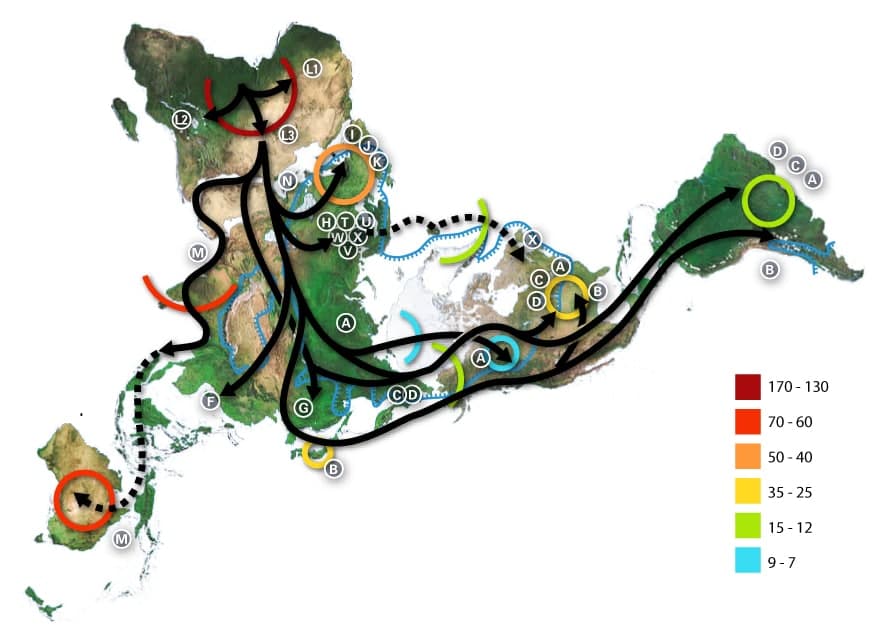
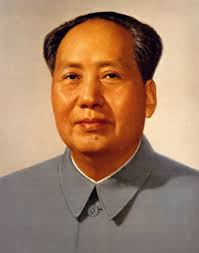
This is a Wikimedia Commons map of the human migration out of Africa (upper left of diagram, North Pole in the center), showing our inexorable advancement to every corner of the globe. By testing the persistent mutations of mitochondrial DNA of modern humans (passed from mothers to their children, so tracing the matrilineal line), we can identify which genetic populations (called haplo-groups) precede others, and by how long. The earliest splits of the mtDNA haplogroup occurred within Africa itself (L1, L2, and L3) between 130,000 and 170,000 years ago. Once out of Africa the human animal migrated first to South and Southeast Asia (60 – 70,000 years ago), then to Europe (40 – 50,000 years ago), and from there to East Asia, North America, and South America. What does this mean? It means that four Khoisan who live within 200 miles of each other are, genetically speaking, more fundamentally different from each other than Mao Zedong and Ronald Reagan.
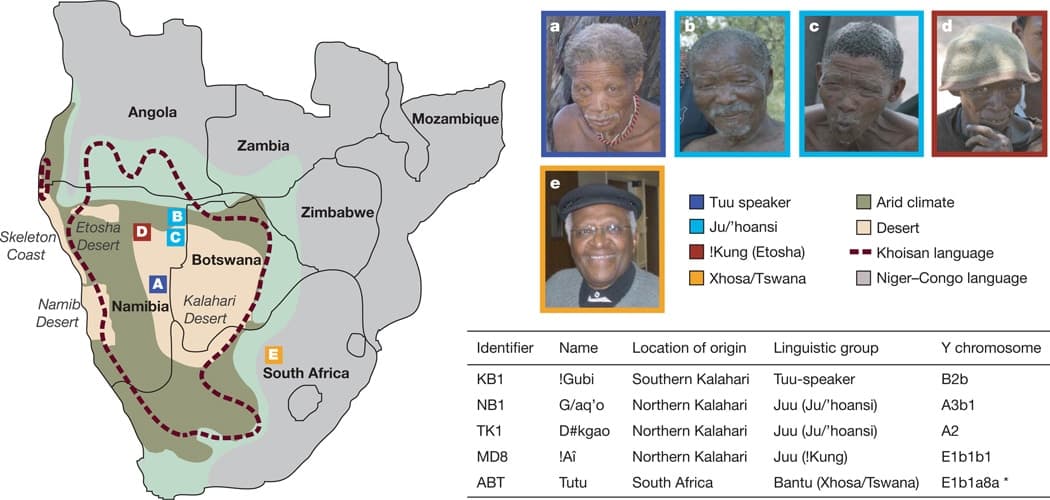
Nature. 2010 February 18; 463(7283): 943-947 (National Institutes of Health Public Access)

It’s not that the Khoisan are somehow more primitive or “less evolved” than Europeans or Asians. They are just as evolved as any other group of humans. It simply means that because their respective tribes separated from each other about 150,000 years ago, their genetic codes have mutated independently for a lot longer than the Chinese and American tribes. Mao and Reagan share a common matrilineal ancestor from maybe 40,000 years ago. !Gubi and G/aq’o, on the other hand, have to go back 150,000 years to find their common mother. There is enormous genotype differentiation between the various sub-linguistic groups of the Khoisan despite very little phenotype differentiation…from a human perspective the Khoisan are a veritable Amazon rainforest of genetic diversity. They don’t look different, but genetically speaking they are VERY different. On the other hand, the genetic diversity found within a modern, cosmopolitan city – no matter how much of an ethnic and racial melting pot it might be – is quite low by comparison. It’s a hard concept to grasp because it goes against the “evidence” of our own eyes, but the distinction between genotype and phenotype (and the primacy of the former for explanatory usefulness) is about as important a concept as there is in evolutionary theory.
Fair enough, Ben…thanks for the science lesson. But what in the world does all this have to do with investing?
The notion of the Other – the concept of differentness – is at the heart of portfolio theory, modern or otherwise. Portfolio theory works because of the Other, because of non-correlated and independent investment choices with differentiated return profiles. If the human animal has a hard time perceiving the Other correctly, if we are poor judges of what does and does not make for fundamental diversity, then we have a big problem with portfolio theory…a problem that will never be perceived, much less addressed, if we do not focus on our evolutionary baggage to become better judges of what generates substantive portfolio diversification. There is no bigger issue in portfolio risk management than the accurate identification of diversifying exposures, no more important topic for an Epsilon Theory perspective.
Here’s my point: we place waaaay too much emphasis on a security’s external appearance – its asset class or sector – in making our portfolio decisions. We place waaaay too much emphasis on a manager’s external appearance – his style box – in making our portfolio decisions. Do we need this sort of simplifying classification or modeling as part of our investment evaluation process? Sure. But to define the diversification qualities of an investment in terms of its phenotype rather than its genotype…well, that’s a mistake. I think that there is enormous room for improvement in constructing smart portfolios if we can stop staring at surface appearances and start focusing on the investment DNA of securities and strategies.
Of course, there’s no such thing as a genetic sequencing assay for an investment or a strategy, so what does this mean in practice, that we should focus on the investment DNA of a security or strategy? If we’re not going to measure the diversification of a portfolio by externally visible characteristics such as asset class or style box, then what are we supposed to do? I think the answer is to look at the externally visible attribute that is most closely linked to the diversity of the human haplogroup: language. I’ve written about this at length, so won’t repeat all that here. The basic idea, though, is that just as linguistic evolution maps almost perfectly to human adaptive radiation and the way our species spread into new environments out of Southern Africa, so, too, are there investment languages and grammars that map to the underlying “DNA” of a security or strategy. The ancient investment languages are Value (together with its grammar, Reversion to the Mean) and Growth (together with its grammar, Extrapolation), and the relative mix of these languages in the description and practice of securities and strategies reveals an enormous amount about their hidden “genotype”.
From this Epsilon Theory perspective, a portfolio comprised of various large-cap US industrial and banking stocks (almost all of which speak a strong Value dialect) would receive much less diversification benefit than a traditional perspective would suggest from an allocation to a macro hedge fund that used various reversion-to-the-mean strategies for currency trades. Conversely, I suspect that a portfolio holding Microsoft (Value-speaking) could receive a significant diversification benefit from adding Salesforce.com (Growth-speaking), even though they are both large-cap tech stocks. I think that there are dozens of ways to put this focus on investment language, investment grammar, and by extension – investment genotype – into practical use for the construction of better-diversified portfolios, and I’ll be spending a lot of time in the coming months testing these applications.
To be sure, this isn’t the first time in the history of the world that someone has suggested looking through surface characteristics such as asset class to find more useful dimensions of portfolio diversification.
For years, Ray Dalio and Bridgewater have been advocating something very similar to this notion with their argument concerning the weakness of asset class correlations in determining optimal portfolio allocations. Dalio’s point – which is the theoretical foundation of Bridgewater’s All-Weather risk parity strategy – is that the correlation of returns between asset classes like stocks and bonds is neither constant nor random. The correlation waxes and wanes over time, with long periods of negative correlation and long periods of positive correlation that must reflect some underlying force. Dalio calls this underlying force the macroeconomic “machine”, which at any given point in time reflects what other people call a “regime”…some combination of inflation and growth characteristics within a context of debt cyclicality to which stocks and bonds respond in predictable ways. Depending on the current regime (which tends to change slowly), stocks and bonds will have either a strong or weak, positive or negative correlation to each other, but there’s nothing meaningful about that correlation. What’s meaningful is the relationship or correlation between stocks and bonds to the macro regime. If you can measure the inflation/growth regime accurately and you know the performance relationship of asset classes to this underlying force, then voilà…you can construct a portfolio of stocks and bonds (and other assets, like commodities) that should perform as well as it is possible to perform within the given regime, where good performance is defined as the most reward for the least volatility. Or so the argument goes.
I think it’s a good argument. Dalio’s theory of why a risk-balanced portfolio works is not the skin-deep perspective embedded in most portfolio construction efforts. Dalio is saying that there’s nothing special about this asset class or that asset class in determining a risk-balanced portfolio, no magical ratio, 60/40 or otherwise, of stocks to bonds. The Bridgewater approach isn’t focused on “balancing” asset classes at all, because there’s really nothing of importance to balance here, no meaning in asset classes per se. Securities are simply instruments that reflect an underlying economic regime with their performance characteristics, and a portfolio should be constructed on the basis of combining these securities in the best possible risk/reward configuration given the underlying regime, period. Sometimes this will mean a lot of stocks and a few bonds; more typically this will mean a lot of bonds and a few stocks. Either way, the Bridgewater approach looks beneath the asset class skin of a security, and that’s a good start.
But it’s only a start. I want to suggest an alternative conceptual basis for risk-balanced portfolio construction, one that doesn’t rely on a deterministic model of the economy.
Moving from an asset class conception of correlation and risk to an inflation/growth regime conception of correlation and risk is not really a fundamental change in perspective. We’re still talking about external characteristics, only now we’re talking about the economy as a whole rather than asset classes or individual securities. It’s like a Hindu mystic saying that it’s wrong to conceive of the world being supported by four elephants, but that what you really need to look for is the turtle that supports the elephants.
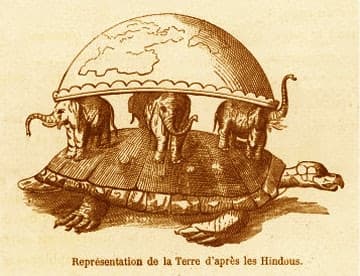
The problem, of course, is that once you accept this concept, you have to ask what the turtle is standing on. The Bridgewater answer is that the macroeconomic turtle-machine is the first mover, the Aristotelian primum mobile, the bedrock on which everything else rests. The only acceptable complement to the beta portfolio in Bridgewater’s turtle-machine framework has to be confined to the realm of “alpha” or skill-based returns that cannot be modeled as a systematic or identifiable phenomenon. The relationships between assets and the macroeconomic machine are “timeless and universal” to quote Bridgewater co-CIO Bob Prince, which means that it’s difficult for their model to account for a regime of regimes, a long and unpredictable game by which political and social forces shape and transform the investment meaning and return correlation of a security to the macroeconomic characteristics of inflation and growth. We believe that these political and social forces are both detectable and actionable and would be more appropriately identified as components of epsilon rather than alpha.
Why is this a problem? Because as the story goes, it’s not nothing beneath that first turtle, but rather more and more turtles…all the way down in an infinite expanse of turtle-dom. In this Epsilon Theory scenario, below the economic turtle-machine is a political turtle-machine, and below that is a social turtle-machine, and below that is a human animal turtle-machine, etc. etc. The lower the turtle, the more slow-moving it is, and the more likely you can ignore its existence for the sake of expedient model prediction at any given point in time. But if you are unfortunate enough to be investing on the basis of your economic turtle-machine when one of the lower turtles lurches forward…you’re in for a nasty surprise. What might this look like? Consider that for most of the past 2,000 years it has been illegal to accept interest payments for a loan to a company, much less to securitize that sort of loan into a bond. Read The Merchant Of Venice again if you need a refresher course in the scope and power of usury laws. Or for a more recent example, consider that private residential mortgage-backed securities hardly existed prior to 2001, were a $4 trillion asset class by the end of 2007, and are now totally moribund, simply running off into oblivion. I just don’t think it’s crazy to imagine large and unpredictable shifts in the economic machine borne out of political and social change. In fact, I think it’s crazy not to expect these shifts, even if the timing and focus of the lurch is impossible to predict.
There are two ways out of the infinite turtles problem.
The first, which is what I imagine the Bridgewater Elect are doing, is to expand the macroeconomic machine to include political and social sub-machines.
If you’ve ever read Isaac Asimov’s Foundation Trilogy, you can easily imagine Ray Dalio as Hari Seldon, with a legion of psychohistorians figuring out more and more equations to incorporate into a massive econometric model of human society and mass behavior.
The second way out (which I favor for precisely the reasons that Seldon’s model failed) is to reject the notion of ANY mechanistic model of how the world works in favor of a profound agnosticism about what the future holds. The only constants I’m willing to accept, particularly in a period of global deleveraging and ferocious political fragmentation within and between countries, are the constants of human nature.
My predictions for the markets in 2014 are that fear and greed will still reign supreme, that investors will still speak ancient languages of Value and Growth, and that emergent behaviors like the Common Knowledge Game will drive short to medium-term price levels in many securities.
I believe that a risk-balanced portfolio – if it explicitly includes both the grammar of Reversion-to-the-Mean and the grammar of Extrapolation – can be as responsive and adaptive to changing patterns and market-moving forces as you want it to be, whether or not you have the right model to explain why those patterns are shifting. As recently as 10 years ago a simplifying macroeconomic model was an absolute necessity for making sense of all the signals that the world throws at us minute after minute. A model, by definition, will ignore certain signals. It’s what models DO. They simplify the world and occasionally miss important signals so that we are not drowned by the sheer flood of less important signals. It’s a trade-off that used to be necessary…but it’s not anymore.
We are in the midst of an information processing revolution – a quantum leap forward in inductive reasoning and inference colloquially named Big Data – that is every bit as important for portfolio management as the economic theory developed by Markowitz et al in the 1950’s.Today we can measure the market world – all of it – and infer the likelihood function of any given pattern or outcome. We know what the past patterns have been and we have the tools to sound an alarm if those patterns start to change, for whatever reason. We no longer have to model the economic world and intentionally cut ourselves off from potentially useful signals because they don’t fit our preconceptions. We no longer have to be the ladies and gentlemen that Steinbeck described, unable to understand Lee if he spoke anything other than pidgin English, because otherwise he would not fit their model of who Lee was. We can be like Samuel, one of the rare people able to separate our observations from our preconceptions. You cannot do that if you approach the world constrained by a model. Sorry, but you can’t.
The tyranny of models is rampant in almost every aspect of our investment lives, from every central bank in the world to every giant asset manager in the world to the largest hedge funds in the world. There are very good reasons why we live in a model-driven world, and there are very good reasons why model-driven institutions tend to dominate their non-modeling competitors. The use of models is wonderfully comforting to the human animal because it’s what we do in our own minds and our own groups and tribes all the time. We can’t help ourselves from applying simplifying models in our lives because we are evolved and trained to do just that. But models are most useful in normal times, where the inherent informational trade-off between modeling power and modeling comprehensiveness isn’t a big concern and where historical patterns don’t break. Unfortunately we are living in decidedly abnormal times, a time where simplifications can blind us to structural change and where models create a risk that cannot be resolved by more or better modeling! It’s not a matter of using a different model or improving the model that we have. It’s the risk that ALL economic models pose when a bedrock assumption about politics or society shifts. If you’re not prepared to look past your model…if you’re not prepared, as Steinbeck wrote, to separate your observations from your preconceptions…then you have a big invisible risk in your portfolio.
I know it’s hard to embrace what I’m describing as a profound agnosticism about the mechanics of how the world works. I know it goes against our biological grain to reject the comfort and succor of a deterministic model and an Answer. In many respects, deep agnosticism is the ultimate Other. It is a non-human perspective on how to think about the world – a Rakshasa – and I’m not expecting it to receive a warm or trusting welcome, particularly when it has the skin of some familiar investment product. But I think it’s the right way to look at a world wracked by political fragmentation, saddled with enormous debts, and engaged in the greatest monetary policy experiments ever devised by man. I think it’s the right way to look at a world of massive uncertainty, as opposed to a world of merely substantial risk, and it’s the perspective I’ll continue to take with Epsilon Theory.


Comments
Start the discussion at the Epsilon Theory Forum...