Heads I Win, Tails You Lose
March 4, 2019·Money

I was searching for images associated with stochastic processes, the ten-dollarest of ten-dollar terms, and amazingly enough, I wasn't finding much to work with. But then I somehow came across this picture of Donald Trump "flipping" the coin for the Army-Navy game ...
Leave aside the weirdness of a grown man not knowing how to flip a coin. Leave aside the weirdness of his clearly not caring that he doesn't know how to flip a coin, that there is no actual flipping involved in his process, and yet he proceeds with full confidence that this is a perfectly great way to flip a coin. And everyone just goes along with the show.
No, no ... just leave all that aside.
The point today is that there’s no way that a normal distribution accurately describes the role of chance in a series of coin tosses, when that coin is flipped by Donald Trump.
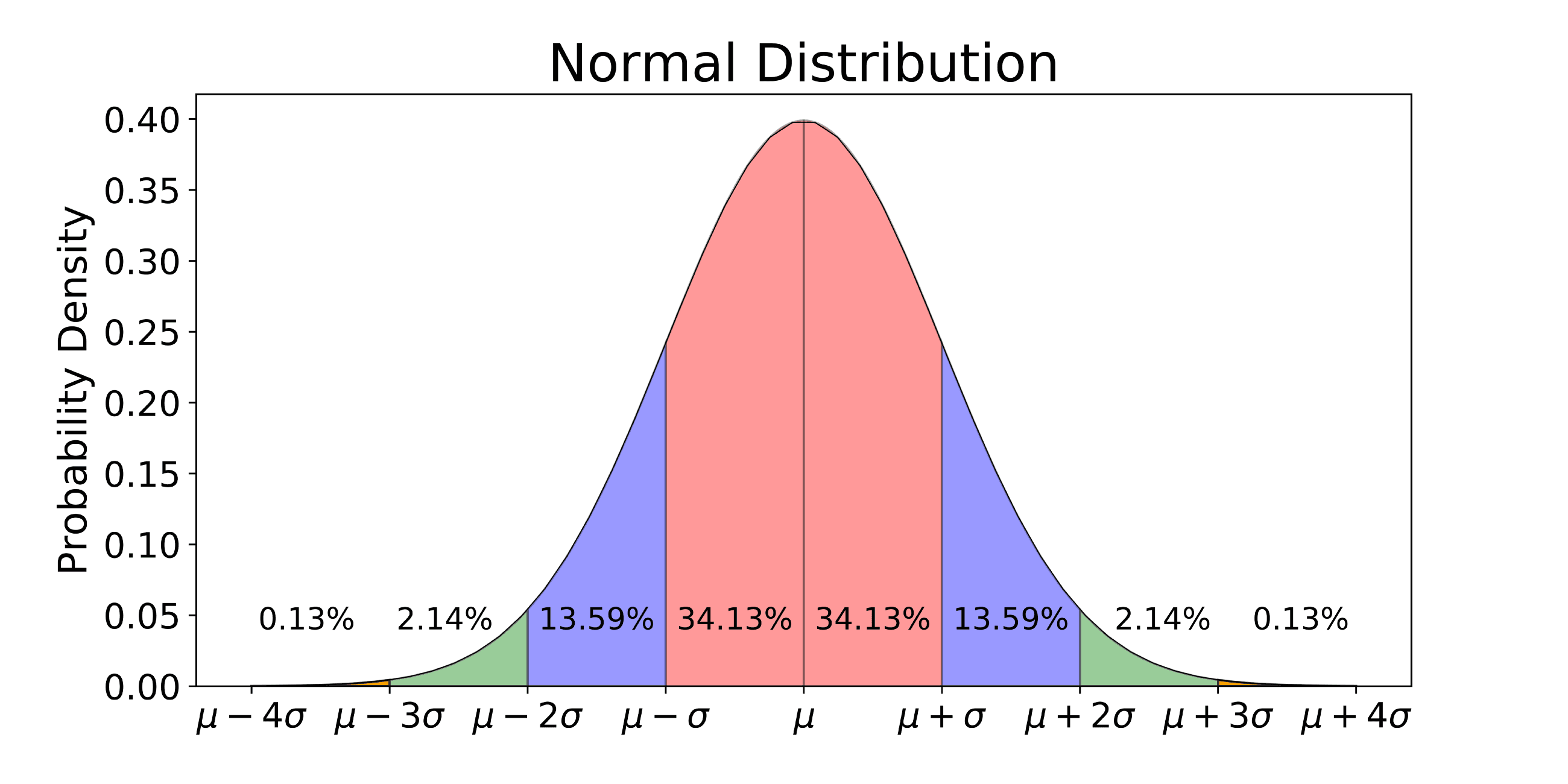
Ditto with your portfolio.
There's no way that a normal distribution accurately describes the role of chance in a series of portfolio return outcomes, when those portfolio returns are "flipped" by Donald Trump and Barack Obama and Jay Powell and Mario Draghi and all the other Team Elite Missionaries. Sure, I'm making fun of Trump in the headline picture here, but if you think there's a smidgen of difference between Trump and Obama and every future resident of 1600 Pennsylvania Avenue in their overwhelming desire to transform capital markets into a political utility ... you are sadly mistaken.
When I say that capital markets have been transformed into a political utility since 2009, what I'm saying in geek terms is that the normal distribution of variation in portfolio returns no longer exists.
Everyone thinks it does. Everyone thinks that a normal distribution of some sort still describes the role of chance in market outcomes, that of course there's a policy impact on skew or heteroskedasticity or the mean or volatility or whatever, but over the long term (or my favorite, "over a credit cycle") there's by and large a normal distribution of variance in portfolio outcomes around some mean expected return.
I'm saying this is wrong.
I'm saying that the distribution of variation in portfolio returns in a regulated utility like capital markets is whatever the State ALLOWS the distribution to be.
Some regulated utilities - like airlines - used to have a very tightly controlled distribution of economic outcomes, but over time were "deregulated" to allow a more-or-less normal distribution of return variance. Other regulated utilities - like power generation and transmission companies - have had a non-normal distribution of portfolio returns imposed throughout their existence. Large losses and large gains for these existentially important utilities are illegal. They are simply NOT ALLOWED. It's not that they have a compressed normal distribution of return variance ... it's not a normal distribution at all.
Before the near-death experience of 2008, the State was happy to allow a more-or-less normal distribution of variation in returns for capital markets. Sure, occasionally we needed to call out the Plunge Protection Team. Sure, political discretion was often the better part of monetary policy valor. But by and large, capital markets were ALLOWED to have chance play a large role in their outcomes. Some years will be good. Some years will be bad. A few years will be very good! Sorry, a few years will be very bad.
But since the near-death experience of 2008, capital markets have been seen - quite rightly, I'd say - as existentially important to the State. Capital markets produce asset prices in exactly the same way that power plants produce electricity, and I'm not sure which is more important to modern society. Honestly, we wouldn't last a week without either on a nationwide basis before things would get downright post-apocalyptic. Until 2008, the State didn't think it was possible for a deflationary shock to bring down the entire asset price production utility. Now they know. And they won't make THAT mistake again.
Is this a forever thing? No, it's not a forever thing. No Zeitgeist is permanent in a three-body system. One day, large market gains and losses WILL BE ALLOWED again.
But a lot has to happen between today and that day. Debts must be monetized. Debts must be inflated away. Bread must be distributed and circuses must be maintained. Wars must be won. Wars must be lost.
Look, I don't enjoy writing this. I know this isn't what people want to hear, and I know that a lot of smart people who I really respect have put their chips down on other sides of these views.
But when I look at the core research questions of investing with Clear Eyes and a Full Heart,
- What are the Narratives (story arcs) I am being told?
- What are the Abstractions (categorizations) presented to me?
- What are the Metagames (big picture games) I am playing?
- What are the Estimations (the roles of chance) shaping outcomes here?
these are the answers that I find ...
- Everything that has shifted in the relationship between State and Market has shifted to prevent a systemic-ending deflationary shock like 2008 from ever happening again. So it won't. If you have prepared your portfolio to protect you from a nasty deflationary shock like a Euro crisis or a China crisis or a Fed crisis - what I call the Three Horsemen of the Investment Semi-Apocalypse - you are building a Maginot Line. You are fighting the last war. You should prepare for the next war. You should prepare for the Fourth Horseman - Inflation - because this horseman is riding in as a response to a deflationary shock or in the absence of a deflationary shock. Either way, fast-motion or slow-motion, THIS is the vector of the next system-redefining process.
- While political scorecards passive large-cap equity indices may not fluctuate so much over this new Zeitgeist, at least not in real terms ... your portfolio (particularly an institutional or ultra high net worth portfolio) almost certainly will, especially in real terms. Why? Because the bond market ain't a political scorecard. Because everything you think you know about portfolio diversification will fail when the Fourth Horseman rides into town. Because emerging markets are going to be crushed before this is over. Because every professional investor's inflation-investing muscles have atrophied to the point of helplessness. Because you think long-vol and crisis-alpha are things.
It's never the same gag twice. It's always the next gag.
To join the Epsilon Theory Pack
Epsilon Theory is a free publication for those who want to watch from a distance.
We offer a Premium subscription for those who want to support our mission.
We offer a Professional subscription for those who want to tap directly into our tools and research for their investments.



Comments
“Every 10 year or so, dark cloud will show up in the financial market and it will rain gold”. Ben, you are saying Warren Buffet will Never be able to buy cheap/fairly valued company again until " they" allow it.
Reading your stuff some times send chills down my spine that makes me doubt how real your stuff is, and yet the killer rabbits, stalking horses, never the same gag twice resonate with something in my bones. I instinctively know what kills everybody would NOT be something sharp and noticeable like 2008. It is more likely something dull, hard to feel, and yet it would eat you alive like chronic disease. There is still 25% of me believing "market’ has its own will and gravity and “they” won’t be able to defy it like they won’t be able defy physics. I also know “they” won’t let it go without putting up a flight at threat of extinction level.
“Because emerging markets are going to be crushed before this is over.” Please could you elaborate on this point?
Ben,
As usual , you make thought-provoking, interesting points but to me your view still feels a little like “This time it’s different”.
Now granted I was brought up in the business when commonplace knowledge was “the market is bigger than government”
And I realize post 2008 the gov’t has imposed it’s will on markets, I just don’t think it can continue to do so in the long run.
But perhaps I have a different sense of how long “the long run” is than you.
To play Devil’s Advocate for a moment – in the defense of “They” – what’s so scary about “How I learned to stop worrying and love the S&P”? Active investment managers have to find another line of work; Warren Buffett has to buy the likes of KHC because there are no other cheap/fairly valued large companies. Weighed against millions of Americans depending on “the market” for retirement, to fund college educations, and so on, it seems like a good deal.
“Because the bond market ain’t a political scorecard” – whatever happened to bond vigilantes? Are they extinct or just in hibernation?
So, does this all mean get ready for “that 70’s show”?
The short answer, John, is to point you to an oldie-but-goodie ET note titled “It Was Barzini All Along” (https://www.epsilontheory.com/it-was-barzini-all-along/). The skinny here is that EM as an asset class is not an independent thing, but is just a reflection of DM monetary policy. And as DMs engage in a race to the bottom to devalue their currencies and jointly monetize their debt, that totally wrecks EMs.
The long answer is that I’ll be updating the Barzini note over the next two weeks and republishing the updated thesis!
It is very difficult to predict the path The Great Reset will take.
We can’t know what the political environment will be as technology begins to eat into the employment rate. Will increasing productivity reduce consumer prices or will inflation rise? If it’s the latter, will the Fed react by raising rates and trigger a Volcker-style recession? Will Congress order the Fed to monetize the debt? —John Mauldin
So Trump has let the dogs of debt loose as far as the fiscal deficit goes. The Obama administration had got the yearly fiscal deficit back under control, but that ‘austerity’ has been jettisoned and the U.S. will run a $1 trillion-plus deficit. Call it 4%-5% of GDP. Hey folks, you don’t have to wait on AOC or Bernie…MMT is already here,they are just not admitting it! Neither is Powell, he has no clue.
The direct monetization of debt is how you get inflation. Monetizing naked debt is how inflation happens and that looks like the path ahead now that QT is dead and the deficit is booming.
It will be interesting to watch oil and gold…do you know what the Fed has almost doubled/tripled in purchasing in 2018 and continues at the same rate in 2019…ahhh gold! Look it up, its on there balance sheets. I wander what bitcoin does in that world? Assuming it breaks new records…
A world in recession might not have such a strong appetite for U.S. Treasurys at the current low rates and heaven forfend if that lack of appetite in itself pushed up interest rates. Someone has to buy. Who is going to buy if the world decides it is not as keen as it was on U.S. debt?
Exporting Debt is the single biggest U.S Comparative-Advantage!!! What happens in a low yield world of the global connective-tissue and the historical global pacifier of US Treasuries stops??? I do not know…but no one else does either.
I think Richard Koo is correct in his assessment of a global-balance-sheet recession/problem/depression,what ever is coming?
Very Relevant….inflation-and-debt National Affairs by John H Cochrane
These dynamics essentially add up to a “run” on the dollar — just like a bank run — away from American government debt. Unlike a bank run, however,
it would play out in slow motion. But in the “run from the dollar” scenario, people want to get rid of all forms of government debt, including money. In that situation, there is essentially nothing the Fed can do. When there is too much debt overall, changing its composition doesn’t really matter.
Above all, we need to return to long-term growth. Tax revenue is equal to the tax rate multiplied by income, so there is nothing like more income to raise government revenues. And small changes in growth rates imply dramatic changes in income when they compound over a few decades. Conversely, a consensus that we are entering a lost decade of no or low growth could be the disastrous budget news that pushes us to a crisis.
I hope you’re right.
But I don’t think you are.
At the risk of being a pain in the ass [but I’m really agreeing]…
I’m thankful that the world I live in is not Gaussian, the alternative would be depressingly boring. Gaussian distributions are most commonly encountered in toy models, real phenomena observed over only short time scales, and deliberate misdirection by conscious actors.
The current racket of the central banks can be seen as trying to simulate a very narrow Gaussian’ish process where the SP500 returns X% ± Y% with Y small. And today’s particular racket can be seen as a natural evolution of the CB racket since the early 70’s and the “secular” decline in interest rates during this regime. Every once in a while the CB’s get a little complacent [as in staying too tight for too long], there’s some kind of asset price crash, and rates need to ratchet down in order to maintain the illusion. The illusion that “the US is actually objectively special, it didn’t just get a transient advantage from being the only industrial economy that wasn’t bombed back to the stone age in WWII”, among others.
But here we are with the interest rate trend line not meaningfully different from 0, and things can’t help but get weird. Corporations spend every spare dollar buying back shares and disappearing into themselves, people start to hoard $100’s, etc… Pretty soon it’s cats and dogs living together. There HAS to be a regime change, and MMT-enabled inflation is about as plausible as anything else. With the caveat that extrapolating through discontinuities is a dangerous game.
Continue the discussion at the Epsilon Theory Forum...