
I'm Not a Raccoon! I'm the Lone Ranger!
July 22, 2019·Money
Every morning, we run the Narrative Machine on the past 24 hours worth of financial media to find the most on-narrative (i.e. interconnected and central) stories in financial media. It’s not a list of best articles or articles we think are most interesting … often far from it.
But for whatever reason these are articles that are representative of some sort of chord that has been struck in Narrative-world.

U.S. Regulator Probing Crypto Exchange BitMEX Over Client Trades [Bloomberg]
The U.S. Commodity Futures Trading Commission is investigating crypto exchange BitMEX, according to people familiar with the matter, a platform that’s become wildly popular in Asia for letting people make big bets with little money down.
BitMEX Chief Executive Officer Arthur Hayes said in an interview in January that BitMEX removes anyone who flouted company rules barring U.S. residents and nationals. However, it is possible clients masked their location by using virtual private networks to assign their computer an Internet protocol address from a BitMEX permitted country, tricking filters put in place, Hayes said.
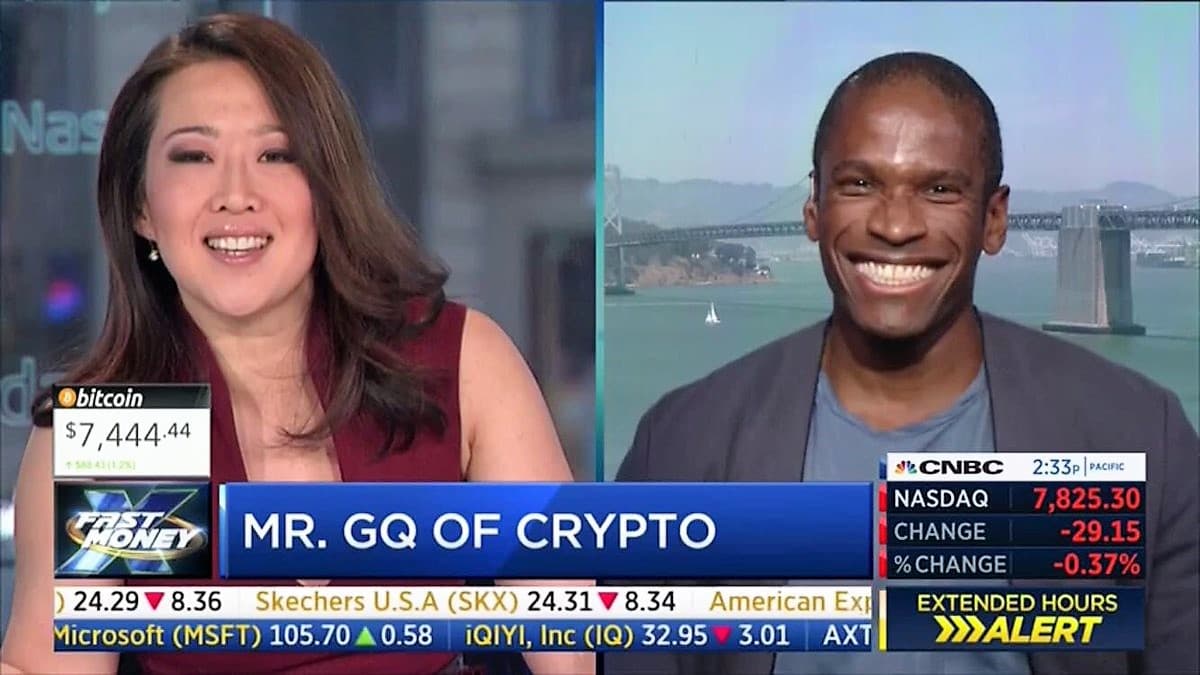
"It's possible."
LOL. We can all chuckle and laugh about the obvious hucksters and con men in crypto-world, the obvious raccoons like Arthur Hayes.
Luckily for Arthur, I'm sure that none of these recent legal "entanglements" will keep him from making his appointed rounds on CNBC.
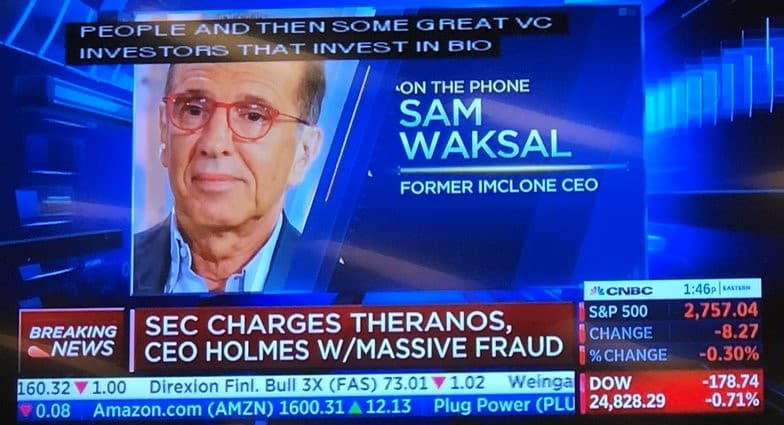
I mean, when you have Sam Waksal on your network to talk about fraud in the biotech world ... not as farce but as serious commentary ... well, friends, we're no longer arguing about what CNBC is actually selling, only the price.
But I want to say something about non-obvious raccoons. I want to say something about people who are not the target of an active criminal investigation or who have not gone to prison for fraud, but are hucksters nonetheless.
Anyone who tells you that you should hodl Bitcoin buy-and-hold a non-cash-flowing, non-productive thing because of "network effects" or Metcalfe's Law or the like ... that person is talking like a raccoon. I'm not saying they ARE a raccoon. Maybe they haven't thought this out and are just parroting an ur-raccoon. That's at least three mixed metaphors, but you get the drift. I'm trying to be generous here.
And to be clear, there are plenty of non-raccoon arguments for hodling Bitcoin buying-and-holding a non-cash-flowing, non-productive thing. There's an inflation argument. There's a security and privacy argument. There's a fashion argument. I'm sure there are more.
Also to be clear, it's not raccoonish to say that you should TRADE Bitcoin a non-cash-flowing, non-productive thing based on the transactional popularity of that non-cash-flowing, non-productive thing. Lots of people trade precious metals, for example. They buy and they sell based on anything they believe motivates other buyers and sellers. Good for them!
What I am saying is that there is no inherent VALUE in Bitcoin a non-cash-flowing, non-productive thing from network effects. There is no "tipping point" in the adoption rate or transaction volumes of Bitcoin a non-cash-flowing, non-productive thing beyond which it becomes "too big to shut down".
In ten-dollar words, network effects are epiphenomenon, not phenomenon, when it comes to non-cash-flowing, non-productive things. They are a shadow of a belief system, not a signal of a belief system.
What did it mean that lots of people in 17th century Amsterdam transacted in guilders and tulips? It meant that lots of people in 17th century Amsterdam transacted in guilders and tulips. That's it. There was no grand statement beyond that. There was no signal of inherent value contained in the transaction volumes of tulips. There was no more inherent value to a Semper Augustus bulb in 1636 than in 1626, even though lots more people bought and sold tulips in 1636 than in 1626.
Price drives the transaction volumes of Bitcoin non-cash-flowing, non-productive things.
Not the other way around.
There are prominent people at the intersection of Wall Street and crypto who know this to be true - who know that the Yay, network effects! narrative is complete BS when it comes to Bitcoin - but who promote the narrative anyway.
Why?
Because it's narrative that drives the price of Bitcoin non-cash-flowing, non-productive things.
Because they are raccoons.



Comments
Well, price is probably the primary driver of the transaction volume of most things. I think that what you are saying is that with bitcoin (strike bitcoin and insert ncfnpt) price is the only driver of transaction volume. The price won’t move because they will come, they will come because they expect the price to move. The price won’t move because they go, they will go because they expect the price to move. Send in the narratives and let the games begin!
“What did it mean that lots of people in 17th century Amsterdam transacted in guilders and tulips? It meant that lots of people in 17th century Amsterdam transacted in guilders and tulips. That’s it. There was no grand statement beyond that.”
Reminds me of (I think it was Rusty’s) line about casino chips. The logo on the chip means nothing.
I would argue this extends to cash-flowing assets as well, but in a more nuanced way, because a lot of the subjectivity embedded in valuation is obscured by the “data-ness” of the exercise. And also because cash-flowing assets vary wildly in the level of subjectivity required to perform a valuation. A Treasury bond is pretty objective as an asset whereas Uber is much more like Bitcoin or gold.
btw is there a better asset/“asset class” for trend following than Bitcoin/crypto?
No. Although I think you can get even one step ahead of price momentum by analyzing narrative momentum.
Exactly.
I love the non-cash flowing comment. For years I have tried to help advisors and clients distinguish the difference between investing and speculation. As the gold bubble was ramping last cycle I purchased a gold watch to use as a prop. When asked my views on gold as an investment I’d hold it up and mention that it was a beautiful piece of jewelry, had some utility but had never paid me a dividend. For it to move from a speculation on future price of a commodity to an investment in my view it would have to develop cash flow.
At the time my easily influenced nephew was deep into everything “gold”. Today he is a Bitcoin aficionado.
I prefer to look at Bitcoin as a sign of speculation fever in the market as a whole. Perhaps a leading indicator of sorts of speculative frenzy
or not.
Or, as my family found out, an organic dairy farm (a true liquid asset;) is much more valuable when the world wants organic milk than when it doesn’t. And then when you deconstruct what you have…some cows, and some land that is good for cows, and some equipment and people that are well…good for cows…you realize that your assets ain’t as cash-flowing as you thought or as valuable as your spreadsheets had suggested.
I’m Not a Raccoon! I’m the Lone Ranger!
This needs to be the secret password to gain admittance to any meet ups of the pack!
Anybody have a handshake suggestion?
It’s strange to me that you define the “inherent value” of Bitcoin in terms of cash-flow, when cash is just another symbolic proxy for the underlying behavioral processes that humans either do or do not find valuable.
Shouldn’t we instead discuss the degree to which these symbolic representations of presumptive value possess isomorphic integrity with the underlying human behaviors we’d like to see proliferate, rather than claiming a novel representative mutation (BTC) differs in kind from our present symbolic baseline of Westphalian token schemes in a way that possesses no “inherent value”?
Along these lines, it seems reasonable to argue that by compressing complex behavioral signals into low-dimensional abstractions of value (homogeneous currency), we inflate the combinatoric symbol-space in which parasitic signaling games may emerge. This is because, to the extent a symbol abstracts and decouples from the reality it claims to represent, it creates a space in which the debt-collection on negative externalities associated with pathological abstractions–to the extent accountability is enforced at all–lags behind the capacity to use said abstractions in service of instrumentally accumulating more fungible totems of value. Thus we incrementally encourage short-term parasitism over behavioral patterns that give rise to long-term value.
One might say this demonstrates the monetary equivalent of Twain’s apocryphal quote concerning the speed at which lies travel, relative to truths. To see the mapping more clearly, consider that lies and truths are but hypothetical claims concerning past, present, or future potential behaviors–mediated by symbolic representations–that possess varying degrees of isomorphic mapping with actual past, present, or desired future states. A lie travels quickly because it pays only a superficial “truth toll”, proportional to the credulity of the audience in question, whereas “truth” is truth because by definition its claims are not superficial, and its travel requires a comprehension / transaction toll in proportion to its complexity, which typically outweighs the cost of comparable lies by orders of magnitude.
And this is the water that appears invisible to most who’ve spent their lives swimming in our financial seas: the emergence of Bitcoin and other cryptocurrencies represents our species’ slow awakening to the fact that without bottom-up mechanisms capable of limiting the degree to which our value representations become parasitic upon the behaviors they claim to represent, such systems will merely accelerate our civilization’s self-termination.
Hence why it feels deeply disingenuous to claim that Bitcoin lacks “inherent value”, when its self-sustaining supra-national dynamic is itself of immense value, if only as a proof-of-concept and catalyst for sparking deeper conversations about the nature of money and the limitations of centrally-managed monetary systems of low-dimensional representative capacity, and that possess few–if any–game-theoretically stable mechanisms for low time-preference behavioral coordination across time.
Thus, by limiting our conceptual scope to “cash flows” as our proxy for “inherent value”, it seems to me we’re simply discussing shades of lipstick on a deeply pathological pig. Why not discuss the inherent value of Bitcoin relative to the actual pathologies in question?
Ultimately behavior is primary. Symbolic flows exist only insofar as they facilitate and parameterize stable and sustainable behaviors. To the extent we define inherent value in terms of cash flows, we preclude the behavioral changes required to exit the present game’s more pathological characteristics.
Continue the discussion at the Epsilon Theory Forum...