
The Best Way to Rob a Bank
March 9, 2021·Money

The best way to rob a bank is to own a bank.
I think that the collapse over the past week of Greensill Capital has a lot of systemic risk embedded within it, particularly as the fraudulent deals between Greensill and its major sponsors – Softbank and Credit Suisse – come to light. And that’s not even considering Greensill’s second tier of sponsors – entities like General Atlantic and the UK government – all of whom are up to their eyeballs in really dicey arrangements.

Yeah, that's Lex Greensill at Buckingham Palace in 2019, receiving a CBE (Commander of the Order of the British Empire) from Prince Charles for ... wait for it ... "services to the British economy". LOL.
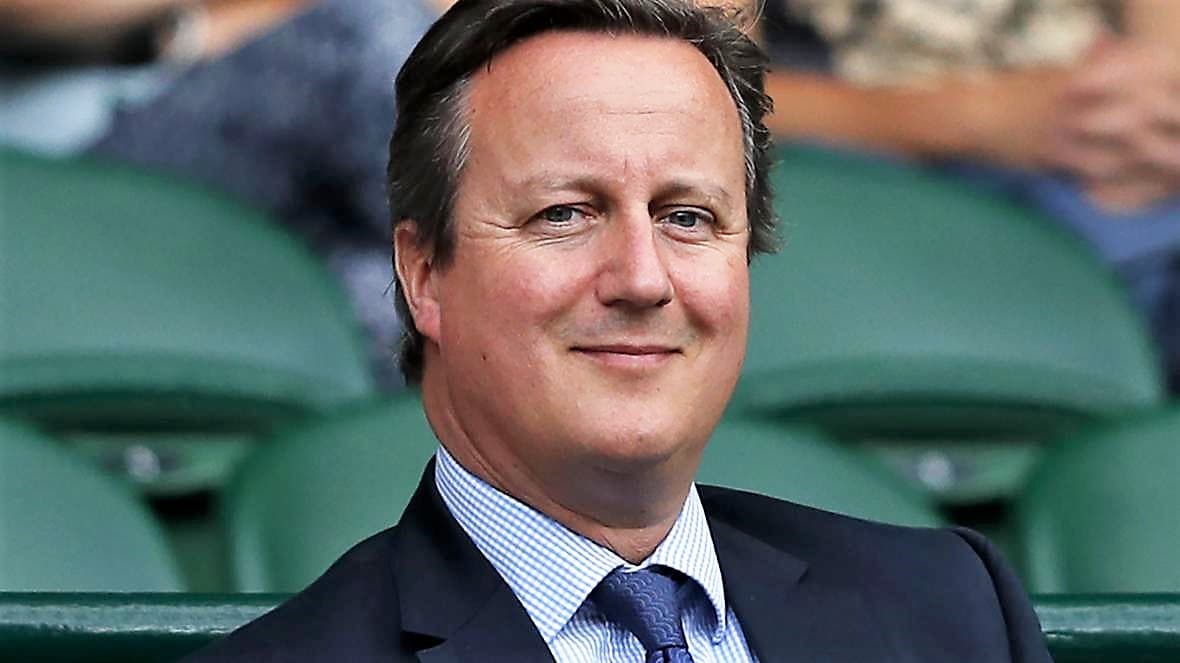
And yeah, that's former UK prime minister David Cameron, positively beaming in this photo that his publicist chose for the 2018 announcement that he would be joining his good friend Lex Greensill as a "special adviser" to the company, keen to assist with the company's mission to "democratize" supply-chain finance and "transform construction finance with Big Data and AI". I mean, that's what the white paper says, so it's gotta be true.
Today, David Cameron is waking up to headlines like this in the UK press:
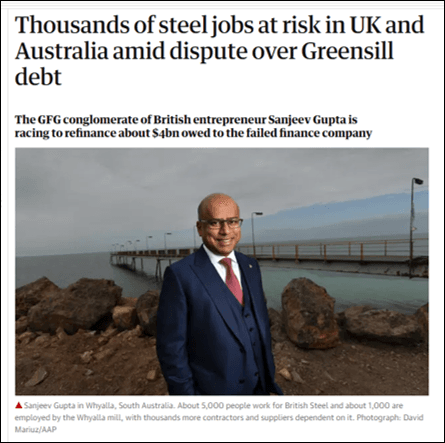
Hope all those free rides on Lex's personal fleet of four private jets (all bought by Greensill Capital's German banking subsidiary and leased back to Lex, btw) were worth it, David.
Is this a Madoff Moment for the unicorn market? Honestly, if you had asked me a few weeks ago, I would have told you that a Madoff Moment was impossible in our narrative-consumed, speak-no-evil market world of 2021. Now I’m not sure. We’ll see, but I think this has legs.
By all rights, Greensill – the eponymously named investment bank started by former Citigroup and Morgan Stanley banker Lex Greensill in 2011 – should have been shot between the eyes in 2019. That’s when their “supply-chain finance” loans, in this case to the steel and energy companies of the UK’s “Savior of Steel”, Sanjeev Gupta, blew up Swiss asset manager GAM’s $11 billion flagship fund, the Absolute Return Bond Fund (ARBF).
It’s a story as old as capital markets … Greensill lent Gupta a lot of money, Greensill wined and dined and private jetted ARBF portfolio manager Tim Haywood, and so naturally Haywood bought as much of the Greensill-originated loans as humanly possible, topping out at 12% of ARBF NAV. LOL. The loans, of course, were not as they seem, Gupta’s companies were nowhere near as solid as they were represented, and GAM ended up firing Haywood and seeing their stock price crater. Lots of people lost lots of money … end of the road for Greensill, right? Nope.
Enter Masayoshi Son, CEO of Softbank, who ended up putting $1.5 billion into Greensill in 2019 through Softbank and then another $1.5 billion into Greensill through the Vision Fund, becoming Greensill’s largest investor and diluting the prior largest investor – General Atlantic – from a 15% to a 7% position. And then the fun begins.
Since that 2019 rescue, Greensill has lent billions of dollars to Softbank and General Atlantic affiliates (mostly Softbank, but GA looks plenty stinky here), loans that were then bought by Credit Suisse funds and laundered by Greensill’s German bank subsidiary. Now when I say ‘laundered’, I don’t mean that metaphorically. The German banking and markets regulator, BaFin, has suspended Greensill’s banking license and referred the case for criminal prosecution.
Here’s an example of how the scam worked. Again, it’s a story as old as capital markets. In early 2020, Greensill lent Softbank portfolio company Katerra $435 million. The company ran into … errr … operational difficulties, and Softbank ponied up $200 million in additional capital last December. For its part, Greensill wrote off the $435 million loan in exchange for … again, wait for it … 5% of common equity. LOL. The $9 billion valuation for Katerra (I am not making this up) was determined by Softbank, of course, and so the Greensill German bank subsidiary reported on its balance sheet that all was well. A $435 million senior loan, secured by trade receivables, was exchanged for a 5% equity position in a bankrupt company, with no loss reported. Seems fair!
As always, the best way to rob a bank is to own a bank.
Second best way is to find a really big bank to buy up all the crap loans you originate, and that’s where Credit Suisse comes in. After the GAM debacle in early 2019, there was zero question that the loans Greensill had been selling to Credit Suisse for years were just as stinky as the loans they had sold to GAM. And yet Credit Suisse did … nothing. Actually, that’s not fair. They purchased MORE of the securitized loans from Greensill than ever before. They marketed their funds HARDER than ever before.
I’m sure it’s just a coincidence that Softbank put $500 million into the Credit Suisse funds after their 2019 Greensill investment.
I'm sure it's just a coincidence that Credit Suisse was the lead advisor to Greensill when they raised hundreds of millions in new capital at a valuation of $7 billion all of ... [checks notes] ... four months ago.
I’m sure it’s just a coincidence that Credit Suisse and Greensill found a Japanese friend-of-Softbank insurer, Tokio Marine, willing to put a wrapper around the Greensill loans so that Credit Suisse could market these Greensill lending facilities as … one more time, wait for it … a safe-as-houses money-market fund
Money quote from an investor in this $10 billion Credit Suisse fund family, per the FT:
“You thought you were in an arm’s length arrangement where all your fellow investors had a pure financial interest,” he said. “Imagine you then found that, in fact, some of your co-investors were funding themselves.”
Yep, imagine that. Like I say, it’s a story as old as capital markets. Here's a fun fact. Did you know that Credit Suisse has paid more than $9 billion since 2009 in legal penalties and settlements?
But then the house of cards came tumbling down. Something spooked Tokio Marine (they’re now putting the blame on a “rogue underwriter”), and once the insurance wrapper came off, Credit Suisse professed shock … shock, I tell you! … as they suspended redemptions from the funds (LOL) and announced a hard-hitting internal investigation into how it was possible that this could have happened. I’m sure they’ll find a "rogue portfolio manager". And then Credit Suisse dropped a dime to the German bank regulators, BaFin, who after the Wirecard debacle were apparently only too eager to show that they weren’t totally corrupt and incompetent.
So here we are. The ECB is now asking whether or not the situation is “contained”
Will it be contained? Will all this be swept under the rug? Probably. Apollo is apparently going to buy the shell of the Greensill trading platform for less than $100 million (down from $7 billion a few months ago), and bury this as deep into the bowels of the Earth as it is possible to be buried. Pretty much all of the Greensill directors have resigned and claimed the Sgt. Schultz / Hogan's Heroes defense ("I see nothing! I know nothing!"), including Lex’s brother (I guess Elon is not the only one who likes to keep board seats in the family). So I am certain that we will hear this week from the ECB and other bank regulators that the situation IS, in fact, contained.
And I'm also certain we'll be treated to another barf bag Softbank earnings deck this quarter, where Masayoshi Son waves his hands with extra vigor to explain away the Greensill "investment". Here are some of my personal faves from last year's virtuoso performance in narrative construction after the Wework debacle. Again, I am not making this up.
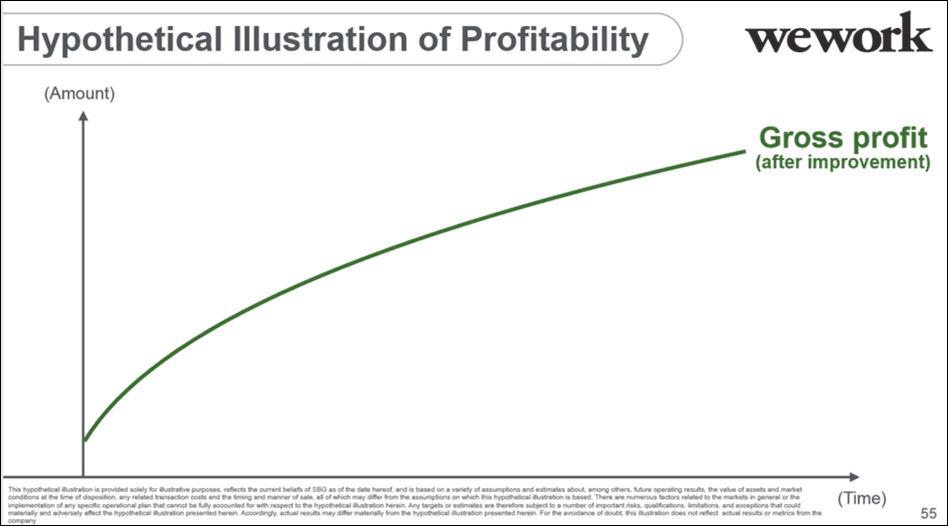
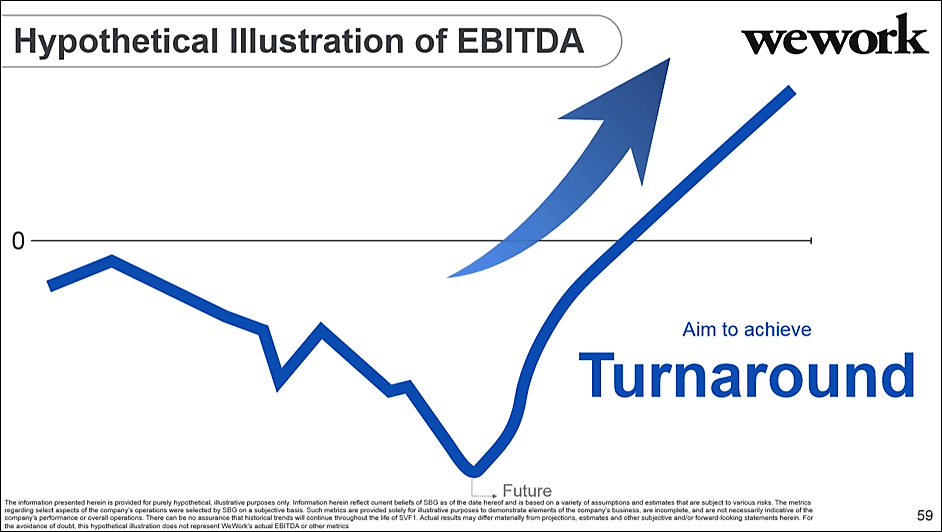


Then again ... maybe Lex Greensill is feeling a wee bit abandoned by his erstwhile friends at Softbank or General Atlantic or the UK government. Maybe Gupta's GFG steel business or some of these Softbank/Vision Fund companies can’t find short-term financing to replace their sweetheart deals at Greensill, and lots of people lose their jobs. Maybe there’s a bad email at Credit Suisse. There's always a bad email.
So maybe this won't be swept under the rug after all. And if it's not ...
This is the first Big Fraud I’ve seen in 13 years with the sheer heft and star power to ripple through markets in a systemic way. Not since Madoff.



Comments
That was one of my favorite financial history books:
https://www.amazon.com/Best-Way-Rob-Bank-Own/dp/0292754183
I was waiting to see if you guys would pick up this story. Credit to ZH for picking at this scab early.
Great article Ben, impressed with your ability to not only figure it out (adding colorful details) but writing so clearly so that your readers completely get it
Thank you
It will be fascinating to see who gets burned through this. A few thoughts from Bronte capital on ‘who is holding the bag’.
http://brontecapital.blogspot.com/2021/03/greensill-who-is-holding-bag.html
After three decades in this business, the only thing that surprises me is that supposedly smart people continuously fail to do even the tiniest bit of due diligence. And yes, there is always a “rogue (fill in the blank)” to blame.
Wherever there’s a carcass with bits of meat still remaining on the bones, Leon Black cannot be far away. Something tells me that a few months from now Apollo investors can look forward to being sold a new and exciting distressed asset fund filled with only the sort of opportunity that the brain trust in the Solow Building could find.
Amazing how many of these “rogue” employees seem to exist and yet nobody ever bothers to put in controls to catch them. If only there were some sort of hierarchical structure that could be created that applies due diligence to deals before they are executed…
Yes, those pedo-apologists seem to have a keen eye for the distressed.
“You got fins to the left, fins to the right and you’re the only bait in town.”
Thanks Ben. Enjoyed the presentation.
The fallout continues. Now the Scottish Nationalist Party has been dragged in to this mess.
https://www.spectator.co.uk/article/the-snp-s-foray-into-high-finance-has-come-at-a-big-price
Continue the discussion at the Epsilon Theory Forum...