The Italian Job
October 8, 2018·Money
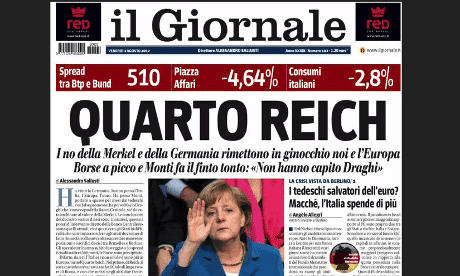
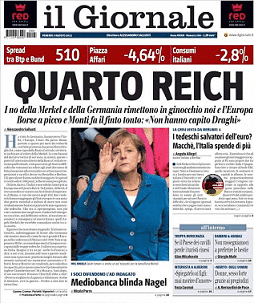
il Giornale (August 3, 2012)
I wrote "Finest Worksong" in September, 2014 (reprinted below). Here's the money quote:
At some point in the not so distant future there will be an anti-Euro realigning election in Italy. And that will wake the Red King.
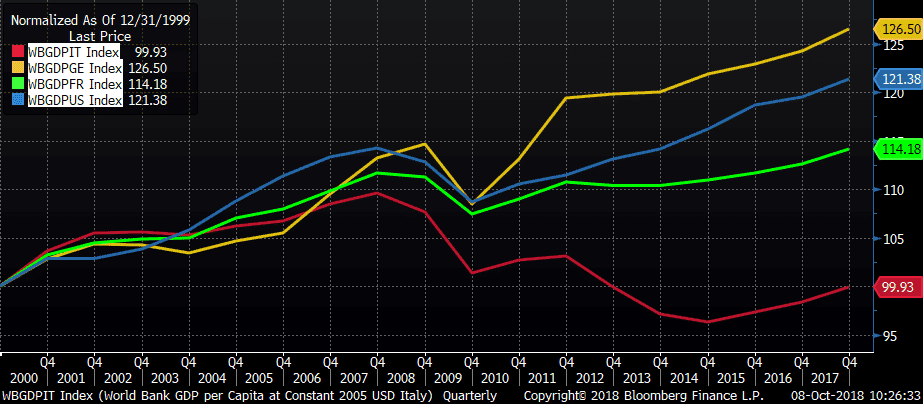
And here's the money chart that is driving all of this.
Source: Bloomberg L.P., World Bank
This is an 18 year chart of per capita GDP for Italy (red), France (green), the U.S. (blue) and Germany (yellow), from World Bank data using constant 2005 dollars, normalized at January, 2000. The takeaway is pretty obvious.
The average Italian is no better off today than he or she was 18 years ago.
The average German is MUCH better off today than he or she was 18 years ago.
But wait, there's more. This data is just taking the aggregate national GDP dollar amount and dividing by the number of citizens in the country in question. It doesn't take into account any changes in the distribution of that aggregate GDP across those citizens. What we know for a fact is that the distribution of goodies in the post-GFC Financial Asset Bubble has been unevenly distributed in favor of those who ... you know, actually own financial assets. In other words, it's not only that the average (mean) Italian is no better off today than he or she was 18 years ago. More importantly for the politics of Italy:
The median Italian is WORSE off today than he or she was 18 years ago.
What's driving everything in Italian politics today? THAT.
What's driving the market swoon in Europe today? THAT means the Red King is waking up.
Can Mario Draghi put the Red King back to sleep? He did four years ago. It's going to be a lot harder today.
My advice? Prepare your portfolio for the Red King NOT going back to sleep.
And yes, Epsilon Theory can help you with that.
Finest Worksong
Take your instinct by the reins
You'd better best to rearrange
What we want and what we need
Has been confused, been confused
REM, “Finest Worksong” (1987)
The politics of dancing
The politics of oooh feeling good
Re-flex, “The Politics of Dancing” (1983)

The fault, dear Brutus, is not in our stars, but in ourselves.
William Shakespeare, “Julius Caesar” (1599)
In theory there is no difference between theory and practice. In practice there is.
Yogi Berra, (b. 1925)
Year after year we have had to explain from mid-year on why the global growth rate has been lower than predicted as little as two quarters back. …
Indeed, the IMF's expectation for long-run global growth is now a full percentage point below what it was immediately before the Global Financial Crisis. …
But it is also possible that the underperformance reflects a more structural, longer-term, shift in the global economy, with less growth in underlying supply factors.
Fed Vice Chairman Stanley Fischer, “The Great Recession: Moving Ahead”, August 11, 2014
There is one great mystery in the high falutin’ circles of the Fed, ECB, and IMF today. Why is global growth so disappointing? There are different variations on this theme – why aren’t businesses investing more? why aren’t banks lending more? – but it’s all one basic question. First the Fed, then the BOJ, and now the ECB have taken superheroic efforts to inflate financial asset prices in order to bridge the gap between the output shock of 2008 and a resumption of normal economic growth. They’ve done their part. Why hasn’t the rest of the world joined the party?
The thinking was that leaving capital markets to their own devices in the aftermath of the Great Recession could result in a deflationary equilibrium, which is macroeconomic-speak for falling into a well, breaking your leg, at night, alone. It’s the worst possible outcome. So the decision was made to buy trillions of dollars in assets, forcing all of us to take on more risk with our money than we would otherwise prefer, and to jawbone the markets (excuse me … “employ communication policy”) to leverage those trillions still further. All this in order to buy time for the global economic engine to rev back up and allow private investment activity to take over for temporary government investment activity.
It was a brilliant plan, and as emergency intervention it worked like a charm. QE1 (and even more importantly TLGP) saved the world. The intended behavioral effect on markets and market participants succeeded beyond Bernanke et al’s wildest dreams, such that now the Fed finds itself in the odd position of trying to talk down the dominant Narrative of Central Bank Omnipotence. But for some reason the global economic engine never kicked back in. The answer? We must do more. We must try harder. And so we got QE2. And QE3. And Abenomics. And now Draghinomics. We got what we always get in the aftermath of a global economic crisis – a temporary government policy intervention transformed into a permanent government social insurance program.
But the engine still hasn’t kicked in.
So now villains must be found. Now we must root out the counter-revolutionaries and Trotskyites and Lin Biao-ists and assorted enemies of progress. Because if the plan is brilliant but it’s not working, then obviously someone is blocking the plan. The structural villains per Stanley Fischer (who is rapidly becoming a more powerful Narrative voice and Missionary than Janet Yellen): housing, fiscal policy, and the European economic slow-down. Or if you’ll allow me to translate the Fed-speak: consumers, Republicans, and Germany. These are the counter-revolutionaries per the central bank apparatchiks. If only everyone would just spend more, why then our theories would succeed grandly.
Hmm. Maybe. Or maybe what we want and what we need has been confused. Maybethe thin veneer of ebullient hollow markets has been confused for the real activity of real companies. Maybethe theatre of a Wise Man with an Answer has been confused for intellectually honest leadership. Maybetheoretical certainty has been confused for practical humility. Maybe the fault, dear Brutus, is not in external forces like Republicans or Germans (or Democrats or Central Bankers), but in ourselves.
Let me suggest a different answer to the mystery of missing global growth, a political answer, an answer that puts hyper-accommodative monetary policy in its proper place: a nice-to-have for vibrant global growth rather than a must-have. The problem with sparking renewed economic growth in the West is that domestic politics in the West do not depend on economic growth. What we have in the US today, and even more so in Europe (ex-Germany), are not the politics of growth but rather the politics of identity. At the turn of the 20th century the meaning of being a Democrat or a Republican was all about specific economic policies … monetary policies, believe it or not. You could vote for Republican McKinley and ride on a golden coin to Prosperity for all, or you could vote for Democrat Bryan and support silver coinage to avoid being “crucified on a cross of gold.”
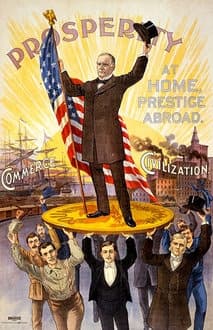
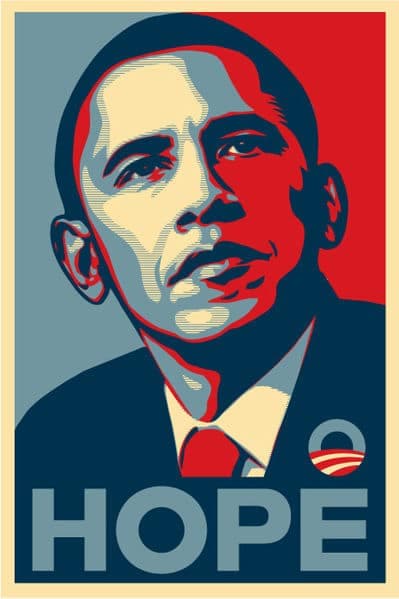
Today’s elections almost never hinge on any specific policy, much less anything to do with something as arcane as monetary policy. No, today’s elections are all about social identification with like-minded citizens around amorphous concepts like “justice” or “freedom” … words that communicate aspirational values and speak in code about a wide range of social issues. Don’t get me wrong. There’s nothing inherently bad or underhanded about all this. I think Shepard Fairey’s “HOPE” poster is absolute genius, rivaled only by the Obama campaign’s genius in recognizing its power. Nor am I saying that economic issues are unimportant in elections. On the contrary, James Carville is mostly right when he says, “It’s the economy, stupid.” What I am saying is that modern political communications use neither the language nor the substance of economic policy in any meaningful way. Words like “taxes” and “jobs” are bandied about, but only as totems, as signifiers useful in assuming or accusing an identity. Candidates seek to be identified as a “job creator” or a “tax cutter” (or accuse their opponent of being a “job destroyer” or a “tax raiser”) because these are powerful linguistic themes that connect on an emotional level with well-defined subsets of voters on a range of dimensions, not because they want to actually campaign on issues of economic growth. Candidates have learned that while voters certainly care about the economy and their economic situation, the only time they make a voting decision based primarily on specific economic policy rather than shared identity is when the decision is explicitly framed as a binary policy outcome – a referendum. Even there, if you look at the ballot referendums over the past several decades (Howard Jarvis and Proposition 13 happened almost 40 years ago! how’s that for making you feel old?), the shift from economic to social issues is obvious.
Both the Republican and the Democratic Party have entirely embraced identity politics, because it works. It works to maintain two status quo political parties that have gerrymandered their respective identity bases into a wonderfully stable equilibrium. The last thing either party wants is a defining economic policy question that would cut across identity lines. But until the terms of debate change such that an electoral mandate emerges around macroeconomic policy … until voters care enough about Growth Policy A vs. Growth Policy B to vote the pertinent rascals in or out, despite the inertia of value affinity … we’re going to be stuck in a low-growth economy despite all the Fed’s yeoman work. I know, I know … what blasphemy to suggest that monetary policy is not the end-all and be-all for creating economic growth! But there you go. At the very moment that elections hinge on the question of economic growth, we will get it. But until that moment, we won’t, no matter what the Fed does or doesn’t do.
What reshapes the electoral landscape such that an over-riding policy issue takes over? Historically speaking, it’s a huge external shock, like a war or a natural disaster, accompanied by a huge political shock, like the emergence of a new political party or charismatic leader that triggers an electoral realignment. In the US I think that the emerging appeal of national Libertarian candidates (all of whom, so far anyway, have the last name Paul) is pretty interesting. The 2016 election has the potential to be a watershed event and set up a realignment, if not in 2016 then in 2020, which hasn’t happened in the US since Ronald Reagan transformed the US electoral map in 1980. And yes, I know that the conventional wisdom is that a viable Libertarian candidate is wonderful news for the Democratic party, and maybe that will be the case, but both status quo parties today are so dynastic, so ossified, that I think everyone could be in for a rude awakening. It’s a long shot, to be sure, mainly because the US economy isn’t doing so poorly as to plant the seeds for a reshuffling of the electoral deck, but definitely interesting to watch.
What’s not a long shot – and why I think Draghi’s recently announced ABS purchase is a bridge too far – is a realigning election in Italy.
I like to look at aggregate GDP when I’m thinking about the strategic interactions of international politics, but for questions of domestic politics I think per capita GDP gives more insight into what’s going on. Per capita GDP gives a sense of what the economy “feels like” to the average citizen. It addresses Reagan’s famous question in the 1980 campaign with Jimmy Carter: are you better off today than you were four years ago? It’s a very blunt indicator to be sure, as it completely ignores the distribution of economic goodies (something I’m going to write a lot about in future notes), but it’s a good first cut at the data all the same. Here’s a chart of per capita GDP levels for the three big Western economies: the US, Europe, and Japan.
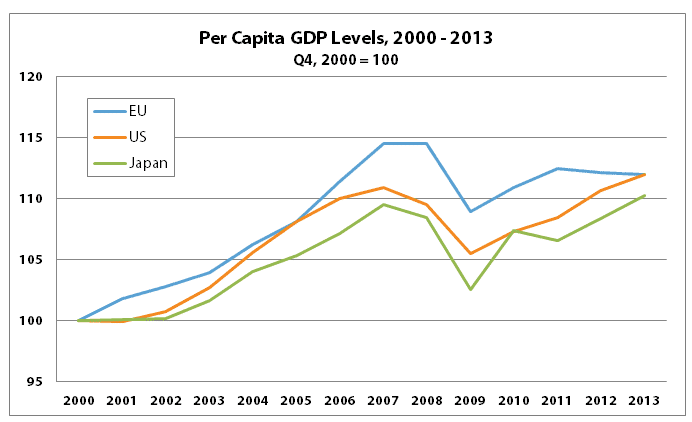
Source: World Bank. For illustrative purposes only.
The Great Recession hit everyone like a ton of bricks, creating an output shock roughly equal to the impact of losing a medium-sized war, but the US and Japan have rebounded to set new highs. Europe … not so much.
Let’s look at Europe more closely. Here’s a chart of the big three continental European economies: Germany, France, and Italy.
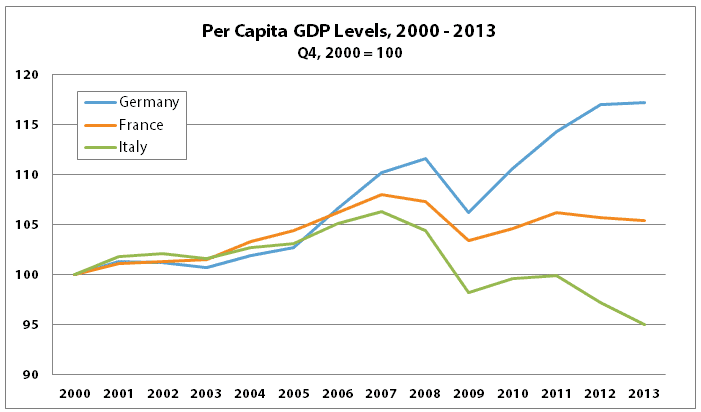
Source: World Bank. For illustrative purposes only.
Germany off to the races, France moribund, and Italy looking like it just lost World War III. I mean … wow. More than any other chart, this one shows why I think the Euro is structurally challenged.
First, why in the world would Germany change anything about the current Euro system? The system works for Germany, and how. Alone among major Western powers, the politics of growth are alive and well in Germany. “But Germany, unless you lighten up and embrace your common European identity, maybe this sweet deal for you evaporates.” Ummm … yeah, right. The history books are just chock-full of self-interested creditors with sweet deals that unilaterally made large concessions before the very last second (and often not even then).
Second, why in the world would Italy accept anything about the current Euro system? The system fails Italy, and how. The system fails other countries, too, like Spain, Portugal, and Greece, but these countries are in the Euro by necessity. Their economies are far too small to go it alone. Italy, on the other hand, is in the Euro by choice. Its economy is plenty big enough to stand on its own, and with a vibrant export potential, an independent and devalued lira is just what the doctor ordered to get the economic growth engine revved up. Short term pain, long term gain.
Why doesn’t Italy bolt? Lots of reasons, most of them identity related. Also, let’s not underestimate the power of cheap money to keep the puppet-masters of the Italian State in a Germany-centric system. The system may fail Italy as a whole, but if you’re pulling the strings of the State and can borrow 10-year money at 2.5% to keep your vita nice and dolce … well, let’s keep dancing.
Still, nothing focuses the electoral mind like the economic equivalent of losing a major war. At some point in the not so distant future there will be an anti-Euro realigning election in Italy.
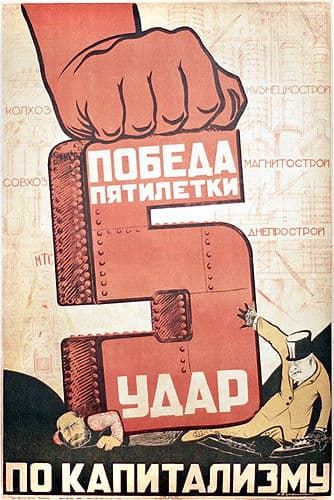
In the meantime, Draghi will go forward with his ABS purchase scheme, a brilliant theory that will deliver frustratingly slim results quarter after quarter after quarter. Until the politics of growth are embraced outside of Germany, European banks will remain reticent to lend growth capital to small and medium enterprises. Until the politics of growth are embraced outside of Germany, large enterprises with plenty of cash and access to cheap loans will remain reticent to invest growth capital. Maybe a little M&A, sure, but no new factories, no organic expansion, no grand hiring plans. The thing is, Draghi knows that he’s pushing on a string with the ABS program and that growth won’t return until the fundamental political dynamic changes in France in Italy, which is why he is calling both countries out by name to institute “structural reforms”. But in typical European fashion this entire debate is Mandarin vs. Mandarin, with almost all of the proposals focused on regulatory reform rather than something that must be hashed out through popular legislation. So long as economic policy reform is imposed from above … so long as we are engaged in modern-day analogs of Soviet Five-Year Plans … I believe we will remain stuck in what I call the Entropic Ending – a long gray slog of disappointing but not catastrophic aggregate economic growth. That’s not a terrible environment for stocks, certainly not for bonds, and the alternative – economic reform based on the hurly-burly of popular politics, is almost certain to be a wild ride that markets hate. But to get back to what we need (real growth) rather than what we want (higher stock prices) this is what it’s going to take. Elections always matter, but in the Golden Age of the Central Banker they matter even more.



Comments
Start the discussion at the Epsilon Theory Forum...