They're Not Even Pretending Anymore
February 28, 2019·Politics
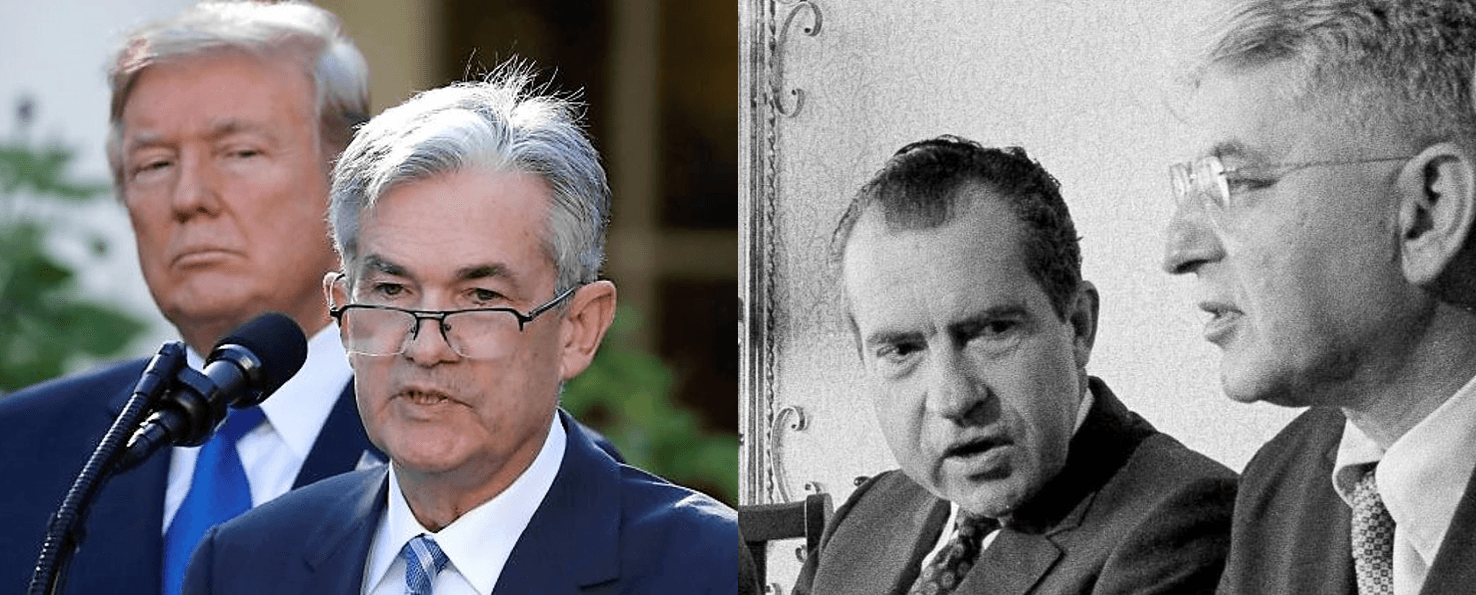


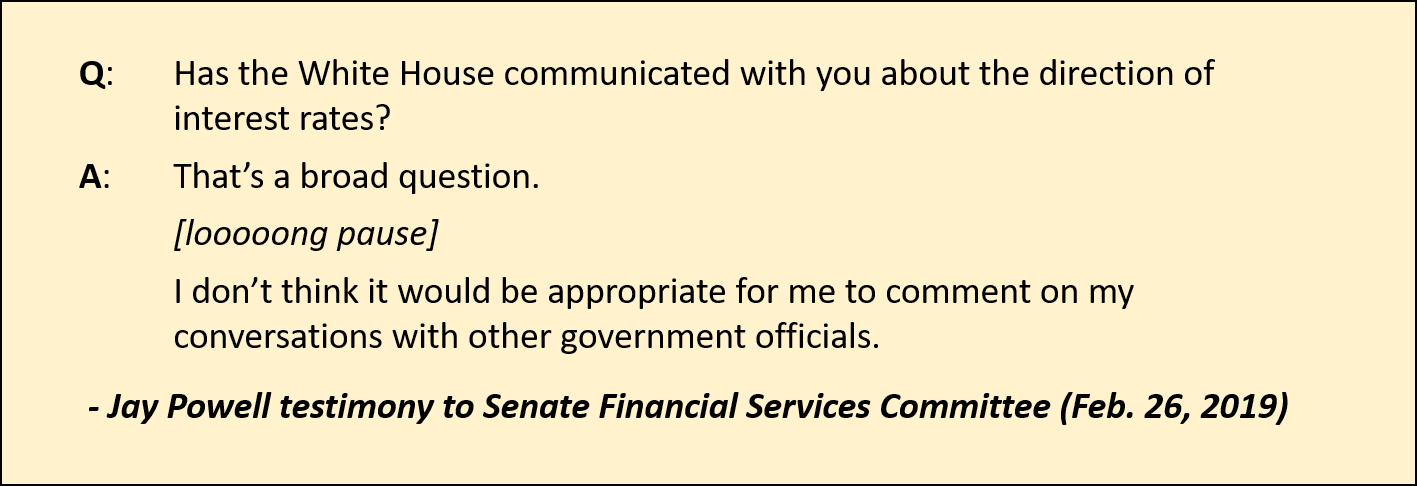
Let's take a walk down memory lane, shall we?
“My relations with the Fed,” Nixon said, “will be different than they were with [previous Federal Reserve chairman] Bill Martin there. He was always six months too late doing anything. I’m counting on you, Arthur, to keep us out of a recession.”
“Yes, Mr. President,” Burns said, lighting his pipe.
“I don’t like to be late.” Nixon continued. “The Fed and the money supply are more important than anything the Bureau of the Budget does.” Burns nodded. “Arthur, I want you to come over and see me privately anytime . . .”
“Thank you, Mr. President,” Burns said.
“I know there’s the myth of the autonomous Fed . . .” Nixon barked a quick laugh. “. . . and when you go up for confirmation some Senator may ask you about your friendship with the President. Appearances are going to be important, so you can call Ehrlichman to get messages to me, and he’ll call you.”
- January, 1970 (John Ehrlichman, "Witness to Power")
Nixon: [If I'm not re-elected] this will be the last Conservative administration in Washington.
Burns: Yes, Mr. President.
Nixon: This liquidity problem is just bullshit.
- October 10, 1971 (Secret Nixon Tape No. 607-11)
Burns: I wanted you to know that we lowered the discount rate . . . got it down to 4.5 percent.
Nixon: Good, good, good.
Burns: I put them [the FOMC] on notice that through this action that I want more aggressive steps taken by that committee on next Tuesday.
Nixon: Great. Great. You can lead ‘em. You can lead ‘em. You always have, now. Just kick ‘em in the rump a little.
- December 10, 1971 (Secret Nixon Tape No. 16-82)
Shultz: Money supply is beginning to move. The economy has to be good, strong expanding economy this year. So much at stake on that. He [Burns] recognizes that and he needs to do everything that he can do. Why worry about interest rates going down? . . . We want low interest rates. What’s the problem there? So, we don’t have a return flow of money from Europe? So what? Keep the money supply going up!
Nixon: Another defense he’s building up for not raising the money supply . . . I’d rather he weren’t so optimistic. ... This is the last time I want to see him [garbled] or get the hell out of here. War is going to be declared if he doesn’t come around some. ... He's talking with the Jewish press.
- February 14, 1972 (Secret Nixon Tape 670-5)
In 1971, Richard Nixon had a problem. The US economy was pretty strong and the Fed wanted to tighten. But Nixon had an election to win in 18 months, and he needed loose monetary policy to do that. Also, the global economy wasn't that strong, and the rest of the world needed an expanding supply of dollars and an expanding US trade deficit to keep its motor running. Nixon didn't really care about that, but a lot of his oligarch cronies did.
So Nixon alternately bullied and cajoled and threatened and rewarded his hand-picked Federal Reserve Chair, Arthur Burns, to do the right thing and keep the money spigot open ... wide open. Complaints about too much liquidity sloshing around were "bullshit", and so what if they were running the economy hot? Good lord, man, imagine who would take over the White House in 1972 if he were defeated! Imagine the insane fiscal spending policies that those Democrats would push on the country if he lost!
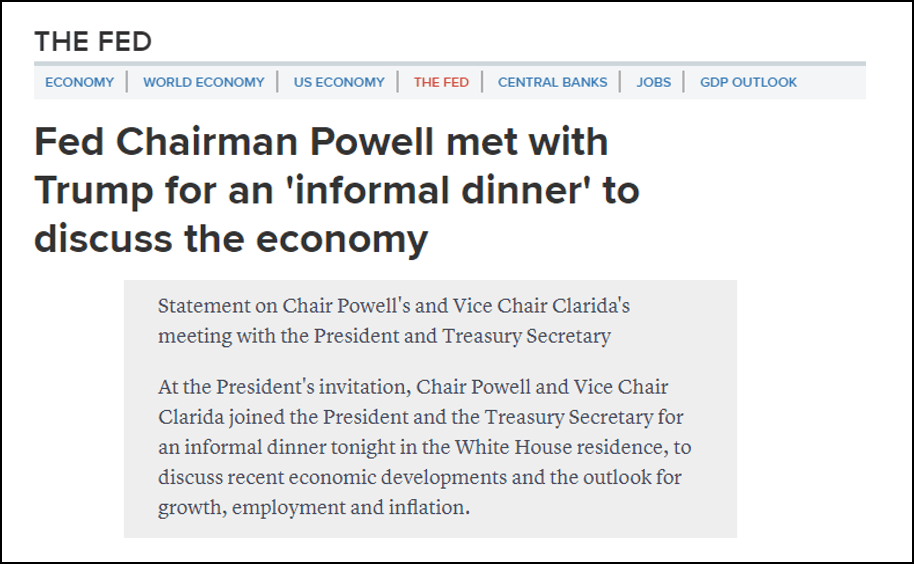
Donald Trump has EXACTLY the same problem.
Donald Trump has found EXACTLY the same solution.
Jay Powell is the Arthur Burns of our day.
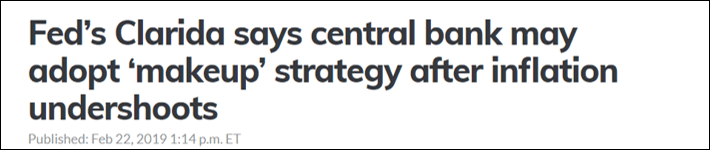
The only difference is that Nixon did all of his bullying and cajoling and threatening and rewarding in private, and Burns wouldn't dream of saying out loud what Powell is shouting about the "important signal" of financial market "volatility" on monetary policy decisions.
They're not even pretending anymore.



Comments
Wow, I didn’t realize how Burns caved to Nixon. I do remember my professor in grad school revering the guy. I wonder what he thinks now?
But a question Ben, Powell is an independently wealthy man with many years in the private sector, probably used to high pressure.
Burns spent his years in the sheltered world as an academic, so perhaps Powell is more immune to any White House bullying?
Anyway, I hope so.
I don’t think Burns then or Powell now thought of themselves as “caving”, even though that’s exactly what it seems like to us. Instead, and you see this SO OFTEN when people get close to charismatic people like Trump and Nixon (and yes, both Trump and Nixon are EXTREMELY charismatic, particularly to other powerful people), Burns then and Powell now truly believe their actions are in the best interests of the country. I think they truly believe it would be a disaster if a Democrat gained the White House and started spending like there’s no tomorrow. Neither Nixon nor Trump inherited their Fed Chair … they picked them. There’s no daylight between Trump’s view of the proper political aims of monetary policy and Powell’s view of the proper aims - it’s all in service to Capital and its anointed representative now sitting in the White House.
My speculation for the near to medium term is that money will be kept loose to keep the asset bubble afloat. The resulting inequality and instability, plus Trump, will sweep the Democrats into power, one way or another (i.e. via an asset bust and economic crash, or via the middle class feeling left out and stuck in bad jobs.) Then money will really flow to the masses, and we’ll have the inflation required to diminish the debt and reset the whole system.
This article points to the Achele’s Heel of the entire system: the elites are incentivized to destabilize their own system, one way or another. Thank you. I didn’t know the discussions were this frank.
The classic model of the cycle is that, after a financial bust, you have deflation to help protect the reputation of elite-issued money and debt by placing the pain of adjustment squarely on the shoulders of the rest of the population. After the people sober up from the excesses of the previous boom, start respecting money by charging less and working harder, you can start to have inflation, and the ‘improved’ qualities of the work force will help minimize the degree of inflation required to stabilize the system for the long haul.
When the system is finally stable and the economy generating its own growth, you can start the Prosperity! narrative, and the whole cycle restarts.
All of this may sound natural and morally fine (note that the modern Western system survived 600 years by tacking as close to nature and morality as possible, rather than defying them openly.) The trouble is that the driving force at the very center is a command system, rather than truly free market forces. This is what causes the above-mentioned incentives and the major problems of humanity. And, let’s not mince words, it’s by design, to benefit the few, while most of the rest of us don’t understand how money really works. (What is great about this space is the small step it takes to make people a little more aware.)
The destination (inflation) is known but the path there is mighty fluid. In November-December it looked like we would get real deflation first. Growth is slowing, parts of Europe are entering recessions, China is slowing.
But then Powell sees the Ghost of Feds Past (Powell) in the mirror of his room in his lonely ivory perch. Adding to Ben’s comments below about the importance of charisma, there are probably other things in play here like ‘Seeing Behind the Curtain’ - which it appears the ECB did as well while pretty rotten economic data keeps coming in, particularly in Europe (and Korea). There’s a saying that I will mangle - “Don’t stare into the abyss too long because it will stare back at you”. This is the real or imagined effect here - its sort of like a story of “Seeing Behind the Curtain” leads to “I Cannot Unsee This” which leads to “Stockholm Syndrome” which leads to “Charisma and Gaslighting” and then you are just another ghost of the long line of your predecessor Fed Governors.
Powell goes dovish, Europe freaks out as their data worsens (and want to join the crowd), and China launches a fission bomb of credit stimulus in January and we reflate FAST.
It’s possible this is the same path that we thought would emerge but more slowly back in the Oct- Dec period. Just accelerated x 10. I see less people on both sides of the aisle complaining about Trump’s oil tweets, his USD tweet today, him suggesting ANYTHING in he way of a Chinese trade deal is negotiable (Meng Wanzou). Have we all been gaslighted, or is everyone simply too addicted to #SPXNEWHIGHS ? My gut says both, but I think there are other things at play here too.
Back to the MMT vs Supply Side/Fed buys everything suggestions - it’s likely we get continued slowing in the real economies of the US, Europe and China. In the US, the comps are tough re: base effects from the Trump tax cuts. Lag effects of actual and implied effective borrowing rates are real. though this will fade. Do we deflate before we inflate? It’s hard to say, certainly inflation data has been soft globally, but we need to focus on the rate of change in real time. The economy (inflation) impacts of something like MMT are years away. The market (asset prices) impacts of the Ghost of Feds Past are happening now in addition to the permanent state of asset prices since QE forever.
Happy to hear any predictions.
Continue the discussion at the Epsilon Theory Forum...