Common Knowledge or Fortune?
December 14, 2018·Money
These strange tables below come from an unusual and fiendishly tricky online trivia competition in which both Ben and I participate. The game arranges players into brackets and pits them head-to-head on a weekly basis. Everyone answers the same six questions, but importantly, each player determines how many points each question will be worth for his opponent. In other words, success in the game is not just about answering correctly, but about guessing which questions one’s opponent will be able to answer correctly. Since, as you see below, the competition keeps a record of how you answered each question, over time your relative strengths and weaknesses become apparent. Ben’s on the left. I’m on the right.
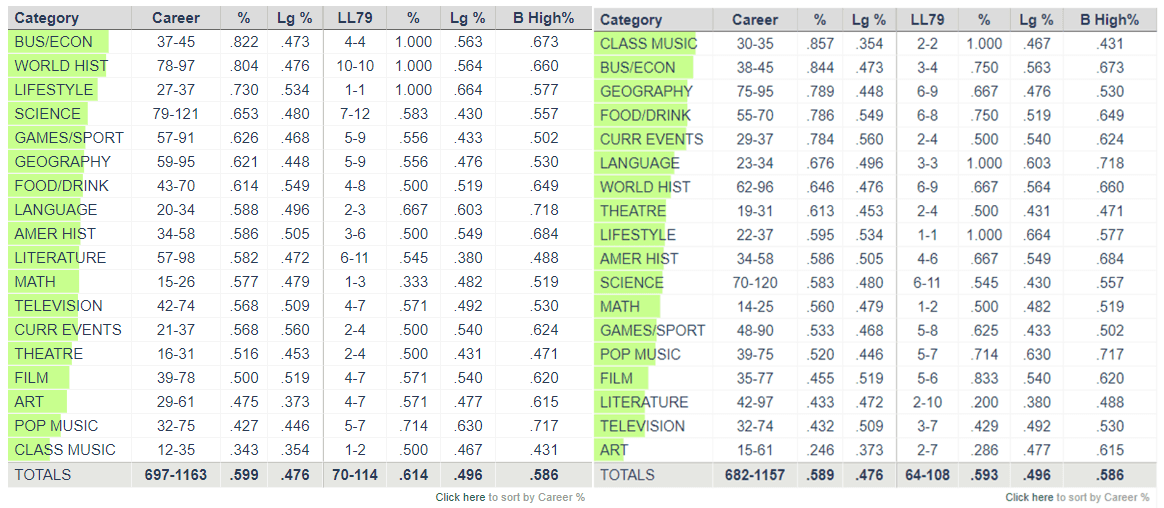
While I was matched up with and defeated Ben yesterday (bringing my all-time record against him to 2-1), he is a more difficult opponent to play against than I. It’s not because he answers 59% of questions correct to my 58%. It’s because he is far more difficult to defend. It is very hard to know which questions you ought to assign Ben few points, and which you ought to assign many, because his knowledge is more or less even across topics. Someone playing against me, on the other hand, knows not to assign me any points for a question about classical music, geography or food, and to give me all the points they can for questions about art history or television. It’s for this reason that Ben assigned me the maximum 3 points yesterday for a question about Cookie Lyon. He was unlucky, and didn’t know that my wife binged Empire on her iPad a couple months back.
These revealed holes in knowledge are also useful for telling you what you need to read and study more. For me, as you will see quite glaringly, that topic is visual art. So over the last couple months, I’ve been reading, studying and watching shows and documentaries about fine art. One of the shows I found, a British import called Fact or Fortune, captivated me. A show in which two researchers seek to establish the provenance of a disputed or ‘lost’ painting, it portrays one of the starkest examples I’ve seen of missionary power over common knowledge. The episodes play out like a good mystery, so read on only if you don’t mind having them ruined for you.
Two episodes stick out in my mind.
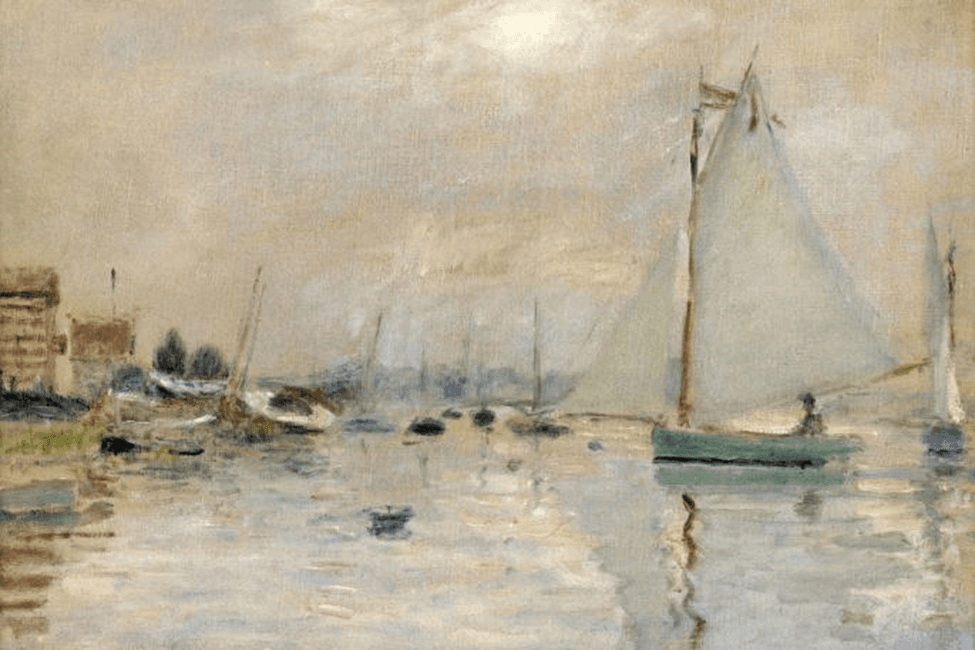
In the first, the trust of a great estate in the U.K. sought to establish the provenance of a painting by impressionist painter Pierre Auguste Renoir that had been hanging in the house for decades. The depth of the analysis undertaken in support of the provenance is fascinating in itself. It spans everything from an established ownership paper trail vouched for by the Bernhein-Jeune Gallery, experts in all things Renoir and Monet, to forensic analysis of the paint tints used against those in use by Renoir at the time of its supposed painting, to infrared discovery of the manufacturer’s logo on the canvas used. To the layperson like me (and to the hosts, who are admittedly invested), the outcome of the episode is shocking. At its conclusion, another authority, the Wildenstein Institute, refuses to authenticate the painting as a genuine Renoir, despite what by all appearances is overwhelming evidence. Their argument rests in part on their belief that the painting isn’t very good. This is especially problematic for the owners, as Wildenstein produces the catalogues raisonnés required by major auctionhouses as a primary and authoritative source listing authenticated works by Monet, Manet, Gauguin, Pissarro…and Renoir.
Without this imprimatur, this painting has effectively zero value.
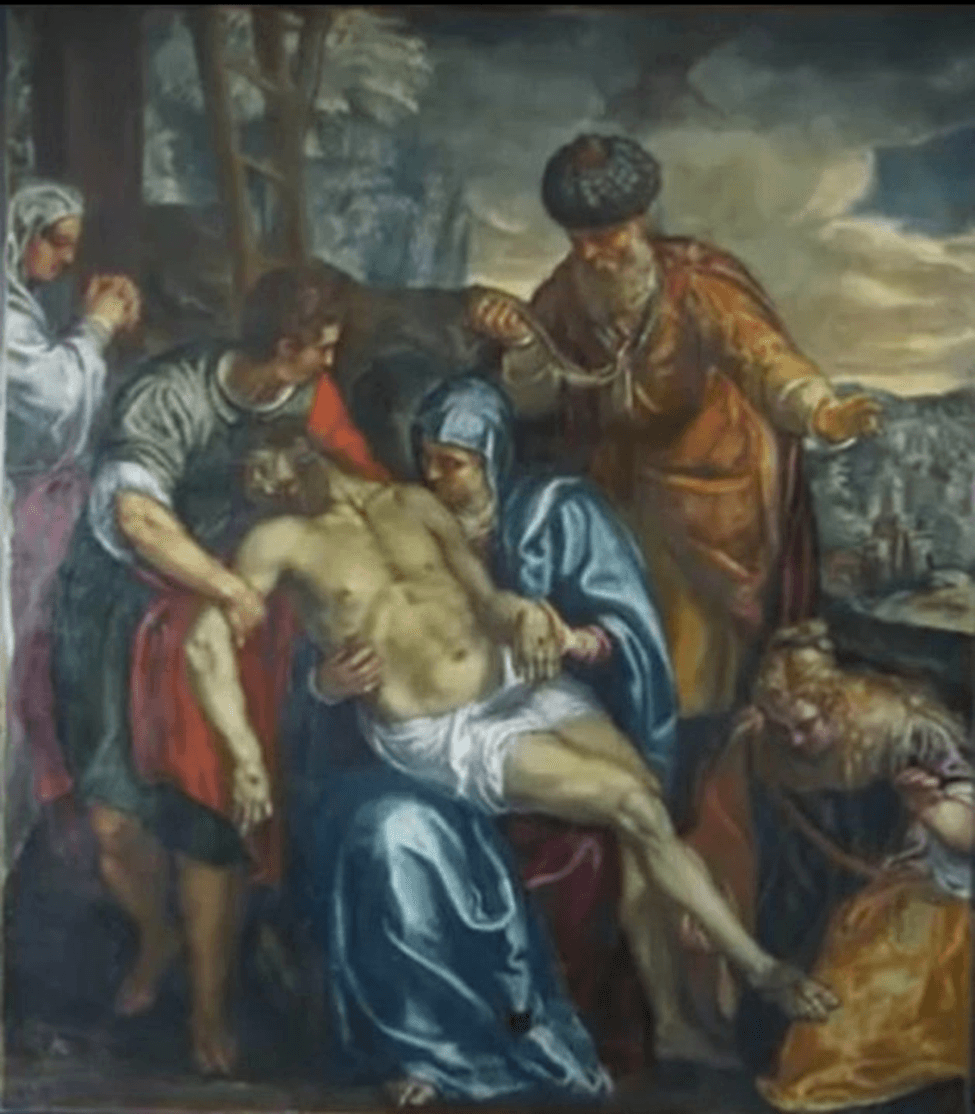
Another noteworthy episode tells the story of a 13th century church in a town just outside of Stoke-on-Trent, and an unidentified piece of religious art hanging from its walls. There is very little paper trail, and what exists conflicts with the church’s own stories of its provenance. After a thorough cleaning, however, the painting goes before an expert in its likely place of painting: Venice. A small group of experts evaluate various qualitative traits - the shape of one figure’s face, the way that the Christ figure’s arm hangs down, the brushstrokes – and conclude definitively: this is a work by Francesco Montemezzano.
With a fraction of the evidence of the Renoir (somewhat understandably given the vast difference in age), this painting’s effective value is now 10-15x what it would have been as an anonymous 16th century Venetian canvas.
The lessons are pretty clear:
- Strong common knowledge exerts significant influence on how markets arrive at and establish prices.
- Strong credentialing effects permit the existence of missionaries to influence and, at times, direct that common knowledge.
You may not agree with everything Ben and I write about the existence of narratives influencing markets. And that’s OK. We won't be right all the time. But if your framework for understanding price-setting doesn’t involve assessment of missionaries, common knowledge and credentialing effects, you’re missing a big part of what makes a market, whether it’s a market for fine art, or a market for fractional claims on the cash flows of companies and other institutions.