E Pluribus Unum - June 2026
The Pulse
June 1, 2026·E Pluribus Unum Pulse

Executive Summary
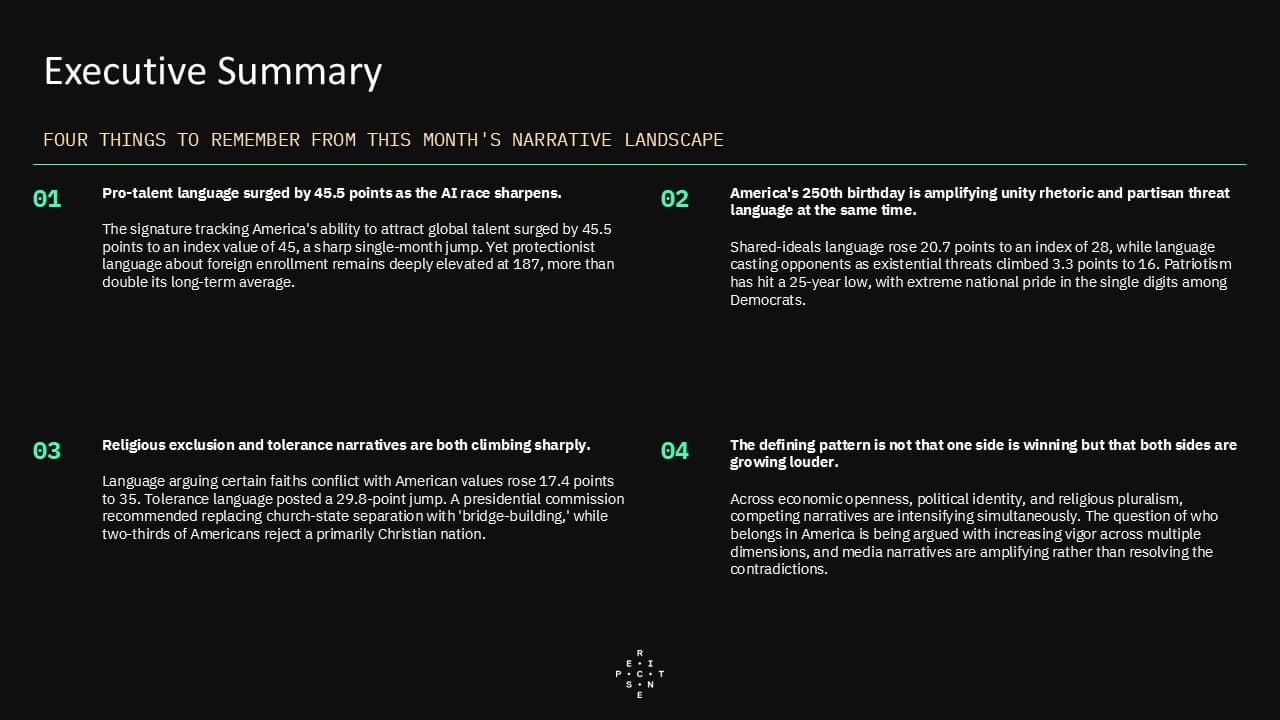
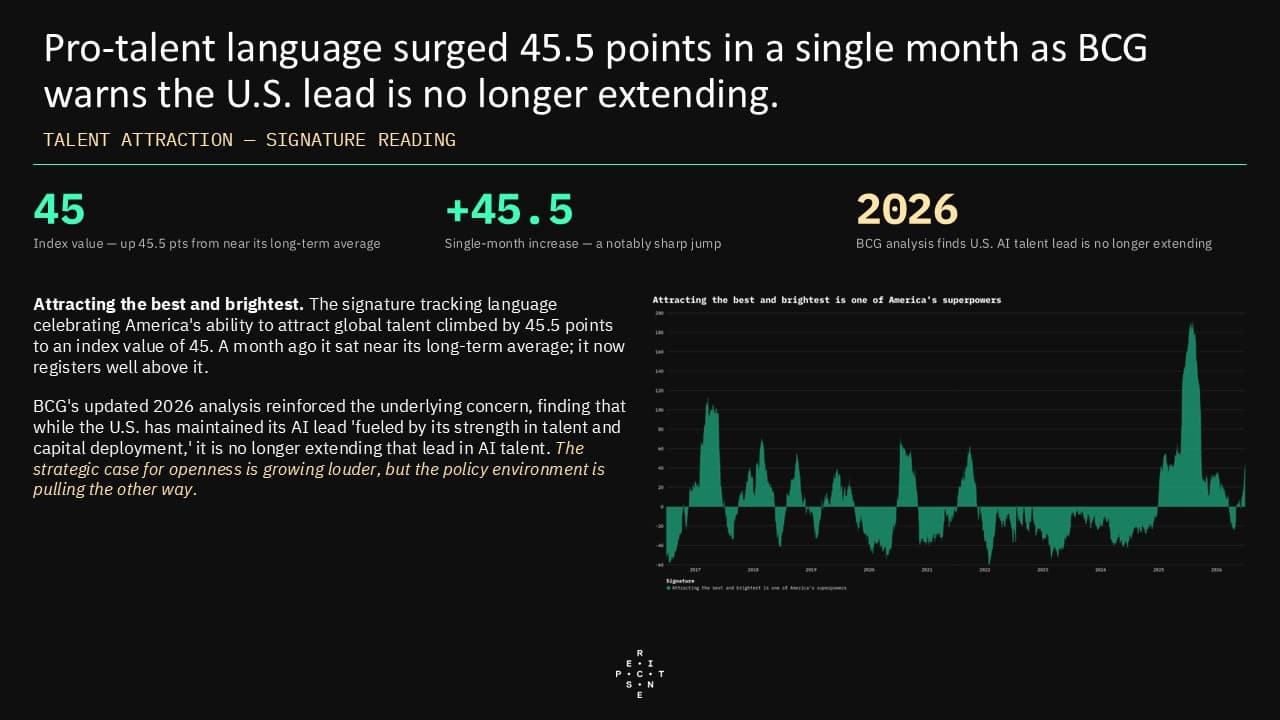
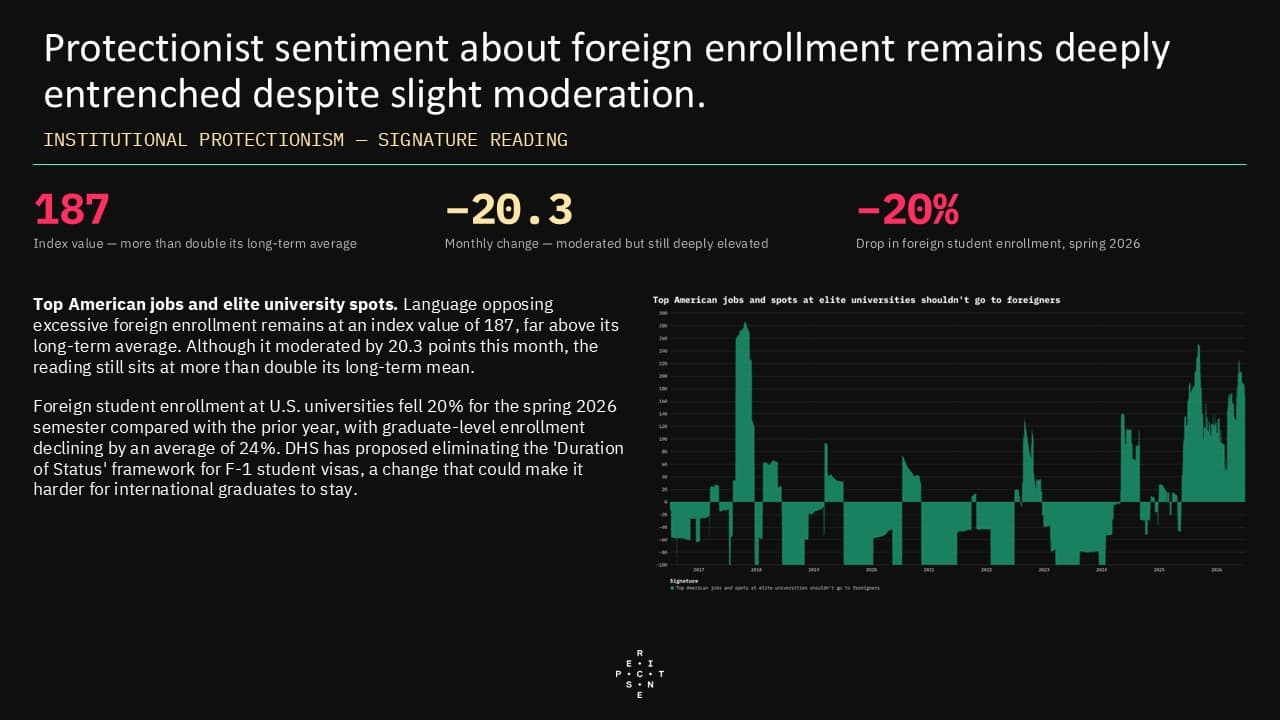
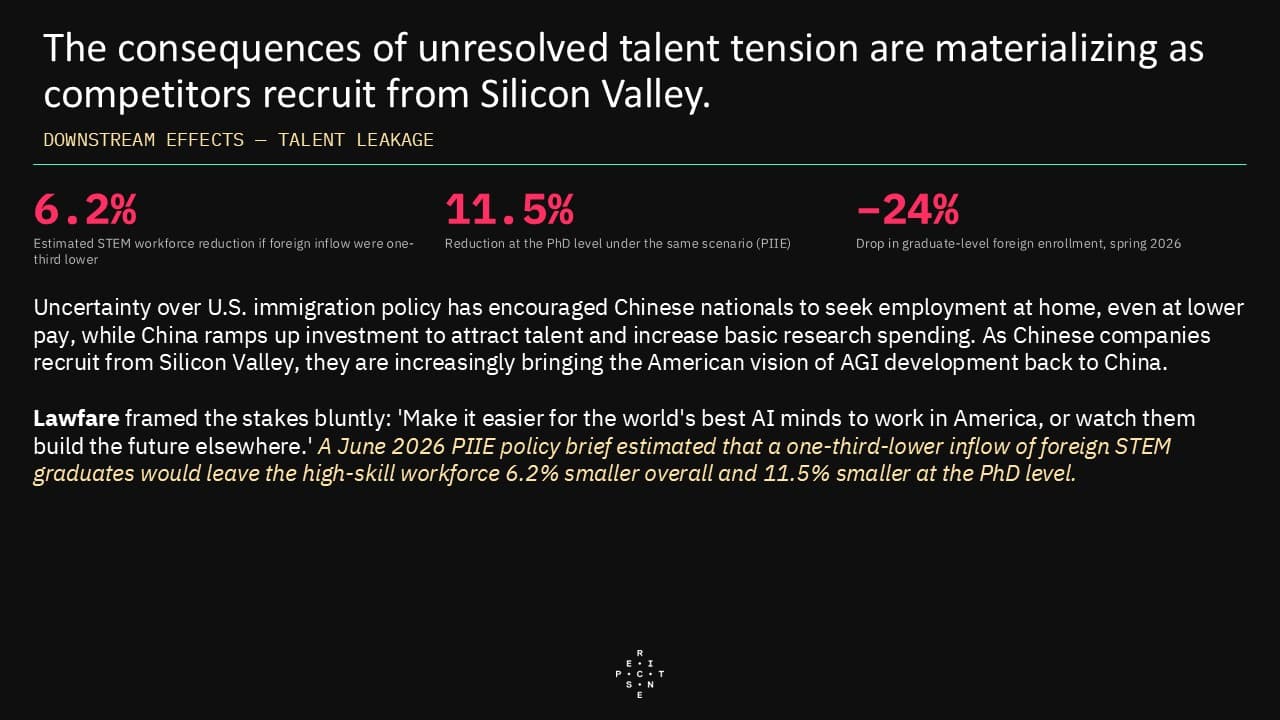
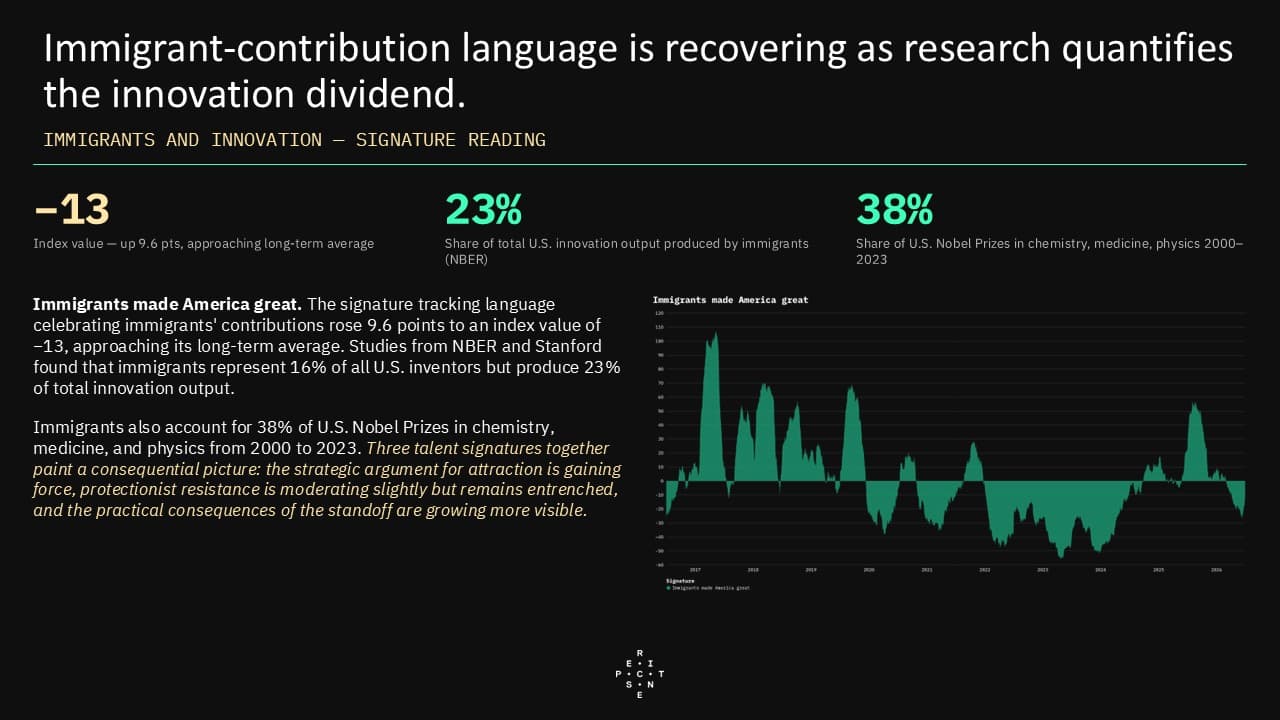
- Financial media's coverage of America's AI talent strategy has grown sharply more urgent, and pro-talent language recorded the largest single-month surge of any signature we monitor. Yet this intensification collides with a protectionist counter-narrative about foreign enrollment in American institutions that, despite slight moderation, remains the most elevated reading in the entire dataset. Policy developments—including proposed visa changes and a 20% drop in foreign student enrollment—are making the consequences of this unresolved tension increasingly concrete, even while competitor nations actively recruit talent away from the United States.
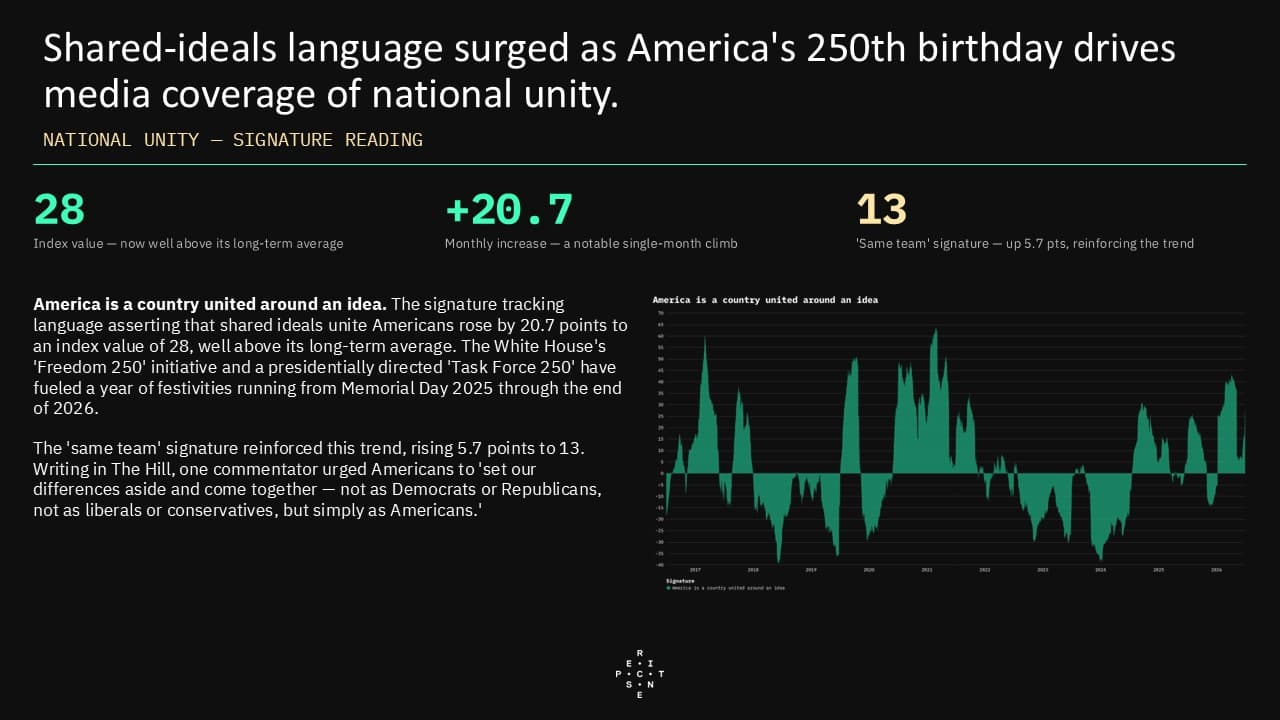
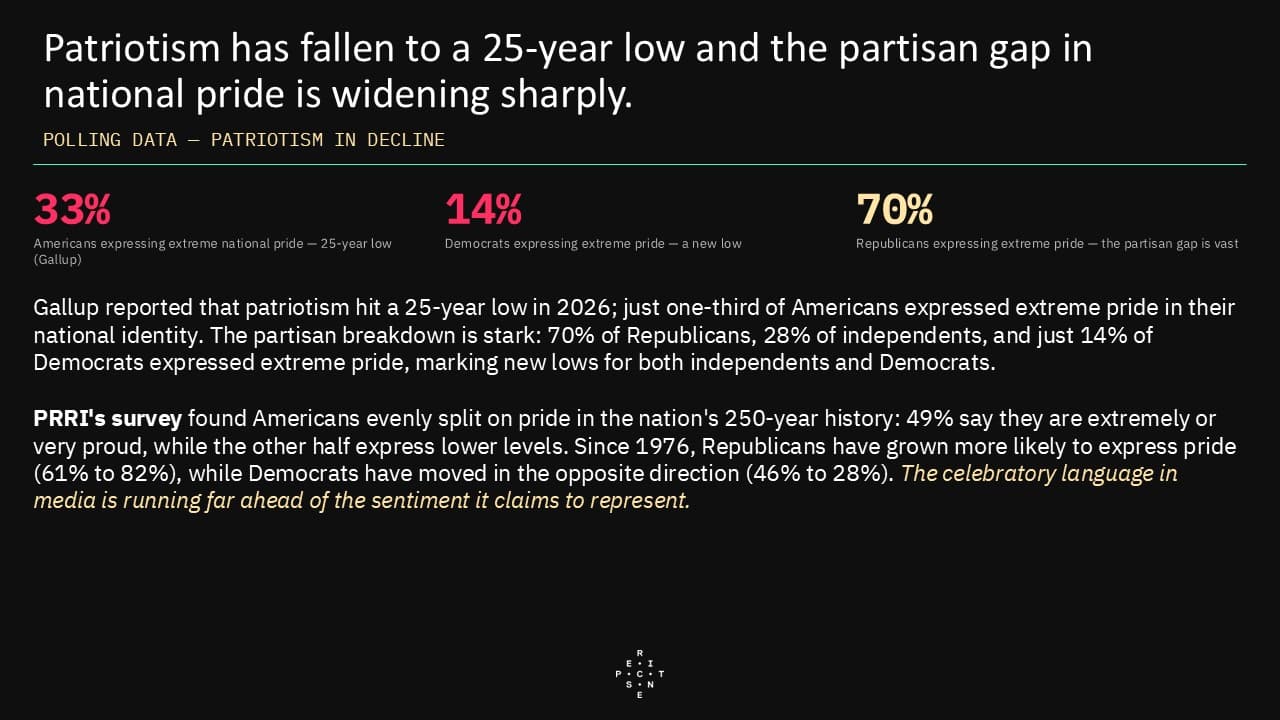
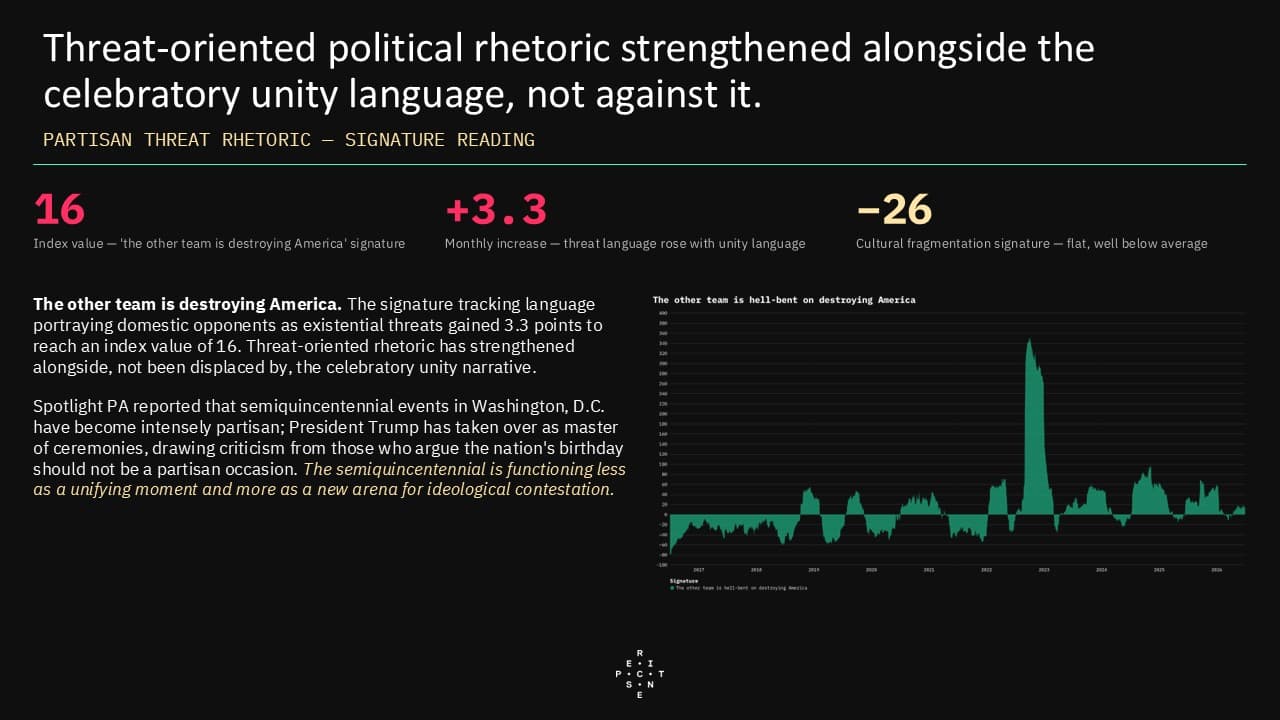
- The approach of America's 250th birthday has driven a pronounced spike in media language celebrating shared ideals and national unity, but polling data reveal a striking disconnect. Patriotism has fallen to a 25-year low; extreme national pride now registers in the single digits among Democrats. The media environment is producing celebratory unity rhetoric and partisan threat rhetoric simultaneously, suggesting that the semiquincentennial is functioning less as a unifying moment and more as a new arena for ideological contestation.
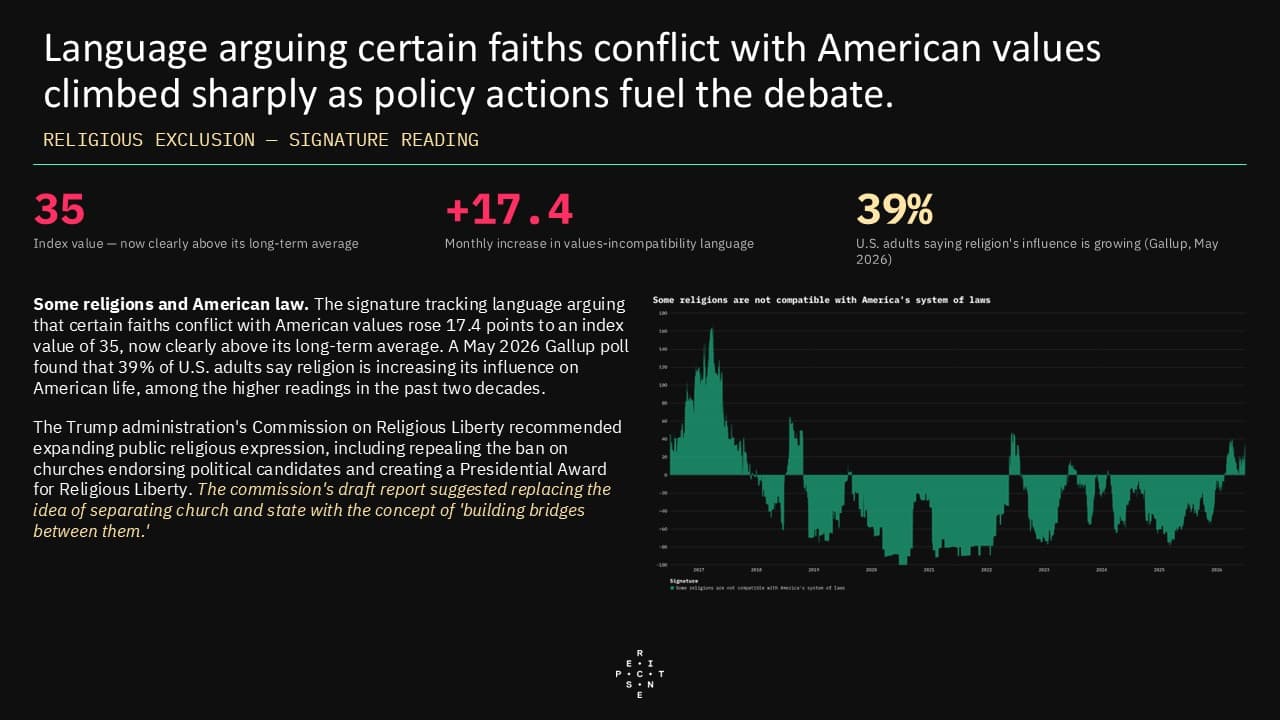
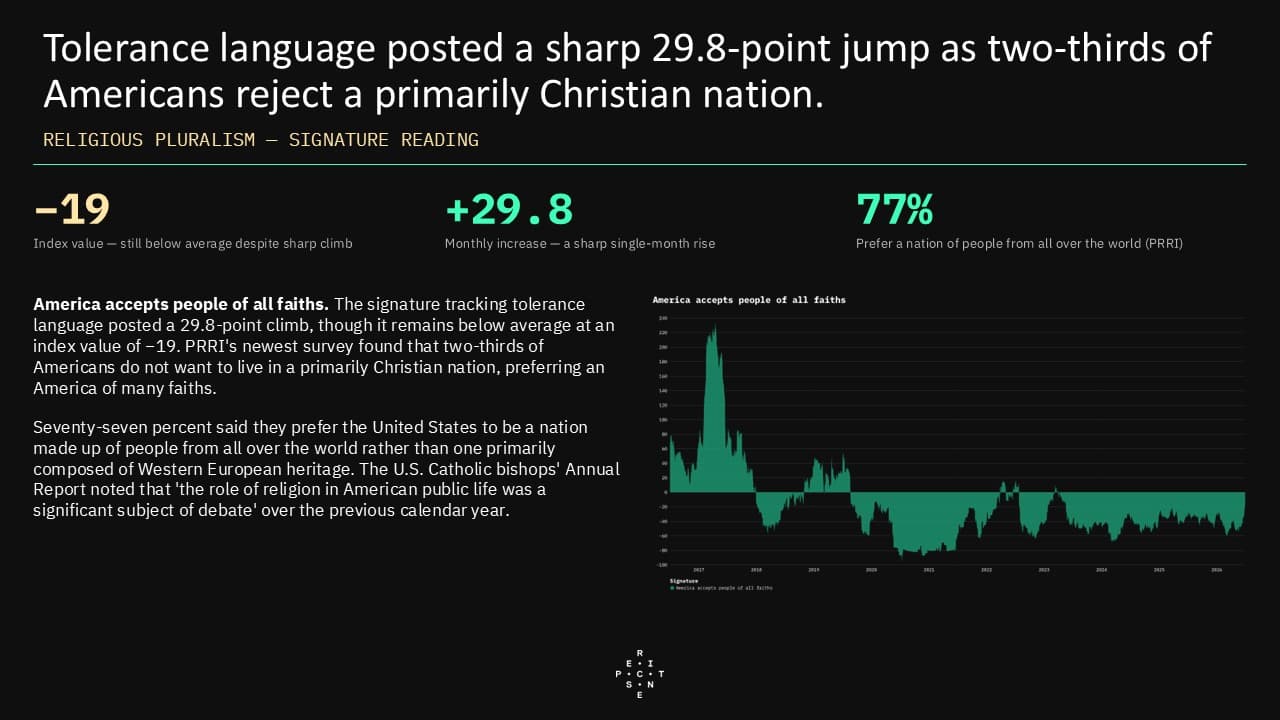
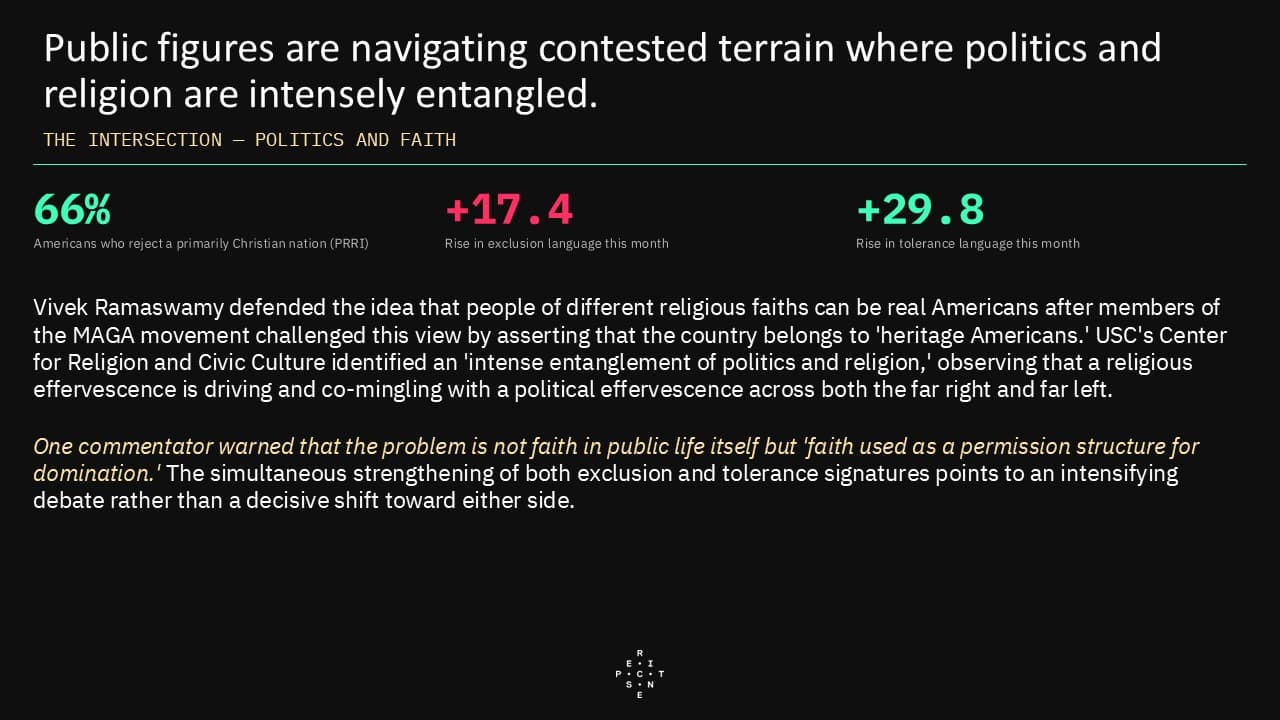
- Debates about religion and American identity are intensifying on both sides at once: language arguing that certain faiths conflict with American values and language celebrating religious tolerance both climbed sharply this month. Policy actions—such as a presidential commission recommending that church-state separation be replaced with "bridge-building"—are fueling exclusionary framing, while survey data showing that two-thirds of Americans reject the idea of a primarily Christian nation appear to be driving the pluralist response.
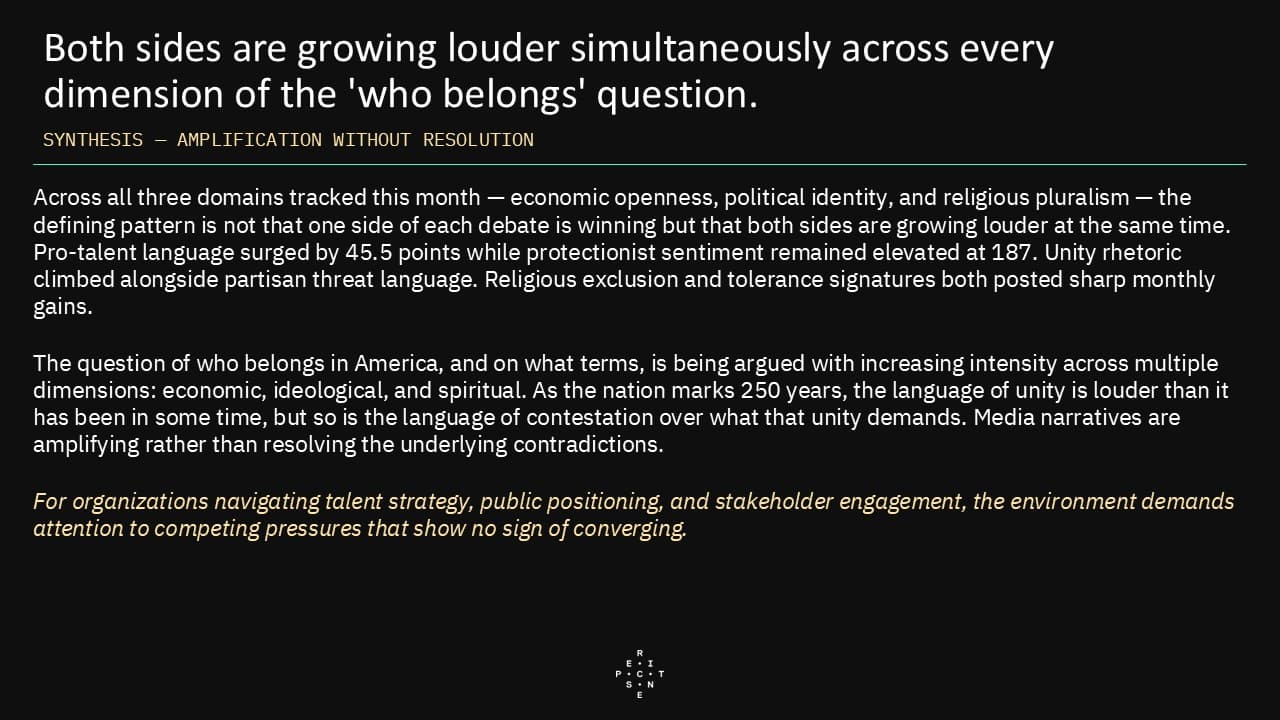
- Across all three domains tracked this month—economic openness, political identity, and religious pluralism—the defining pattern is not that one side of each debate is winning but that both sides are growing louder simultaneously. The question of who belongs in America, and on what terms, is being argued with increasing intensity across multiple dimensions, and media narratives are amplifying rather than resolving the underlying contradictions. For organizations navigating decisions about talent strategy, public positioning, and stakeholder engagement, the environment demands attention to competing pressures that show no sign of converging.