


Wondering why your Thanksgiving groceries cost more this year? It’s because greedy corporations are charging Americans extra just to keep their stock prices high. This is outrageous. businessinsider.com/big-companies-…
Inflation and the Common Knowledge Game
Epsilon Theory
December 8, 2021·Money
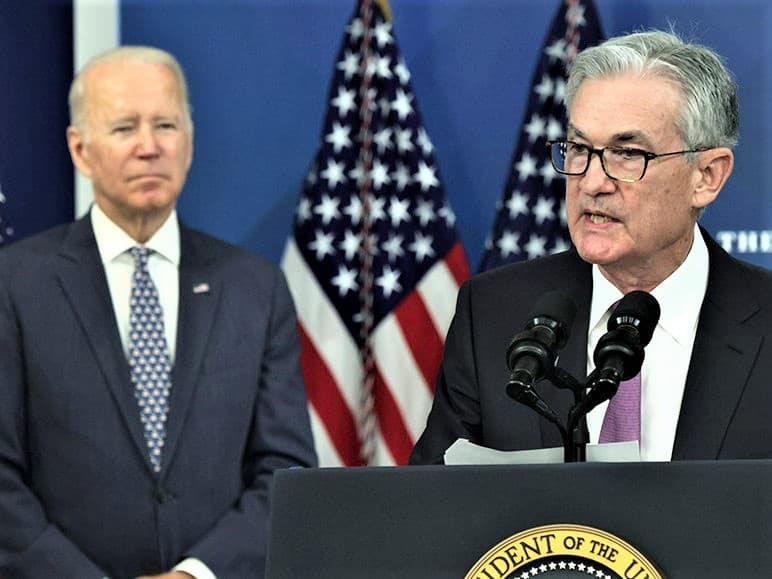
At whatever point in time you think inflation will start to fade, you are being too optimistic.
US corporations are raising prices, sometimes [gasp!] at a faster rate than their costs are increasing.
As a result, ruling party politicians are losing their minds.
Loading tweet...
Loading tweet...
Loading tweet...
The highlight for me (or lowlight, I guess) was this Nov. 17 letter from the Biden White House to the Federal Trade Commission, calling for federal regulators to investigate whether oil and gas companies are engaging in "illegal conduct" by increasing their gross profit margin. I am not making this up.
Usually, prices at the pump correspond to movements in the price of unfinished gasoline, which is the main ingredient in the gas people buy at the gas station. But in the last month, the price of unfinished gasoline is down more than 5 percent while gas prices at the pump are up 3 percent in that same period. This unexplained large gap between the price of unfinished gasoline and the average price at the pump is well above the pre-pandemic average. Meanwhile, the largest oil and gas companies in America are generating significant profits off higher energy prices. The two largest oil and gas companies in the United States, as measured by market capitalization, are on track to nearly double their net income over 2019 – the last full year before the pandemic. They have announced plans to engage in billions of dollars of stock buybacks and dividends this year or next.
I do not accept hard-working Americans paying more for gas because of anti-competitive or otherwise potentially illegal conduct.
White House letter to Federal Trade Commission, Nov. 17, 2021
I, for one, welcome MiniPlenty's forthcoming diktat on acceptable crack spreads. LOL.
So look, this is ridiculous stuff, almost as ridiculous as "temporarily" releasing 50 million barrels of oil from the Strategic Petroleum Reserves. But I get it. If I were an incumbent ruling party politician I'd be pretty miffed, too.
The US government has not just allowed but directed a dozen years of the most accommodating monetary policy conditions in literally the history of mankind, with a cost of capital that is effectively zero for large corporations.
The US government has not just allowed but directed the creation of a multi-trillion dollar infinity-pool of liquidity to prop up any hiccup in asset prices.
The US government has not just allowed but directed one of the largest transfers of wealth - again, literally in the history of mankind - to the managerial class.
One day we will recognize all of this as the defining Zeitgeist of the Obama/Trump years. One day. But not today.
And now you guys are raising prices more than your costs are going up? After all we've done for you? Seriously?
Like I say, I'd be miffed, too. Something, something, face-ripping leopards.
But this isn't collusion or price fixing or "anti-competitive conduct" or any of the usual high-functioning sociopathic behaviors we've come to know and love from our titans of financialization industry. I mean, yes of course the vast majority of Chairman/CEOs (and ruling party politicians) are high-functioning sociopaths, but that's not the determining factor here.
Why are US companies raising prices in unison?
Because it's rational behavior in the Common Knowledge Game.
We’ve written about the Common Knowledge Game a lot, starting in the original “Manifesto”. Honestly, once you start looking for the Common Knowledge Game, you will see it everywhere.
Common knowledge is something that we all believe everyone else believes.
The classic example of the Common Knowledge Game is the fable of The Emperor’s New Clothes. Everyone in the crowd possesses the same private information — the Emperor is walking around as naked as a jaybird. But no one’s behavior changes just because the private information is ubiquitous. Nor would behavior change just because a couple of people whisper their doubts to each other, creating pockets of public knowledge that the Emperor is naked. No, the only thing that changes behavior is when the little girl (what game theory would call a Missionary) announces the Emperor’s nudity loudly enough so that the entire crowd believes that everyone else in the crowd heard the news. That’s when behavior changes. That's when behavior changes FAST.
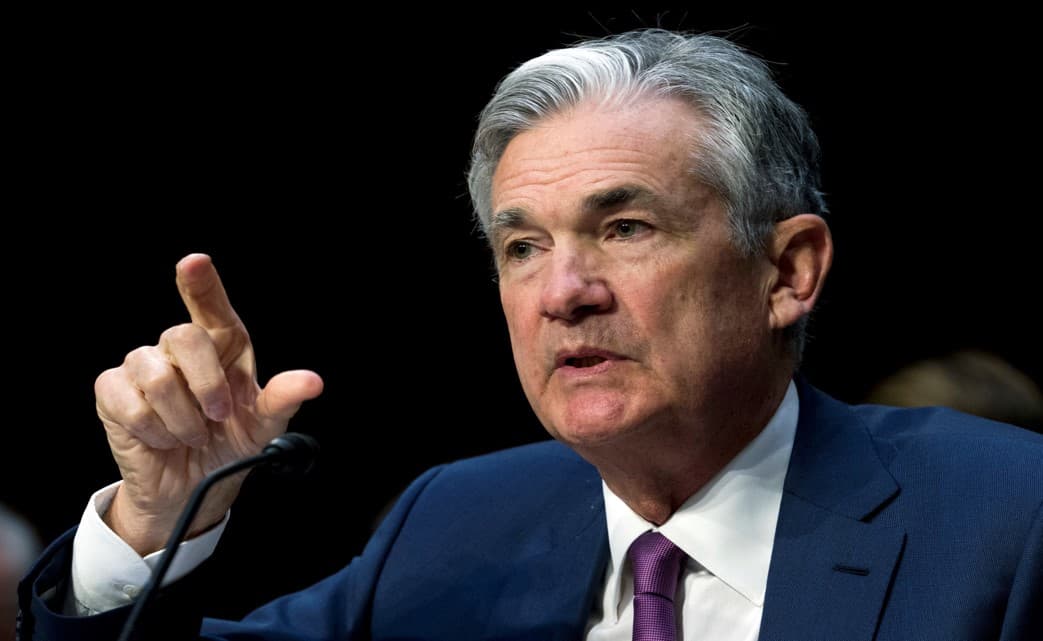
For months now, Missionaries large and small have been saying that inflation is here and inflation is well-embedded. But when the most powerful Missionary in the world, Jay Powell, says that inflation is no longer “transitory” … well, now everyone knows that everyone knows that inflation is here to stay.
And when everyone knows that everyone knows that inflation is here to stay, ALL businesses can raise prices to maintain margins without fear of competitive pressure or customer pushback.
Narrative dynamics rule our world. Not fundamentals, whatever that means, but narrative dynamics. One on top of another. Endlessly. Recursively. It's narrative dynamics all the way down. And the number one engine of narrative dynamics is the Common Knowledge Game. Understand that and you'll understand the game of markets and politics and every other social interaction of crowds.
I wrote this almost exactly three years ago.
You don’t have to change your investment playbook for a Fed-created recession, a China-created credit freeze, or an Italy-created Euro crisis. You already know the deflationary playbook. It’s what you’ve been doing (or should have been doing) for the past ten years. Just keep doing THAT.
But if we enter an inflationary world, something that very few investors alive today have EVER experienced … well, everything you’ve been doing for the past ten years will be a mess. Your prayers to the great god of diversification, at least as that god is manifested today as the Holy Long Bond, will go unanswered. Your embrace of the cult of Vanguard, at least as that cult is expressed today as the worship of passive index funds, will give you pain rather than comfort. The very language that you use today to speak with other investors about core abstractions like Value and Growth will turn into gobbledygook.
Today’s common knowledge rejects this Fourth Horseman of inflationary regime change. But, but … demographics!, you hear. Don’t you understand that Demographics is Destiny™, that we are getting older and having fewer children, dooming us to the long gray slog? But, but … technology!, you hear. Don’t you understand that robots and AI are going to replace all us mere humans, creating a world where our bread and circuses just get cheaper and cheaper? Yeah, I understand. I hear these narratives and memes, too.
But that’s my point. We believe that we are in a deflationary world because we are TOLD that we are in a deflationary world. That’s the common knowledge. Everyone knows that everyone knows that inflation is dead and gone, that it’s a long gray slog going forward, forever and ever amen.
It’s hard to imagine when you’re immersed in it, but common knowledge can change.
That includes common knowledge of the fundamental inflationary/deflationary nature of our world.
I think it’s happening. I could be wrong. But that’s what I’m trying to imagine.
The common knowledge of whether we are in an inflationary or deflationary world has now shifted. It will not shift back for years and years, because common knowledge is a stable, self-reinforcing phenomenon. Common knowledge is a barge, not a speed boat. Common knowledge is incredibly difficult to stop, much less turn around, but once it starts going the other way it will keep going.
At whatever point in time you think inflation will start to fade, you are being too optimistic.
Why? Because common knowledge. And here's the kicker:
An inflationary world will cause enormous political and economic pain, but that pain will be different from the pain of a deflationary world.
This is the challenge of our economic lives for the next decade or more. How do we make sense of the differentness of an inflationary world? Will we have the imagination to conceive of the repercussions of that differentness and come up with the personal actions and social policies to address that differentness?
And will we have the courage to act.
Money
ET Note
Money