Institutions April 29, 2026
April 29, 2026·0 comments·Politics
Iran Ceasefire Recasts Institutional Narratives: Military Discussion Eases, Congressional Authority Gains Traction, and the White House Faces Dueling Critiques
EXECUTIVE SUMMARY
- The Iran ceasefire extension produced the largest weekly movements in Perscient's dataset, with both critical and laudatory military language cooling substantially. The decline was bidirectional rather than directional—the public media conversation about the armed forces has quieted rather than turned hostile. Yet the constitutional question of whether the President possesses the authority to wage this war without Congressional approval remains the single most intense narrative tracked across all signatures, linking the military drawdown in coverage directly to a sharpening institutional confrontation.
- Congress is enjoying a rare moment of narrative legitimacy driven entirely by its constitutional oversight role, not by legislative output. Language affirming Congressional integrity posted the largest upward move across all signatures, while language depicting Congress as dysfunctional fell by a comparable magnitude—the most dramatic paired shift in the dataset. Bipartisan cooperation and legislative productivity signatures, however, remain well below average, indicating that the trust surge is tethered specifically to the War Powers Act deadline on May 1 and the question of whether lawmakers will assert their authority over the use of force.
- The White House occupies a structurally paradoxical media position in which critiques of executive overreach and critiques of executive passivity both remain elevated, while affirmative language about presidential leadership, competence, and moral authority registers at or near the lowest levels tracked. Multiple major polls now place approval in the high 30s, and erosion among non-MAGA Republicans has accelerated. The dominant critique is not personal corruption but rather questions of authority and competence—a frame that aligns with and reinforces Congressional efforts to reassert war-powers prerogatives.
- The approaching May 1 War Powers deadline has become the organizing principle of American institutional discourse, redistributing narrative legitimacy from the executive branch toward Congress and the courts. The media frame presents an administration under simultaneous challenge on legislative, judicial, and public-opinion fronts—a configuration that carries direct implications for how campaigns and consultancies should evaluate the 2026 midterm environment.
---
Military Narratives Pull Back as Ceasefire and Public Opinion Shift the Conversation
The Iran ceasefire's extension reshaped military-focused media discourse this week, producing the largest single weekly movement across all tracked signatures. Perscient's semantic signature tracking the density of language arguing that U.S. armed forces are being deployed inappropriately for political purposes fell by 19 points to an index value of 39, pulling back from the prior week's 58. Our signature tracking language praising the armed forces for their sacrifice, competence, and role as defenders of freedom dropped by 9 points to 57. The simultaneous decline in both critical and laudatory military narratives points to an overall cooling in military-specific media conversation rather than a directional shift. The gap between them remains meaningful: affirmative military language continues to outpace critical language by a wide margin, suggesting that the public conversation has quieted rather than turned hostile toward the armed forces.
The ceasefire itself is the clearest driver. While Trump extended the pause in hostilities, U.S. military officials are developing plans to target Iran's capabilities in the Strait of Hormuz should the agreement collapse. Options include strikes against small fast attack boats, minelaying vessels, and other asymmetric assets. Trump's own posture, however, appeared uncertain; Al Jazeera reported him saying he "hasn't even thought about" ending the ceasefire even as he announced that American negotiators would travel to Islamabad for talks aimed at a resolution.
Public opinion continues to run clearly against further operations. A Reuters/Ipsos poll showed 64% of Americans disapproving of Trump's handling of the conflict, while NBC News polling shared widely on social media found 61% opposing further military action and 68% overall disapproval, with broad bipartisan support for the temporary ceasefire. Pentagon intelligence assessments have reportedly undercut the administration's more optimistic framing of the conflict's trajectory, adding to the tension between official claims and ground-level realities.
Discomfort within the military itself has drawn sustained attention. NPR interviews with service members and advocates described a growing sense of unease since Trump began his second term. The GI Rights Hotline reported increased calls from personnel exploring options for separation. U.S. military commitments extend well beyond Iran: since the first strike on Tehran on February 28, the U.S. has conducted 10 strikes in Somalia, four against vessels in Latin America, and a bombing in Ecuador. Analysts warn that the Iran campaign has consumed enough resources to erode readiness for another major conflict.
These moderating military narratives are partially offset by the persistent strength of Perscient's signature tracking language arguing that the White House is bypassing Congress or the Courts, which at an index value of 72 remains the highest reading in the dataset. The approaching May 1 War Powers Act deadline appears to be redirecting coverage from battlefield operations toward constitutional questions about authorization, creating a natural bridge into the institutional-authority debate now dominating political discourse.
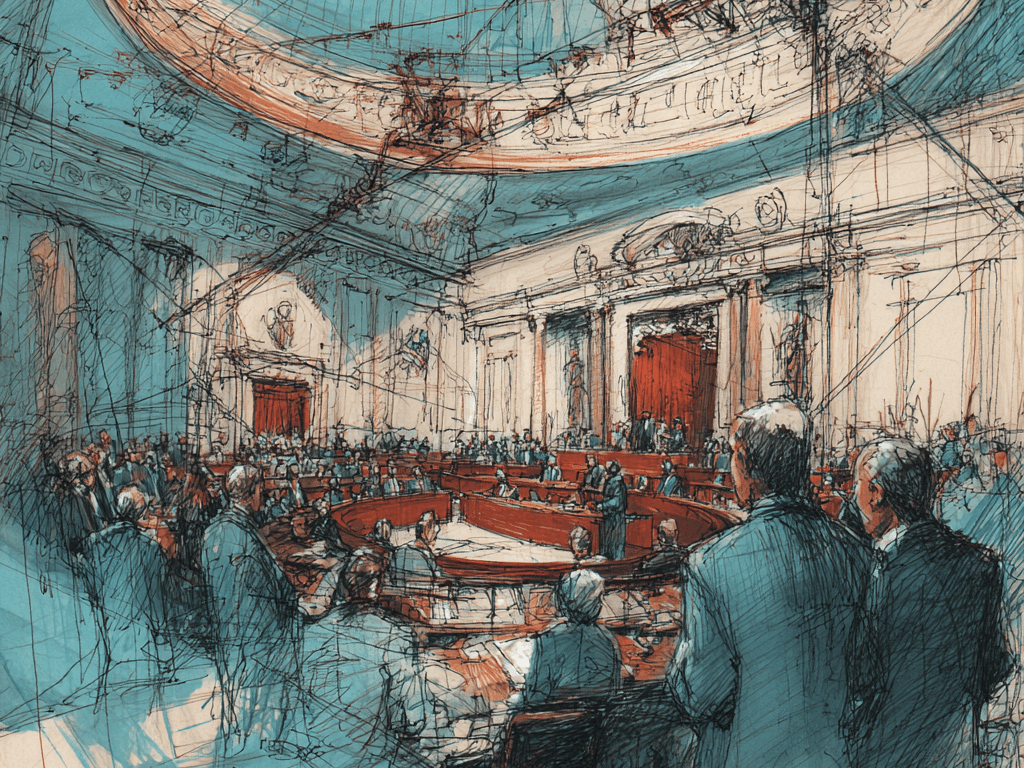
Congressional Trust Rises Sharply as the War Powers Debate Reframes Capitol Hill's Role
The approaching War Powers deadline has reframed Congress's media profile in structurally specific ways. Perscient's semantic signature tracking the density of language asserting that members of Congress are acting with integrity and in the best interests of their constituents rose by 12 points to an index value of 69, the largest upward move across all signatures this week. Our signature tracking language asserting that Congress is paralyzed or failing to address the country's needs fell by 10 points to -1, returning to roughly the long-term mean. Together, these form the most dramatic paired shift in the dataset: a positive institutional legitimacy signal strengthening by double digits while its negative counterpart weakened by a comparable amount.
The War Powers Act provides the clearest contextual explanation. The war in Iran, for which the Trump administration sought no prior approval, hits its 60-day mark on May 1, but what happens next remains contested. Many Republican lawmakers argue that the ceasefire period does not count toward the deadline, and even some Democrats have urged that the fragile truce be given time to work. The Senate rejected a fifth Democratic bid to rein in the president's use of force, voting 46 to 51; Senator Rand Paul was the only Republican supporting the measure. In the House, the war powers vote failed by a single ballot, 213-214.
Social media discussion reflected both frustration and a growing sense that the deadline is becoming a forcing function. Rep. Mike Levin argued that the 60-day emergency provision exists only for situations where the United States is attacked, accusing Republican colleagues of "abandoning their Constitutional responsibility." Senator Chuck Schumer signaled that Democrats would continue forcing votes on war powers resolutions "every week until Republicans decide to put the American people over Donald Trump and end this war." Senator Susan Collins has indicated she would join Democrats if authorization is not sought, and Rep. Don Bacon stated plainly: "By law, we got to either approve continued operations or stop."
The trust increase does not correspond to a parallel rise in bipartisan or productivity narratives. Our signature tracking language asserting that Congress is working across party lines stayed flat at an index value of -11, and the signature capturing language arguing that Congress is successfully passing beneficial legislation remained at -25, well below the long-term mean. The trust narrative appears anchored in Congress's constitutional oversight role rather than in any record of legislative deal-making. A recent special election further reduced the already thin Republican House majority, making every floor vote on war powers, appropriations, and reconciliation a higher-stakes affair.
Perscient's signature tracking language asserting that members of Congress are beholden to special interests rather than voters remained steady and near average, suggesting that the trust increase reflects genuinely affirmative language about Congressional integrity rather than a simple decline in corruption coverage. The war powers debate has given Congress a rare narrative opening at the direct expense of the executive branch.
The White House Navigates a Paradox: Overreach and Inaction Critiques Coexist Alongside Record-Low Approval
That narrative opening for Congress comes at a clear cost to the executive branch, where the media frame has settled into a structurally revealing pattern. Perscient's semantic signature tracking language arguing that the White House is bypassing Congress or the Courts to exercise power it does not legally possess holds at an index value of 72, the highest across all tracked signatures, despite declining by 7 points from the prior week. Our signature tracking language arguing that the White House is failing to lead or reacting too slowly to crises sits at 27, also above average. The coexistence of overreach and passivity critiques at elevated levels reflects a fragmented media assessment: the administration is seen as overstepping on some fronts (unauthorized military action, executive orders) while underperforming on others (economic leadership, diplomatic outcomes).
Multiple major polls put numbers behind this discontent. CNBC's survey found that Trump's net approval fell by 10 points to -18, with his net approval on the economy at -21. Much of the decline came from non-MAGA Republicans, whose economic approval dropped to 55% from 69% in the prior quarter. The Silver Bulletin average shows 39% approval against 57.7% disapproval, while NBC News polling reported 37% approval against 63% disapproval; two-thirds of respondents disapproved of Trump's handling of both inflation and the Iran conflict. One conservative commentator noted that the GOP is "really, really screwed if things don't turn around, fast".
Our signature tracking language asserting that the White House projects strength, dignity, and competence on the national and global stage remains deeply negative at an index value of -43, while the signature characterizing the President as a moral leader who unites or uplifts the country sits at -67, the most negative reading in the entire dataset. These suppressed values indicate a media environment in which affirmative framing of the presidency is markedly absent. The declining signature tracking language arguing that the President is corrupt is informative: personal enrichment and criminal activity are not the dominant critique. The active frames center on questions of authority, competence, and leadership.
The administration's pattern of unilateral action continues to provide material. On Friday, the White House removed all members of the National Science Foundation's oversight board, leaving the agency without a board, director, or deputy director. The dismissals raised broad concerns about NSF's independence, particularly given that the board had been actively advising Congress against the administration's proposed 55% budget cut. Courts remain a counterbalancing force: a federal appeals court blocked the administration's asylum restrictions this week, and the Supreme Court's docket includes Trump v. Slaughter, a case that could reshape the independence of regulatory agencies.
The net effect across Perscient's signatures is a White House narrative defined by institutional tension rather than personal scandal. Overreach and passivity critiques both remain elevated, and the positive leadership and inspirational signatures remain far below average. The media frame presents an executive branch under simultaneous challenge from Congress, the courts, and public opinion. Ahead of the May 1 deadline, the institutional confrontation over war powers has become the organizing principle of American political discourse, with clear implications for how campaigns and consultancies should think about the 2026 midterm environment.
Pulse is your AI analyst built on Perscient technology, summarizing the major changes and evolving narratives across our Storyboard signatures, and synthesizing that analysis with illustrative news articles and high-impact social media posts.