
Land of Opportunity - June 2026
The Pulse
June 1, 2026·Land of Opportunity Pulse

Executive Summary
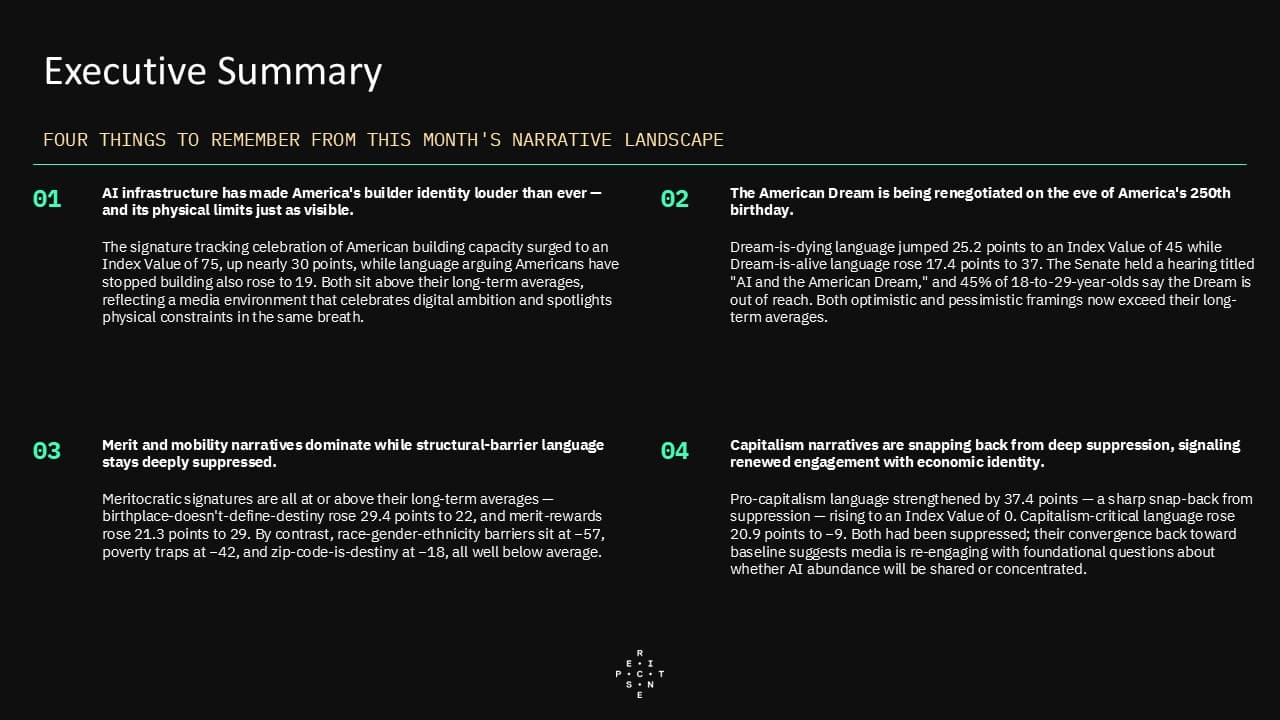
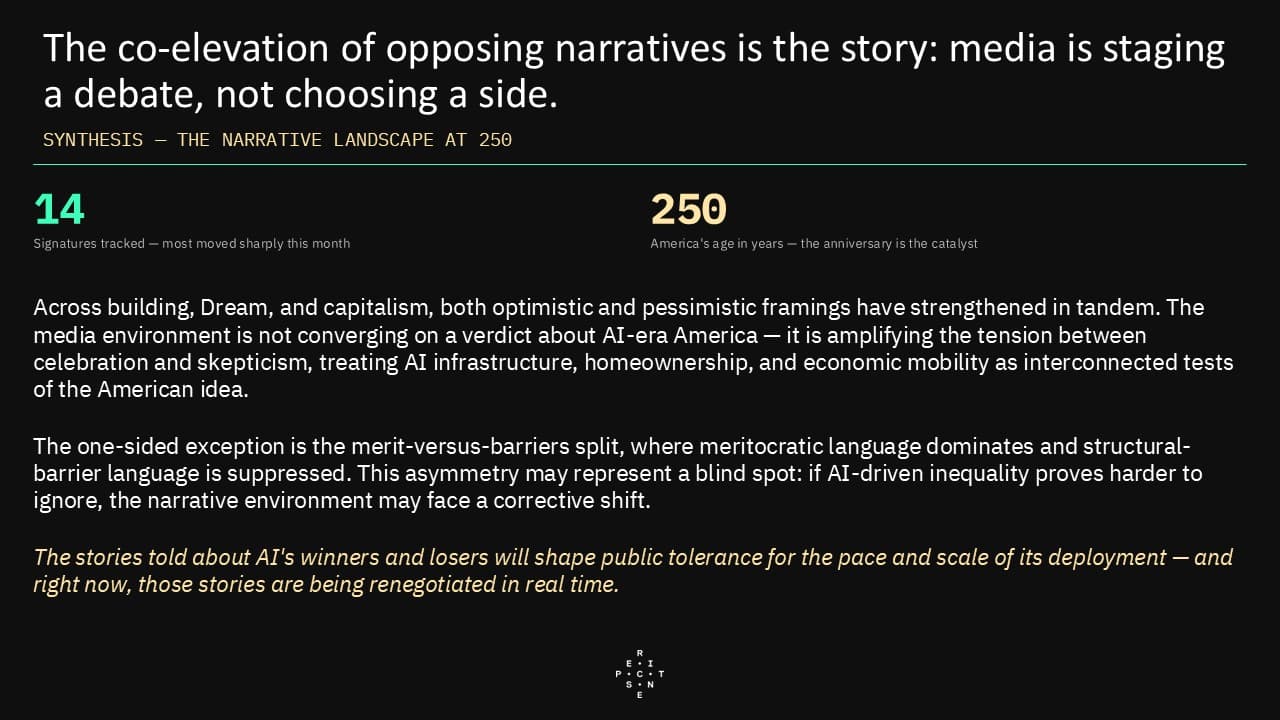
- America's semiquincentennial has turned AI into a referendum on the nation's foundational promises, with financial media simultaneously amplifying celebration of American ambition and deep skepticism about whether that ambition can deliver. Across building, Dream, and capitalism semantic signatures, both optimistic and pessimistic framings have strengthened in tandem, producing a media environment defined by dueling narratives rather than consensus. The co-elevation of opposing frames is itself the story: media is not choosing a side so much as staging a debate, one that treats AI infrastructure, homeownership, and economic mobility as interconnected tests of the American idea.
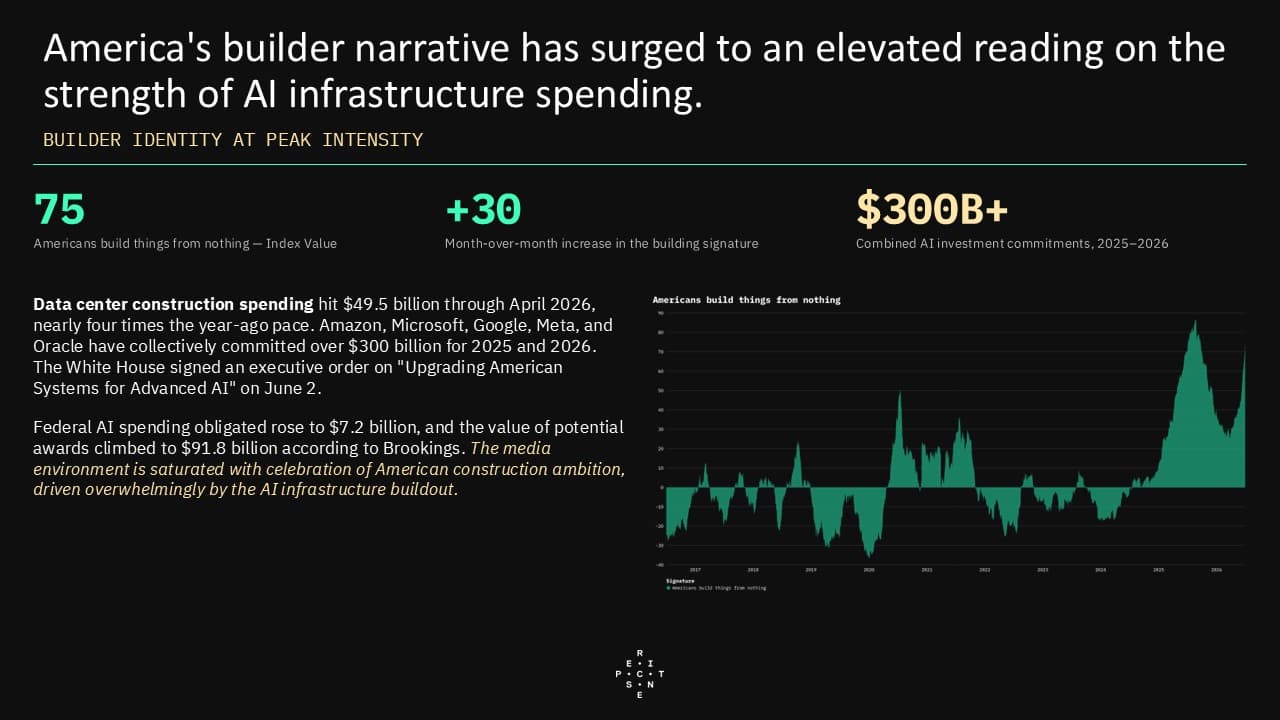
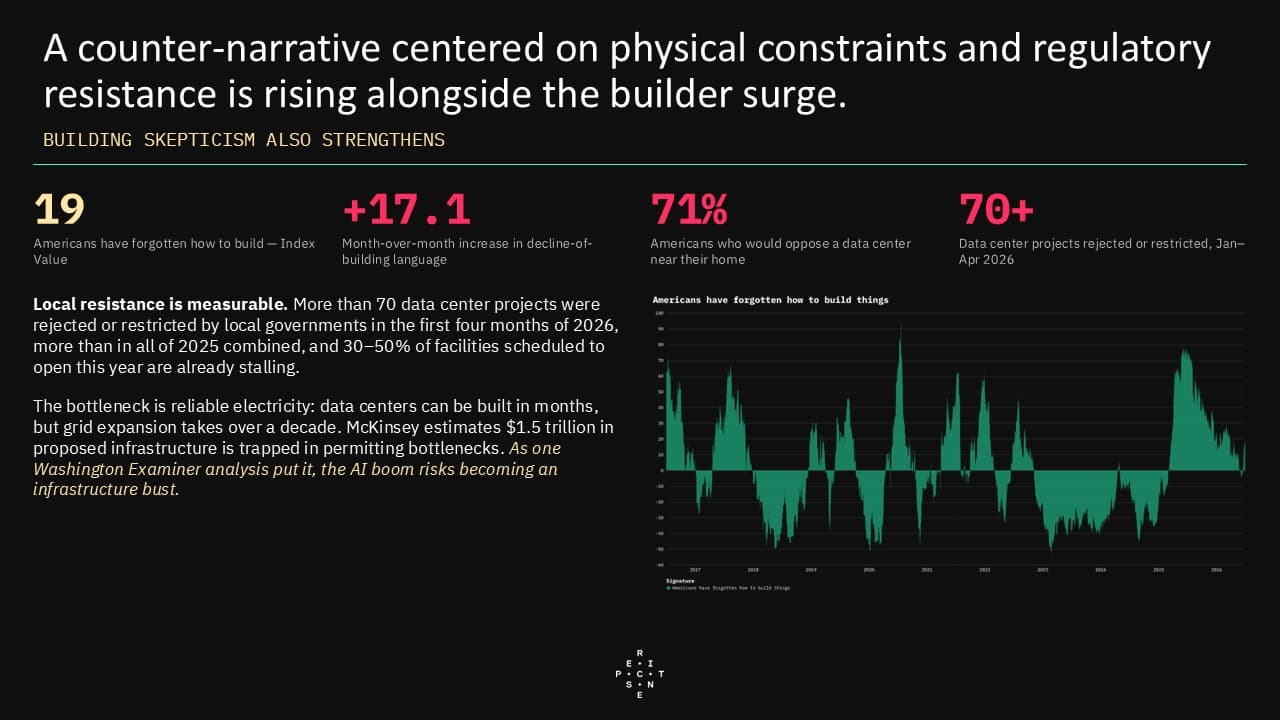
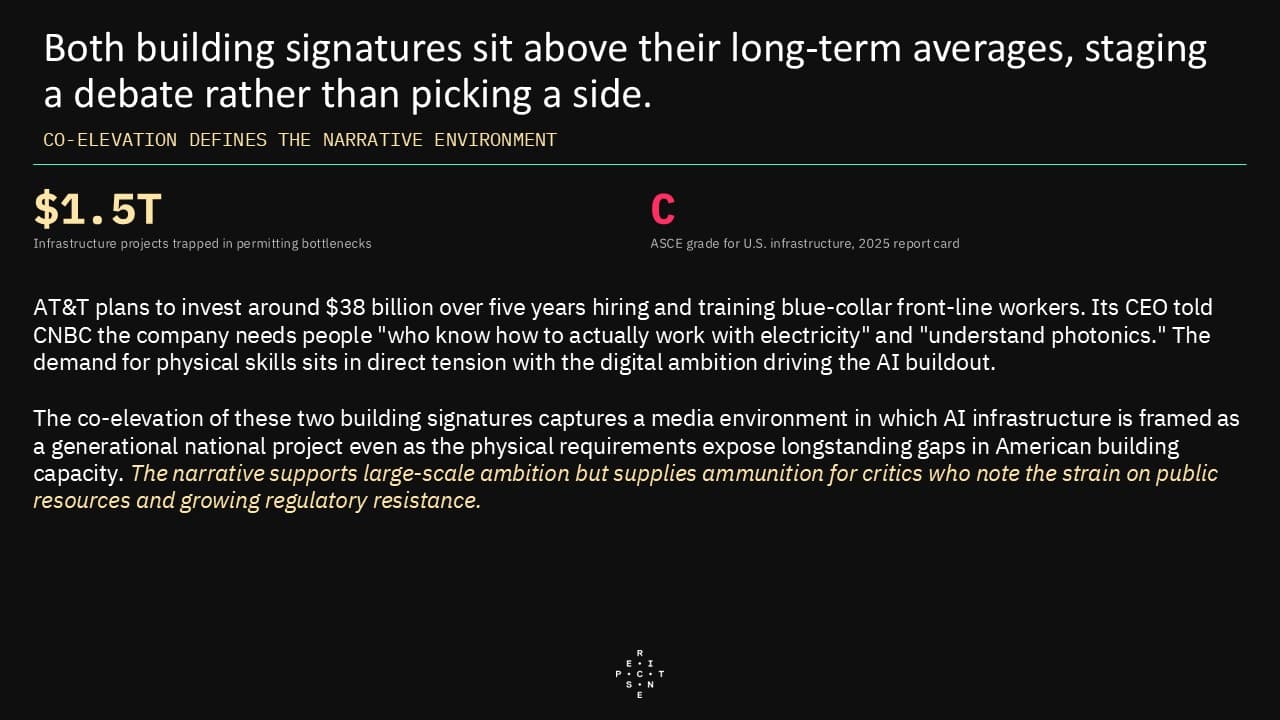
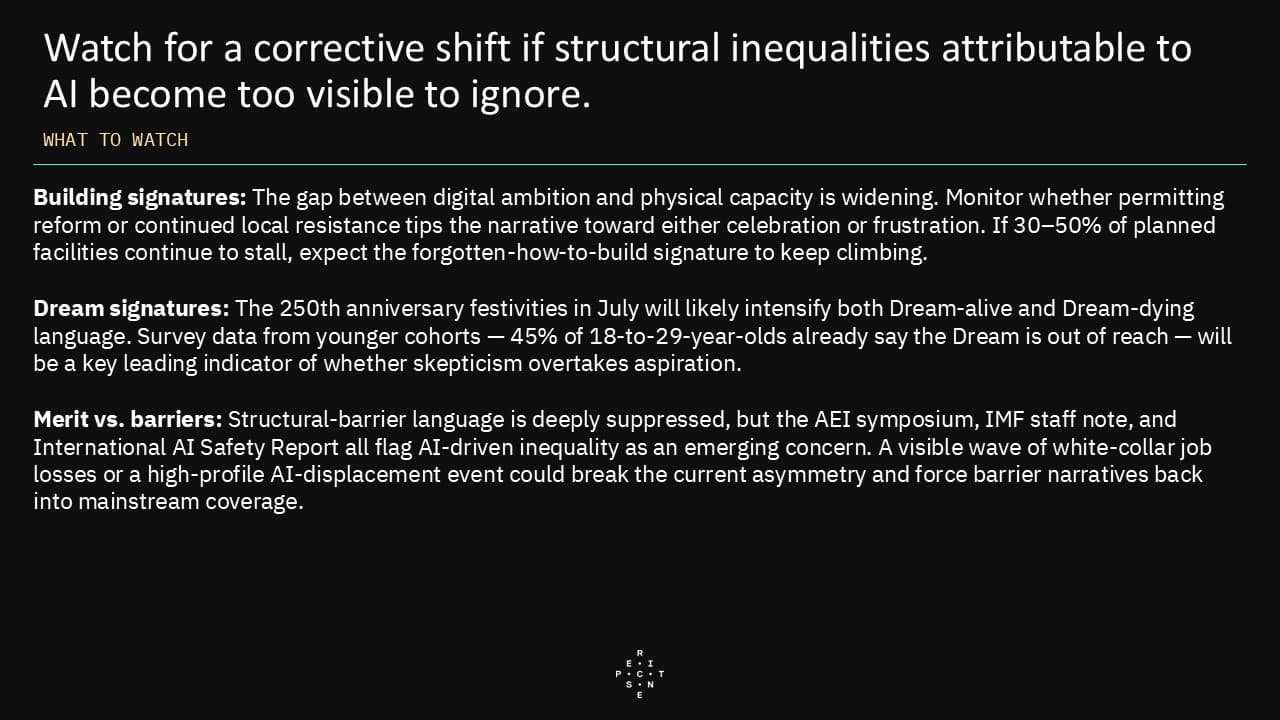
- The AI infrastructure buildout has become the dominant engine of American "builder" narratives, but a counter-narrative centered on physical constraints, regulatory resistance, and energy bottlenecks is rising alongside it. Perscient's semantic signature tracking celebration of American building capacity surged to its highest level in the dataset, yet language arguing that Americans have stopped building things also intensified. With local governments rejecting or restricting data center projects at an accelerating pace and grid expansion timelines measured in decades rather than months, the gap between digital ambition and physical capacity is supplying critics with a growing body of evidence.
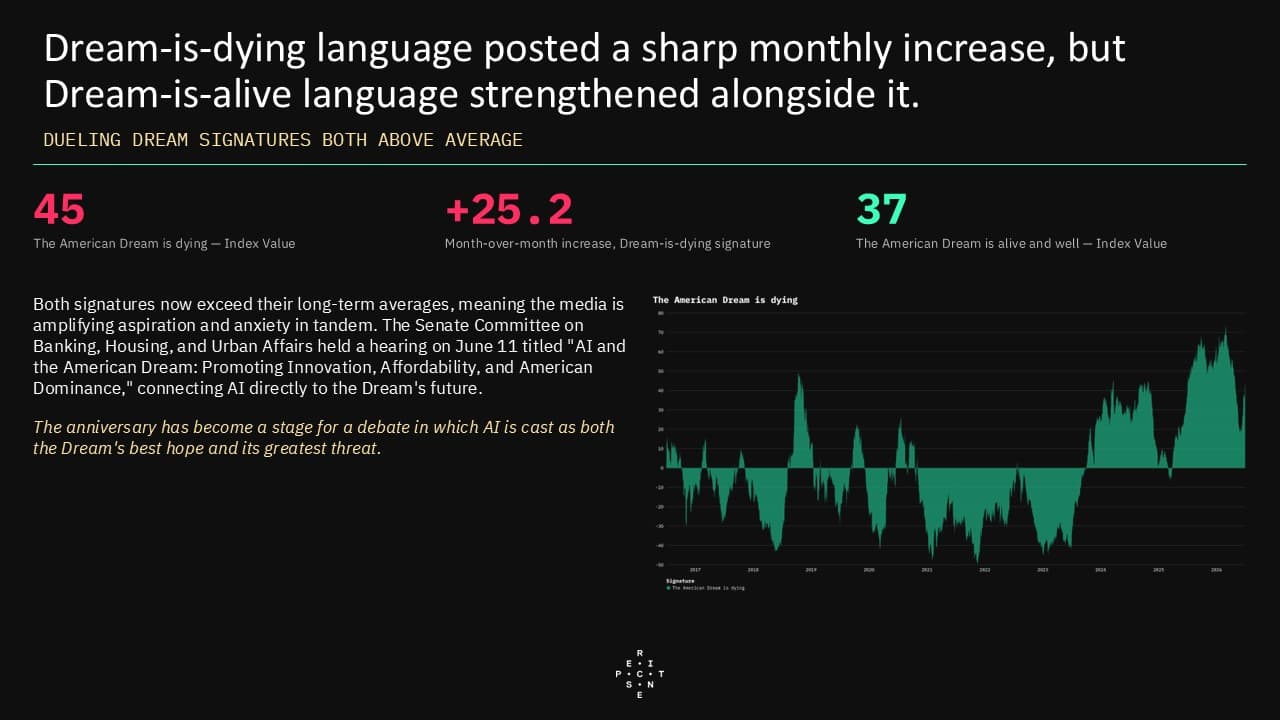
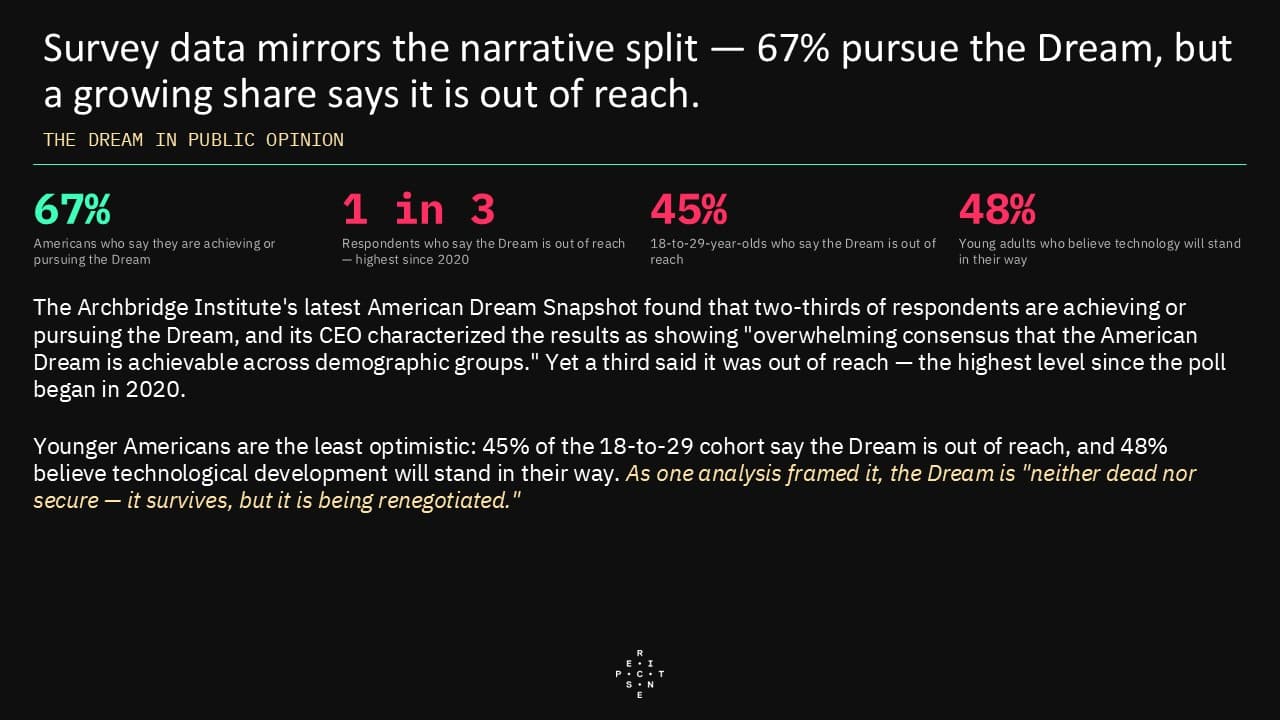
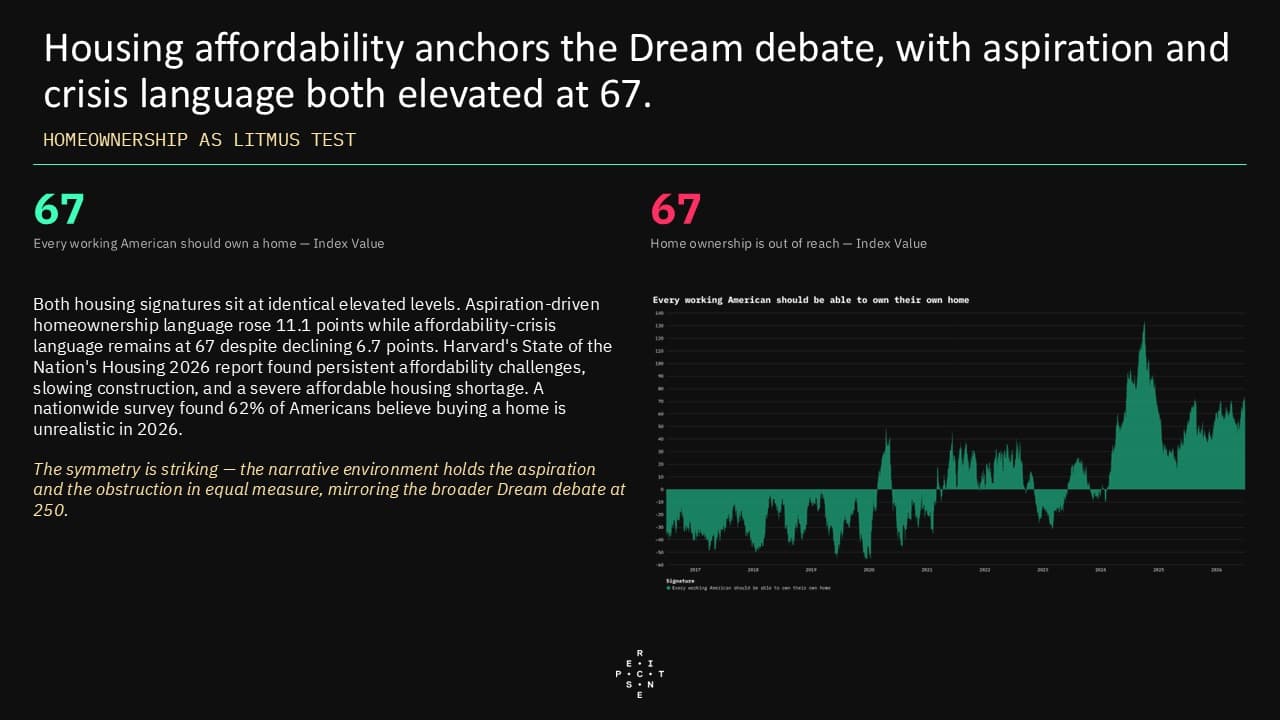
- The American Dream has become the primary frame through which media evaluates AI's societal impact, and housing affordability anchors the debate on both sides. Language arguing that the Dream is dying posted one of the largest monthly increases in the dataset, but language asserting that the Dream is alive also strengthened. Housing narratives reinforce the split: aspiration-driven language about homeownership and affordability-crisis language both sit at elevated levels. Survey data mirrors the tension, with a majority of Americans saying that they are pursuing the Dream even though a record share — concentrated among younger adults — say that it is out of reach.
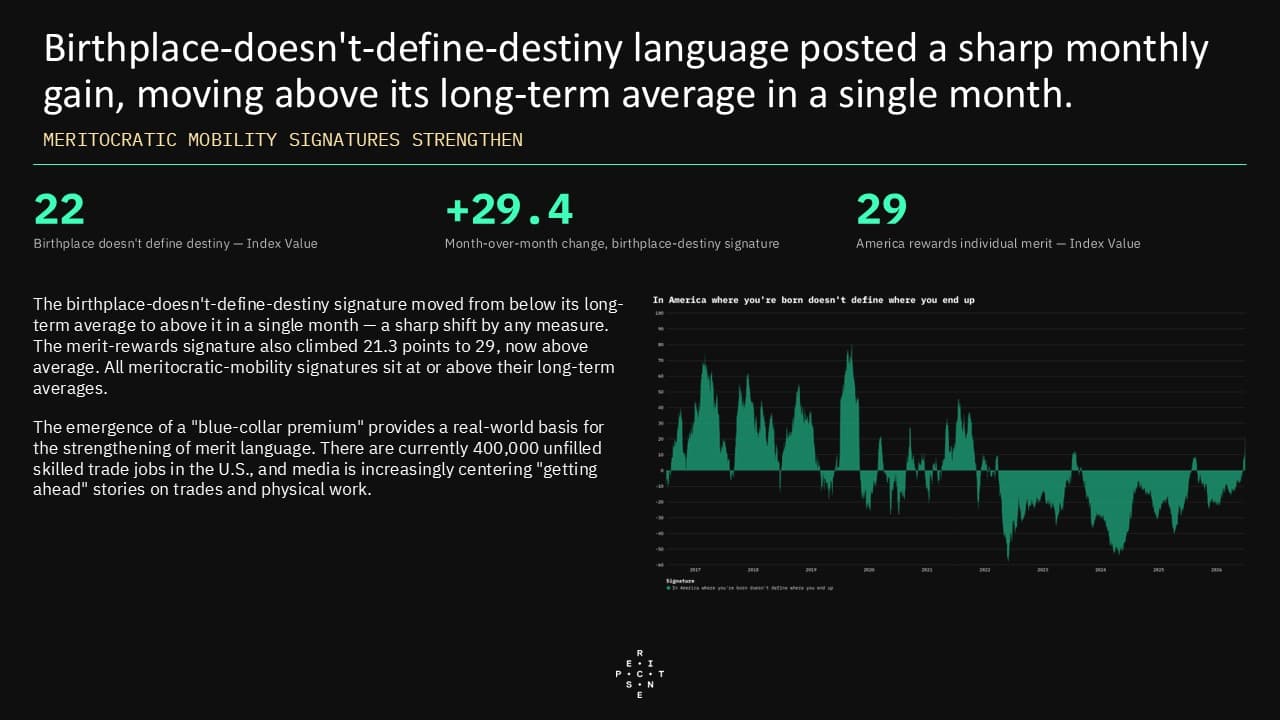
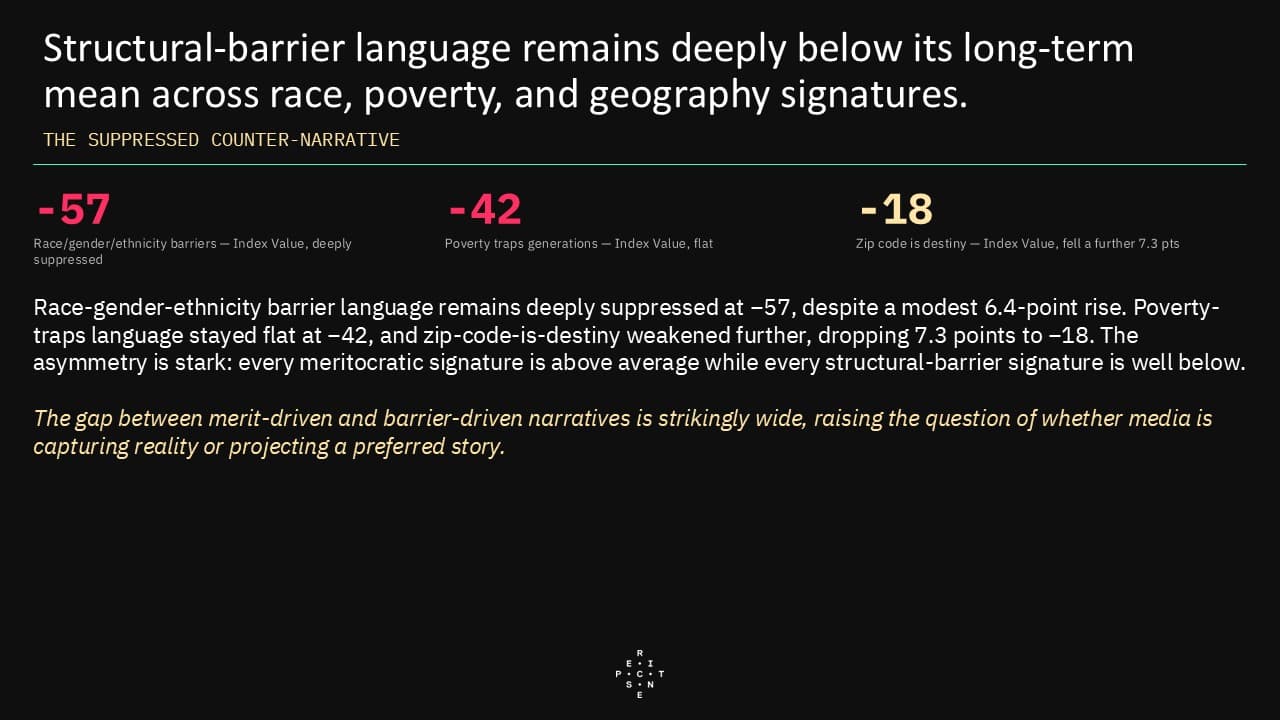
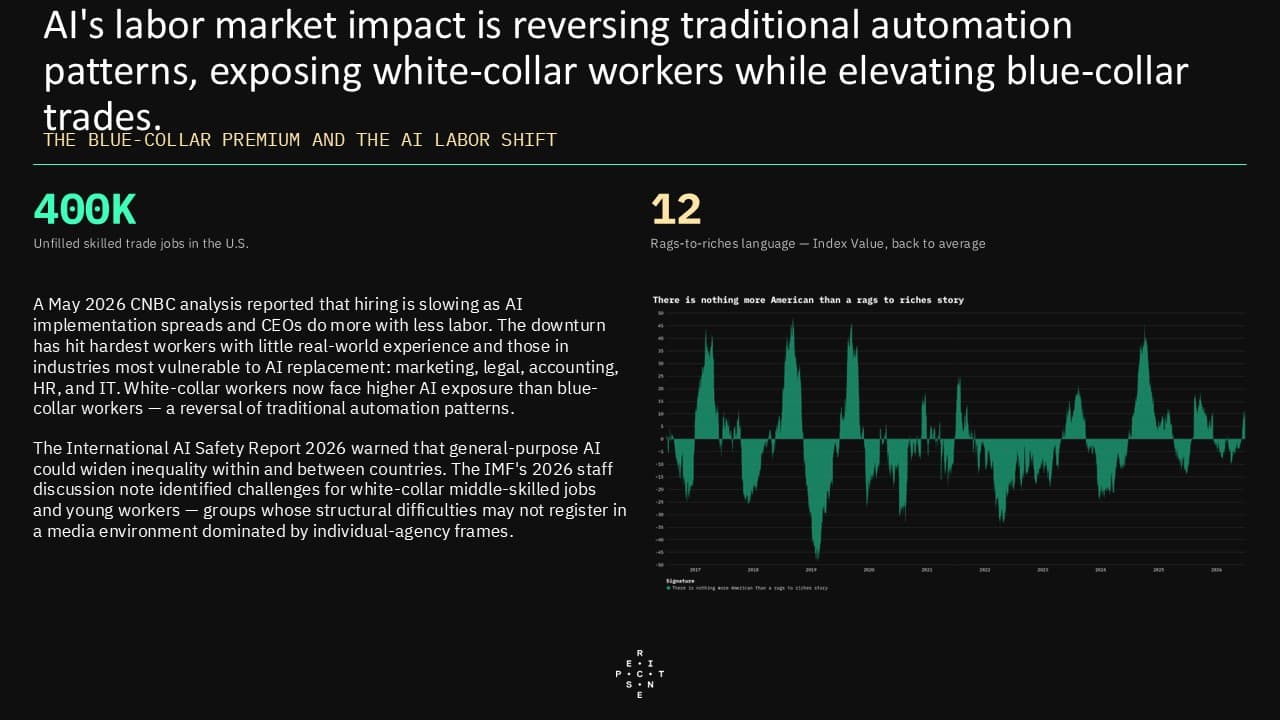
- Media narratives about getting ahead in America have tilted decisively toward individual agency and merit, while structural-barrier language remains deeply suppressed — a gap that may represent a blind spot if AI-driven inequality proves harder to ignore. Meritocratic-mobility signatures all sit at or above their long-term averages, buoyed in part by the emergence of a "blue-collar premium" and stories of trades workers thriving even while white-collar hiring slows. Meanwhile, language about racial, geographic, or generational barriers to success sits well below average. The resurgence of capitalism and rags-to-riches language reinforces this tilt, suggesting that the current media environment is primed to frame AI as a democratizing force — but international bodies and policy researchers are warning that AI adoption could widen structural inequalities in ways that this narrative environment is not yet reflecting.
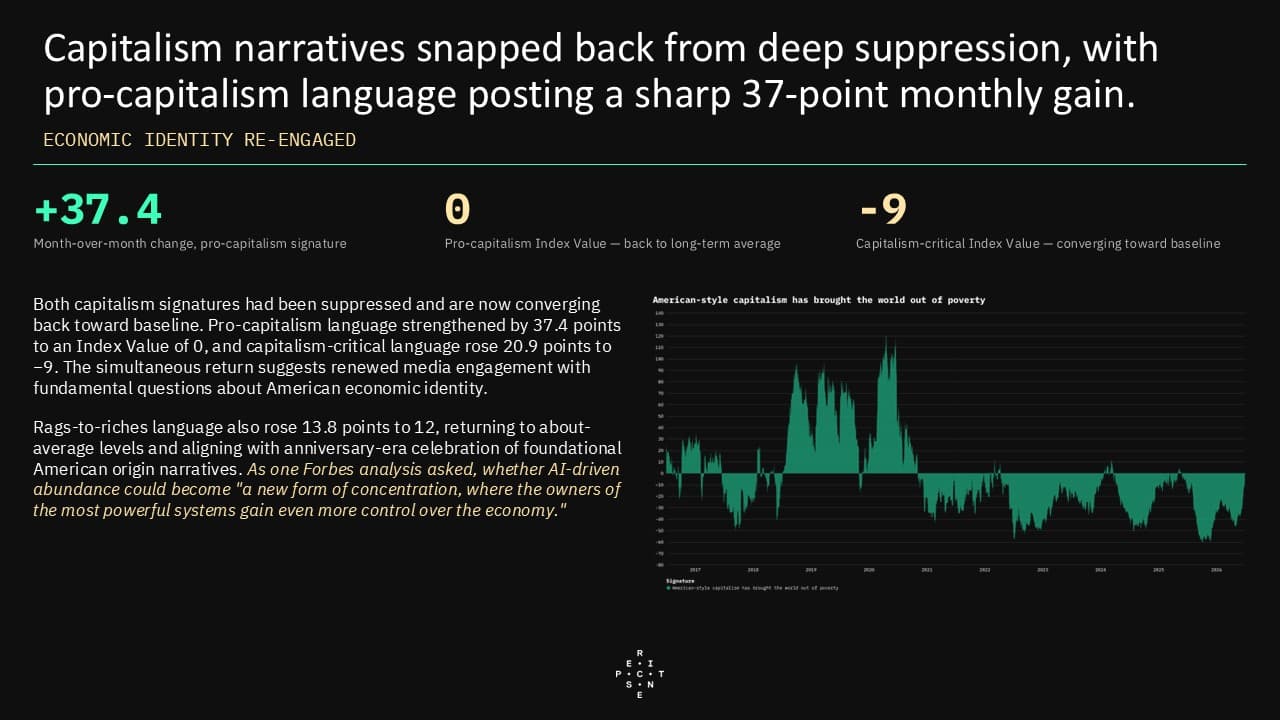
- The simultaneous return of both pro-capitalism and capitalism-critical language from deeply suppressed levels — including the single largest monthly change of any signature — signals that media is re-engaging with fundamental questions about American economic identity, clearly inflected by debates over whether AI-driven abundance will be broadly shared or narrowly concentrated. This convergence, combined with the intensifying Dream debate, suggests that the anniversary period is catalyzing a broader reckoning with the distributional consequences of the AI era, one in which the stories told about the technology's winners and losers will shape public tolerance for the pace and scale of its deployment.