
Spending and Budgeting July 20, 2026
The Pulse
July 20, 2026·Money

Executive Summary
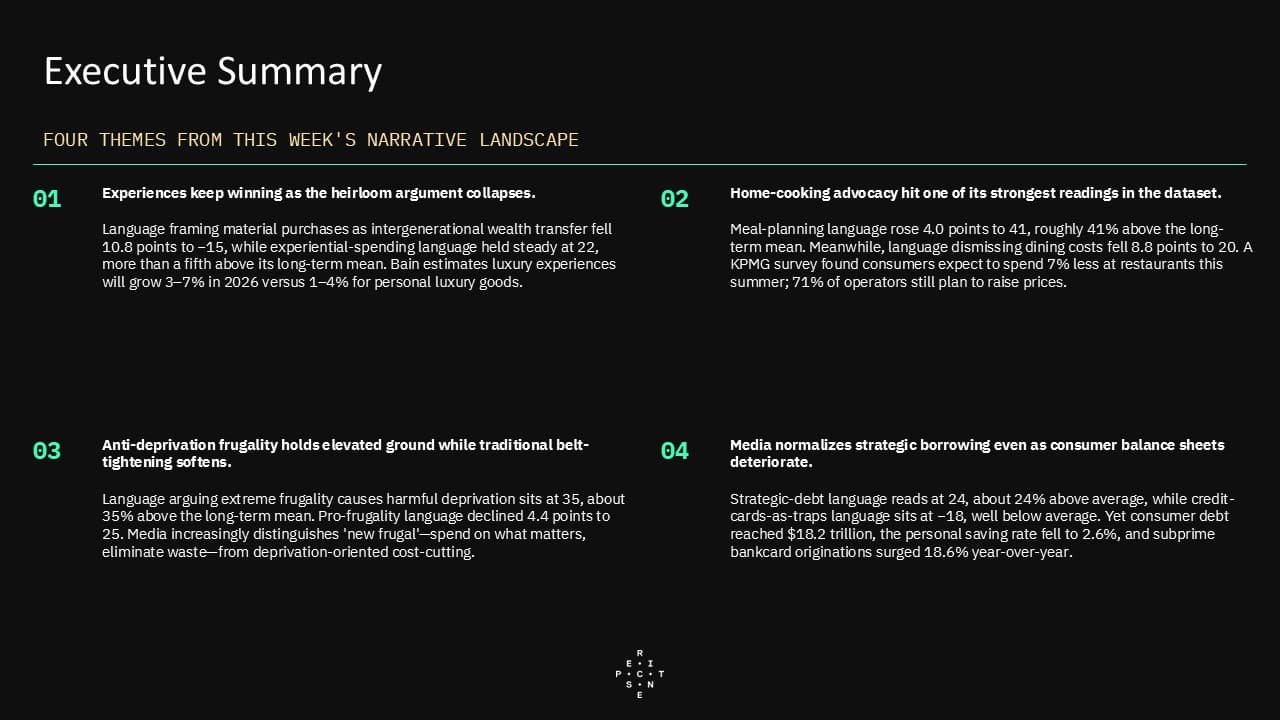
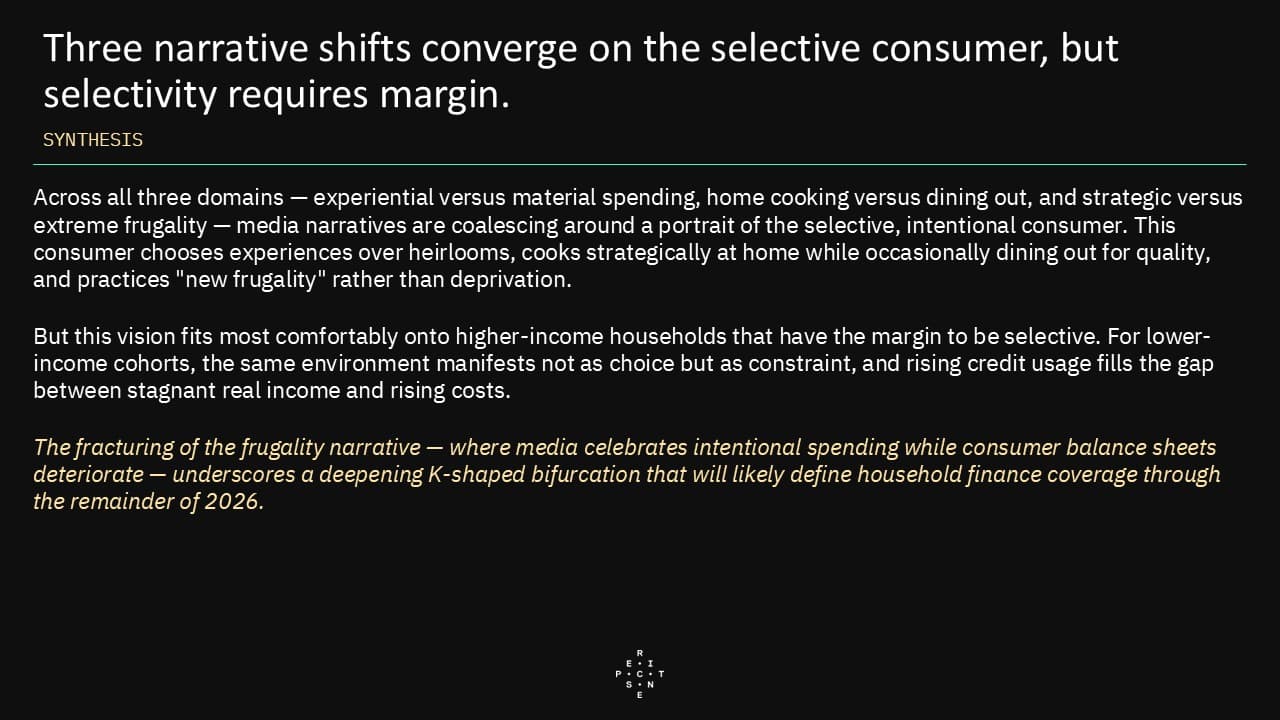
- Experience over possession, kitchen over restaurant, intentionality over deprivation: media narratives are converging on a portrait of a more selective consumer. Across all three domains tracked in this report—experiential versus material spending, home cooking versus dining out, and strategic versus extreme frugality—financial media is increasingly championing deliberate, values-driven allocation of household dollars rather than blanket austerity or indiscriminate consumption.
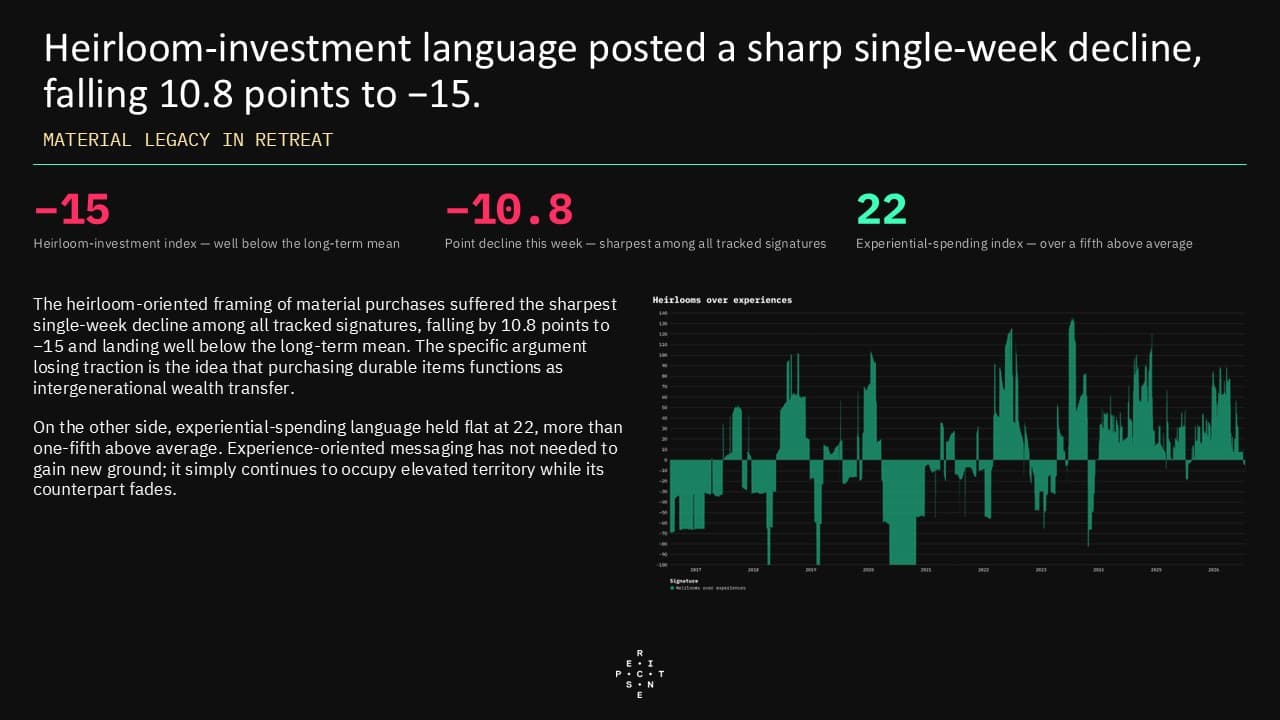
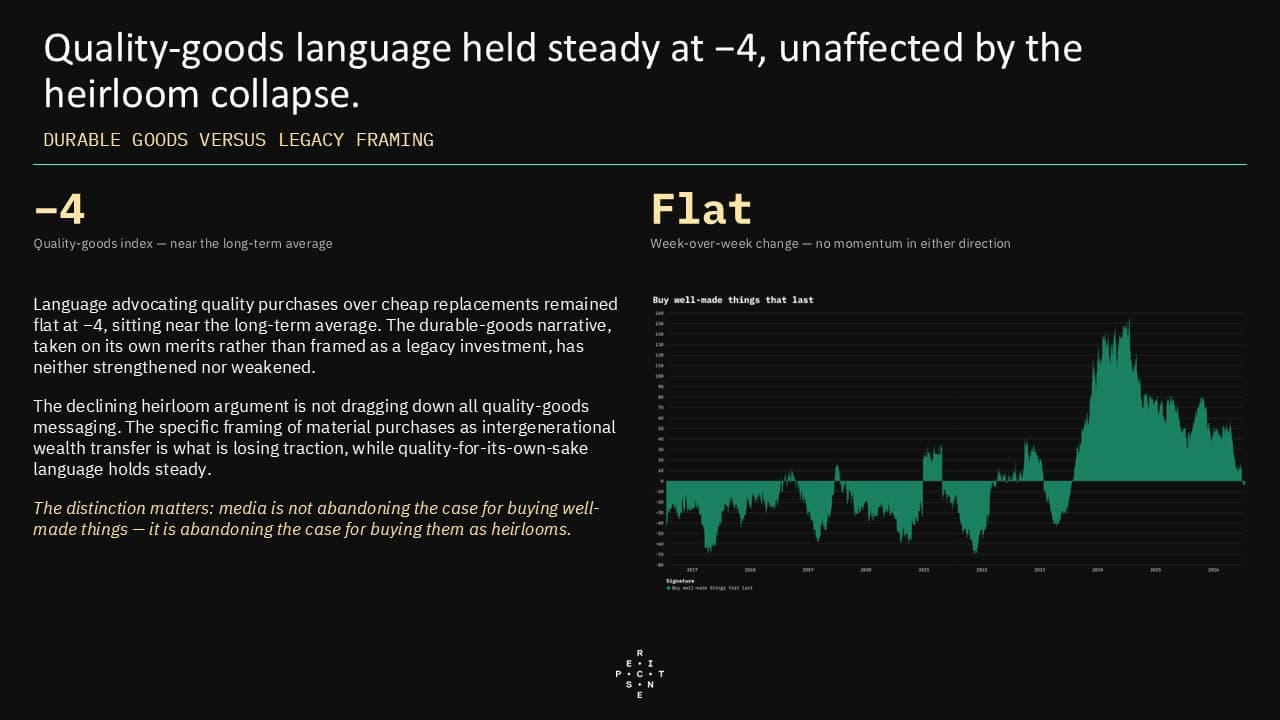
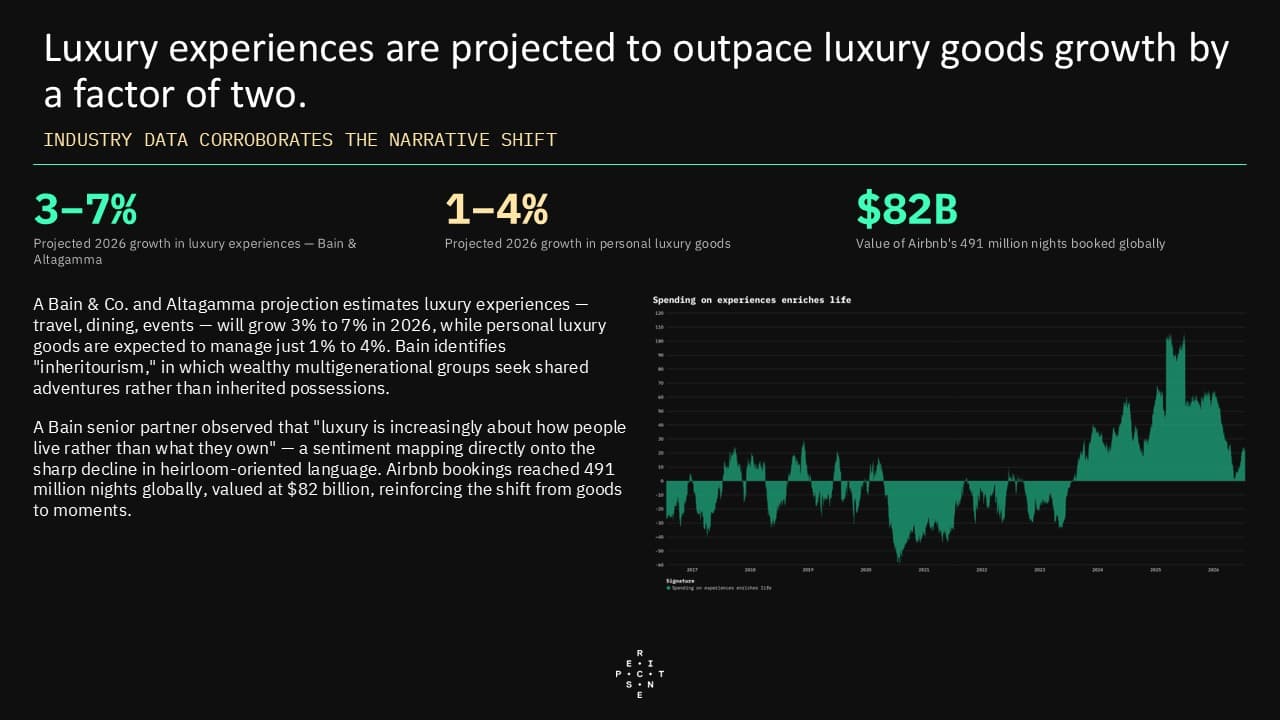
- The heirloom-investment framing of material purchases suffered the sharpest single-week decline among all tracked signatures, while experiential-spending language held at elevated levels. The divergence suggests that media is not abandoning quality-goods arguments broadly but is specifically retreating from the idea that purchasing durable items as intergenerational wealth transfer competes with experiential spending. Industry data on luxury experience growth and the emergence of "inheritourism" corroborate this shift.
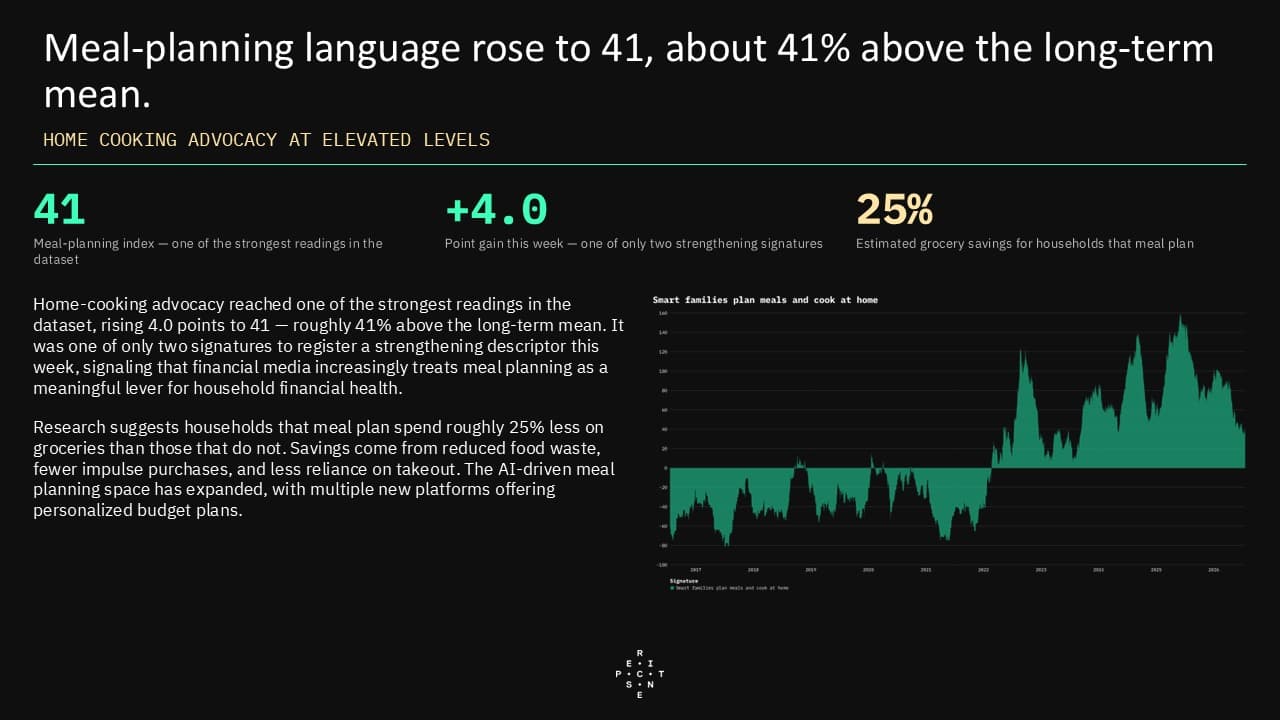
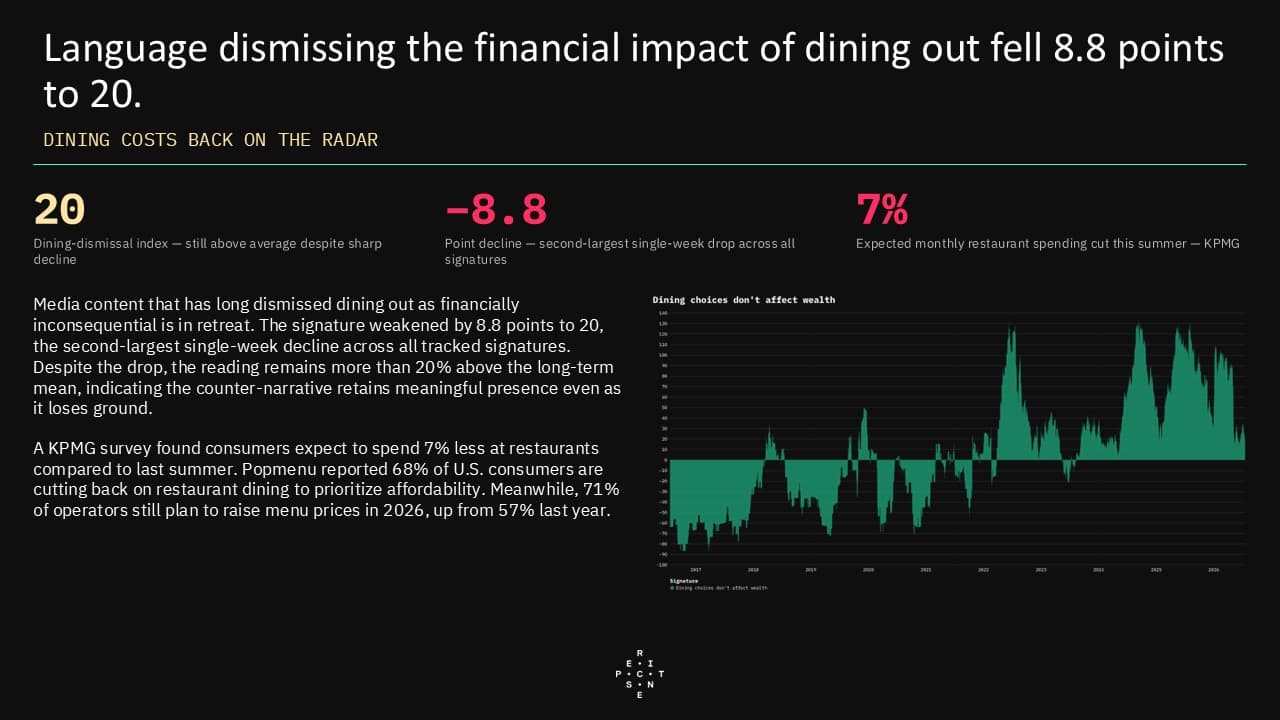
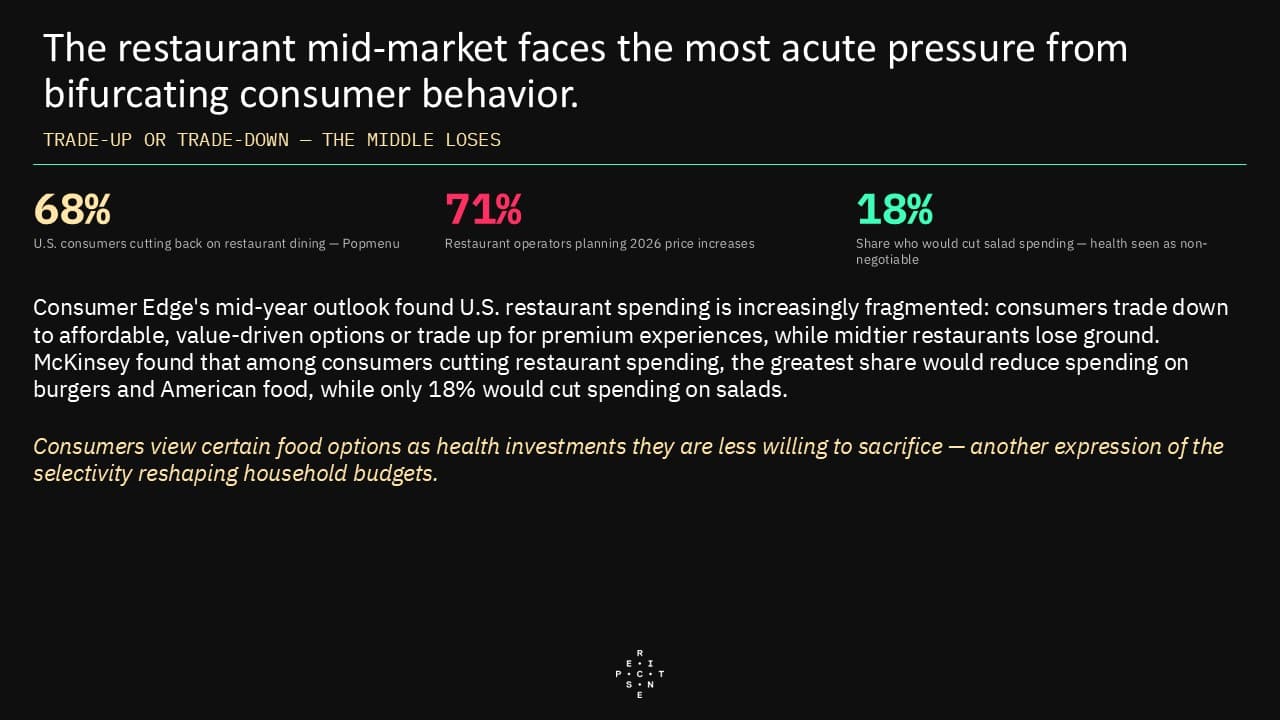
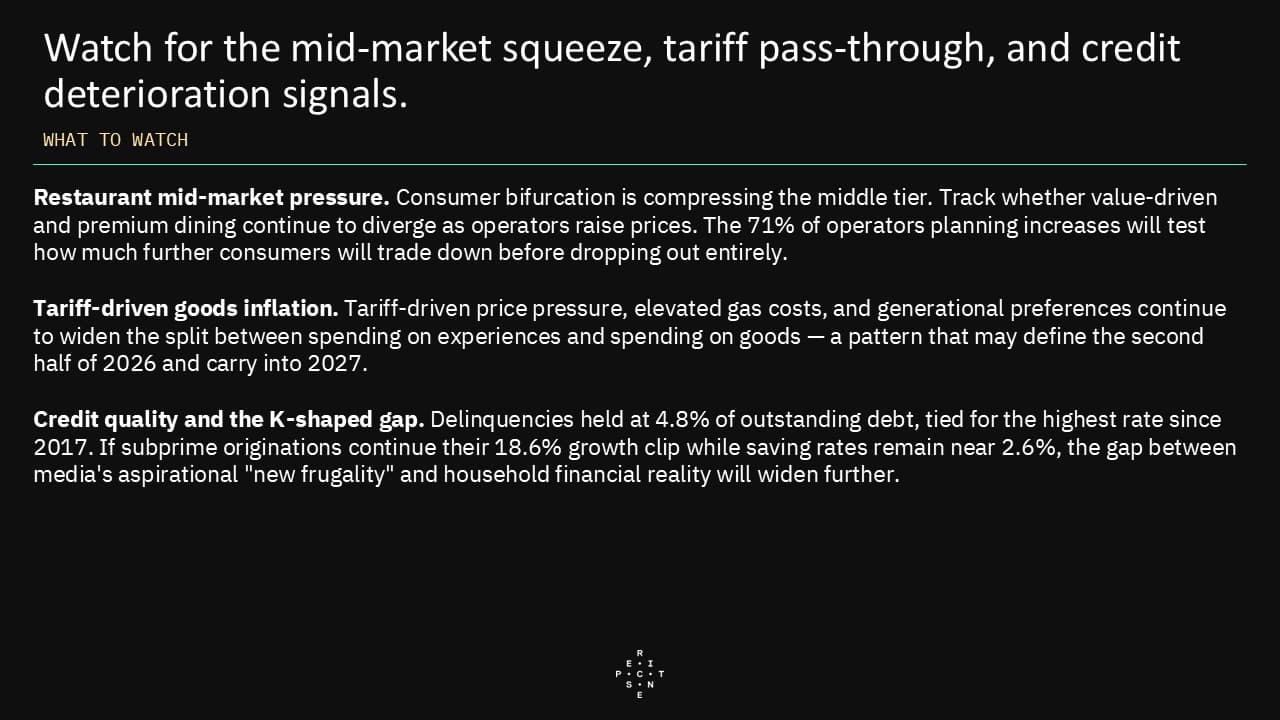
- Home-cooking advocacy reached one of the strongest readings in the dataset, while media language dismissing the financial impact of dining out posted its second-largest weekly decline. These movements signal that financial media increasingly treats household food budgets as a meaningful and controllable lever for financial health—a shift that coincides with survey data showing that consumers plan to cut restaurant spending materially this summer and that operators continue to raise menu prices.
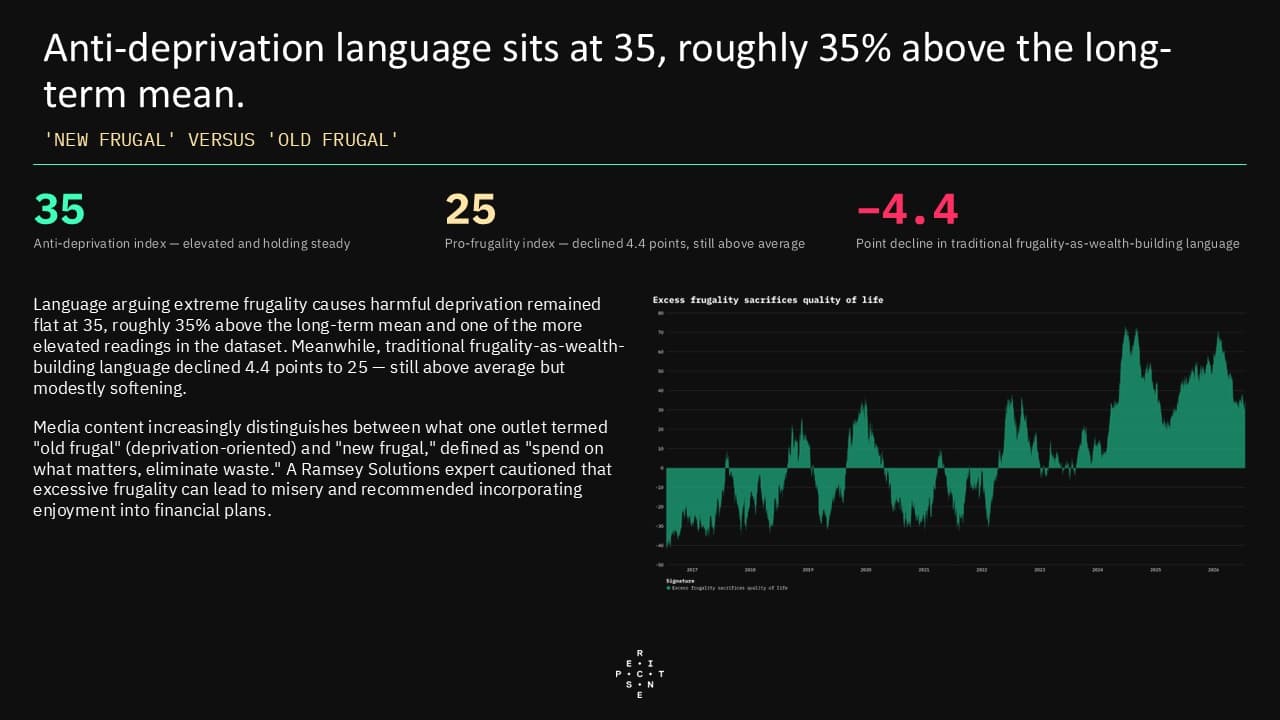
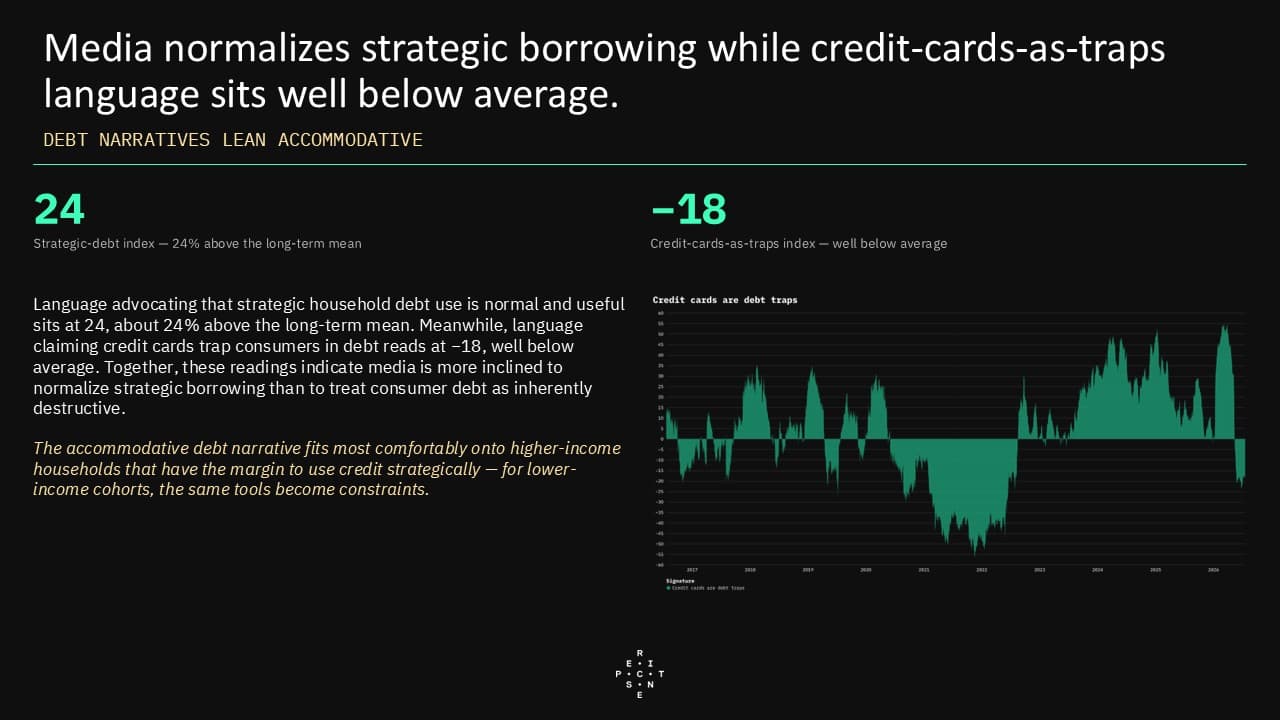
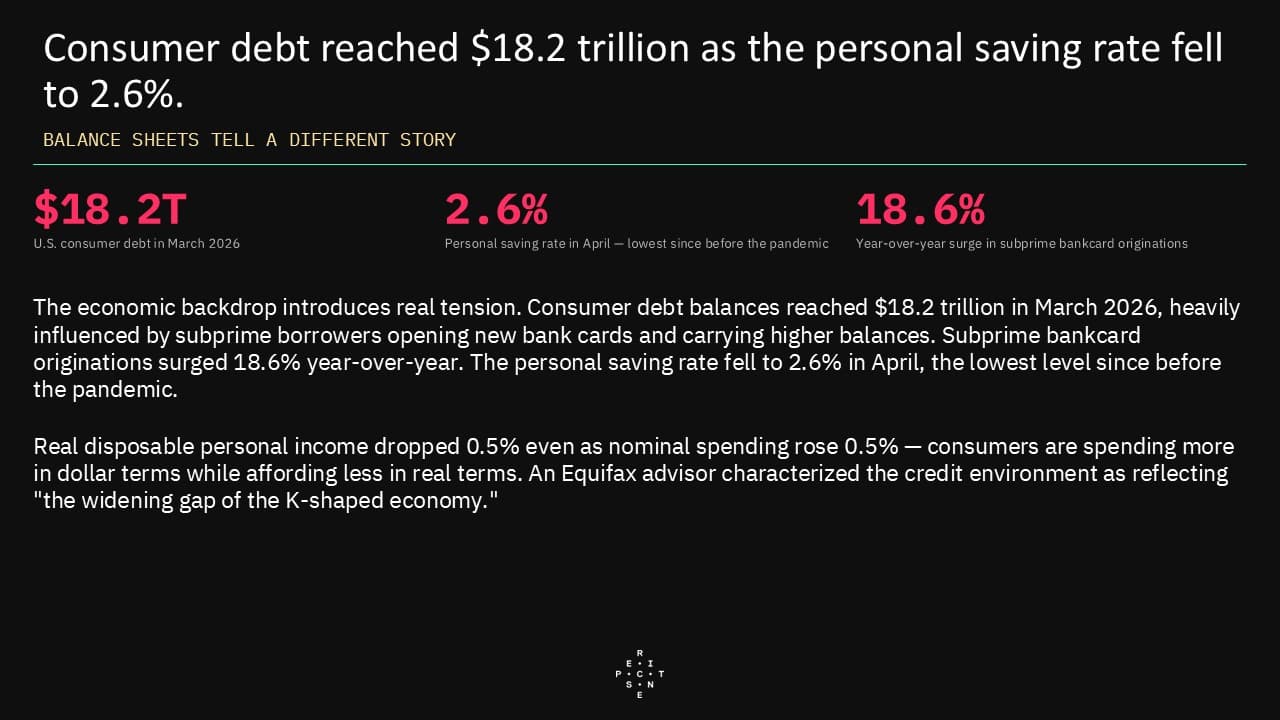
- Media content normalizing strategic borrowing and rejecting deprivation-oriented frugality sits well above long-term averages, even though household balance sheets tell a more strained story. Consumer debt has reached record levels, savings rates have fallen to pre-pandemic lows, and subprime credit card originations have surged. The gap between media's aspirational "new frugality" and the financial reality facing lower-income households highlights a deepening K-shaped bifurcation that may define household finance coverage through the remainder of 2026.