
Spending and Budgeting June 01, 2026
The Pulse
June 1, 2026·Money


Executive Summary
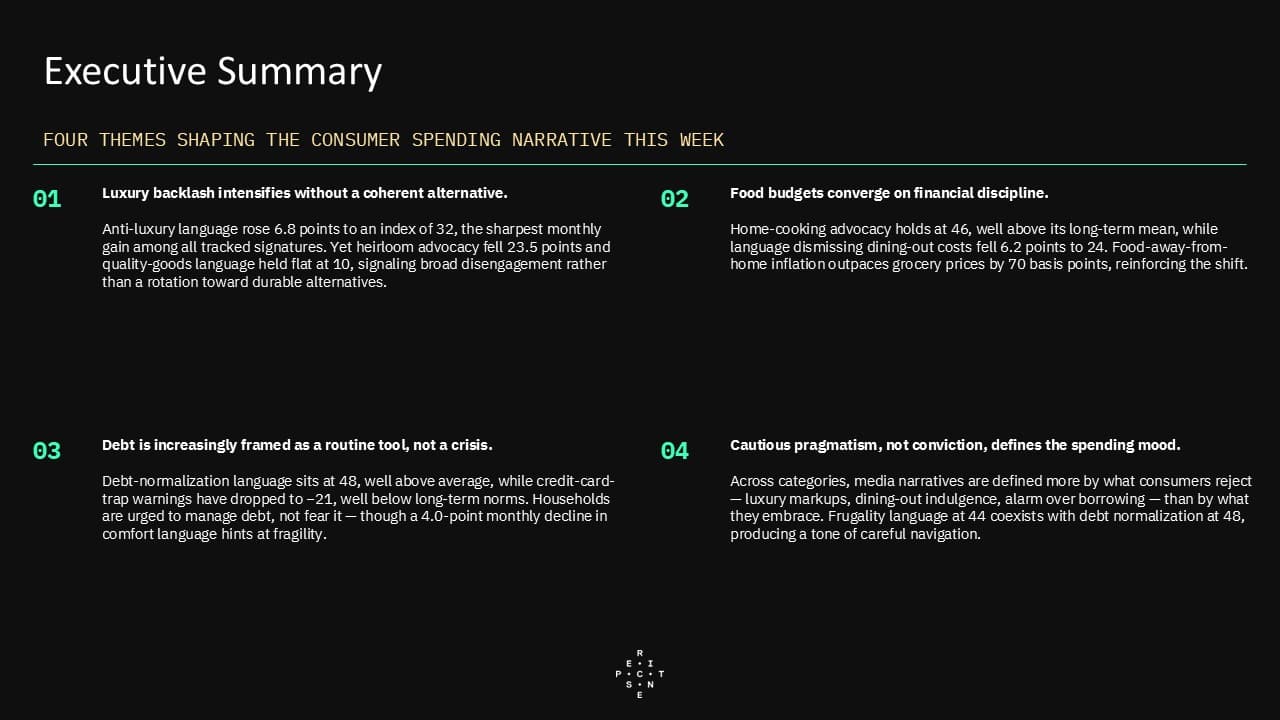
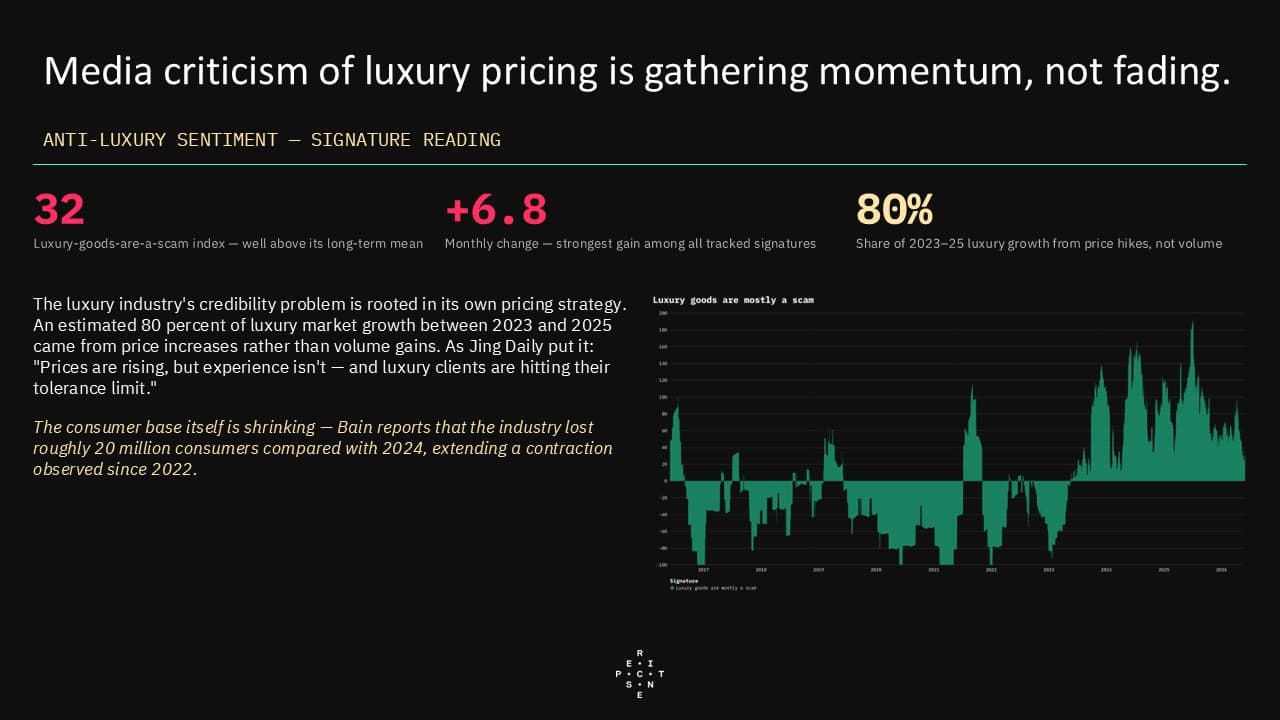
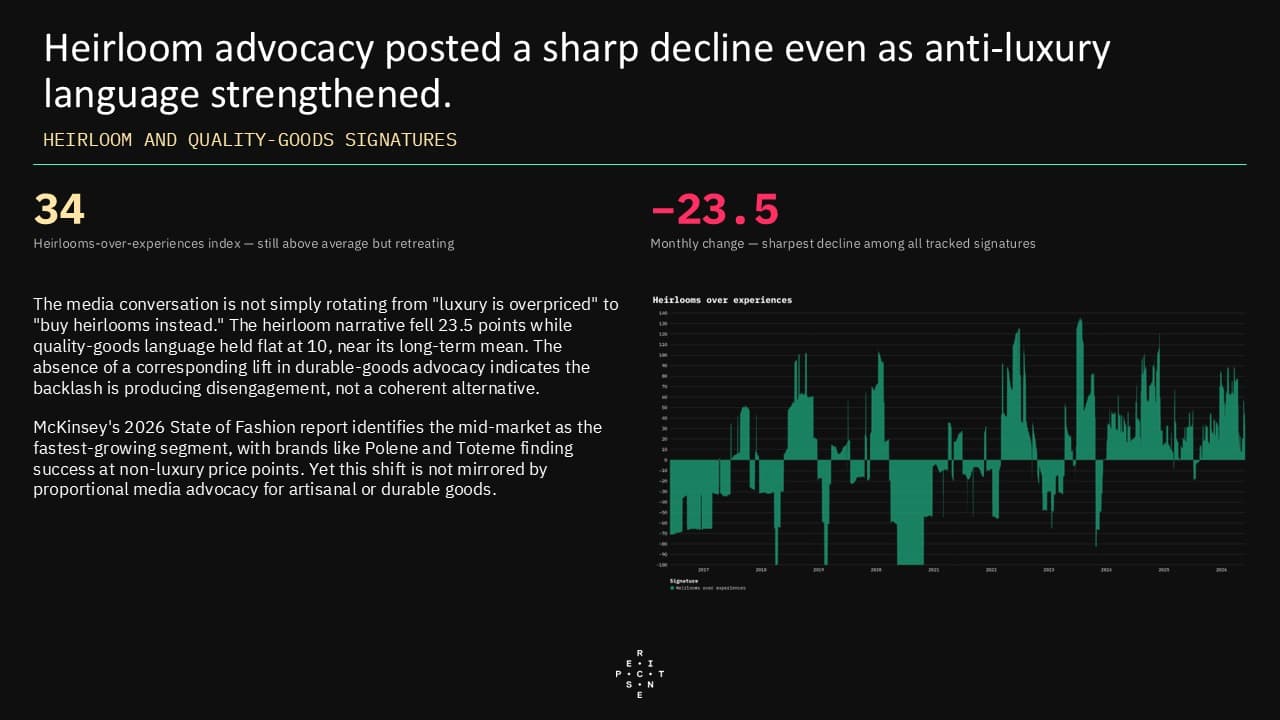
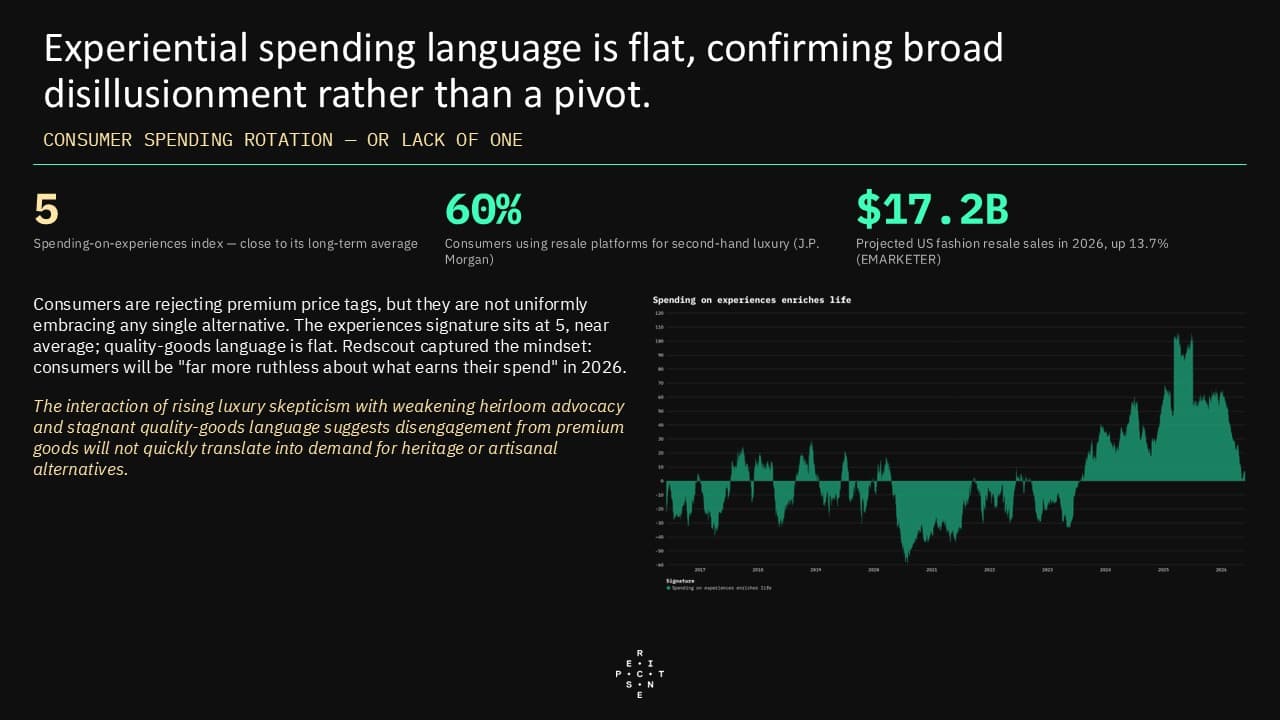
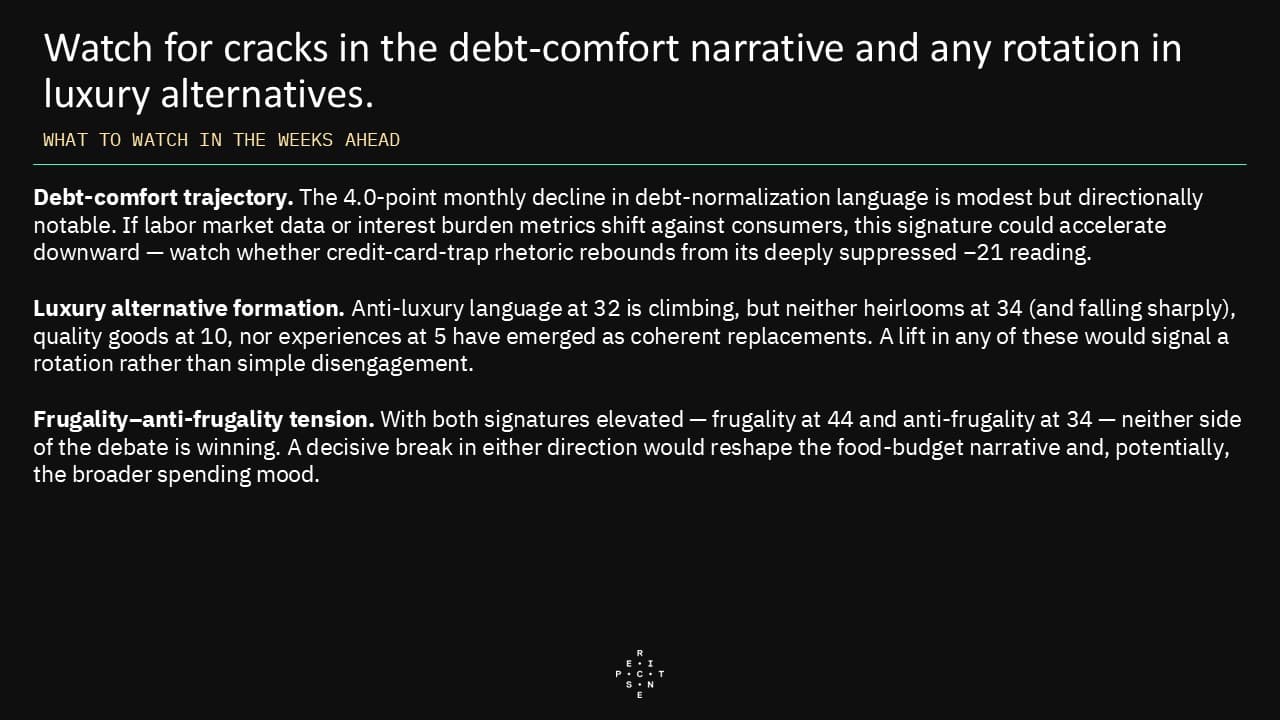
- Media criticism of luxury pricing is intensifying, yet advocacy for quality goods and heirloom purchases is weakening rather than strengthening. Consumer disillusionment with premium brands is not translating into a coherent alternative spending philosophy. The luxury industry's reliance on price increases rather than volume growth has eroded credibility, but neither mid-market nor experiential spending narratives have risen to fill the void—suggesting that the backlash reflects broad consumer disengagement from premium goods rather than a rotation toward any single substitute.
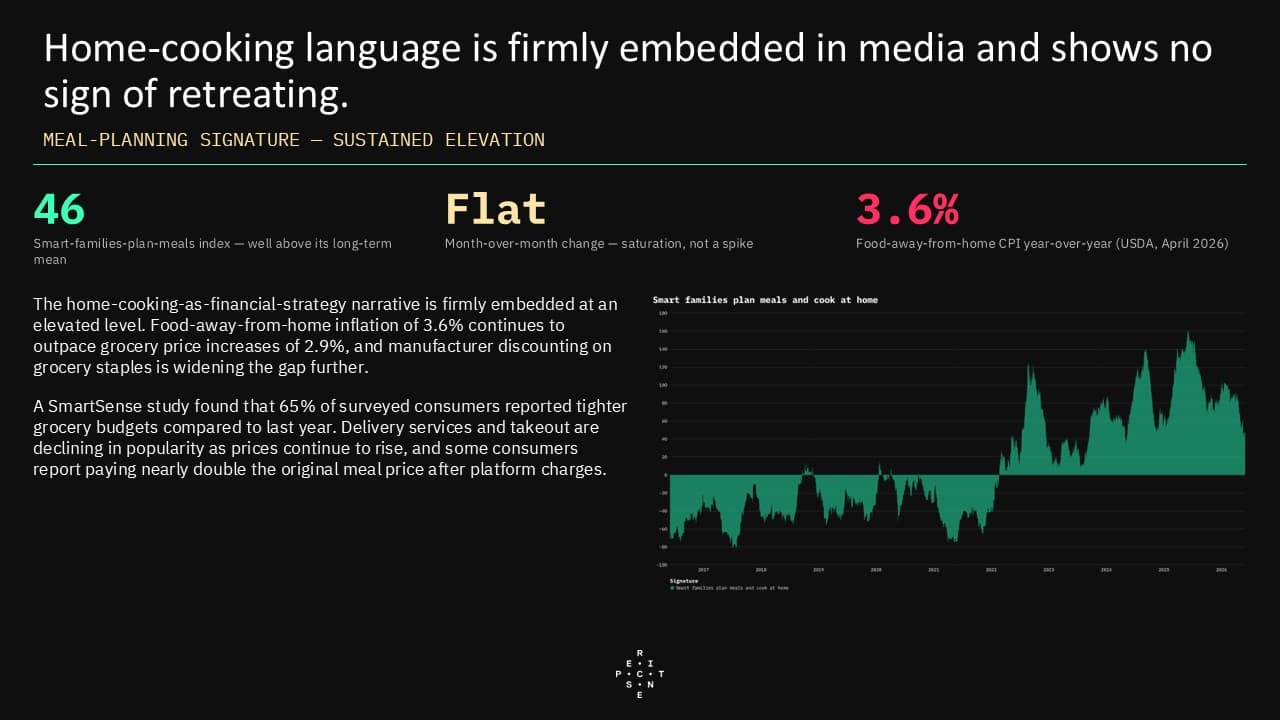
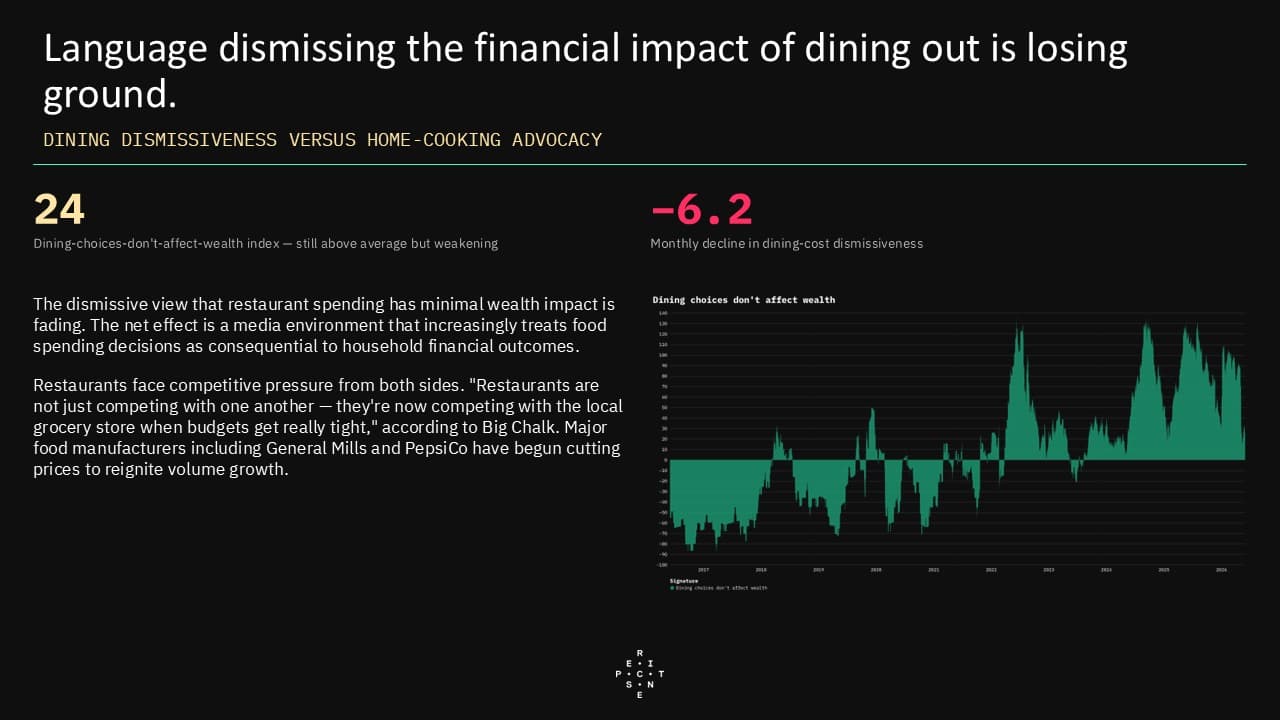
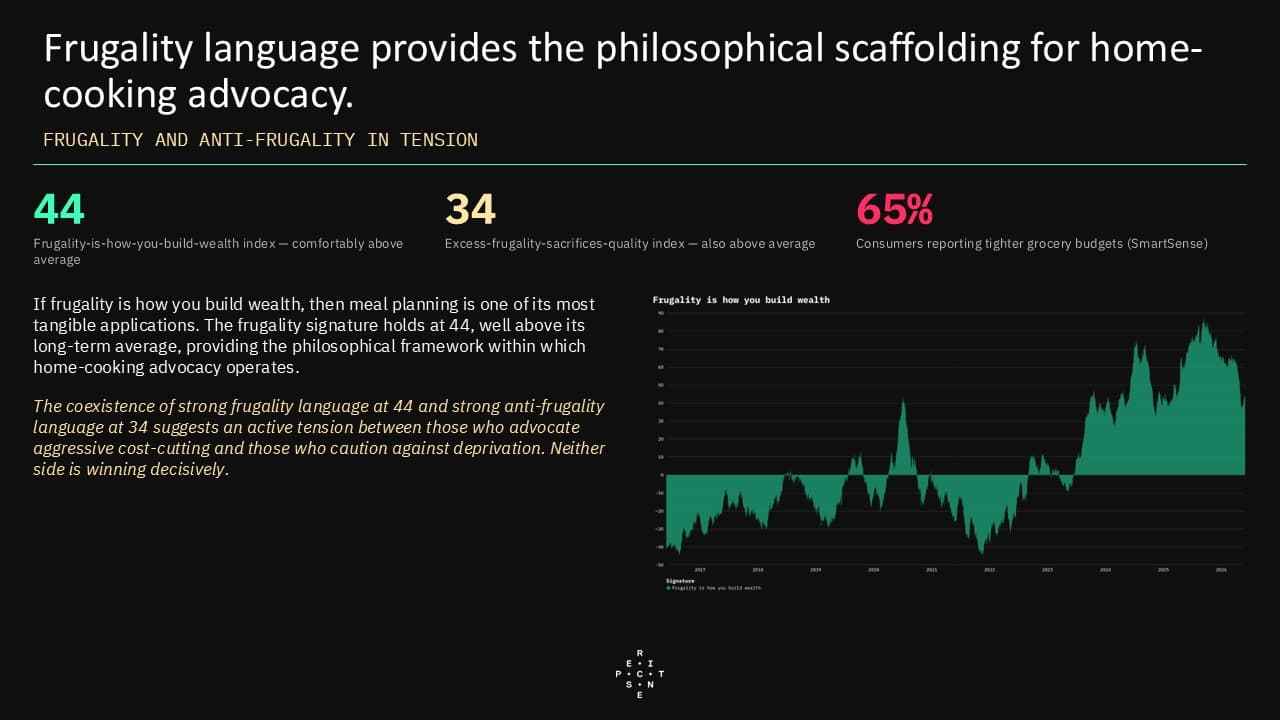
- Food spending narratives are converging around financial discipline. Home-cooking advocacy remains well above its long-term average, and media language that dismisses the financial impact of dining out is fading. Real-world cost pressures reinforce this framing: food-away-from-home inflation continues to outpace grocery prices, and manufacturer discounting on grocery staples is widening the gap further. The sustained strength of broader frugality language provides the philosophical scaffolding within which meal-planning advocacy operates.
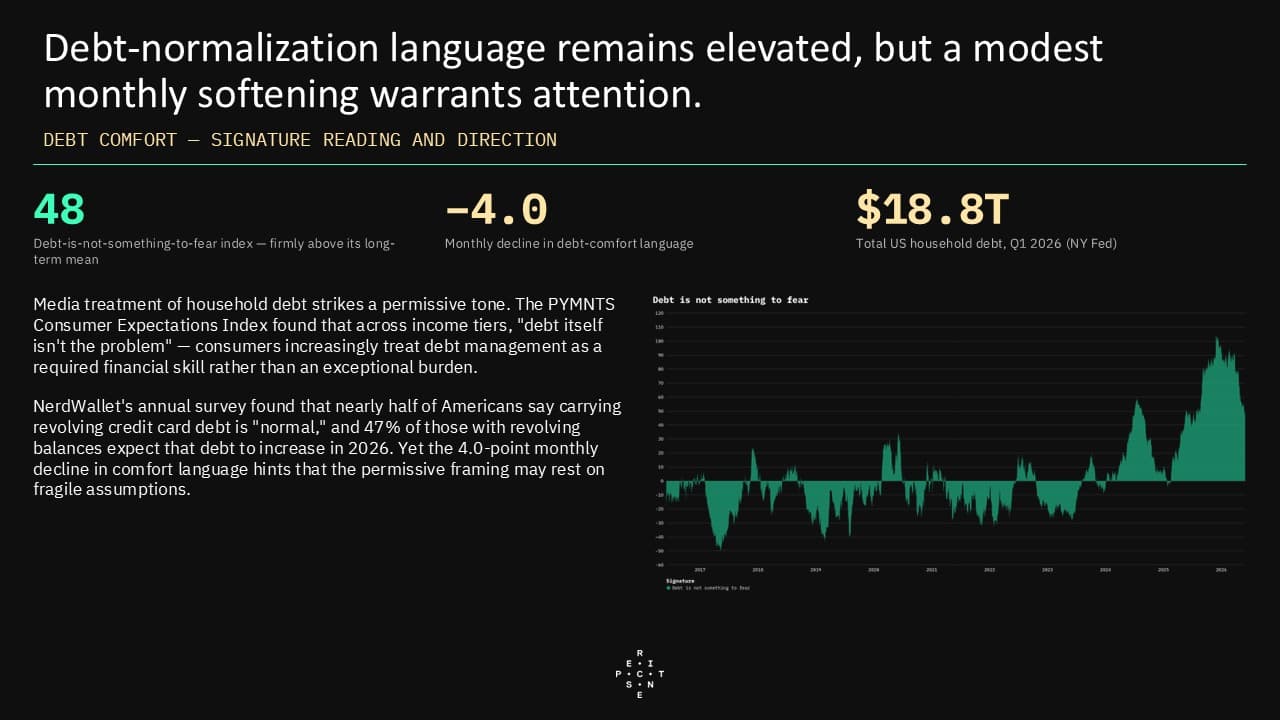
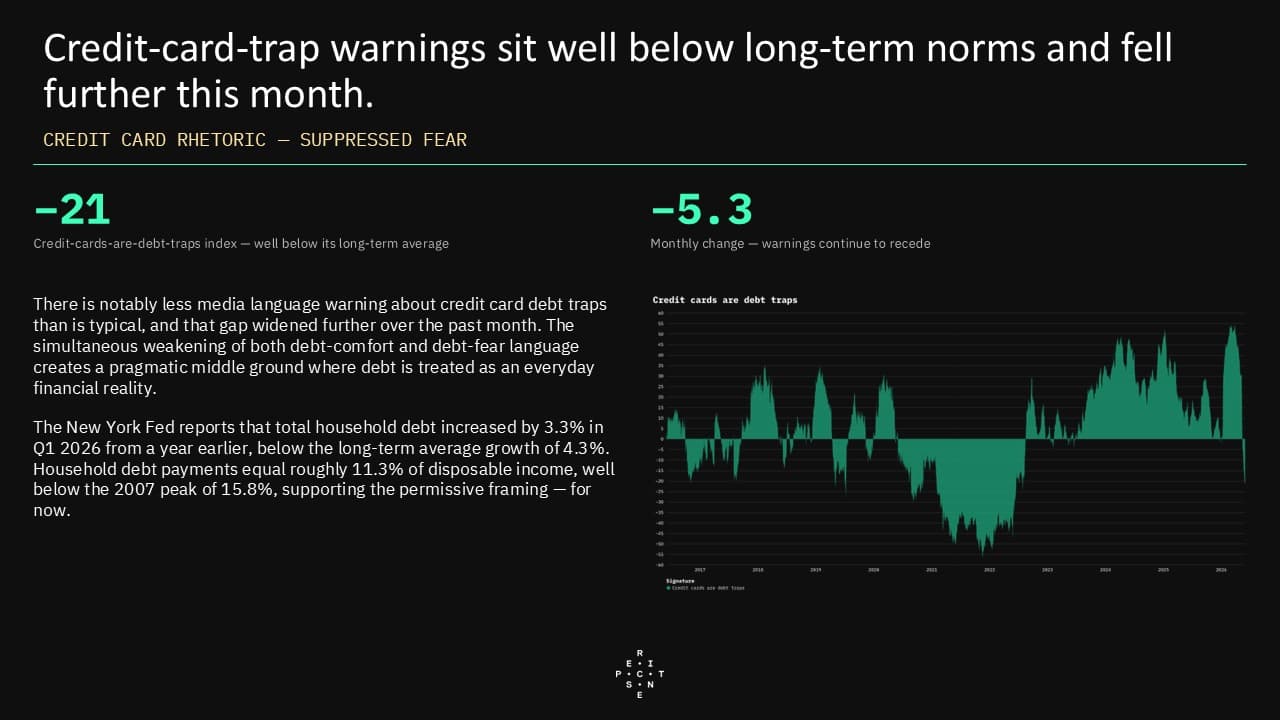
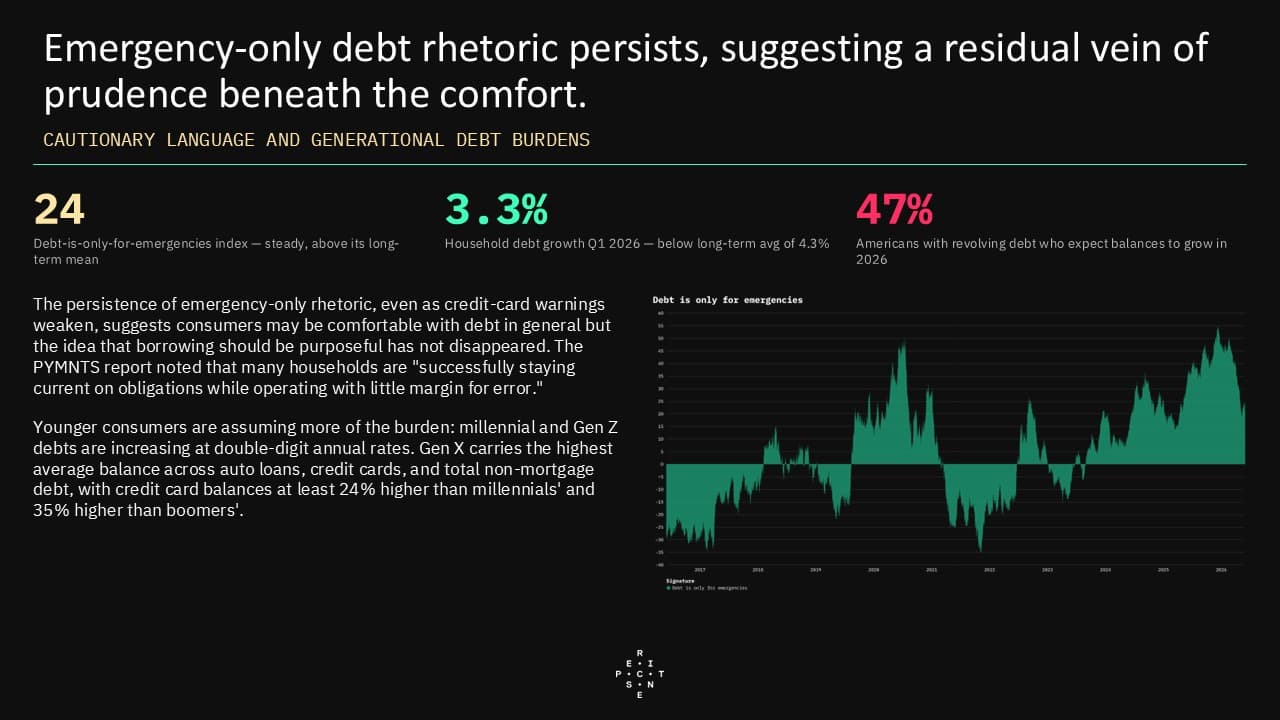
- Household debt is increasingly framed in media as a routine financial tool rather than a source of alarm. Language normalizing strategic borrowing remains elevated, and credit-card-trap warnings sit well below historical norms. Yet a modest monthly softening in debt-comfort language—alongside the persistence of cautionary "emergencies-only" rhetoric—hints that this permissive framing may rest on fragile economic assumptions, particularly if labor market conditions or interest burdens shift against consumers.
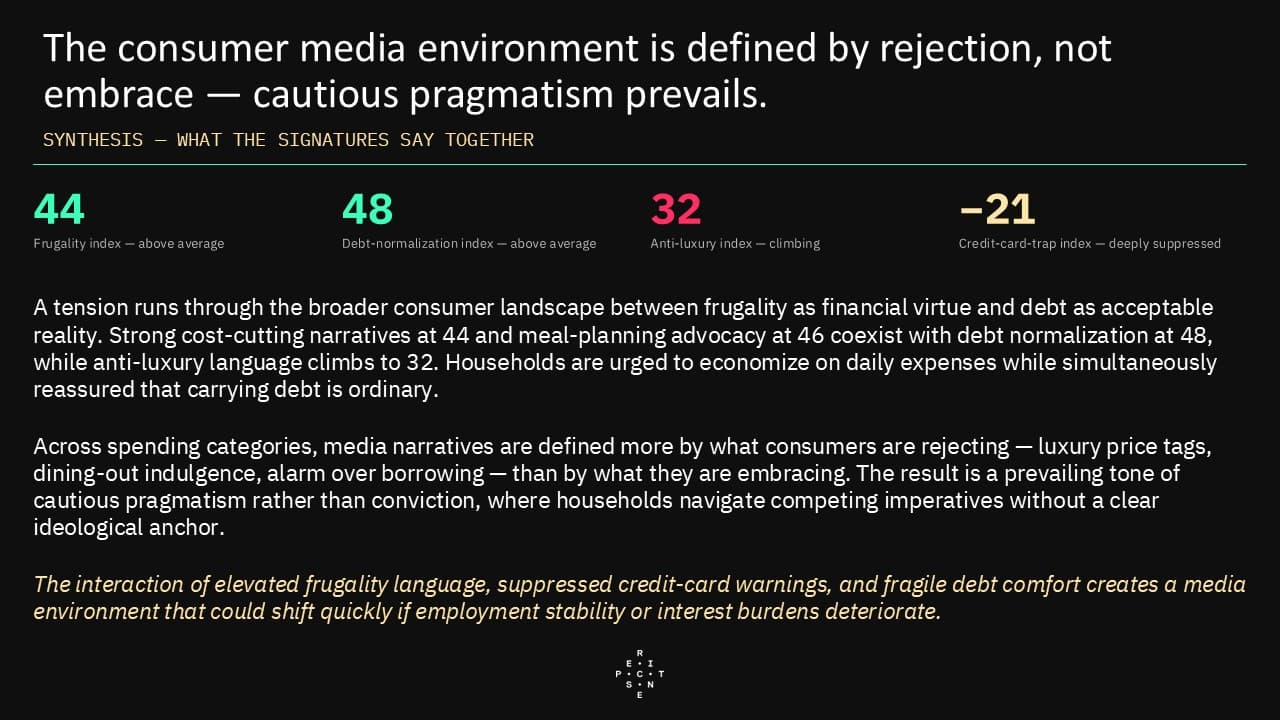
- A tension runs through the broader consumer media environment between frugality as financial virtue and debt as acceptable reality. Strong cost-cutting and meal-planning narratives coexist with elevated debt normalization, pointing to a media environment in which households are urged to economize on daily expenses while simultaneously reassured that carrying debt is ordinary. Across spending categories, media narratives are defined more by what consumers are rejecting—luxury price tags, dining-out indulgence, alarm over borrowing—than by what they are embracing, producing a prevailing tone of cautious pragmatism rather than conviction.
Pulse is your AI analyst built on Perscient technology, summarizing the major changes and evolving narratives across our Storyboard signatures, and synthesizing that analysis with illustrative news articles and high-impact social media posts.