The Afghanistan Narratives
August 17, 2021·Politics
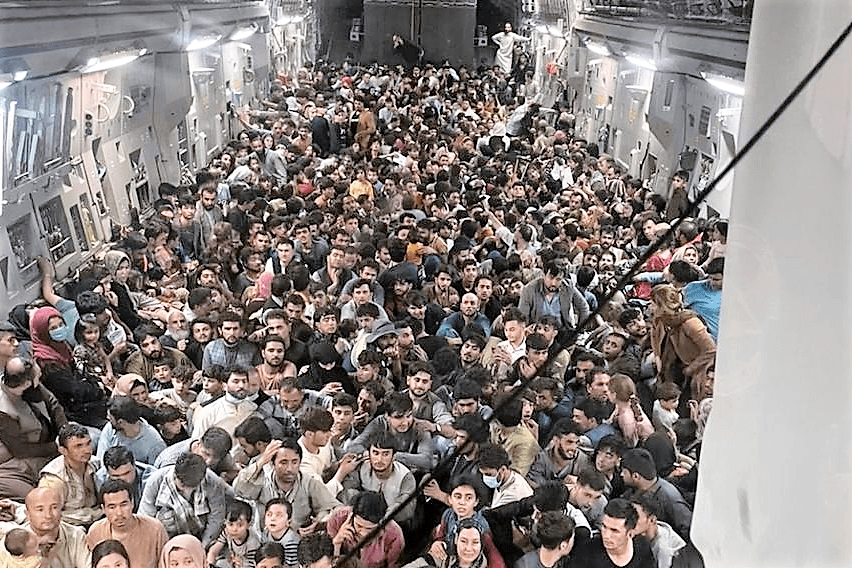
Source: US Air Force
We usually try to be cautious about drawing narrative conclusions in the middle of a news cycle. OK, maybe we aren't that cautious about it, but we recognize that those narratives can change pretty quickly. Still, what is happening in Afghanistan is big enough and the attempts in media to frame what it means are significant enough that it warrants a quick look.
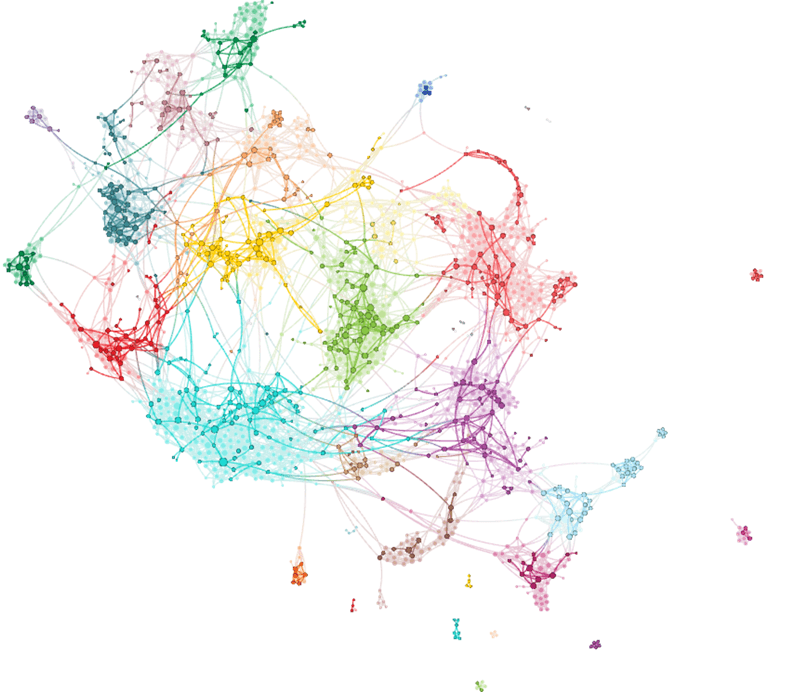
Let's first take a look at the network graph of articles published by US-based outlets about Afghanistan between Friday, August 13 and today, August 17. As usual, each dot or node is a single news article, press release, transcript or blog. Colors reference clusters of highly linguistically similar articles. Connecting lines and proximity also reference linguistic similarity. Up, down, left and right have no meaning other than proximity and its indication of linguistic similarity.
The first graph highlights in bold the articles which we associate with the nuts-and-bolts language describing the offensive conducted by the Taliban in connection with its effective takeover of Afghanistan and its government. In other words, these are the articles which are at least in part about the primary news about Afghanistan, and exclude those which are exclusively about the political implications, the rightness or wrongness of policy actions taken, or analysis of the effects of the events.
As we see below, these articles (highlighted in bold) are more or less scattered throughout the network graph, which is what you would expect in early news coverage. That is, even if your article is saying that this is all President Biden's fault or President Trump's fault or President Bush's fault or the fault of Edward Law, 1st Earl of Ellenborough, we are still at a point where most articles need to explain what has actually happened. What we can't see in the graph below but will as we move forward is that the north and northwest clusters are those most defined by the coverage of the facts of the events that took place rather than what we believe to be the most influential emerging frames for those facts.
Articles Referencing Details of Taliban Takeover (8/13 - 8/17)
Source: Quid, Epsilon Theory
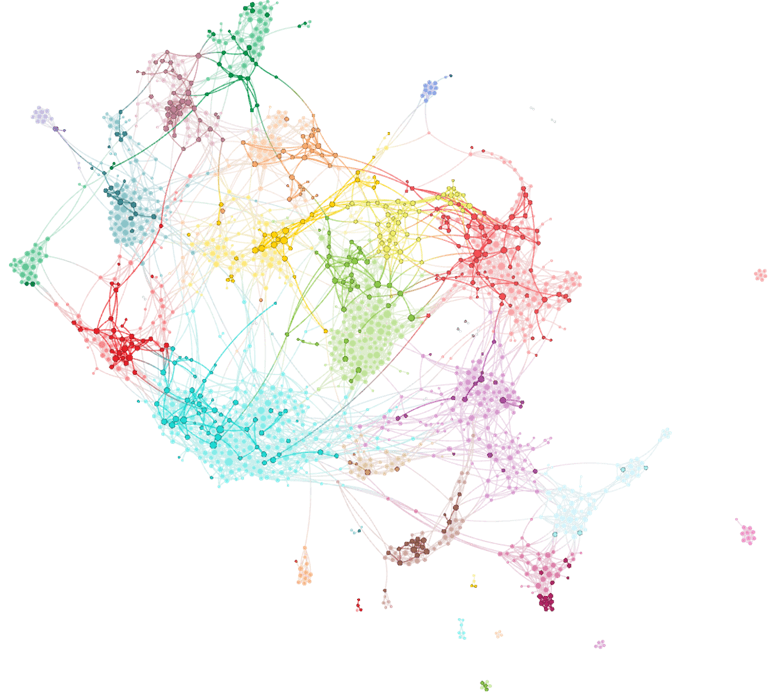
A couple of the frames that have emerged are idiosyncratic, that is, significantly driven by emphasis of a trait specific to this event. One of the most common such frames is that you should be thinking about Afghanistan based on how it affects the Afghans who helped the US. There are multiple clusters connected by this language. This framing isn't central yet, but it is present in a number of different contexts.
Framing Afghanistan in Terms of Those Who Helped US (8/13 - 8/17)
Source: Quid, Epsilon Theory
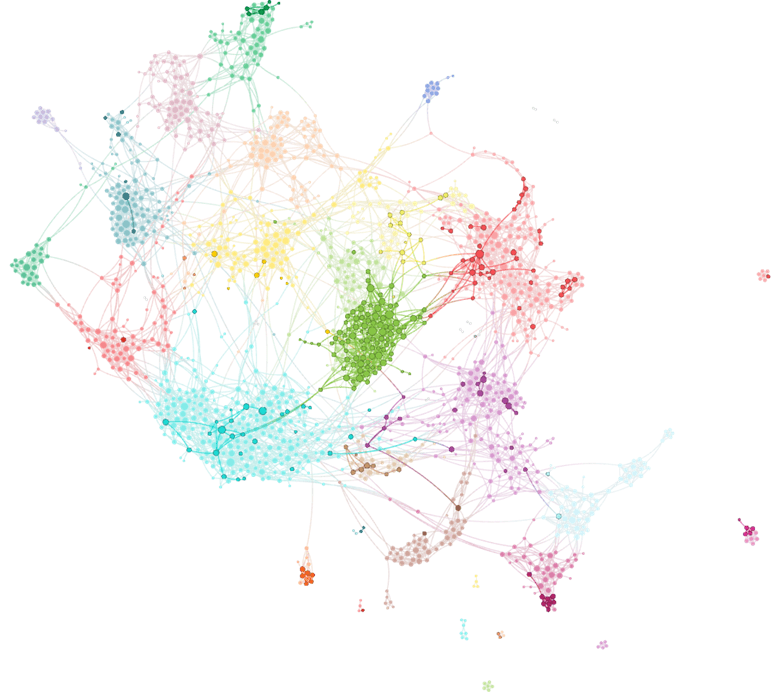
Only slightly less idiosyncratic is the framing of Afghanistan in context of the sacrifices of US veterans over the last 20 years. What is most striking about this frame is that natural language processing categorizes these articles almost entirely within a single cluster, but also at the very center of the network. What does that mean? The uniform cluster membership indicates to us that it is a cohesive narrative, which just means one that uses extremely similar language. The centrality usually indicates to us that it is a narrative which has applications to multiple topics, such as general foreign policy coverage, domestic policy analysis, geopolitical and military risk assessments, assessments of long-term impacts on things like elections, etc. This is usually the recipe for a narrative with legs. In this case - and you should know this is my opinion and not a fact present in the data - I think that the narrative of a disconnect between American civilian and military leadership IS that narrative with legs.
Framing Afghanistan in Terms of The Sacrifices of Veterans (8/13 - 8/17)
Source: Quid, Epsilon Theory
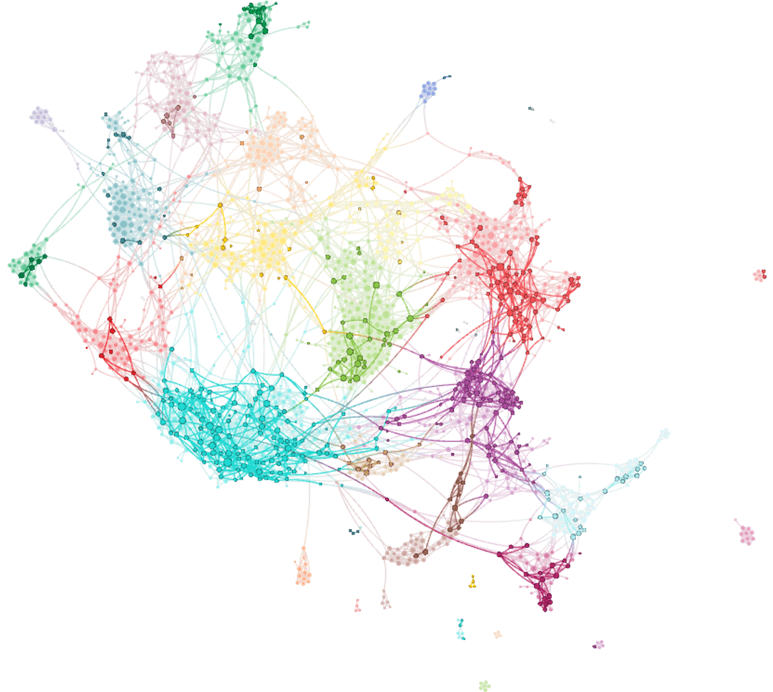
Perhaps the most widespread and influential emerging frame for the events in Afghanistan over the past few days is (unsurprisingly) that it represents "a disaster." More than that, the very special collocation n-gram "an unmitigated disaster" stands out in the data. This language is deeply connected to nearly all discussions of policy, of outcomes and of responsibility for those policies and outcomes. The outlets, narrative missionaries and others telling you how to think about whose fault this is - and there are an awful lot of those - are reliant on this deeply affected language. We note as well that there are a number of usually restrained news outlets whose editors have had a gentle red pen hand on copy with very loaded language and superlatives about the nature of these events.
So yes, a wide range of articles present stories about the disaster, tragedy, calamity and failure in Afghanistan in precisely those terms. That doesn't necessarily tell you a lot, however. Not just because what is happening in Afghanistan very obviously is a disaster, but because, frankly, a lot of these are articles saying, "This is a disaster and [Leader X] is to blame." And a lot of them are also delivering variants of "This is a disaster and it still would have been a disaster whether we withdrew 10 days from now or 10 years from now."
Those are two very different narratives.
Until they have each become part of more cohesive missionary efforts - and over the coming days and weeks they absolutely will - they are difficult to discern and differentiate from one another using most NLP techniques. We'll come back to that in a moment, but for now, let's acknowledge that there is a prominent narrative that the fall of a government backed by 20 years of effort and trillions in American taxpayer dollars in roughly a week is a Bad Thing. Let this be a reminder that our use of the term narrative does not the carry the pejorative "an explanation at odds with facts" implication of its colloquial usage.
Framing Afghanistan as a Disaster (8/13 - 8/17)
Source: Quid, Epsilon Theory
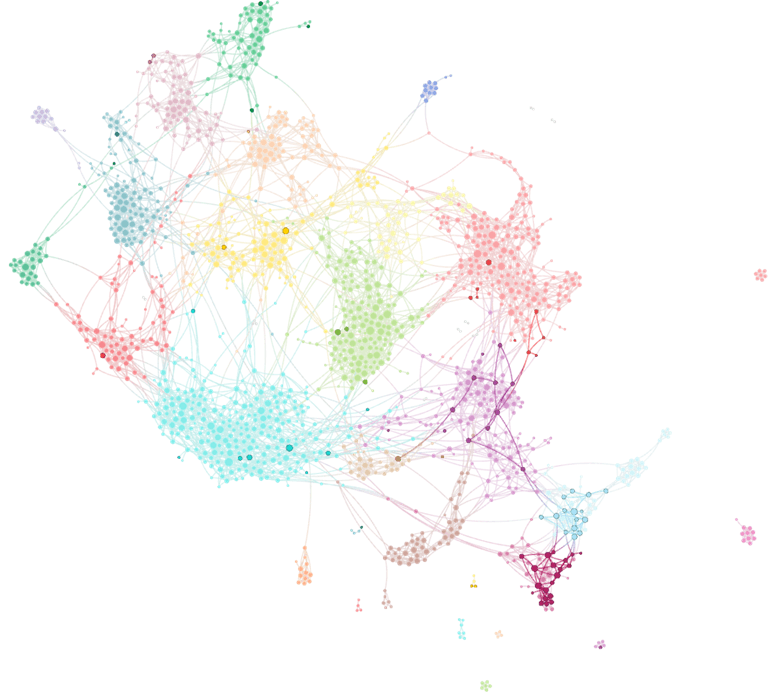
Here's the interesting thing, however. It IS possible to identify some of the linguistic features of the speeches and comments made by administration officials in defense of the way in which the withdrawal took place. We have a good language model for what the narrative that "it would have been this bad no matter how we did it, so what really matters is that we made the hard decision to withdraw" looks like. And what it looks like is the most peripheral and distinct linguistic cluster of any size within the entire network.
The administration's attempt to reframe the discussion of Afghanistan has failed. So far, anyway. Said another way, if you have felt fewer warm fuzzies coming from traditional media toward the administration on this topic than at any point in the presidency thus far, you are not imagining things. Major news and opinion outlets have rejected the reframed narrative.
You don't need us to tell you where you should come out on this. Make up your own damn mind. But do it with the understanding that the news, opinion and gray-area 'feature' content you consume exists in an ecosystem in which everybody knows that everybody knows this was a real botch job.
Framing the Disaster as Inevitable (8/13 - 8/17)
Source: Quid, Epsilon Theory
All this could very well change. We are still early in this news cycle, and a lot about this narrative structure is still in flux. An argument or angle that aligns itself well with our memetic sensibilities or political identities could change the landscape drastically. Still, we think we can make a few observations about the Afghanistan narratives active today with reasonable confidence:
- We are in the very early innings of the narrative formation around responsibility for the outcome in Afghanistan. Steel yourselves for weeks of gaslighting from every angle. Hooray.
- The Biden Administration's gambit to reframe the Afghanistan conversation as about the decision to withdraw vs. the way that the withdrawal took place has - at least for now - failed.
- The narrative of a disconnect between civilian leadership and the military and veterans is worth watching. Even if you think, as I do, that it points out a very real concern - especially if you do - be mindful of how it may affect your news consumption in the wild.