I Want It, But I Don't Like It
June 2, 2026·Media
Epsilon Theory Unplugged is an ongoing series featuring a rotating cast of authors. Each Tuesday, a new note is published. We cover a variety of topics, all focusing on our relationship with technology and ourselves. Sign up to keep up to date on the latest Unplugged notes.
Brent Donnelly is president of Spectra Markets and is a veteran FX trader and market maker. He is the author of The Art of Currency Trading (Wiley, 2019) and Alpha Trader (2021), with a sequel out soon!
I need my phone, but I don’t like it. Sure, I want GPS, all the music, and a better taxi service. But I do not want to disappear for sixty-plus minutes into a dark zone scarfing down infinite mental Twinkies.
Most are familiar with the idea that smartphones and slot machines exploit human weakness in similar ways. The major social media design elements that keep you doomscrolling have their roots in the casino industry and the recipe for a good slot machine and a good social media app is the same: High-speed, bottomless stimulation peppered with intermittent, unpredictable payoffs that tap directly into your cerebral architecture and reward system. And for many, the feeling after long sessions of smartphone use or machine gambling is the same: Regret, agitation, and that sluggish, empty feeling.
Social media users commonly explain that they are doing something they don’t want to do for much longer than they wanted to do it. This is similar to how addicts describe their relationship with drugs, alcohol, and machine gambling.
“I want it, but I don’t like it.”
As I read NYU professor Natasha Schüll’s fascinating book on machine gambling, Addiction by Design, I noticed you could replace “Machine Gambling” with “Smartphone Use” and most paragraphs would sound perfectly fine.
For example:
Unlike chess, ritual trance, or the execution of a surgical operation, all of which have natural endpoints, machine gambling is a potentially inexhaustible activity whose only sure end is the depletion of gambler funds. The operational logic of the machine is programmed in such a way as to keep the gambler seated until the point of “extinction” is reached.
Substitute “smartphone” for “machine gambling” here and the parallel is clear. TikTok, YouTube, and Instagram want you to sit still for as long as possible so they can extract the last penny from your pocket before you crumple over, exhausted, irritable, and drained. Here’s how Kruger et al. explain the Dark Zone in their paper, Contrasting Mind-Wandering, Dark Flow, and Affect During Slot Machine Play:
Some slot machine players describe entering a trance-like state while playing the slot machine, a feeling which they call the “slot machine zone” (Schüll, 2005; Murch et al., 2017). Gamblers report a strong desire to be alone in order to enter this “zone” and once in this state, problem gamblers become so absorbed with the machine that they experience an extreme narrowing of attention and feelings of positive affect (Diskin & Hodgins, 1999, 2001; Dixon et al., 2019a, 2019b; Murch et al., 2017). This extreme narrowing of attention and trance-like state that gamblers describe is somewhat reminiscent of flow states referred to in positive psychology: total engagement with the current environment to the point where attending to task-relevant stimuli is effortless (Csikszentmihalyi & Csikszentmihalyi, 1992; Marty-Dugas & Smilek, 2018).
Although flow is typically viewed as something favorable, Dixon and colleagues refer to the slot machine zone as a state of “dark flow” because of the potentially negative consequences this state engenders for the player (e.g., spending more time or money than initially planned at the slot machine).
Throughout Schüll’s book, she explains how addiction does not emerge solely from an individual’s predisposition or from the design of the machine. Instead, it is a complex interaction between human and machine.
A slot machine gambler’s experience is not just about their predisposition towards gambling disorder. It’s the interaction between their brain and the machine itself. A slot machine that looks like a video game and is programmed to detect and monetize a player’s weaknesses will exert a more powerful pull than one with a mechanical arm. The machine does not need to be evil. It just needs to be optimized. And when the optimization function is engagement, the predictable output is compulsion.
Same story with smartphones. Once you spend a few hours watching, clicking, and liking posts and videos, the tech companies know you better than your spouse does and even better than you know yourself. The algorithms have intimate knowledge of your preferences, and they use this knowledge to direct your actions, keep you engaged for as long as possible, and keep you coming back. Your attention is the coin in the machine, and the machine has been trained by billions of human test subjects to know exactly how and when to pay out.
Here’s how the former head of marketing at Instagram explains loss of agency in an excellent article for Psychology Today:
A recommendation engine chooses what you'll listen to on your commute. GPS tells you exactly how to get where you're going, and neuroscience research has shown that relying on it actually changes the brain, shifting you from building your own internal map to simply following the next prompt.
It’s a confusing relationship because a smartphone is not one thing. It is two things fused together: a utility layer and an extraction layer. The extraction layer has me playing Clash Royale long after I don’t feel like playing anymore. Scrolling Twitter on a sunny Saturday. Delegating my agency to an algorithm. Half-listening to a family update from my wife because I’m checking my email for no reason on a Thursday evening after dinner. The shocking and amazing thing about the unprecedented economic success of surveillance capitalism is how easily many of us (including me) surrendered to the extraction layer without much of a thought or a fight.
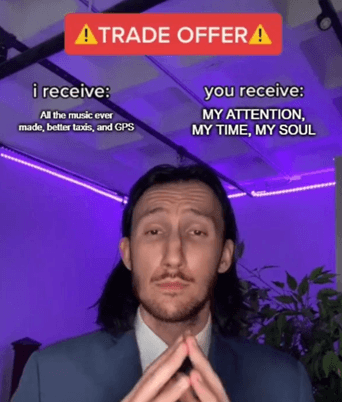
I have grudgingly accepted that I cannot get rid of my phone. It is a necessary evil. But I am now keenly attuned to the adversarial relationship—I pay $999 and hand over my time and attention to a corporation. They perform unholy alchemy, transmuting my time and attention into cash. That cash pays for executive compensation and stock buybacks. In return, I get all the music ever created by humanity, a handheld comms device, frictionless taxi dispatch, and GPS.
While it’s fun to read articles in the New York Times or watch YouTube videos about cutting edge neo-Luddites who go months or years sans smartphone, that’s not happening for 99.9% of us, including me. So, I am holding two contradictory facts in my head at once: 1) I can’t live without this thing and 2) When I play around on my phone, I am being played.
Here is my strategy guide. How I will fight back—with escalating levels of resistance.
EASY
Before I take a photo, or post something to social media, I will ask myself: What if I don’t post this? Will it matter? Will anyone care? Since I am not an influencer, the answer is almost certainly: No. Nobody’s going to care. The world will not miss that photo of me with the colorful drink laughing it up with the funny guy from Amsterdam at the pool bar in the Cayman Islands. My Dad isn’t going to wonder why I haven’t posted any IG reels showing the POV from my seats at the Mets game. I will send photos to loved ones and have a meaningful conversation with them. I will not post more slop on the streams.
When someone starts talking to me, I will immediately put my phone face down. It’s a simple statement: “You are more important than this thing.” Sure, it’s easy for me to keep scrolling as my son fills me in on the new MTG meta, or my wife asks what I feel like for dinner. But that’s not the kind of dad or husband I want to be.
No phone in the bathroom. Dude, you’re peeing. You don’t need a phone for that.
MEDIUM
Be a good example. My experience as a parent has been that telling my kids what to do has less impact than doing the right thing and hoping they follow along. They are not going to sit there for a 30-minute lecture on conflict resolution, but they will see and emulate the way my wife and I resolve a disagreement. I can tell them phones are bad, and they will nod their heads and scroll on. Most wisdom cannot be transferred verbally.
A flashbulb memory from 1985: My Dad and I walk on dry brown grass across a field on the way to do some batting practice on the baseball diamond behind the middle school near where I grew up. We’re chatting about box scores or Expos highlights or whatever when an empty potato chip bag rolls in front of us. I ignore it. He picks up the bag, puts it into his pocket and we continue the conversation. There is no judgment or head shaking or reprimand for some imagined litterbug. No outrage.
He wasn’t doing a performative act or delivering a teaching moment. He just doesn’t want to live in a world where chip bags are blowing around, and he doesn’t expect someone else to pick them up because he knows: if everyone expects someone else to do it, no one does it. And because it was the 1980s… He didn’t snap a photo of the chip bag in the grass and post it on Instagram with a caption, like: “Litterbugs! I hate them so much!”
Silent, non-performative acts have power. If you sit quietly reading a book made out of paper in your living room, your kids will see that. They might not sidle up on the couch and immerse themselves in The Hobbit like you wish they would, but a seed has been planted. Will it grow? Not all seeds grow! All you can do is plant them and water them and hope for the best.
If your son walks in the room and you glance up from your phone and go back to scrolling through IG or Twitter slop, you just made a statement. If you put the phone face down and smile at him, you’ve made the opposite statement.
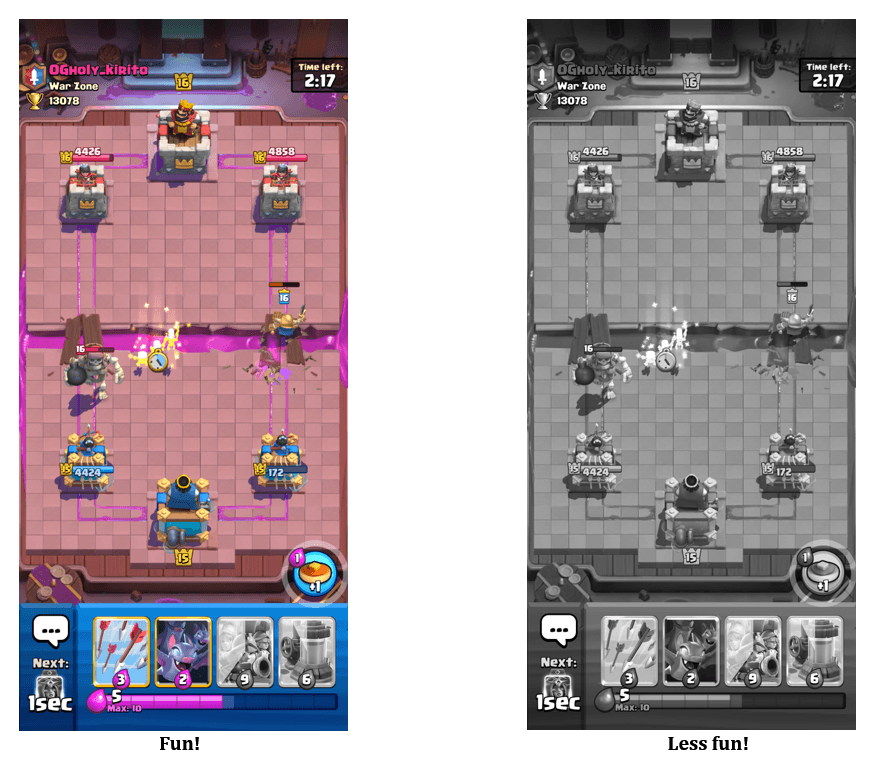
Grayscale your phone. I have found this weirdly effective. The phone still works perfectly well, but it’s just not very fun to look at. The dopamine drops. It becomes less attractive and more functional.
Accessibility / Display & Text Size / Color Filters / On / Grayscale.
There. Done.
Leave the phone in the car. It’s not a toddler. It won’t perish in the heat. As I stand undistracted in a lineup for the first time since 2014 or so, I feel my brain cool down; I might even meditate for a minute. Meditation does not have to be a five-day act of silent, hardcore Buddhism in a monastery upstate. Sneak in a minute or two of micro-meditation here and there and enjoy brief contact with your inner self.
When I go into a store or a mall or a friend’s house without my phone, I notice how many times I reach for it and realize what a stupid habitual reflex that is. Sure, as I share a drink with a friend, questions will pop into my head and go unanswered. Who won the 1989 World Series? What is Jay-Z’s real name again? It doesn’t matter! I don’t need to Google the answer to every random question that pops into my head.
It’s Shawn Corey Carter.
Jay-Z’s real name is Shawn Corey Carter.
Wait 30 minutes before checking my phone in the morning. This is hard because I work in finance and the second I wake up, I’m dying to know how markets misbehaved overnight. But instead of checking financial news first thing, or opening up Twitter, I should want to take in the morning sky. Look at real birds. Hear actual tweets.
The first hour of the day is a critical mood-setter. I need to feed my brain peace for breakfast, not chaos.
HARD
Go to a concert, sporting event, or wedding without my phone. You know what’s really boring? That video you sent me last week from the Kings of Leon concert. I really didn’t find it interesting at all. I have never once watched the twenty video clips I shot on my phone at the Guns N’ Roses concert in 2018.
Just last year, I took a two-minute video of Busta Rhymes performing at the Knicks halftime show. For what? For why? I showed it to my kids and after about 14 seconds, their eyes glazed over and they both quietly slinked away. Shameful.
From now on, I will leave my phone at home or turn it off when I get to the concert.
And when I go to a wedding, I will think to myself… You know who is really good at taking wedding photographs? Wedding photographers.
Delete the apps that make me feel bad. Think about how your phone makes you feel. How do you feel when you come off Twitter or Instagram? Angry? Sluggish? Irritated? Or peaceful and full of joy? Does the light inside you dim or brighten as you scroll?
When I answer this honestly, it’s easier to delete a ton of apps like I’m going through the closet, throwing out old clothes. I miss them at first. But if I can stay strong for a couple of weeks, the yearning fades.
I need Twitter for work because it’s the only thing I use for marketing. But I don’t need to use it while I’m peeing at 2 p.m. on Saturday or while I’m waiting in line at the car wash. It’s okay to ride an elevator in silence. I have deleted Twitter off my phone and I feel happier.
The astonishing fact is that stimulation is not the same thing as happiness.
BOSS LEVEL
24- or 48-hour detox. Can I go 24 hours without my phone? “I need the GPS” and “Work needs to be able to get ahold of me” are the alcoholic’s equivalent of “Every social interaction in my life involves alcohol” or “I just need one or two to take the edge off.”
I turned off my phone for all of last Sunday and nothing bad happened. I will try again this Sunday. Maybe I’ll do 48 hours someday.
Final boss: Delete the whole slop cluster off your phone: Twitter, Instagram, YouTube, TikTok, Reddit. Hard, but possible. You can still use them on your computer, if you need to. Or not.
These are some of the actions I’m taking to fight back against my phone now that I’ve admitted it’s both indispensable and insufferable. This is a work in progress. I have already deleted and reinstalled Twitter five or six times in the past two years. When I am not my best self, I am tempted by the ludicrous nonsense, and I want to plug back in. Then, I scroll the asylum for a while, become annoyed, and delete it again.
When I have a spare half hour on a Saturday afternoon, my first thought is still to flip open Clash Royale or Google News. But I don’t always listen to my first thought anymore. Many, many of my first thoughts are not my best thoughts.
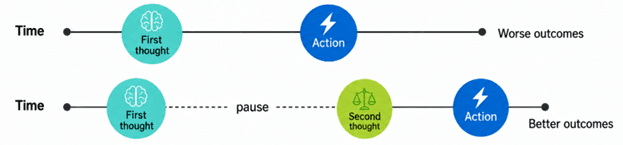
As I embrace the idea that my phone works for me, not the other way around, I make fewer bad moves. I spend less time dropping coins into the machine. I am calmer and less agitated. And I am much less likely to torture my children with jiggly, low-fi video clips of Busta Rhymes.