A Republic if You Can Keep It Pulse
The Pulse
September 1, 2026·A Republic if You Can Keep It Pulse
Executive Summary
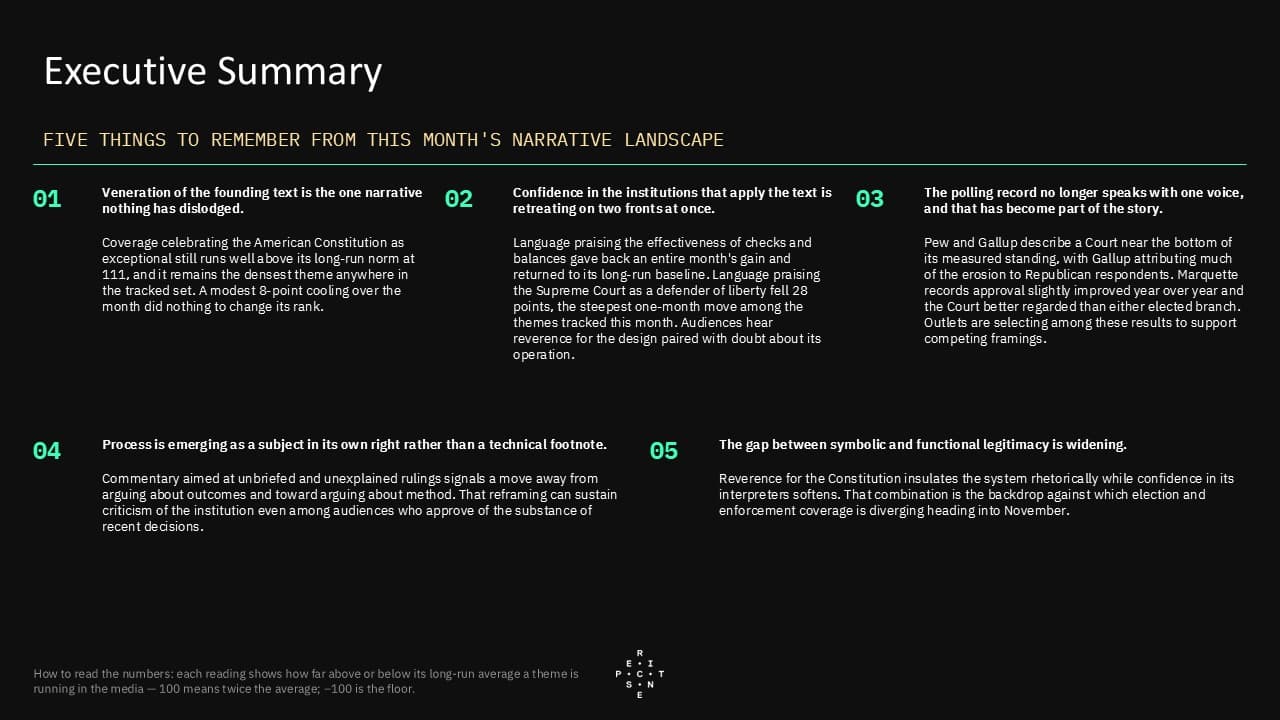
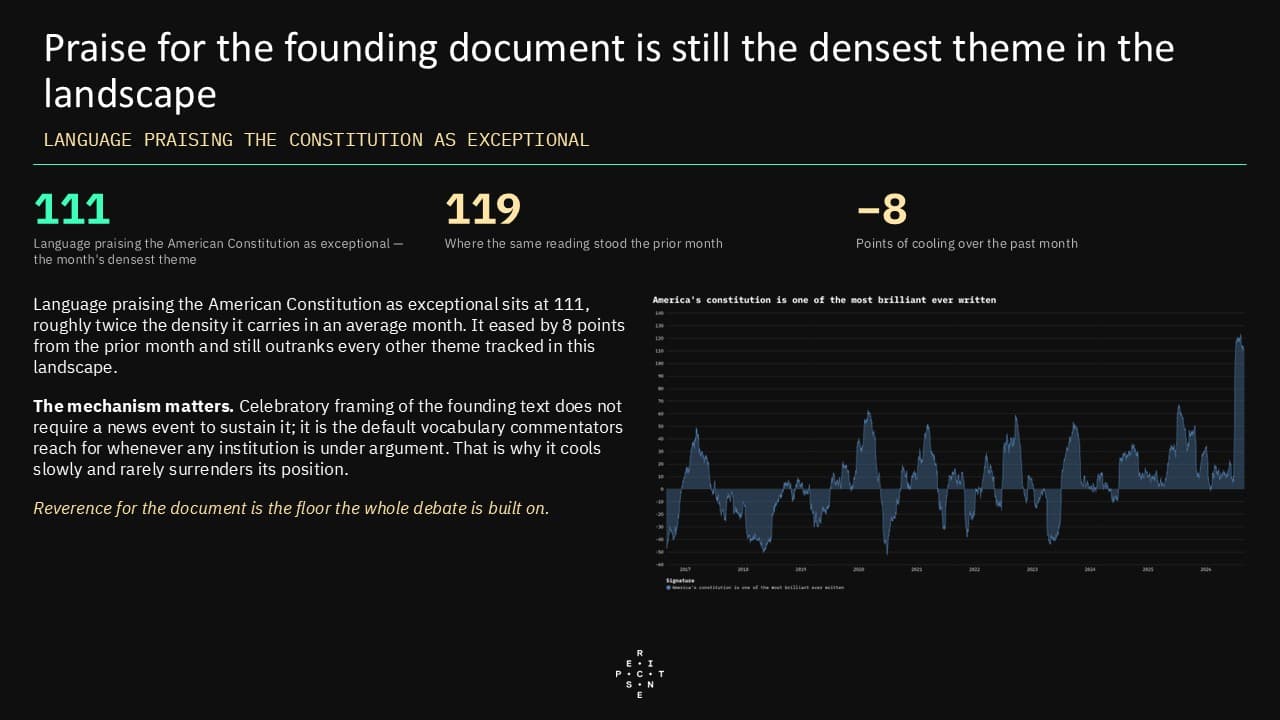
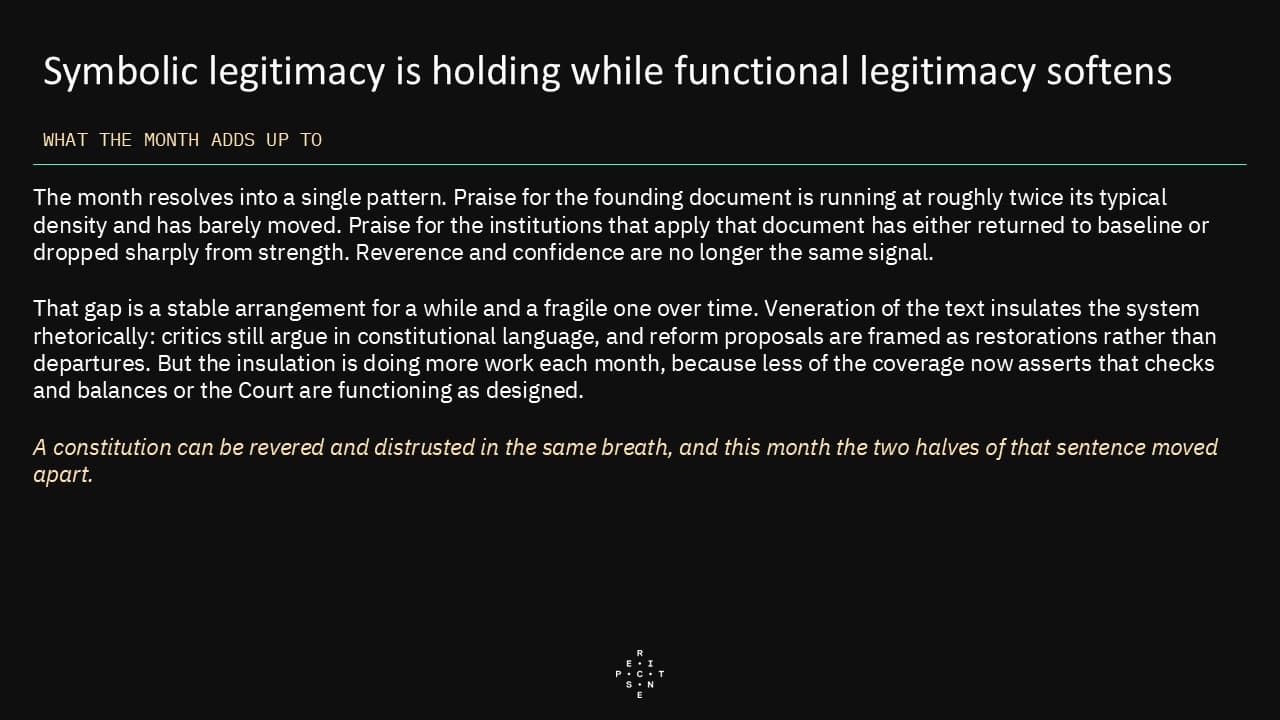
- Coverage continues to celebrate the founding document itself at a level well above its long-run norm, and this remains the densest reading anywhere in the tracked set, even after a modest cooling over the past month. Veneration of the text is the one narrative that has not been dislodged.
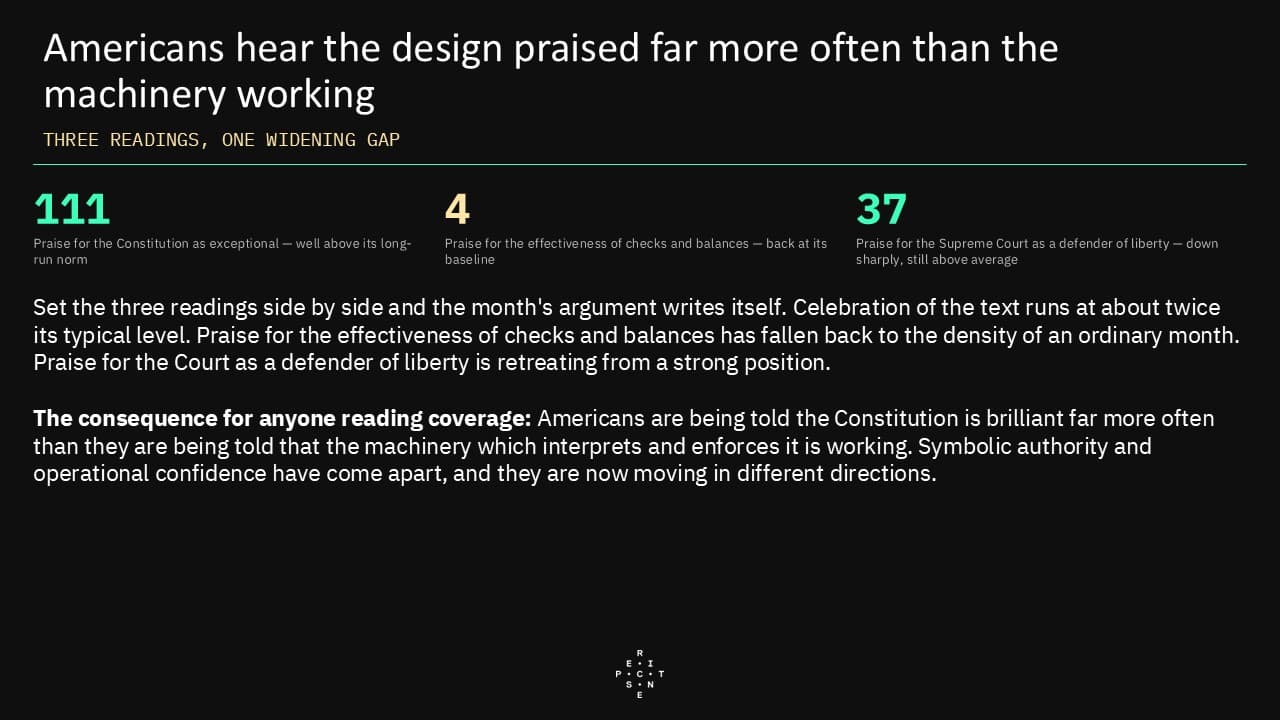
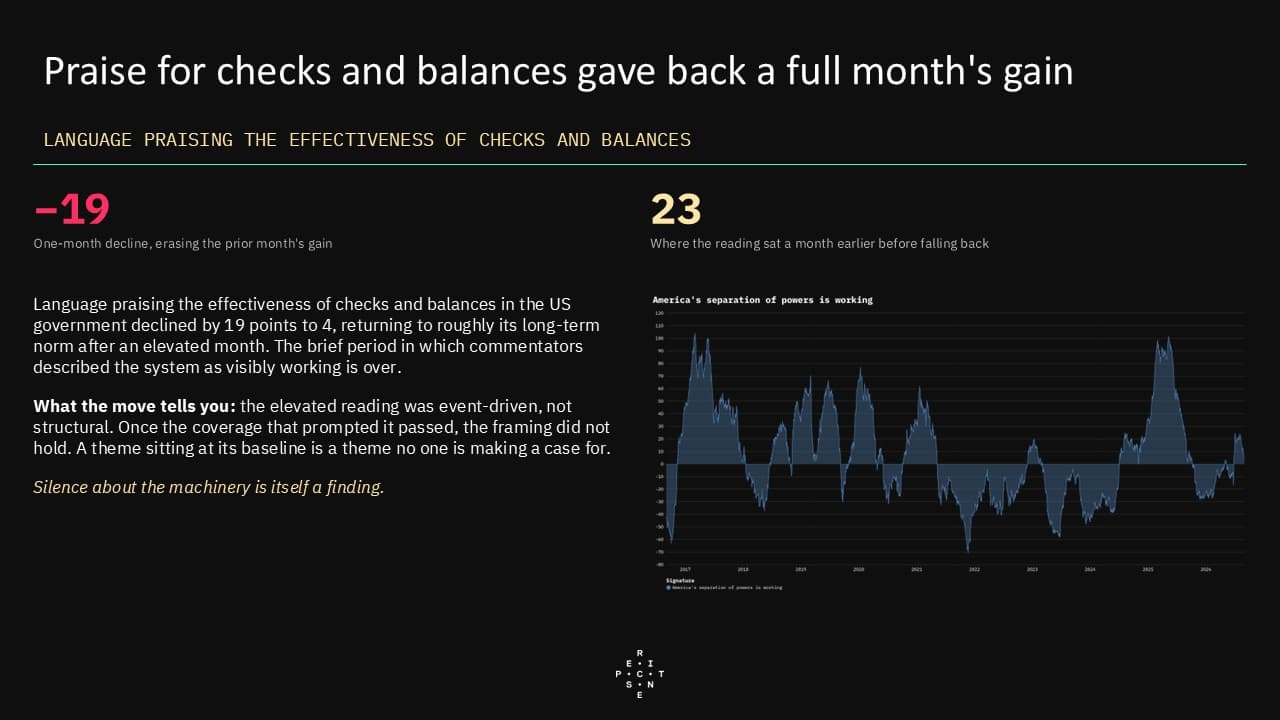
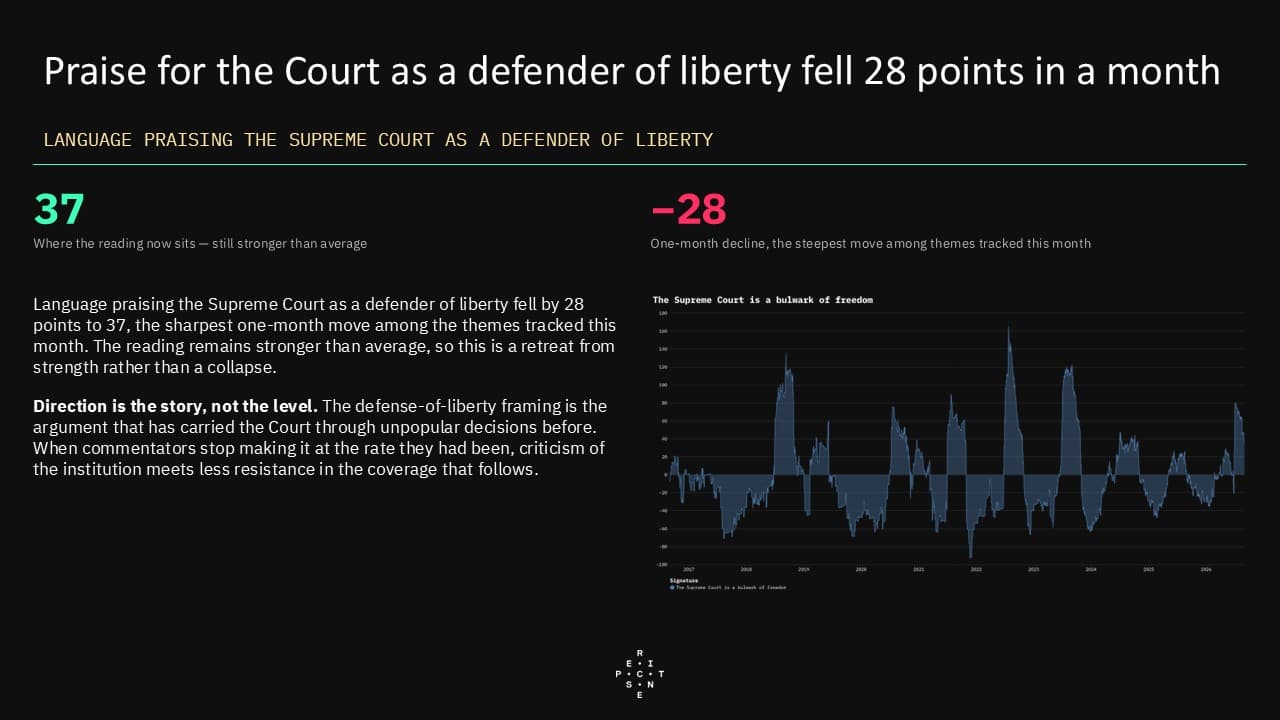
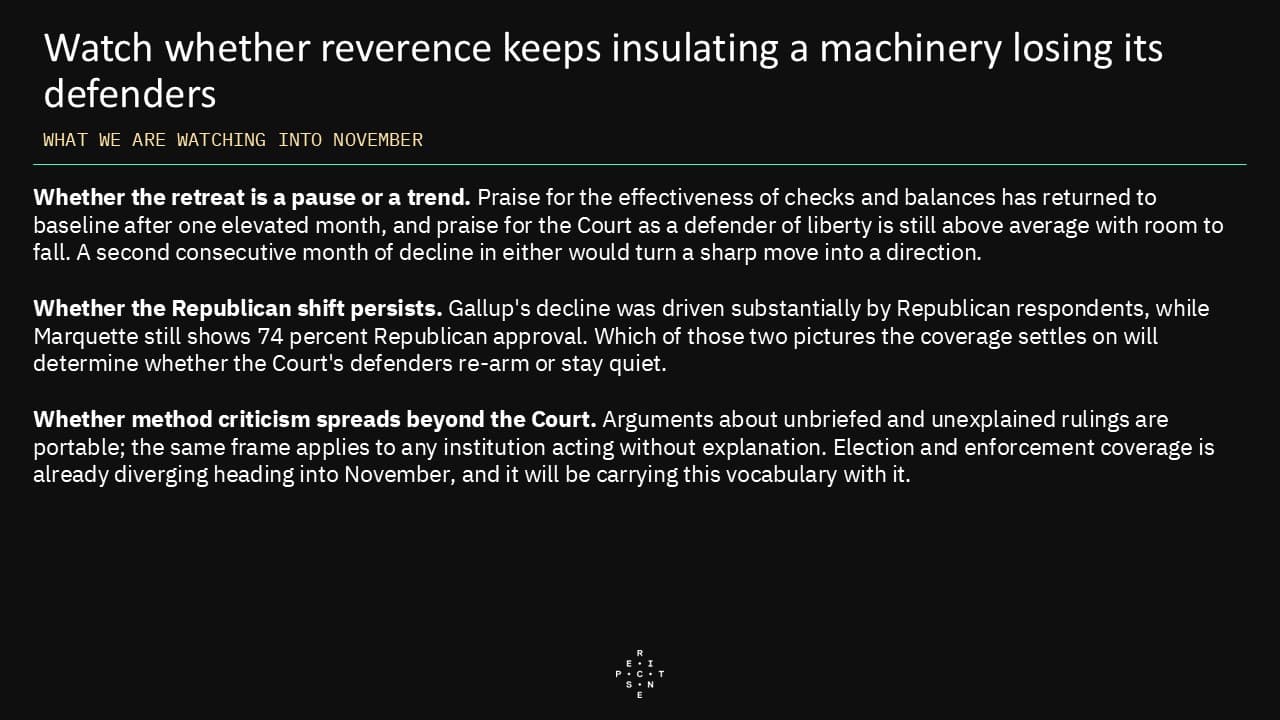
- Confidence framing around the institutions that apply the text is retreating on two fronts at once: our signature tracking praise for the effectiveness of checks and balances gave back an entire month's gain and returned to its historical baseline, while praise for the Supreme Court as a defender of liberty posted the sharpest single-month decline in the set. Media audiences are hearing reverence for the design paired with growing doubt about its operation.
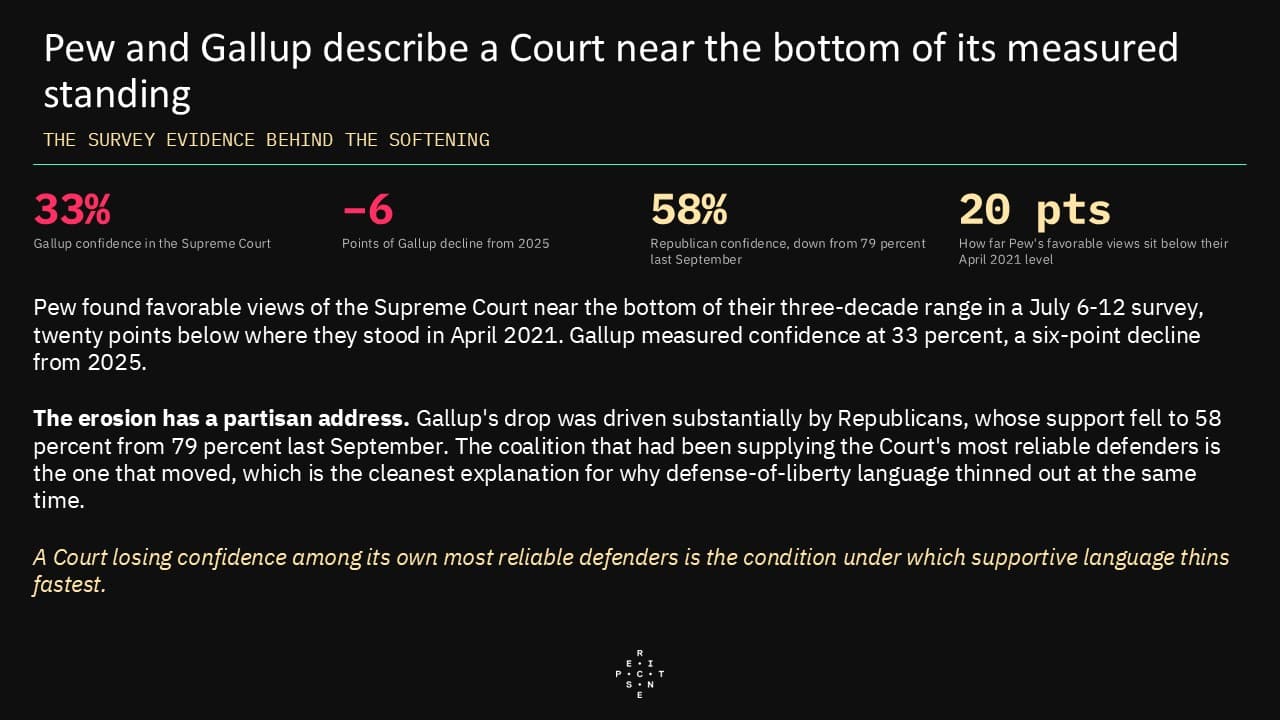
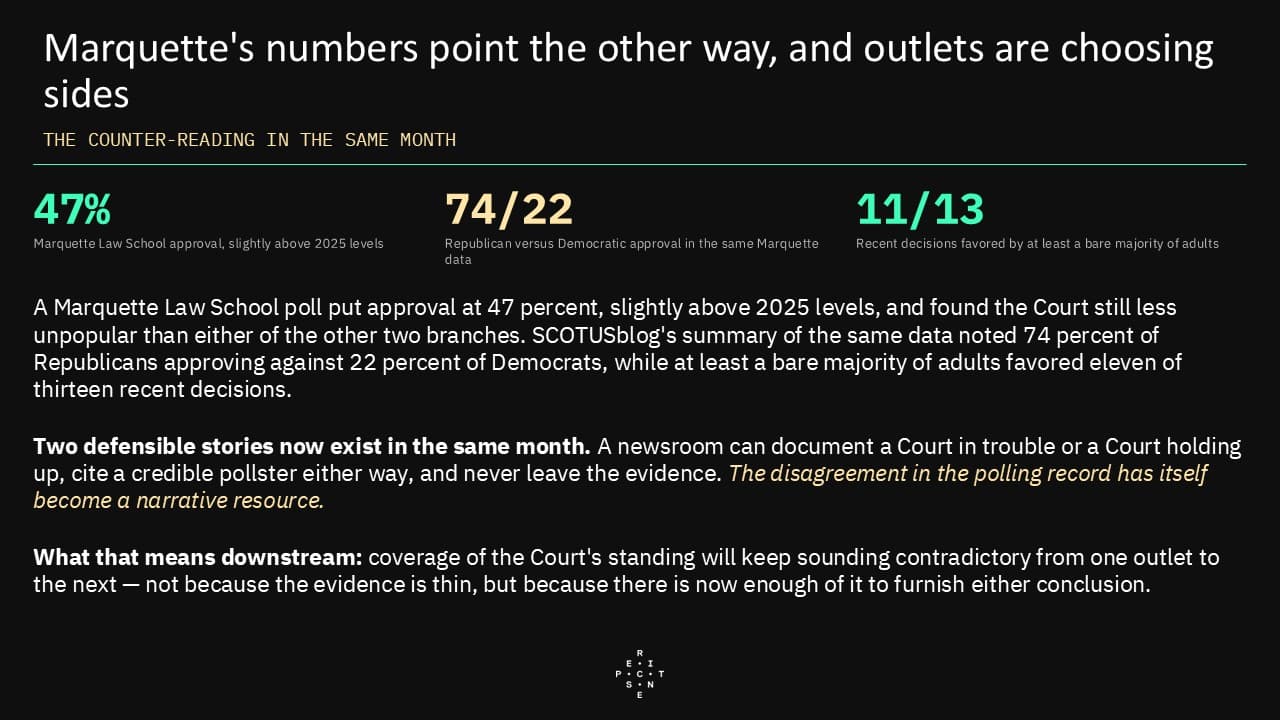
- The polling record cited in the report does not speak with one voice, which itself has become part of the story. Pew and Gallup describe a Court near the bottom of its measured standing, and Gallup attributes much of the recent erosion to Republican respondents; Marquette, by contrast, records approval slightly improved year over year and finds the Court better regarded than either elected branch. Outlets are selecting among these results to support competing framings.
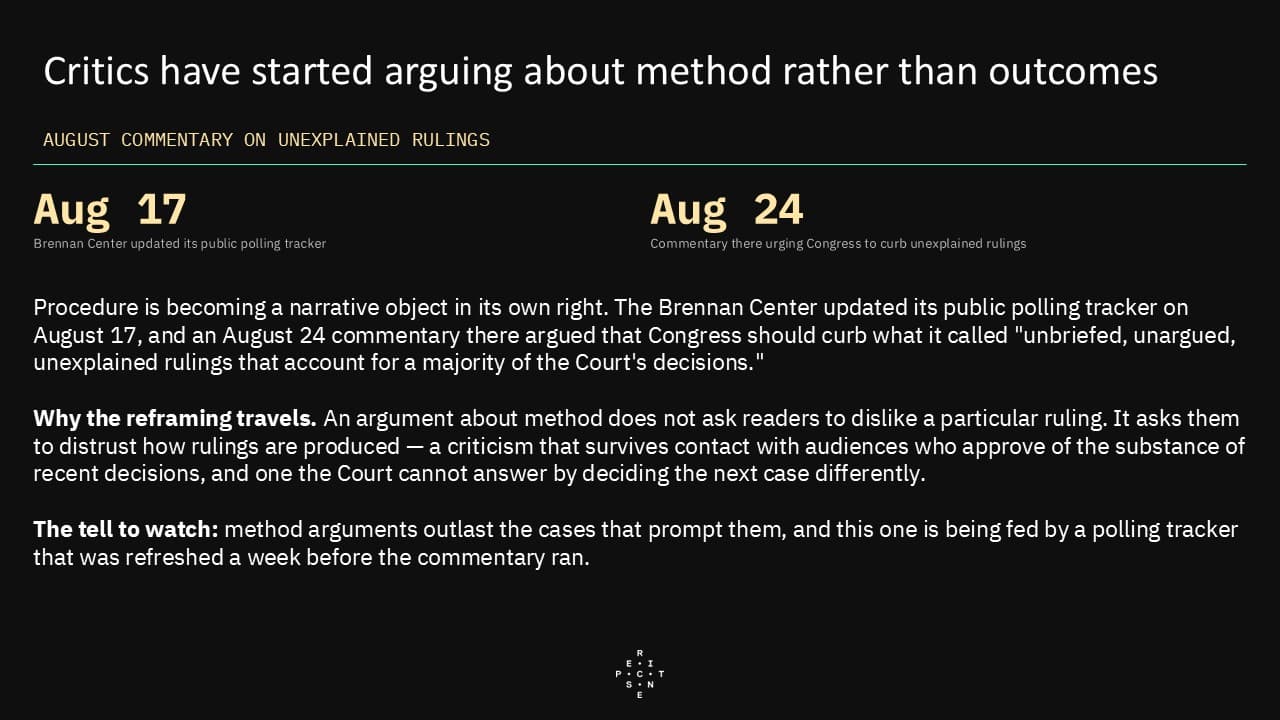
- Process is emerging as a subject in its own right rather than a technical footnote. Commentary directed at unbriefed and unexplained rulings signals a move away from arguing about outcomes and toward arguing about method, a reframing that can sustain criticism of the institution even among audiences who approve of the substance of recent decisions.
- Taken together, the readings suggest a widening gap between symbolic and functional legitimacy. Reverence for the Constitution insulates the system rhetorically while confidence in its interpreters softens, and that combination is the backdrop against which election and enforcement coverage is diverging heading into November.
Last updated: ...