We Can Do It Pulse
The Pulse
August 3, 2026·We Can Do It Pulse


EXECUTIVE SUMMARY
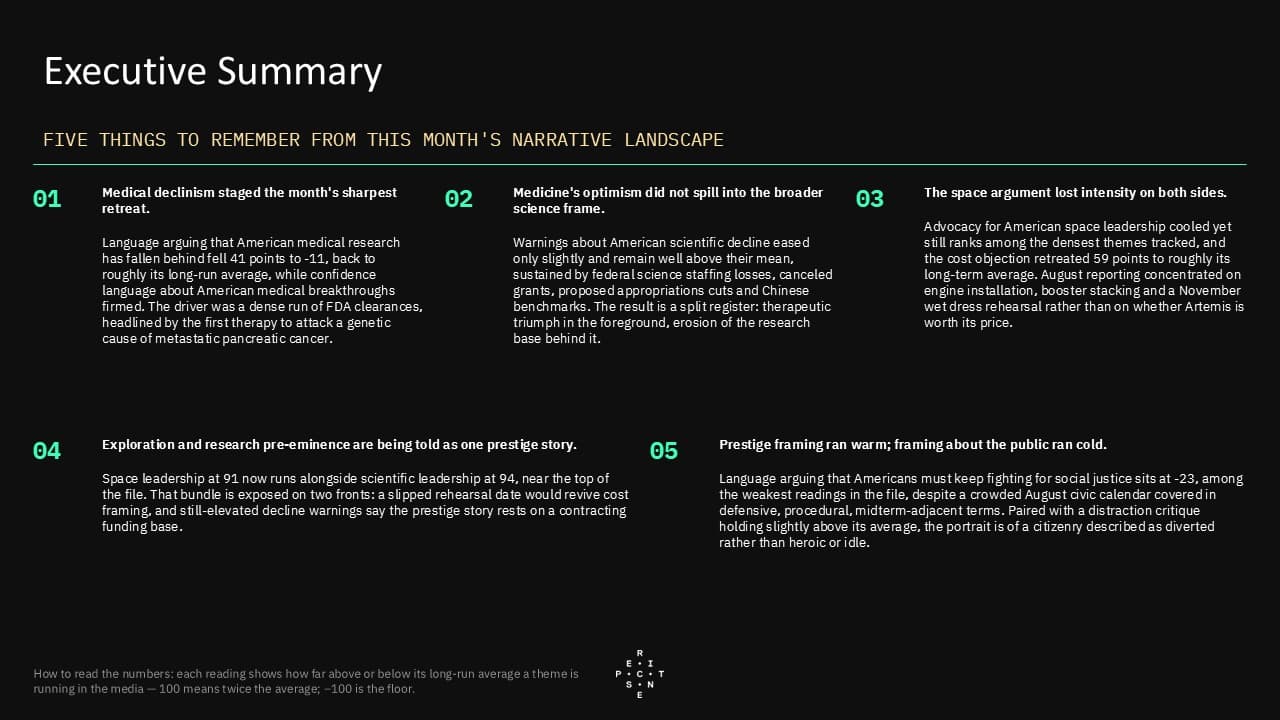
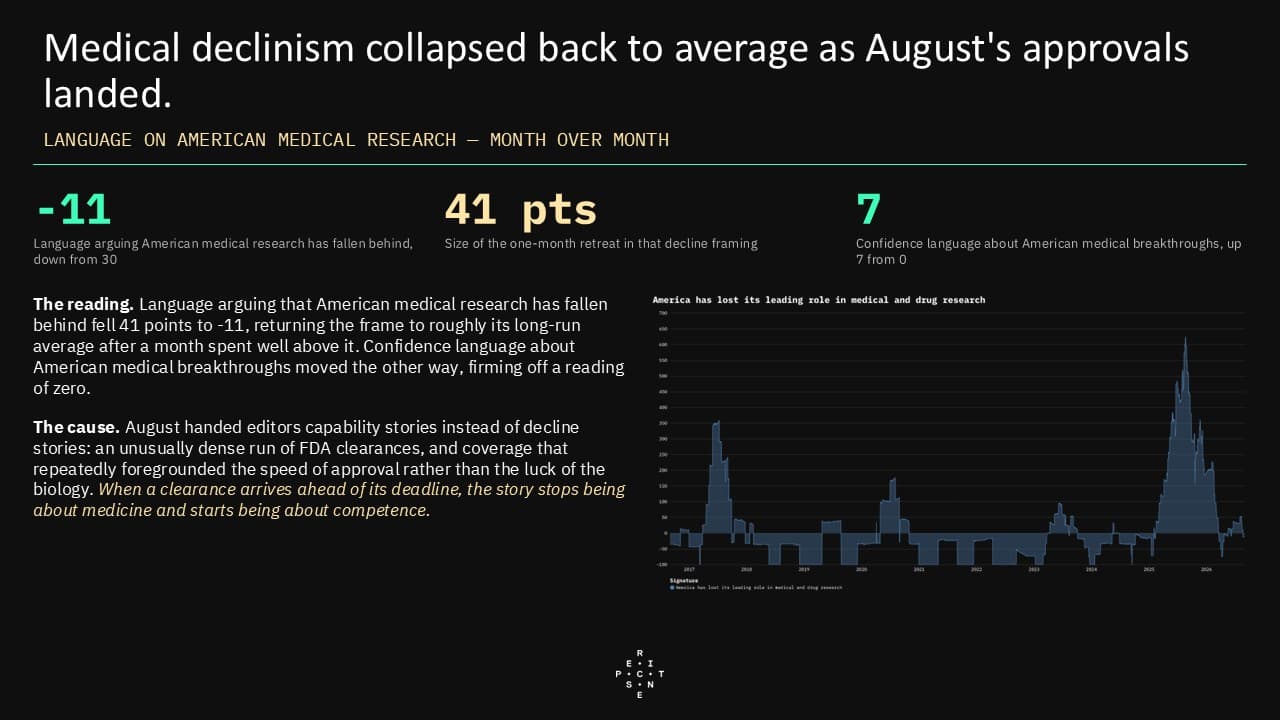
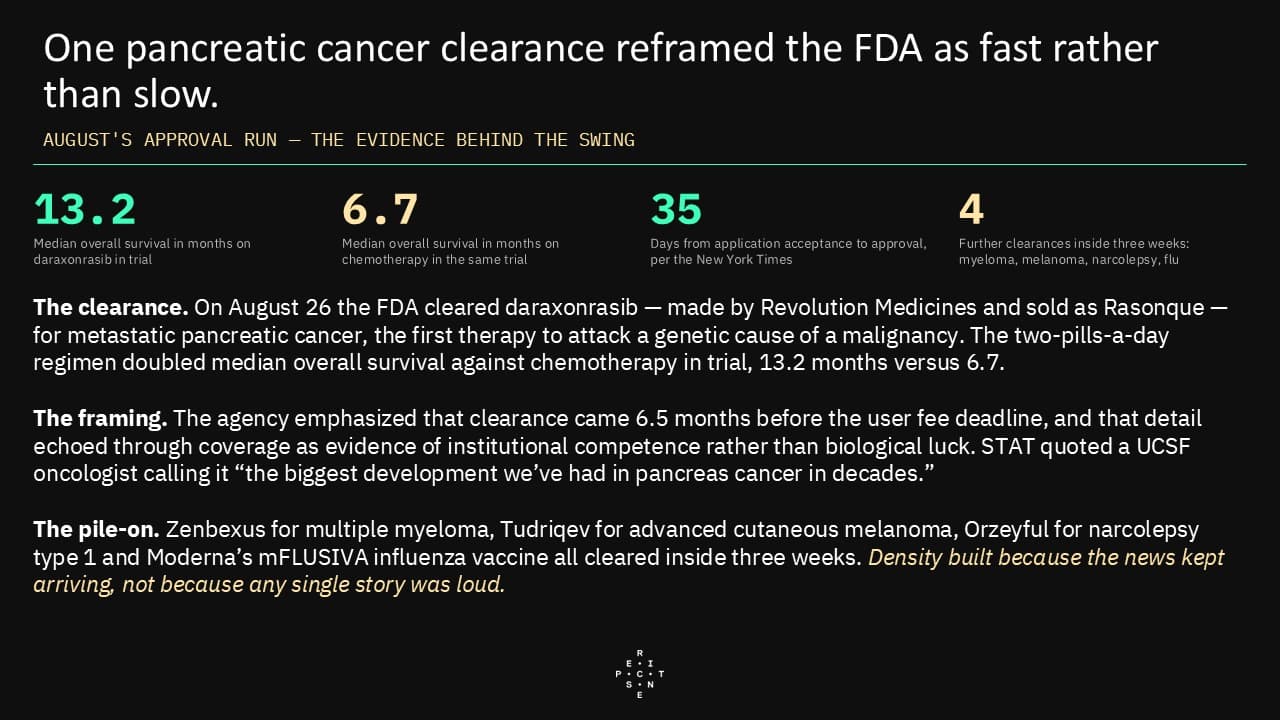
- Medical declinism staged the sharpest retreat anywhere in the file. Perscient's semantic signature tracking the density of language arguing that American medical research has fallen behind collapsed back toward its long-term average, while confidence language about American medical breakthroughs firmed. The driver was an unusually dense run of FDA clearances, headlined by the first therapy to attack a genetic cause of metastatic pancreatic cancer, and coverage repeatedly foregrounded the speed of the approval relative to the user fee deadline — framing regulatory competence, not merely biological fortune, as the story.
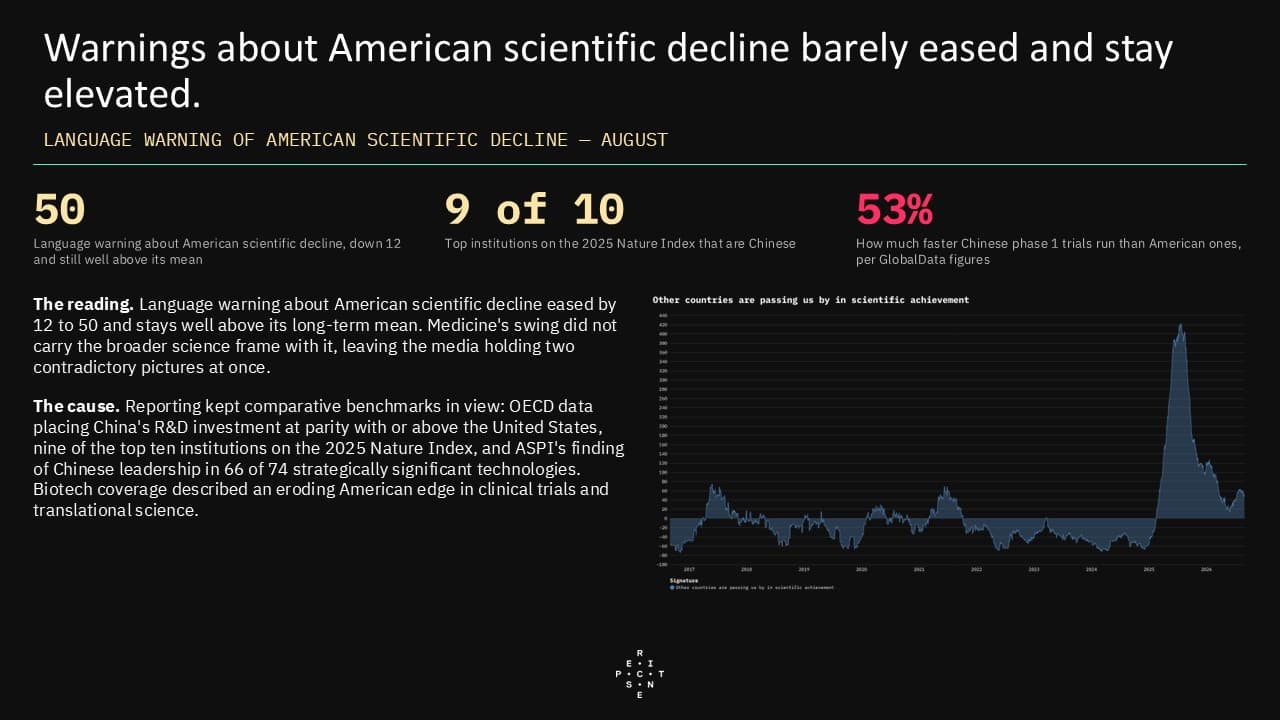
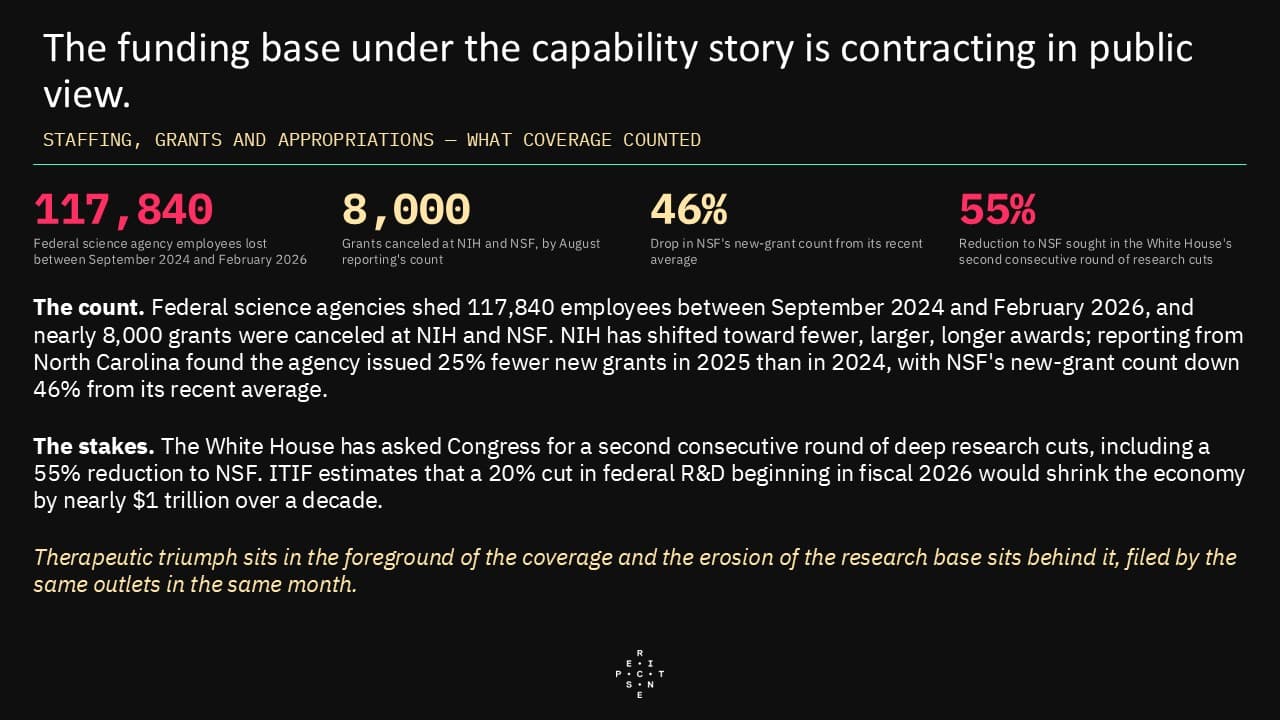
- Medicine's optimism did not spill over into the broader science frame, leaving media holding two contradictory pictures at once. Our signature tracking warnings about American scientific decline eased only slightly and remains well above its mean, sustained by reporting on federal science staffing losses, cancelled grants, proposed appropriations cuts, and comparative benchmarks showing Chinese leadership across research spending, institutional rankings, and trial speed. The result is a split register: therapeutic triumph in the foreground, erosion of the research base in the background.
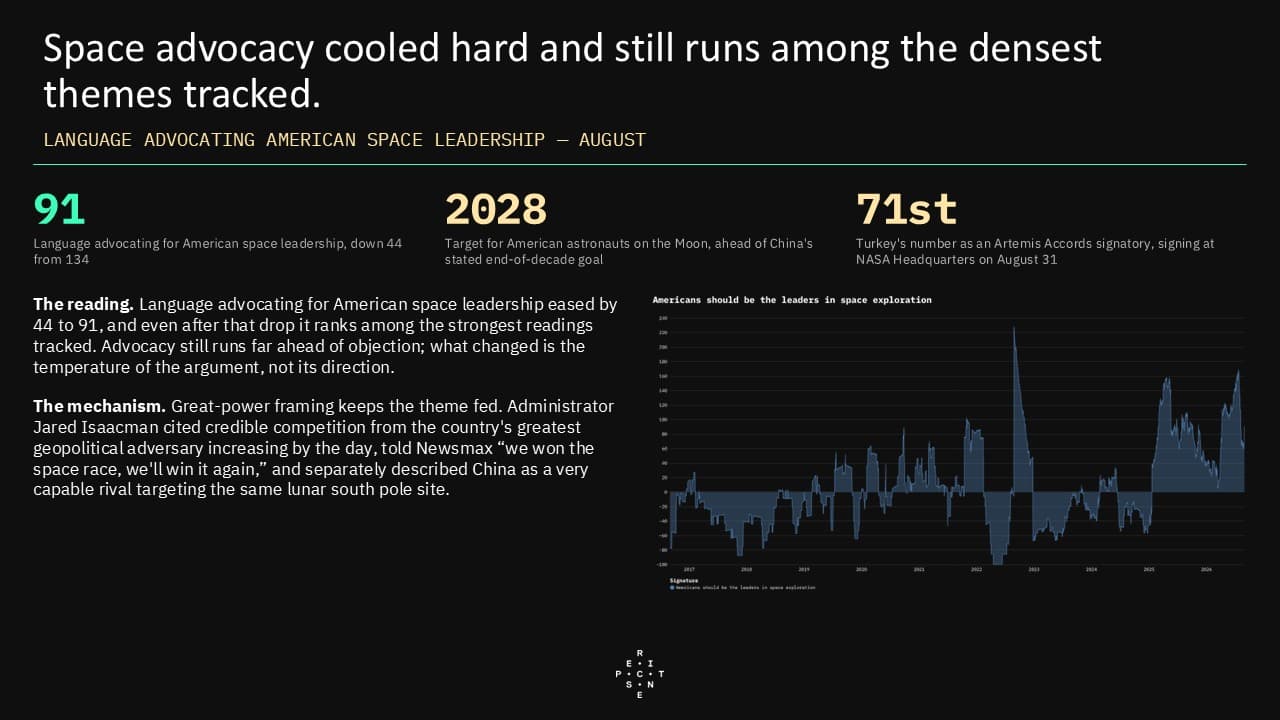
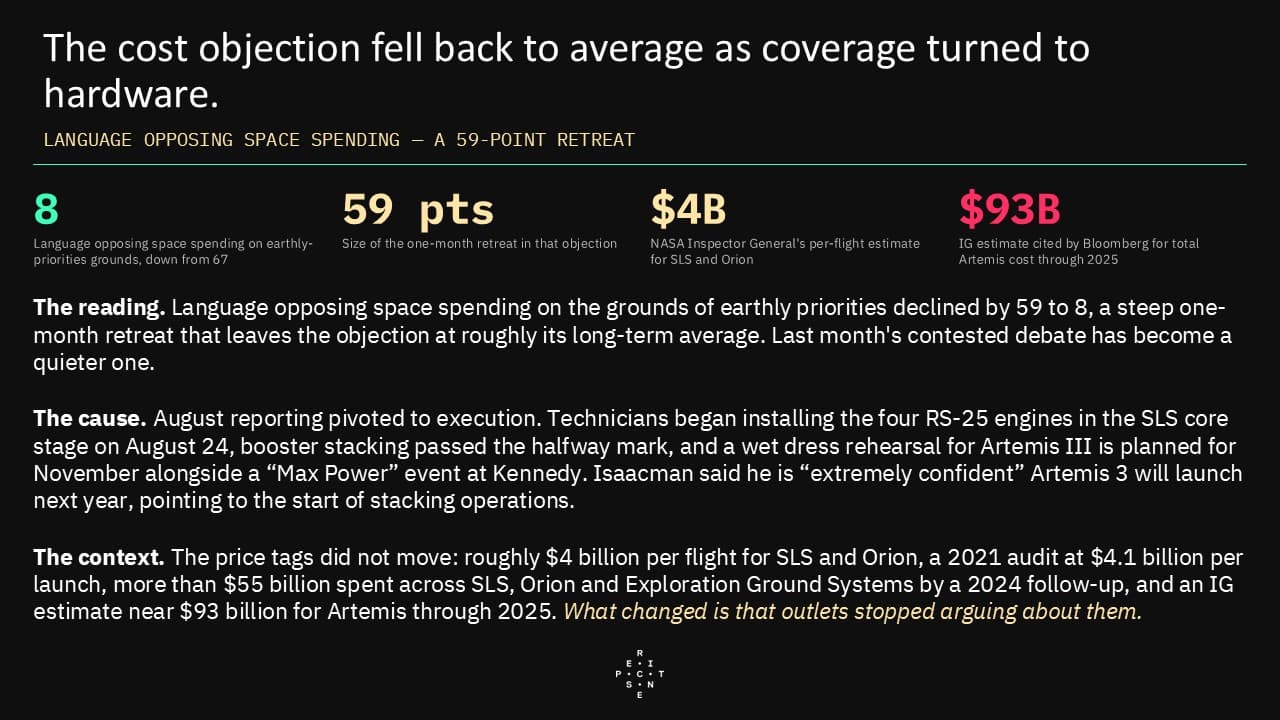
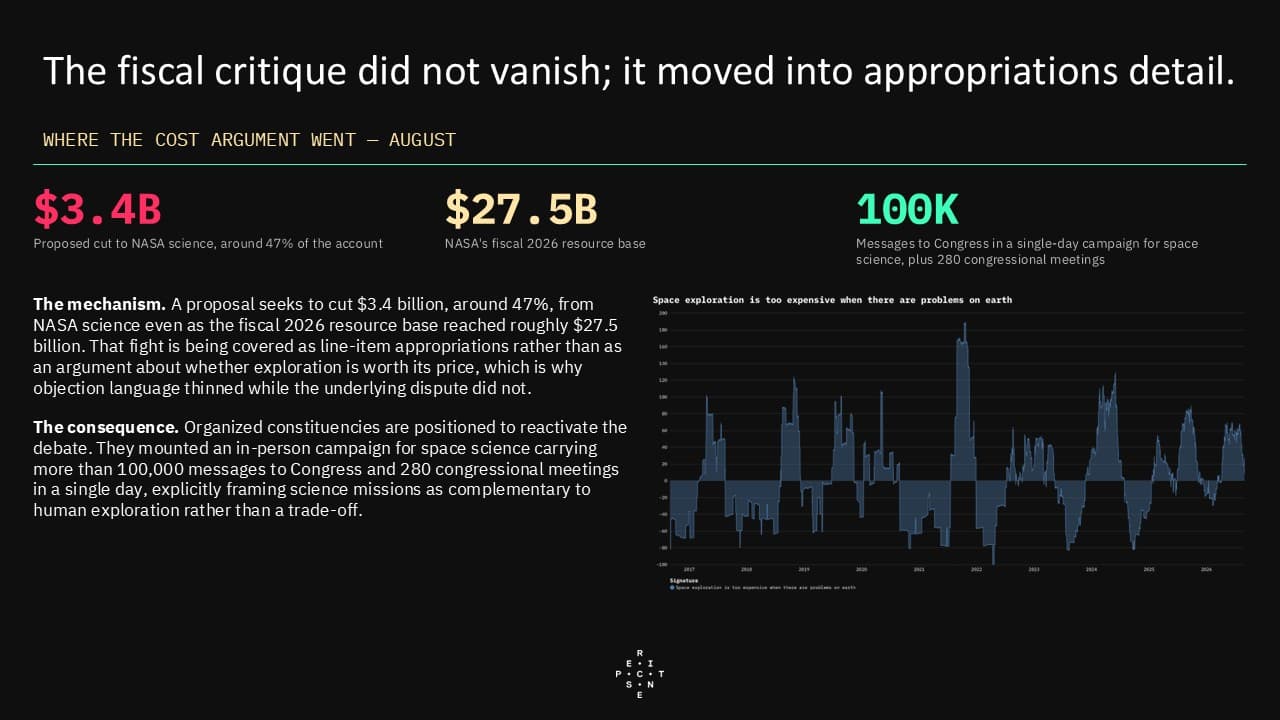
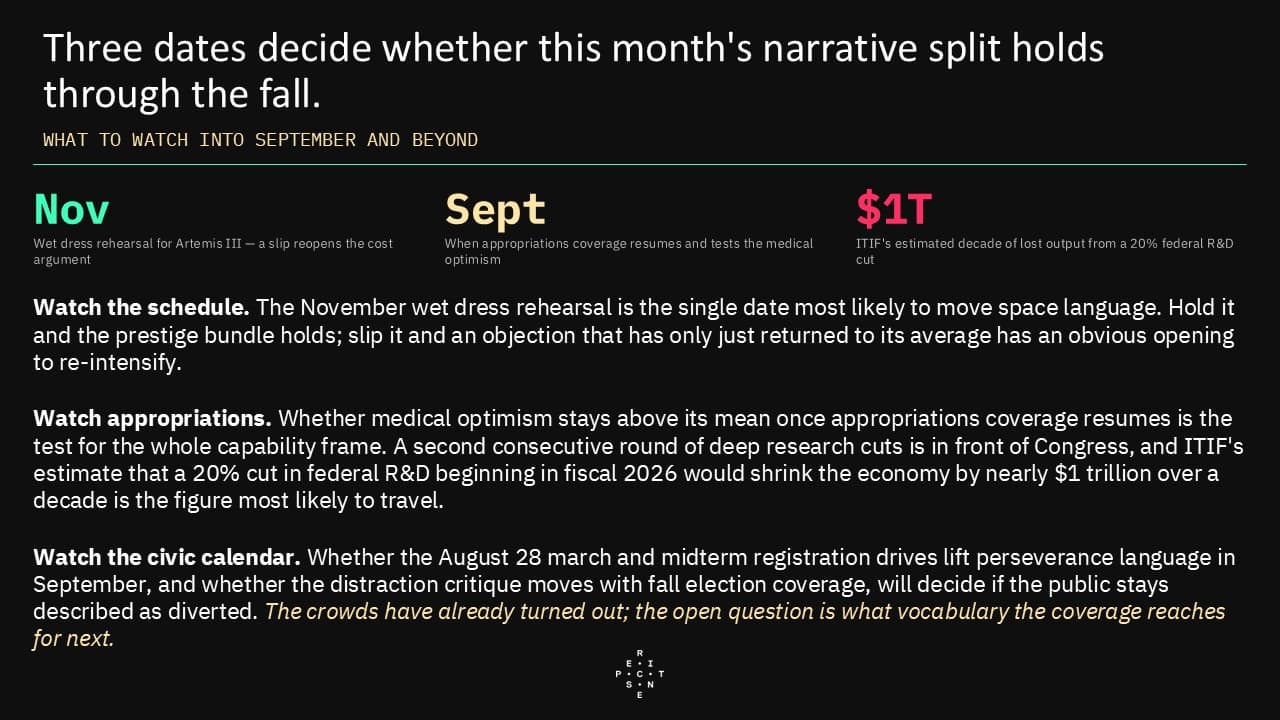
- The space debate lost intensity on both sides, and coverage migrated from argument to schedule. Advocacy language for American space leadership cooled yet still ranks among the densest readings we track, while the cost objection recorded the largest single-month decline of the period and returned to roughly its long-term average. August reporting concentrated on engine installation, booster stacking, and a November wet dress rehearsal rather than on whether Artemis is worth its price — though the fiscal critique has not vanished so much as relocated into appropriations detail and organized advocacy positioned to reactivate it.
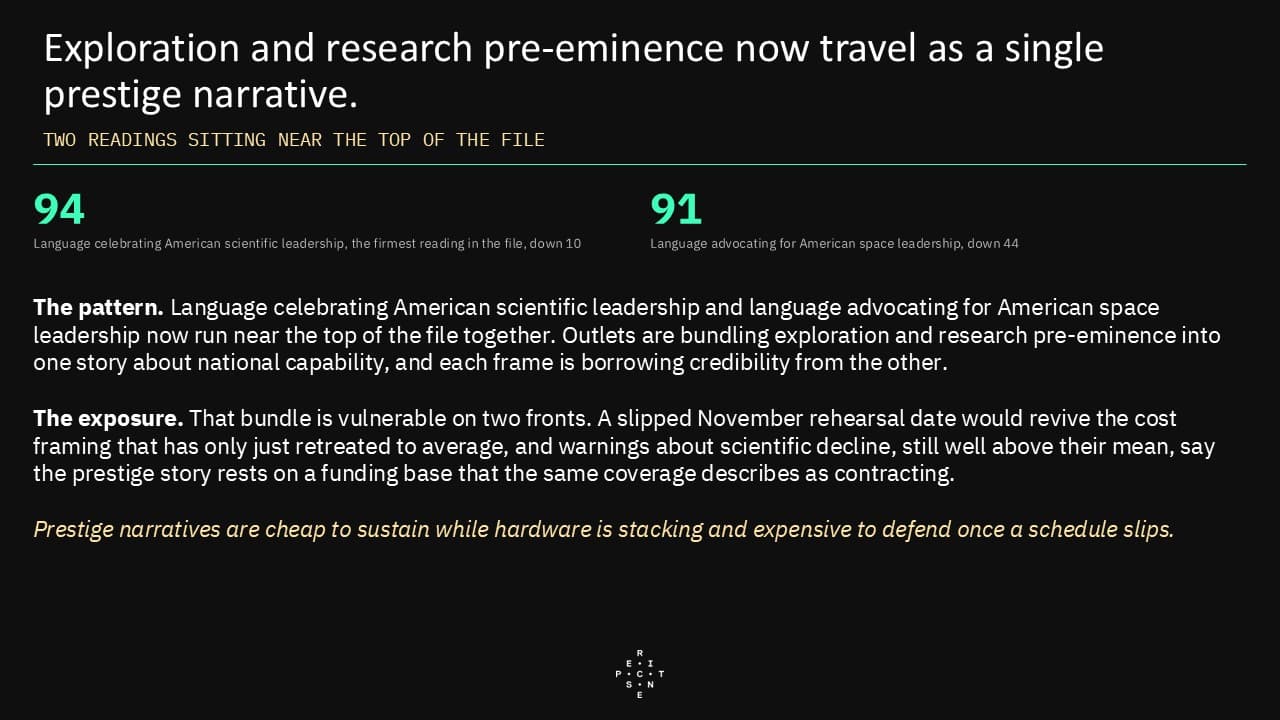
- Space leadership and scientific leadership language now run near the top of the file together, suggesting that outlets are bundling exploration and research pre-eminence into a single prestige narrative. That bundle is exposed on two fronts: a slipped rehearsal date would revive cost framing, and the still-elevated decline warnings show that the prestige story rests on a funding base which reporting simultaneously describes as contracting.
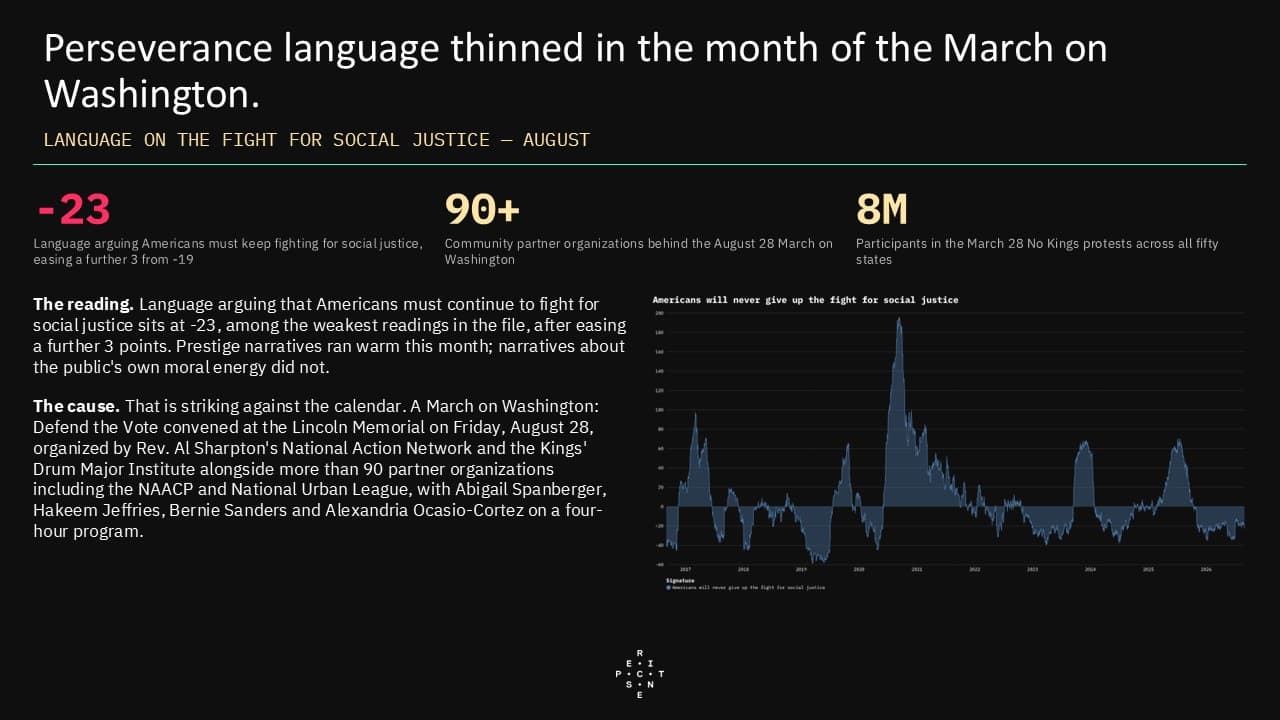
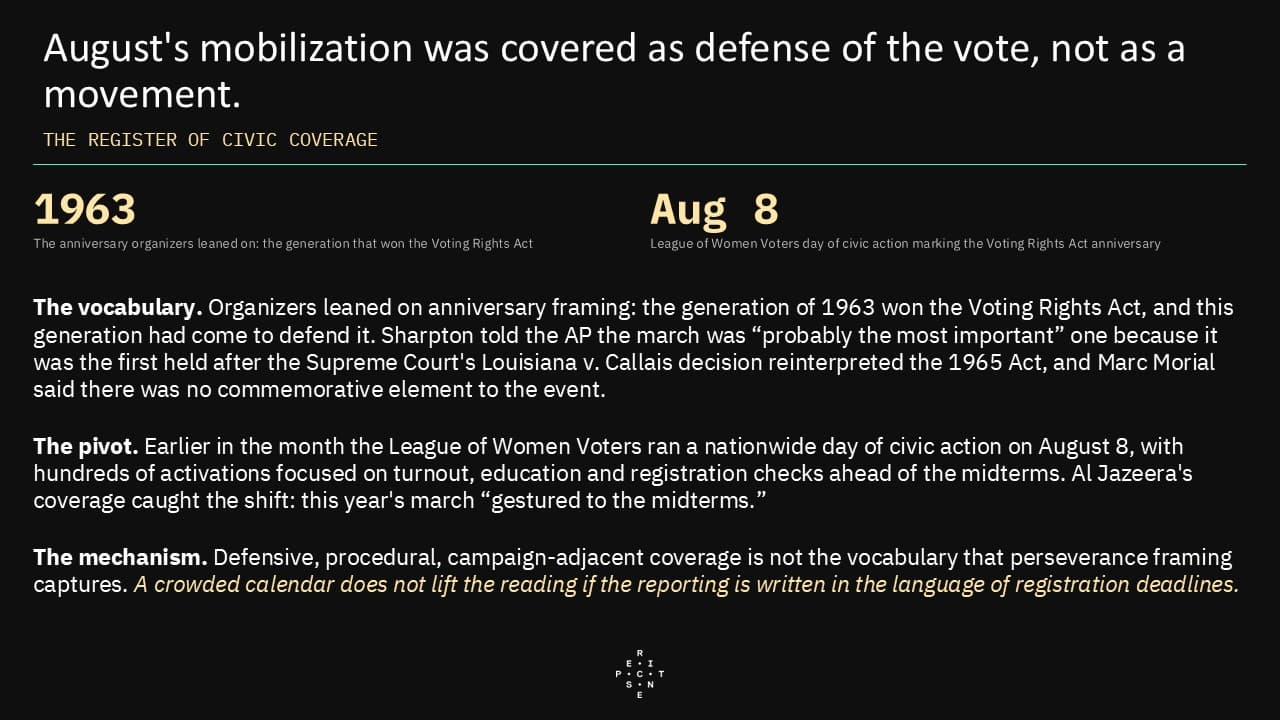
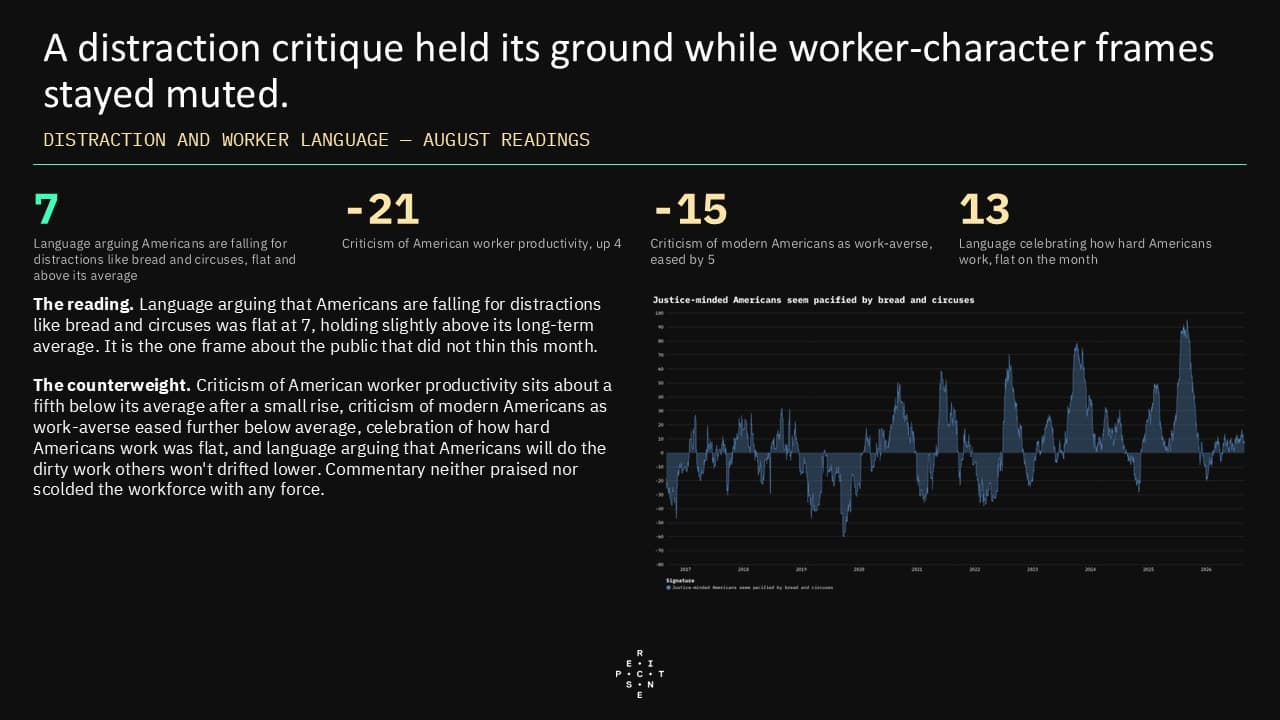
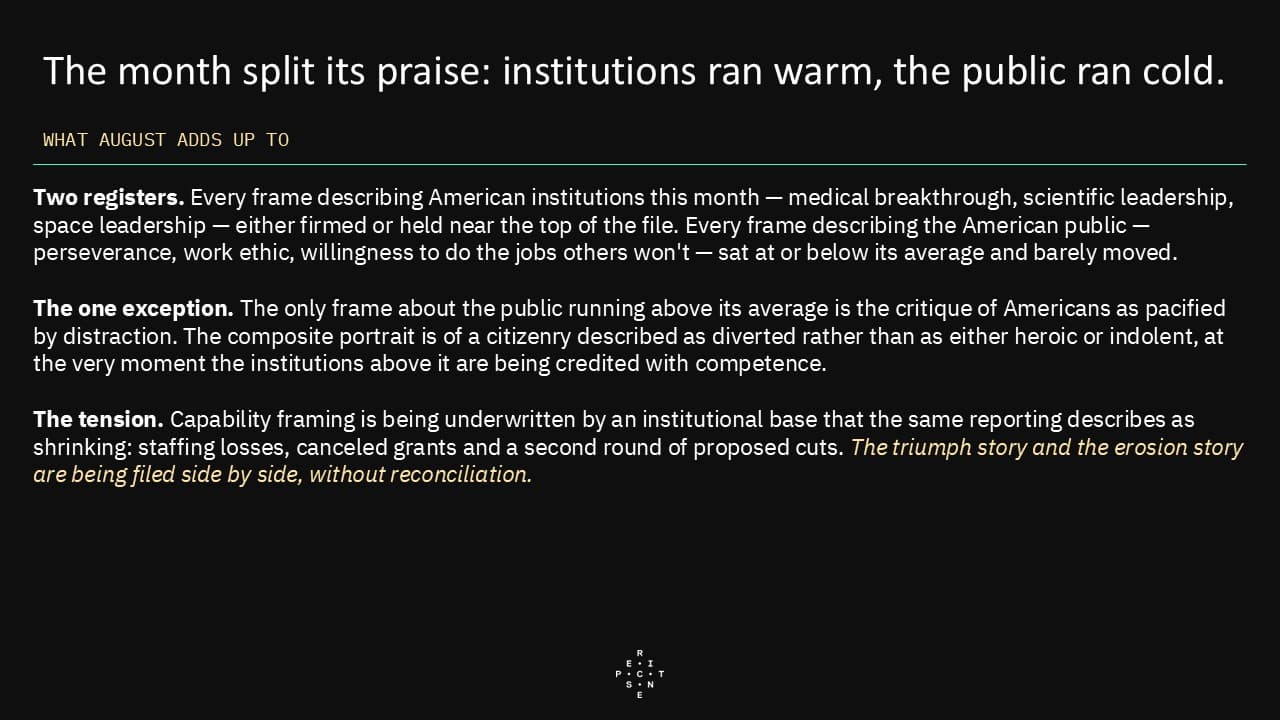
- Prestige framing about American institutions ran warm while framing about the American public ran cold. Our signature tracking language arguing that Americans must keep fighting for social justice sits among the weakest readings in the file despite a crowded August civic calendar, because the March on Washington and the voting-rights activations were covered in defensive, procedural, and midterm-adjacent terms rather than aspirational movement vocabulary. Paired with a distraction critique holding slightly above its average and muted worker-character frames in both directions, the composite portrait is of a citizenry described as diverted rather than as either heroic or idle.
Last updated: ...