
Land of Opportunity Pulse
The Pulse
November 2, 2026·Land of Opportunity Pulse

Executive Summary
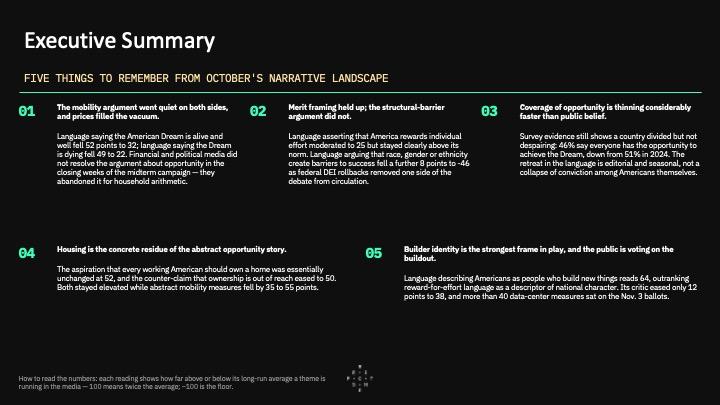
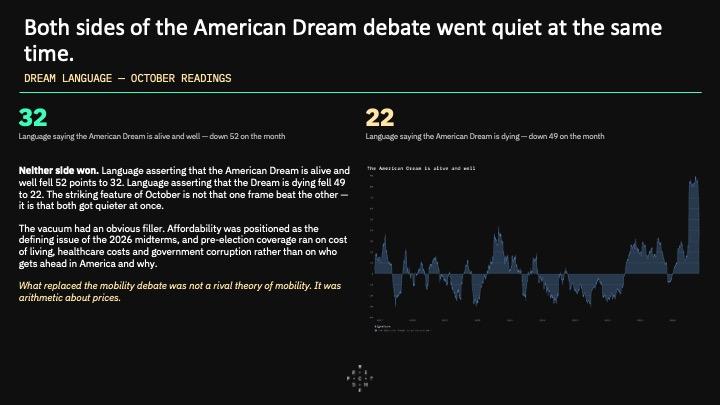
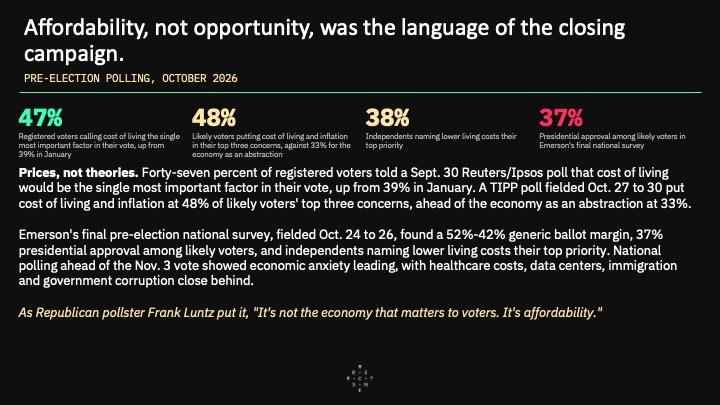
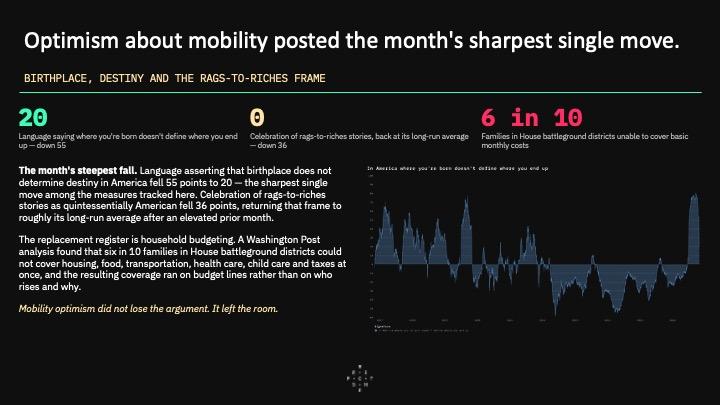
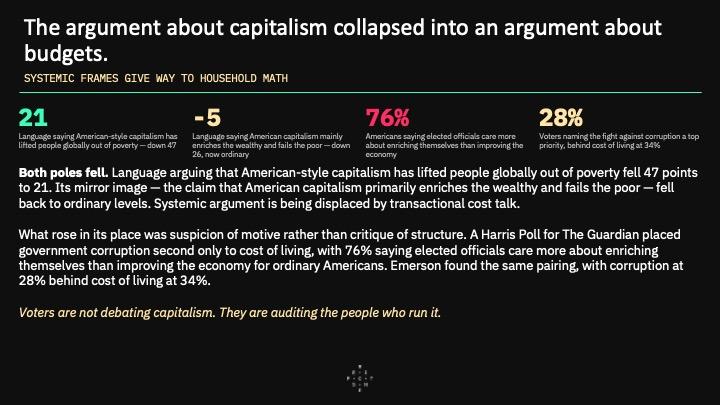
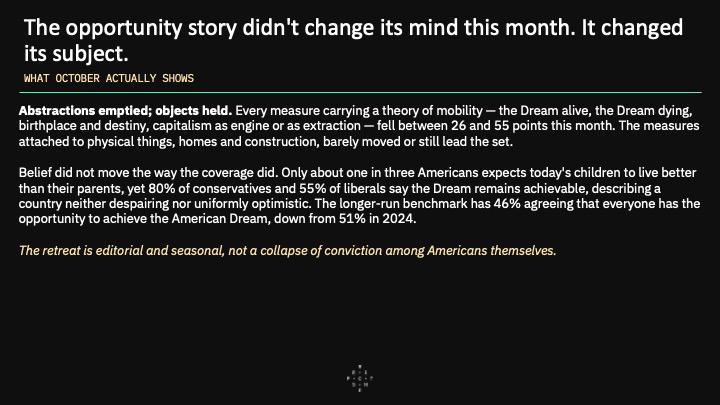
- The mobility debate went quiet on both sides, and prices filled the vacuum. Semantic signatures tracking both the claim that the American Dream is alive and the claim that it is dying fell sharply together, as did the competing signatures arguing that American capitalism lifts people out of poverty and that it enriches only the wealthy. Financial and political media did not resolve the argument about opportunity in the closing weeks of the midterm campaign; they abandoned it for household arithmetic, with affordability, healthcare costs and corruption dominating pre-election coverage and polling.
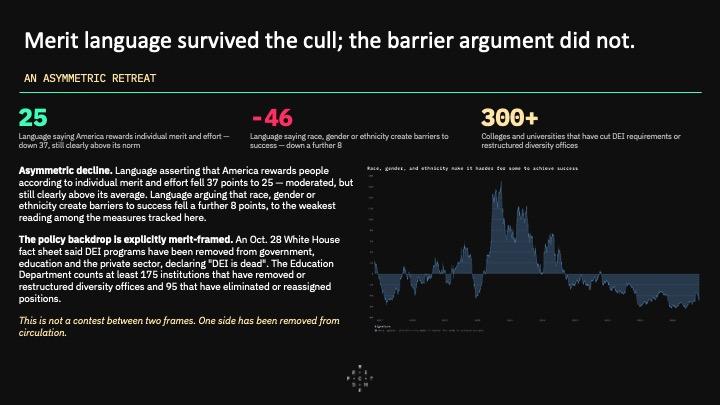
- Merit framing held up better than structural-barrier framing, consistent with the policy backdrop. Language asserting that America rewards individual effort moderated but stayed clearly above its norm, while the signature tracking arguments about race, gender or ethnicity creating barriers to success fell further to the weakest readings in the file. Coverage of federal DEI rollbacks and university restructuring has effectively removed one side of that debate from circulation rather than producing a contest between the two.
- Media density on opportunity is now falling considerably faster than measured public belief. Survey evidence still shows a country divided but not despairing about the Dream's achievability, while the language carrying those arguments is thinning rapidly. The gap suggests that the retreat is editorial and seasonal rather than a reflection of collapsing conviction among Americans themselves.
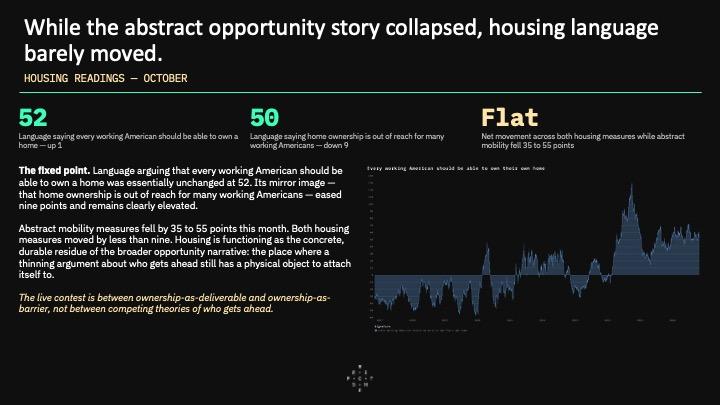
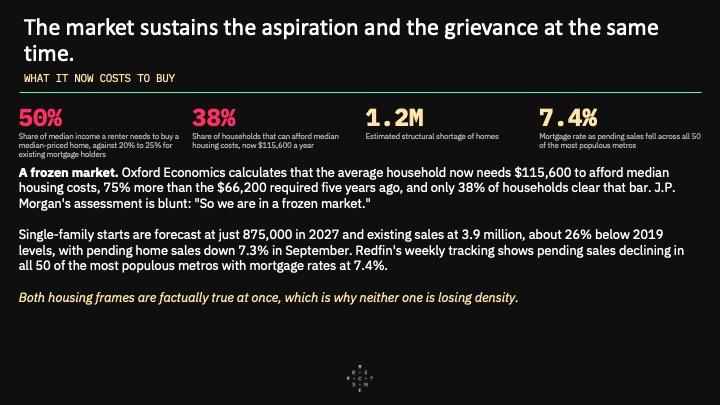
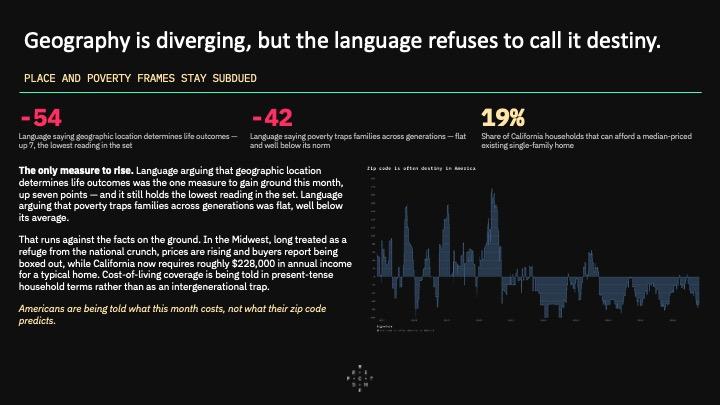
- Housing has become the concrete residue of the abstract opportunity story. While abstract mobility signatures collapsed, both housing signatures — the aspiration that every working American should own a home and the counter-claim that ownership is out of reach — barely moved and remain elevated. Notably, language about geography determining life outcomes and poverty trapping families across generations stayed near the bottom of the file even amid worsening regional affordability, indicating that cost-of-living coverage is being told in present-tense household terms rather than as an intergenerational trap.
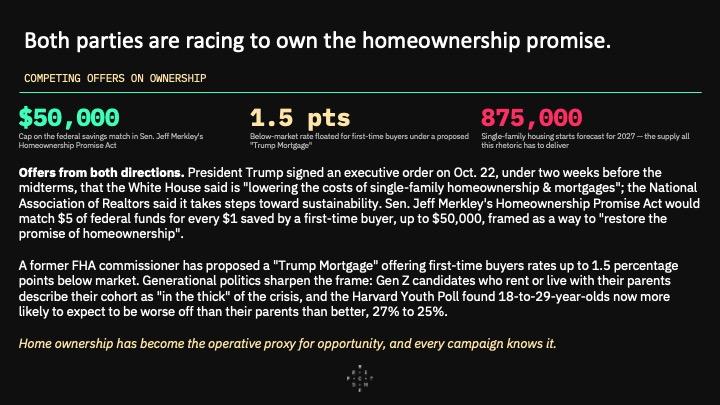
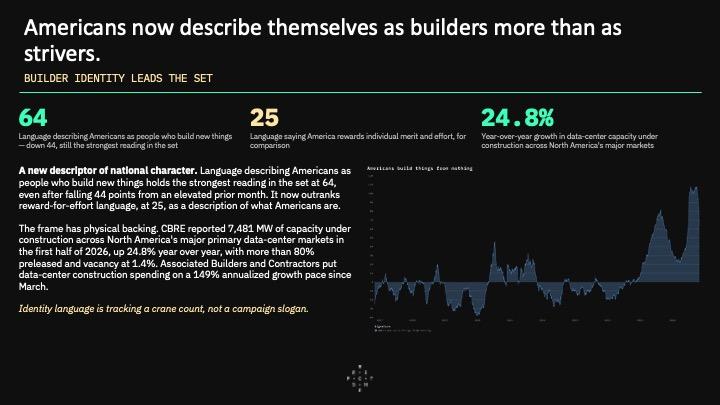
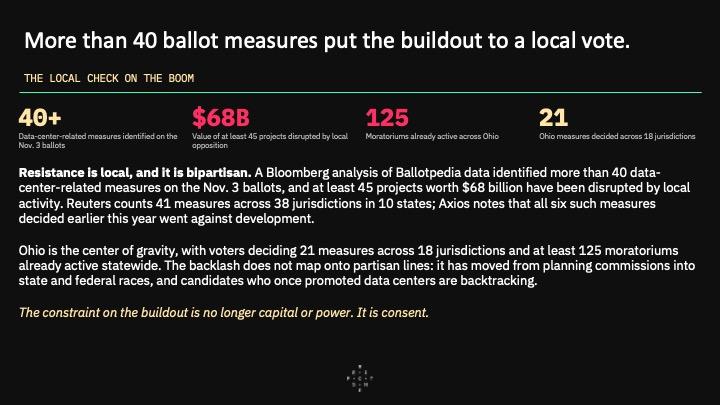
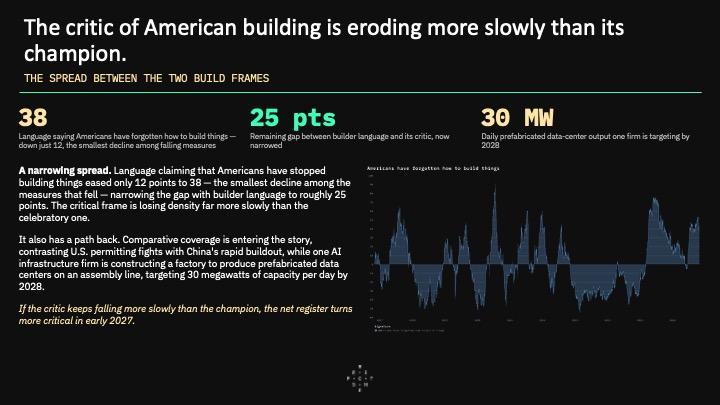
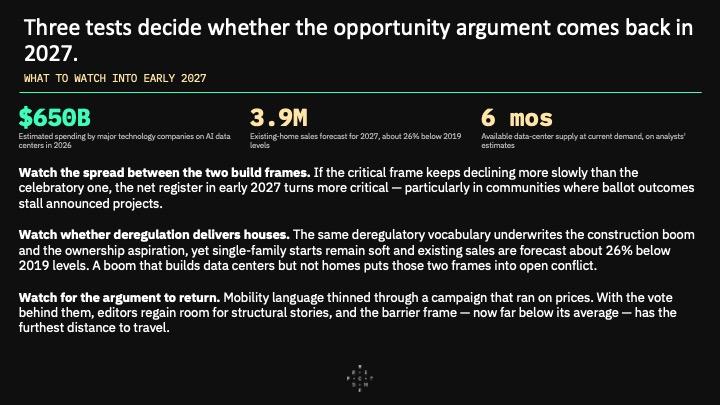
- Builder identity is the strongest frame in the file, but its critic is eroding more slowly and the public is voting on the buildout. Language describing Americans as people who build new things now outranks reward-for-effort language as a descriptor of national character, carried by a genuine data-center construction cycle. Yet the signature capturing claims that Americans have stopped building fell least of all, and dozens of local ballot measures, active moratoriums and comparative coverage of China's buildout give that critical frame a path back. The same deregulatory vocabulary underwrites both the construction boom and the ownership aspiration, even though single-family starts remain soft — a tension worth watching into early 2027.