
City on a Hill Pulse
The Pulse
September 1, 2026·City on a Hill Pulse


Executive Summary
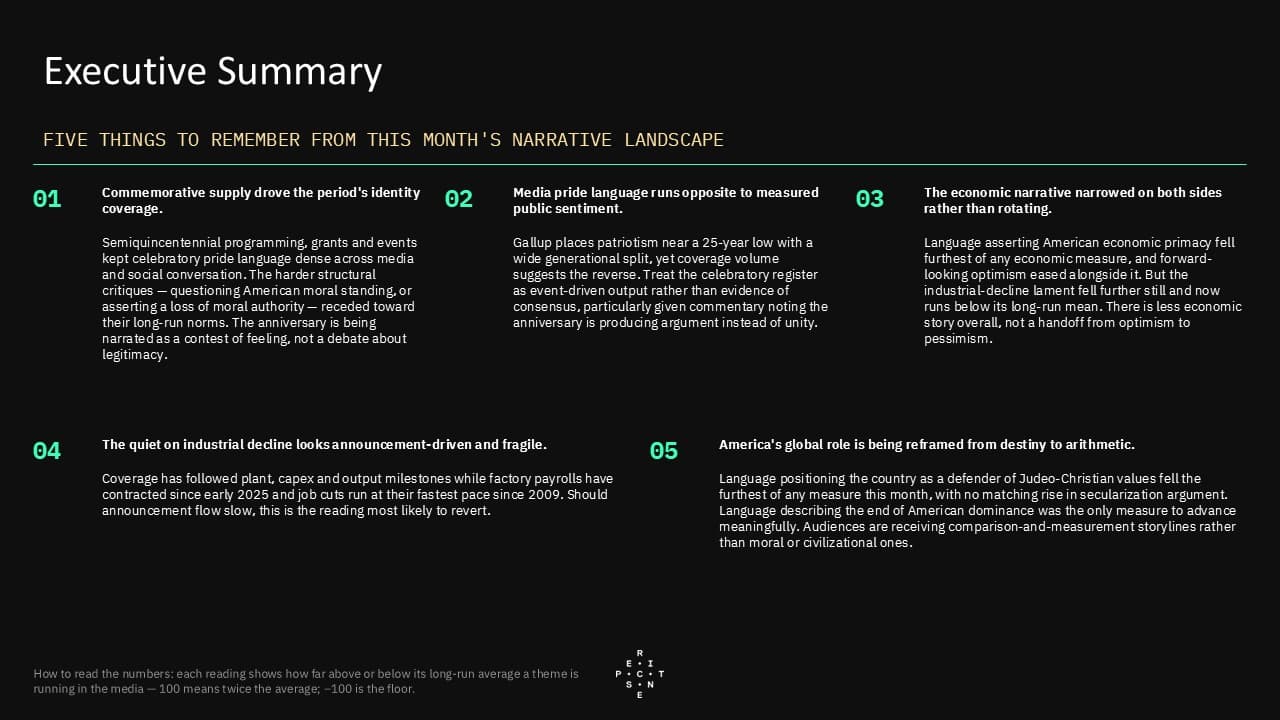
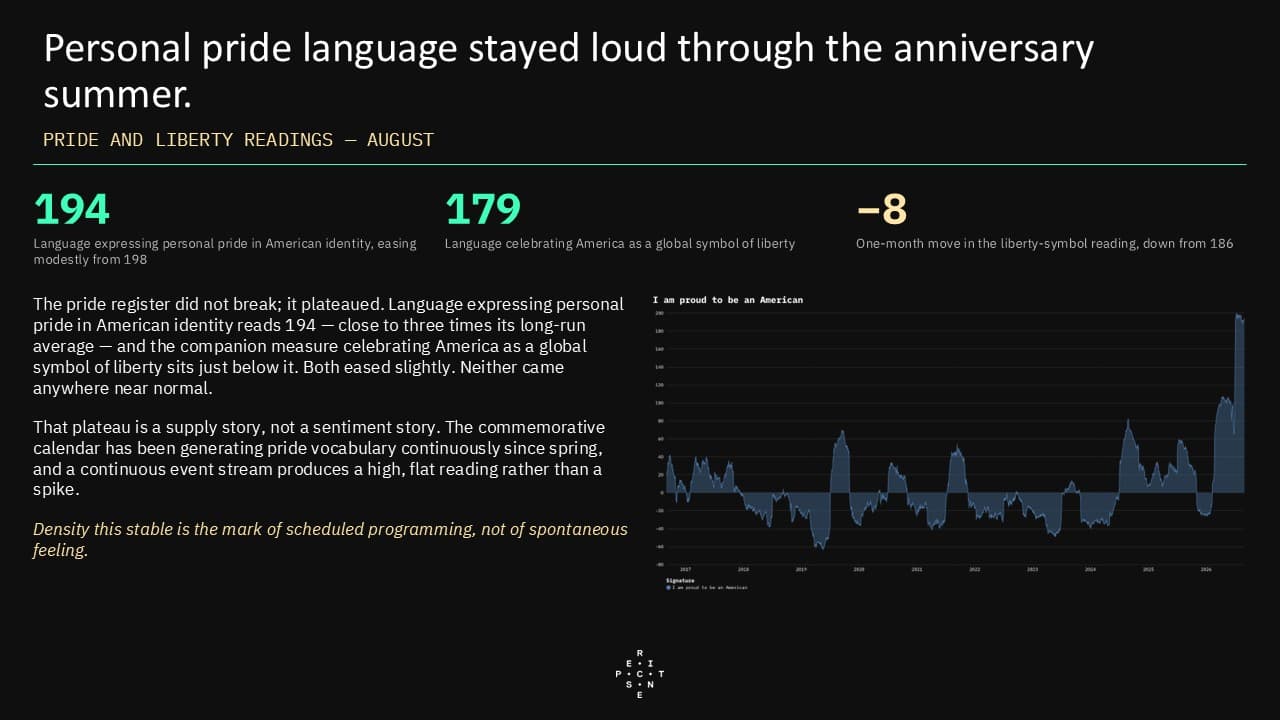
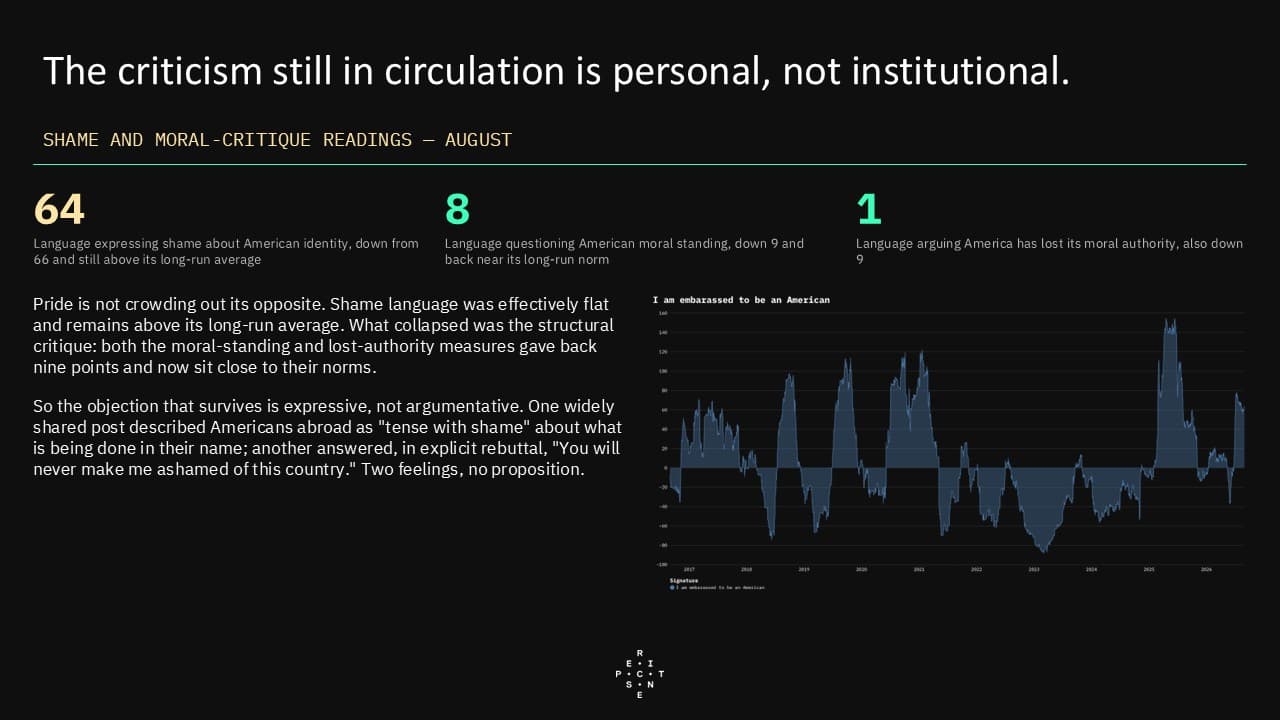
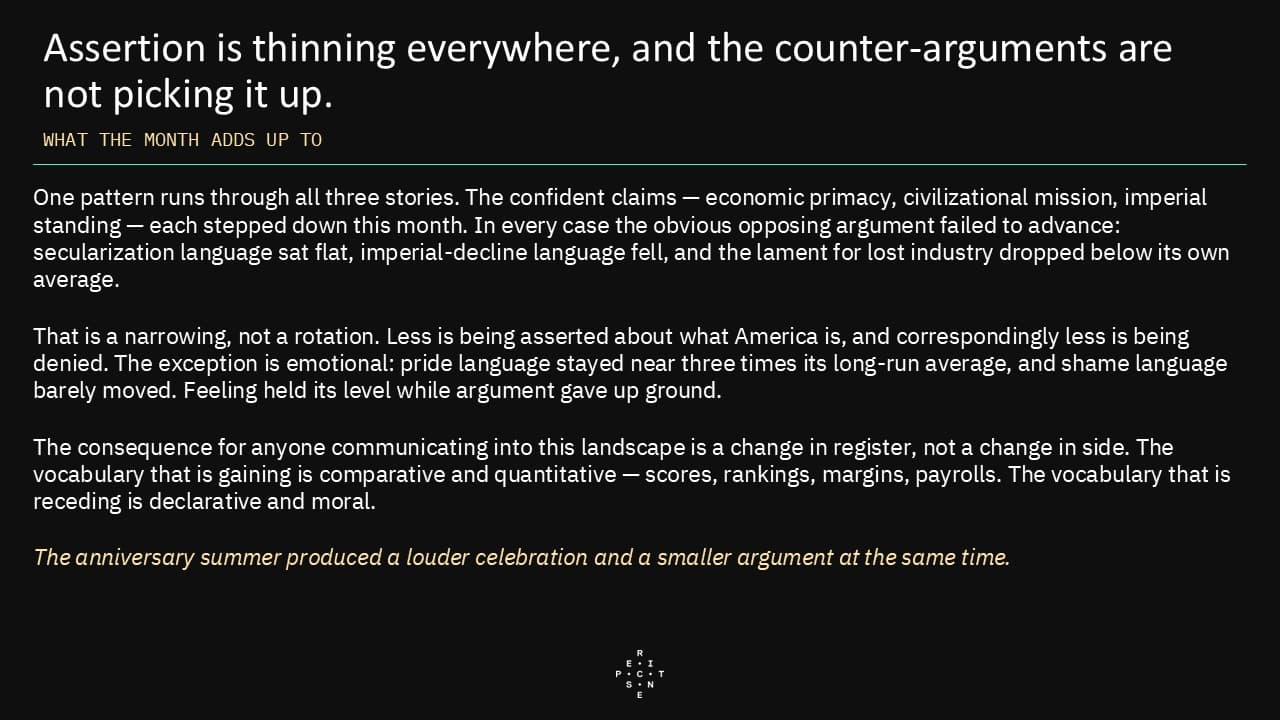
- Commemorative supply drove the quarter's identity coverage. Semiquincentennial programming, grants and events kept celebratory pride language dense in media and social conversation, while the harder structural critiques — questioning American moral standing or asserting a loss of moral authority — receded toward their long-run norms. What criticism remains is personal and emotional rather than institutional, leaving the anniversary narrated as a contest of feeling rather than a debate about legitimacy.
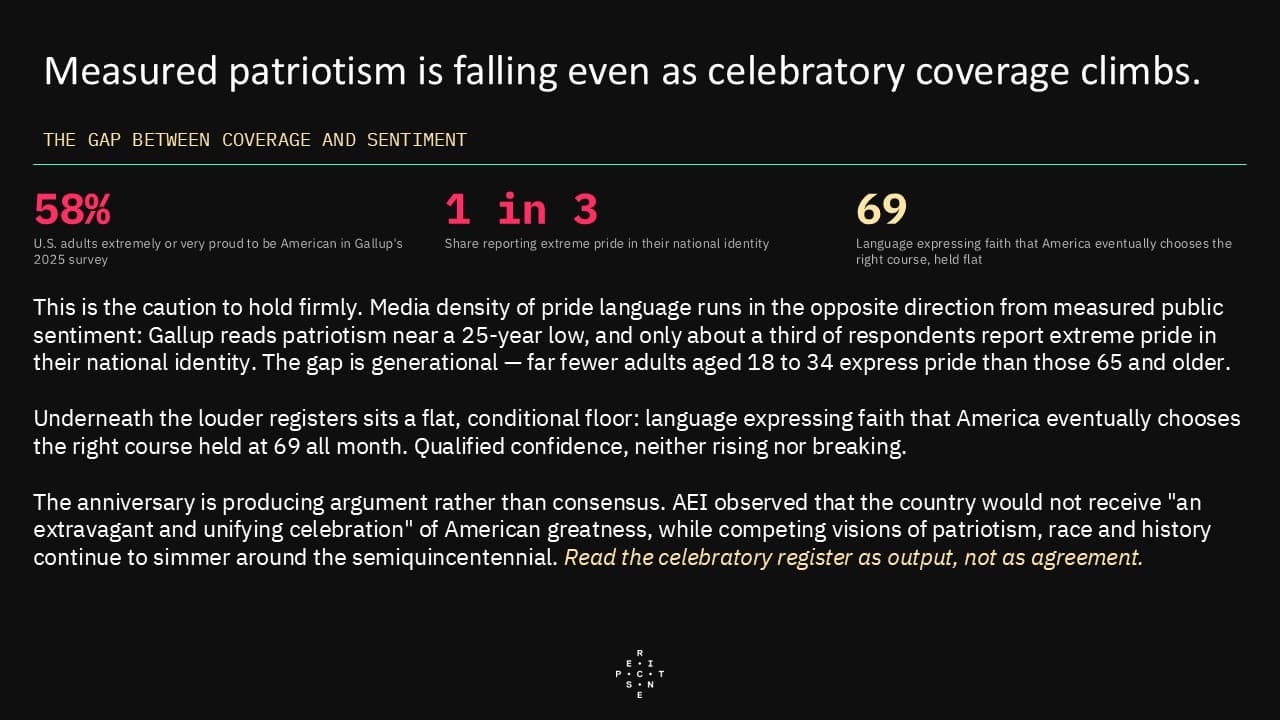
- Media pride language runs opposite to measured public sentiment. Gallup readings place patriotism near a 25-year low, with a wide generational split, yet coverage volume suggests the reverse. Editors should treat the celebratory register as event-driven output rather than evidence of consensus, particularly given commentary noting that the anniversary is producing argument instead of unity.
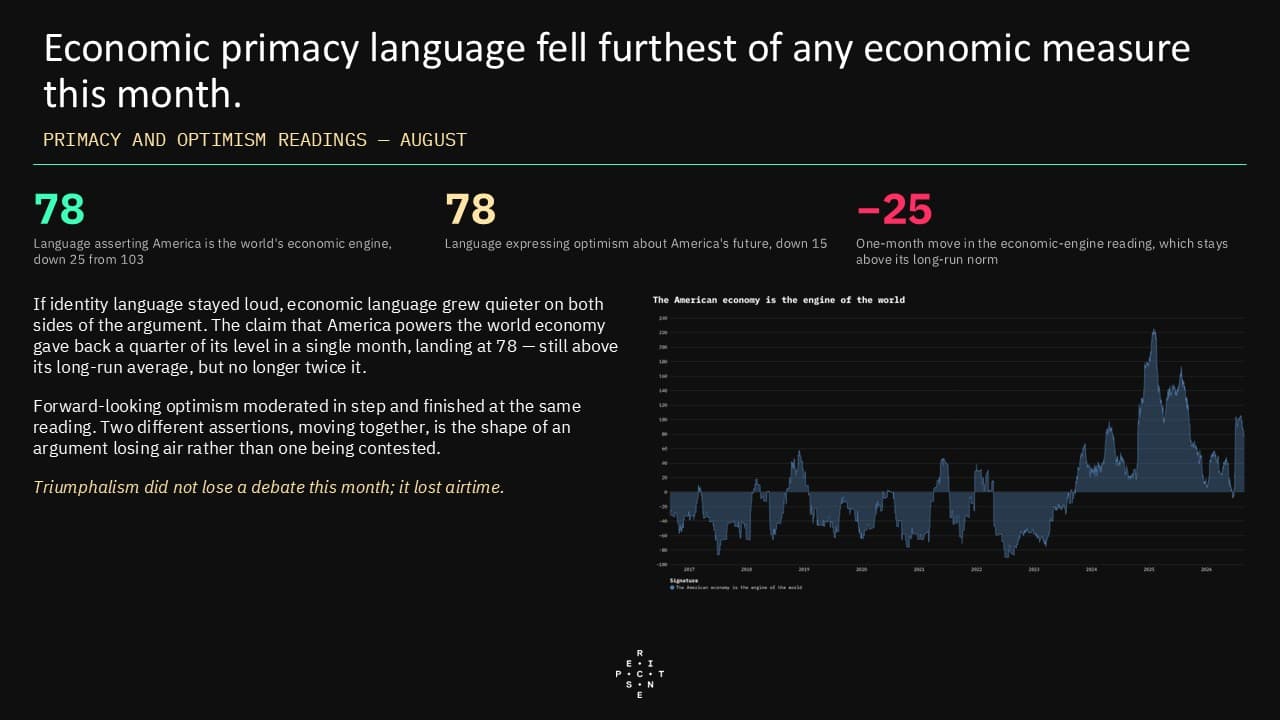
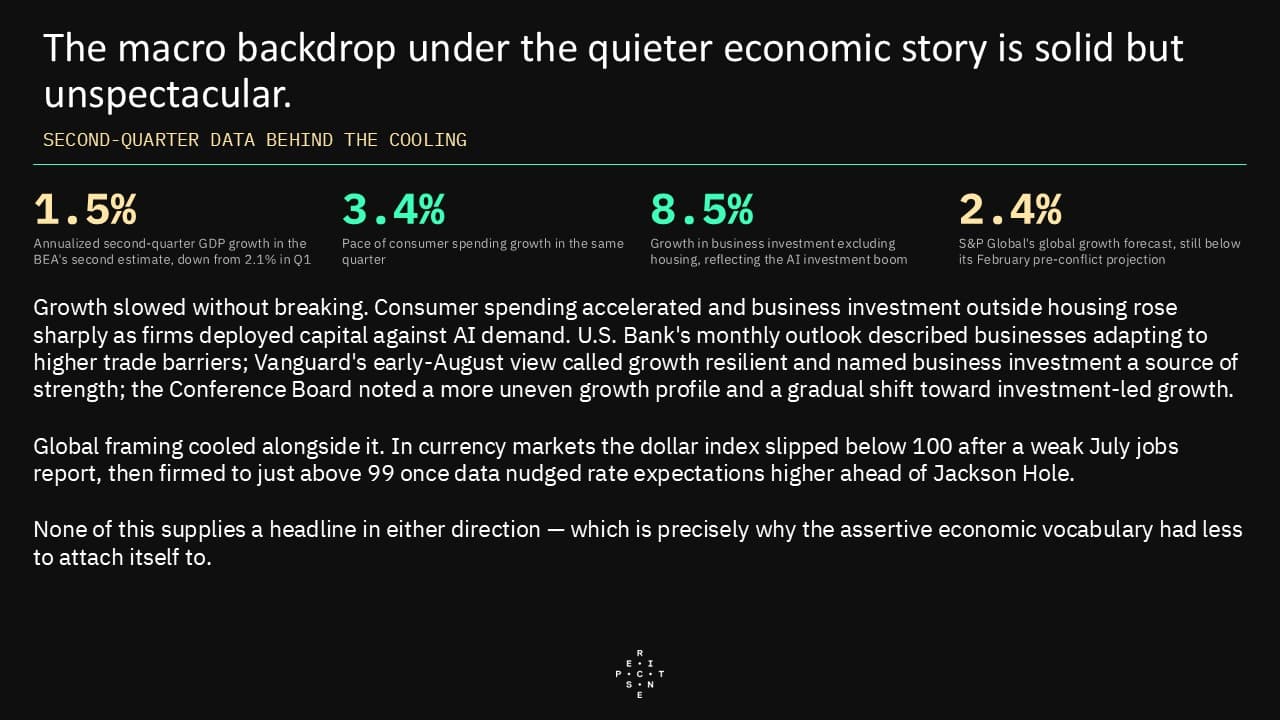
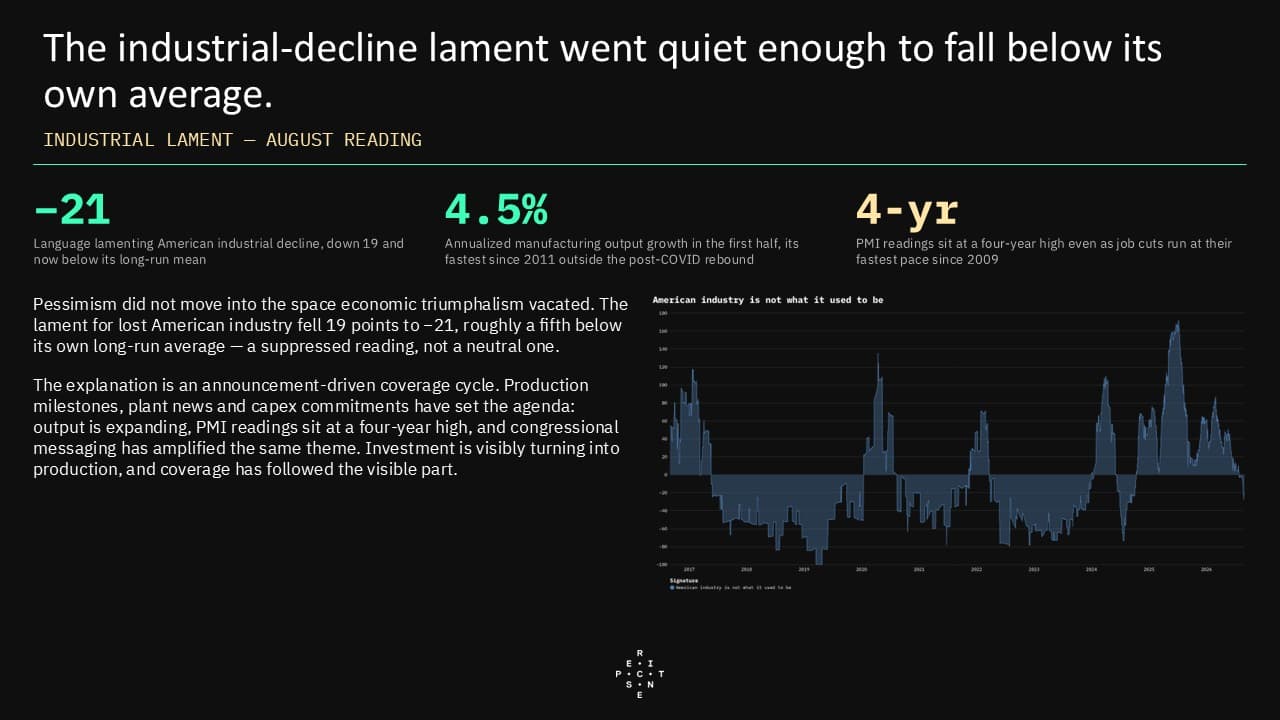
- Economic narrative narrowed on both sides rather than rotating. Language asserting American economic primacy posted the quarter's largest economic decline and forward-looking optimism eased alongside it, but the industrial-decline lament fell further still and now runs below its historical mean. The result is less economic story overall, not a handoff from optimism to pessimism.
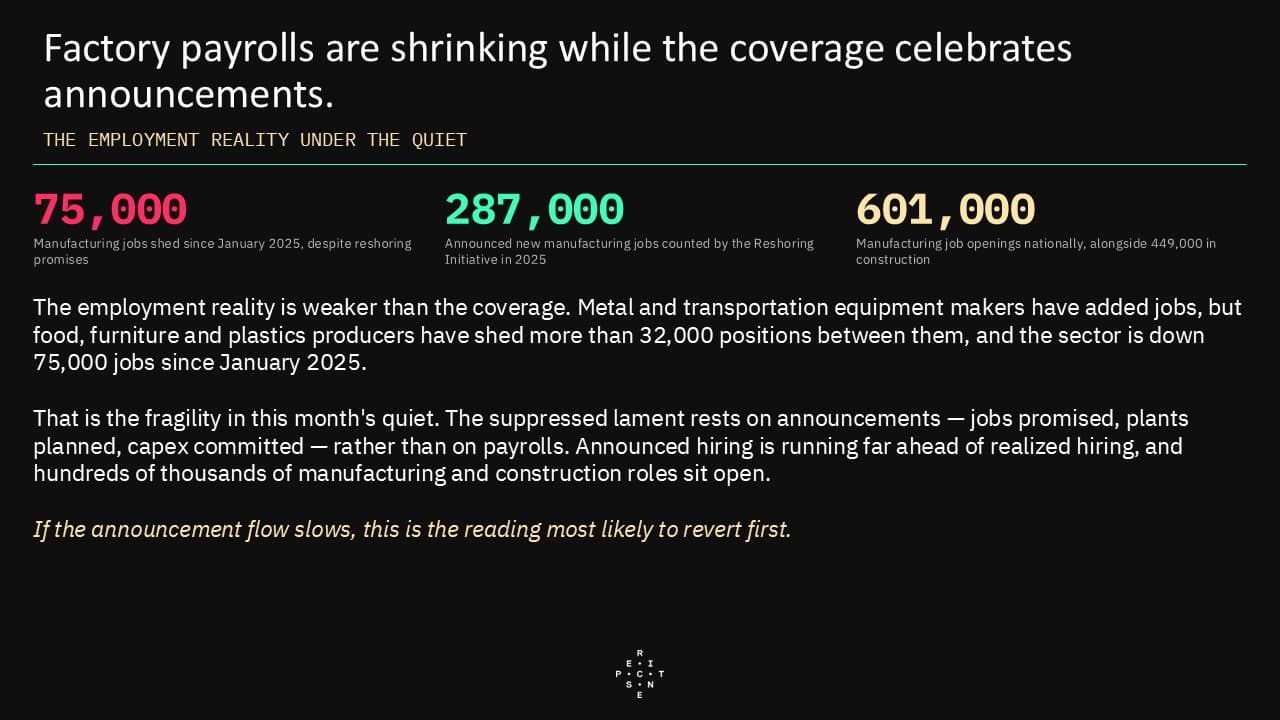
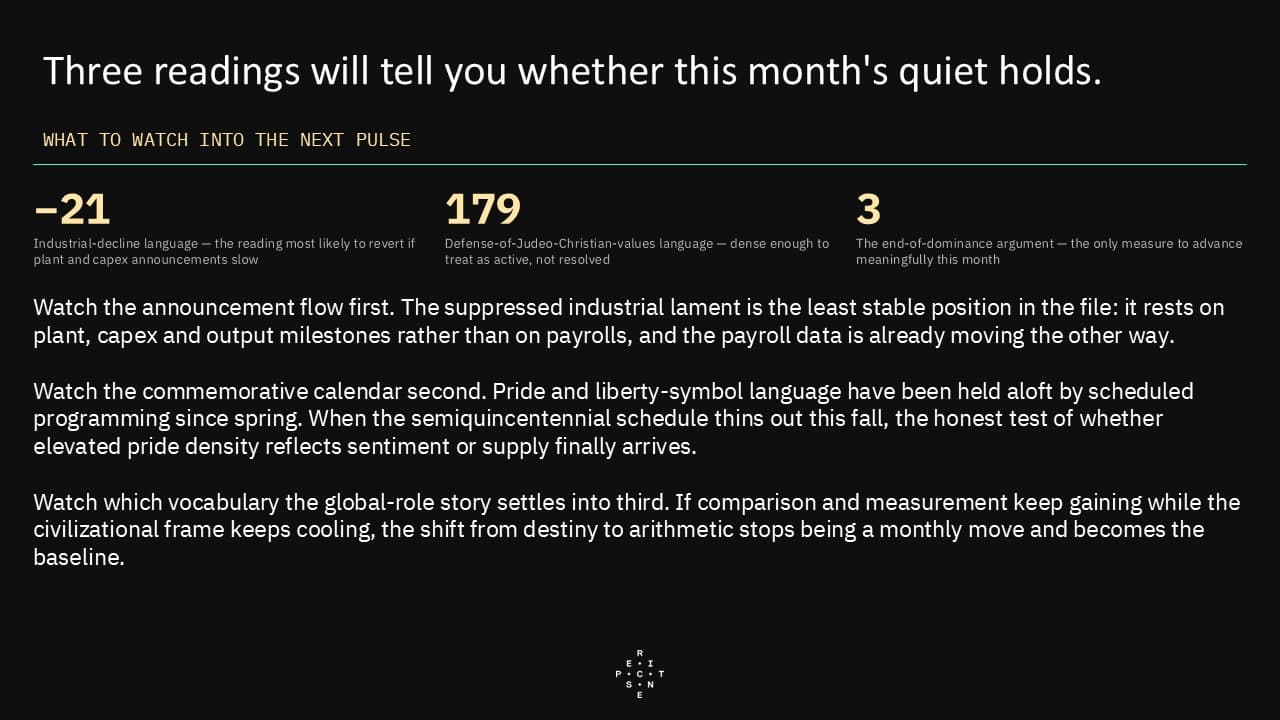
- The quiet on industrial decline looks announcement-driven and fragile. Coverage has followed plant, capex and output milestones, while factory payrolls have contracted since early 2025 and job cuts run at their fastest pace since 2009. Should announcement flow slow, this is the most likely measure in the file to revert.
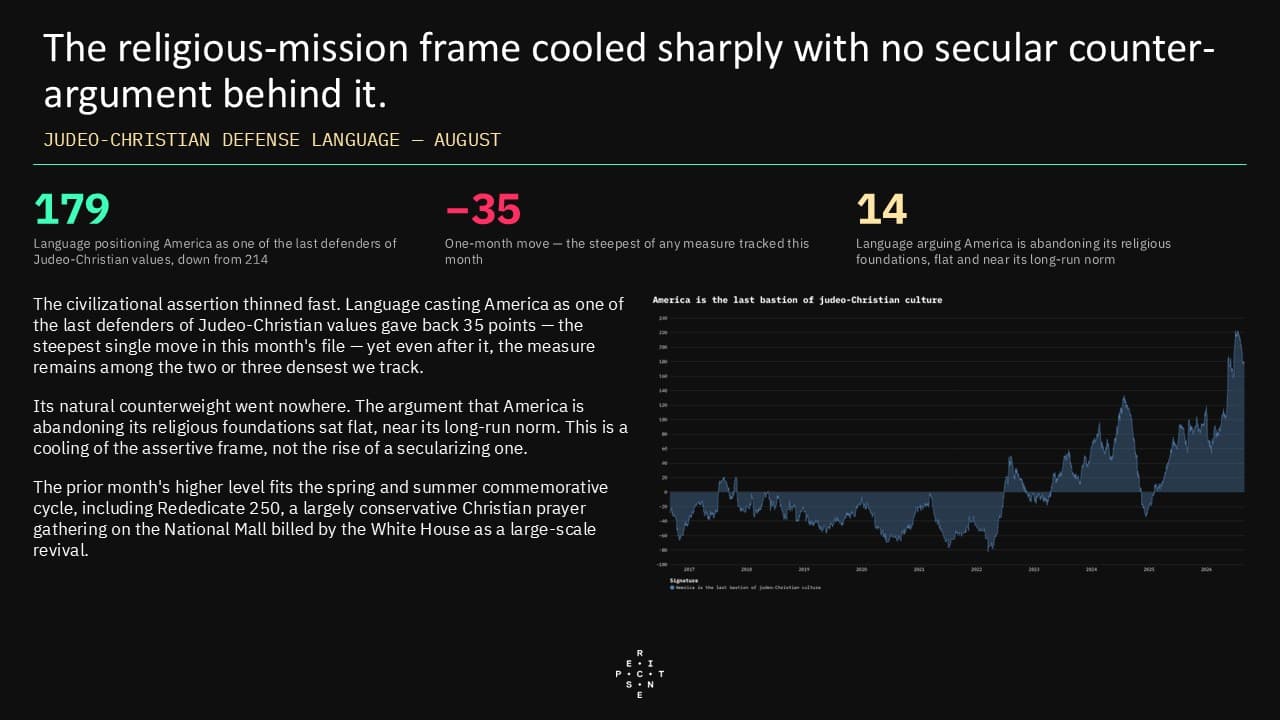
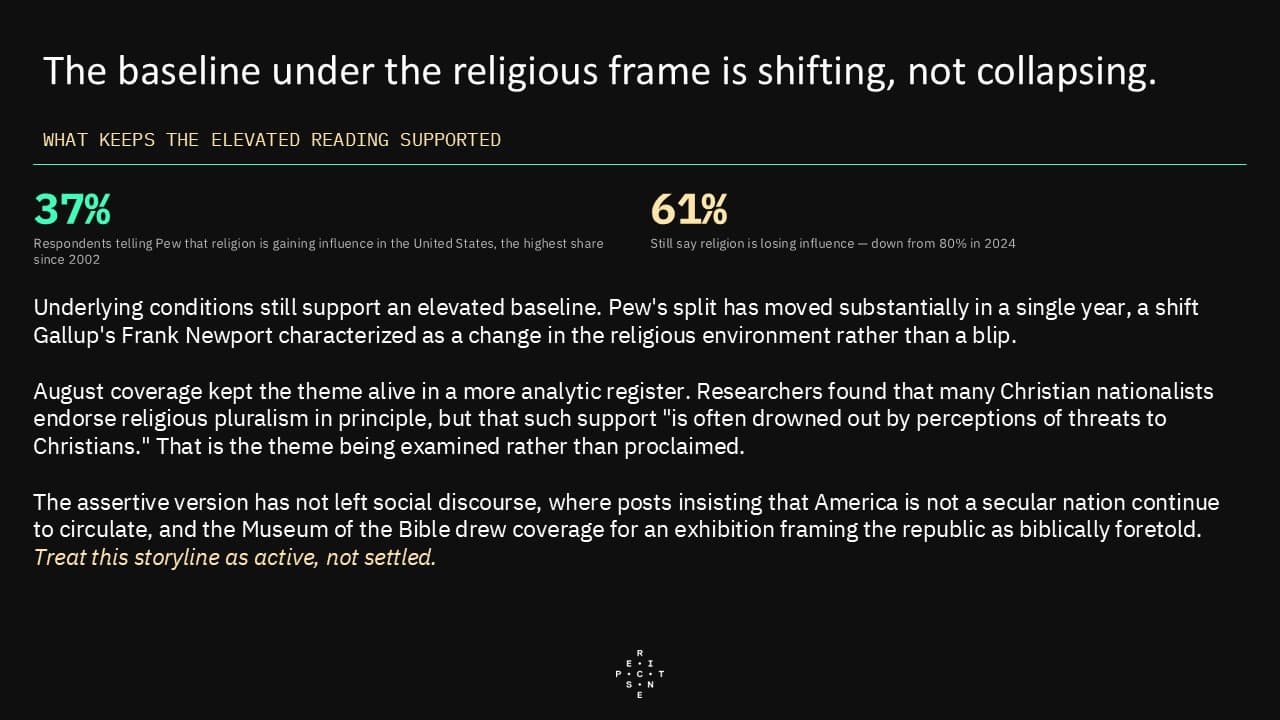
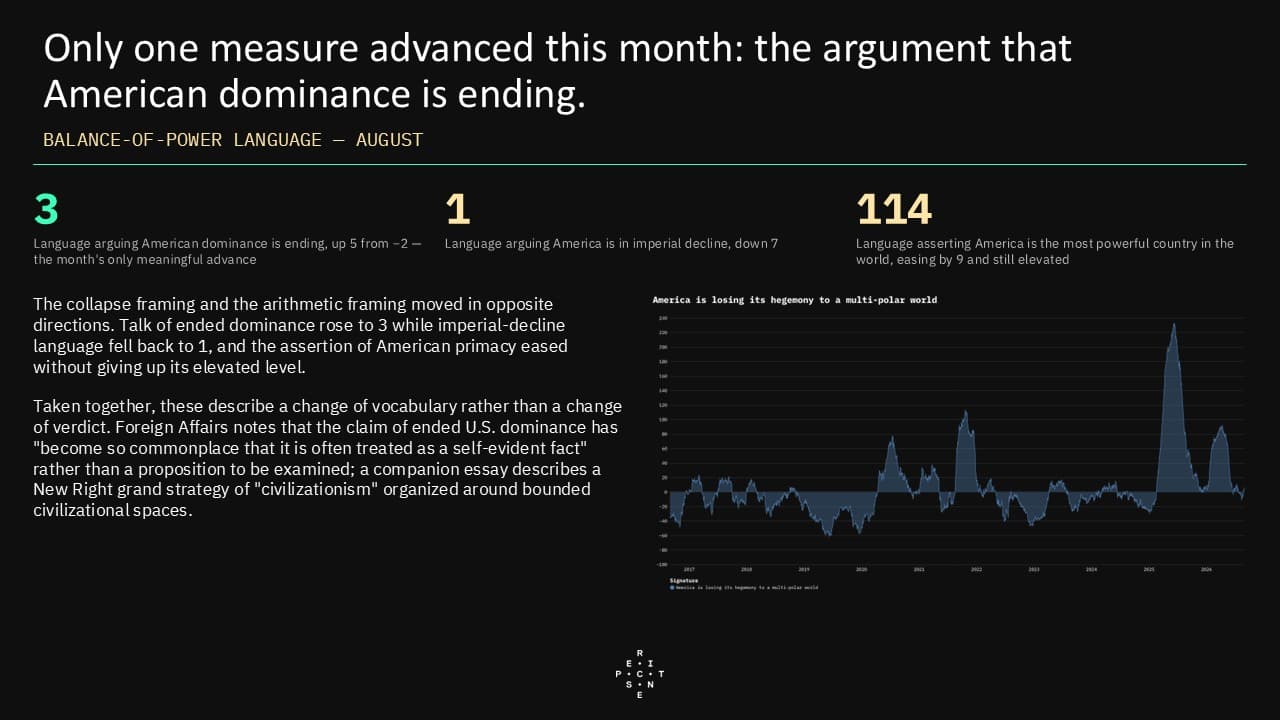
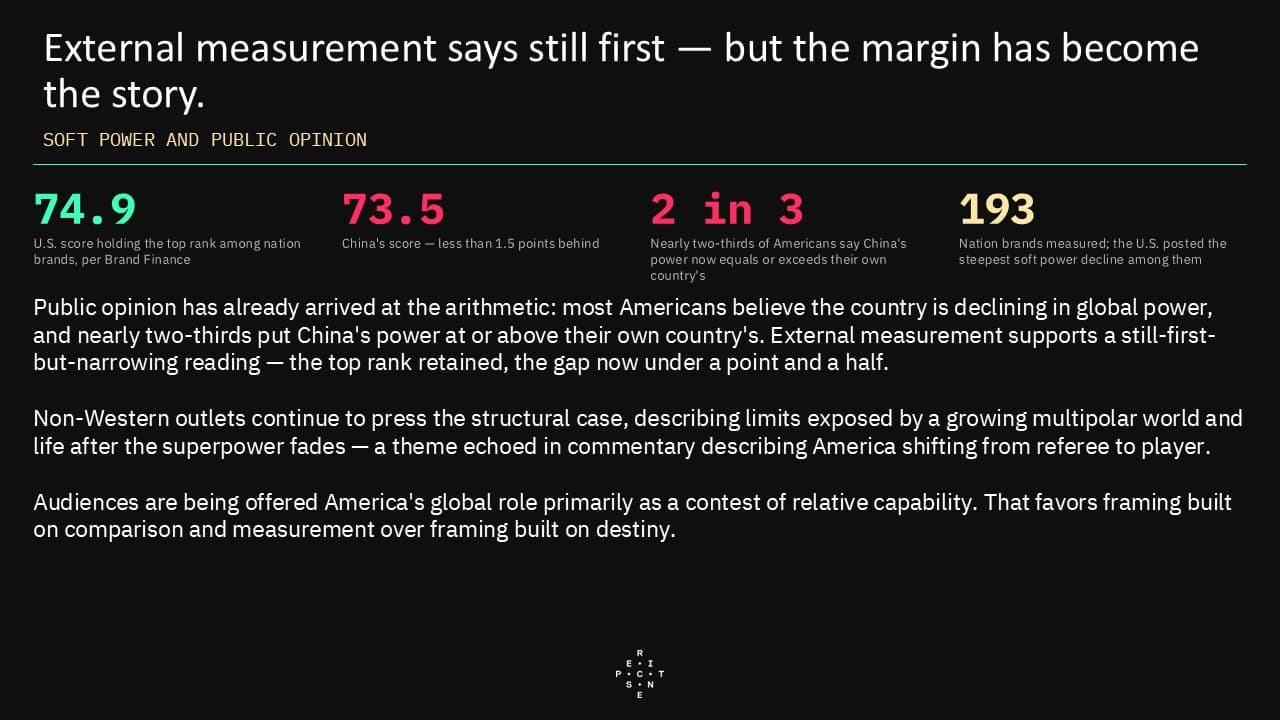
- America's global role is being reframed from destiny to arithmetic. Language positioning the country as a defender of Judeo-Christian values posted the file's steepest single decline without any corresponding rise in secularization argument, while language describing the end of American dominance was the only measure to advance meaningfully and the imperial-collapse framing faded. Combined with the narrowing of economic triumphalism, this points toward audiences receiving comparison-and-measurement storylines rather than moral or civilizational ones — though the religious-mission frame remains dense enough to treat as active rather than settled.
Last updated: ...