E Pluribus Unum Pulse
The Pulse
September 1, 2026·E Pluribus Unum Pulse

Executive Summary
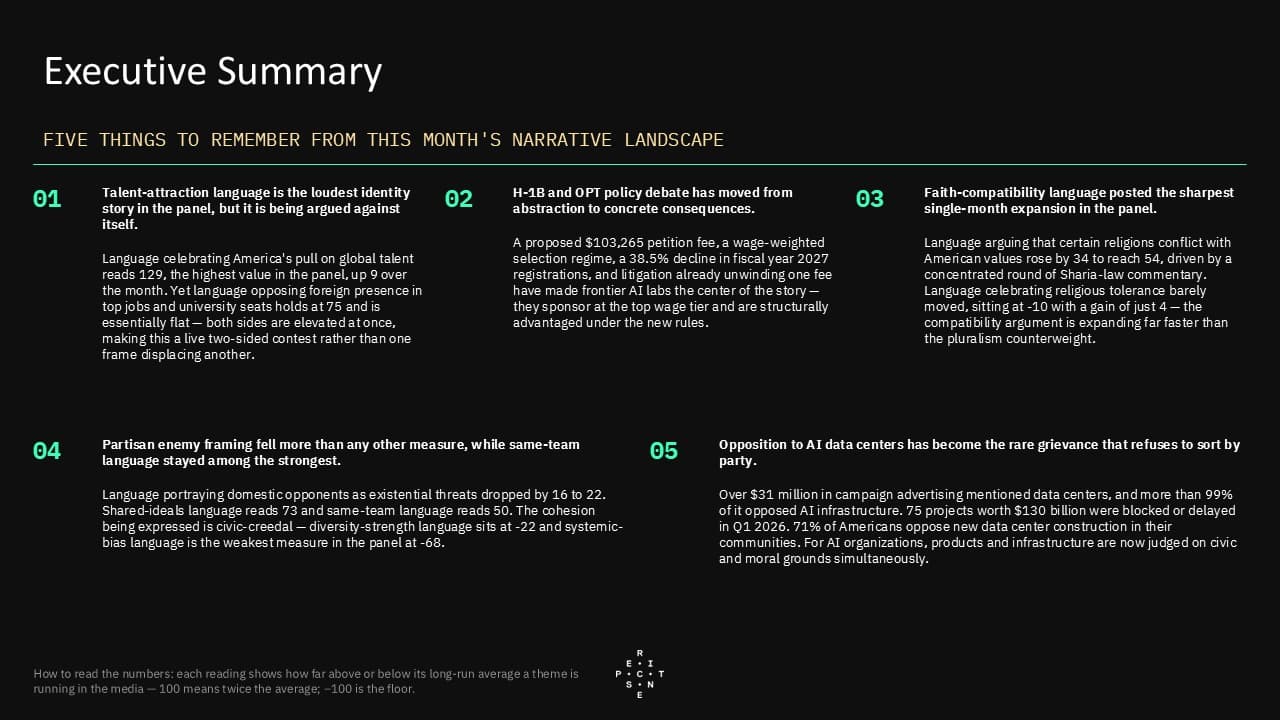
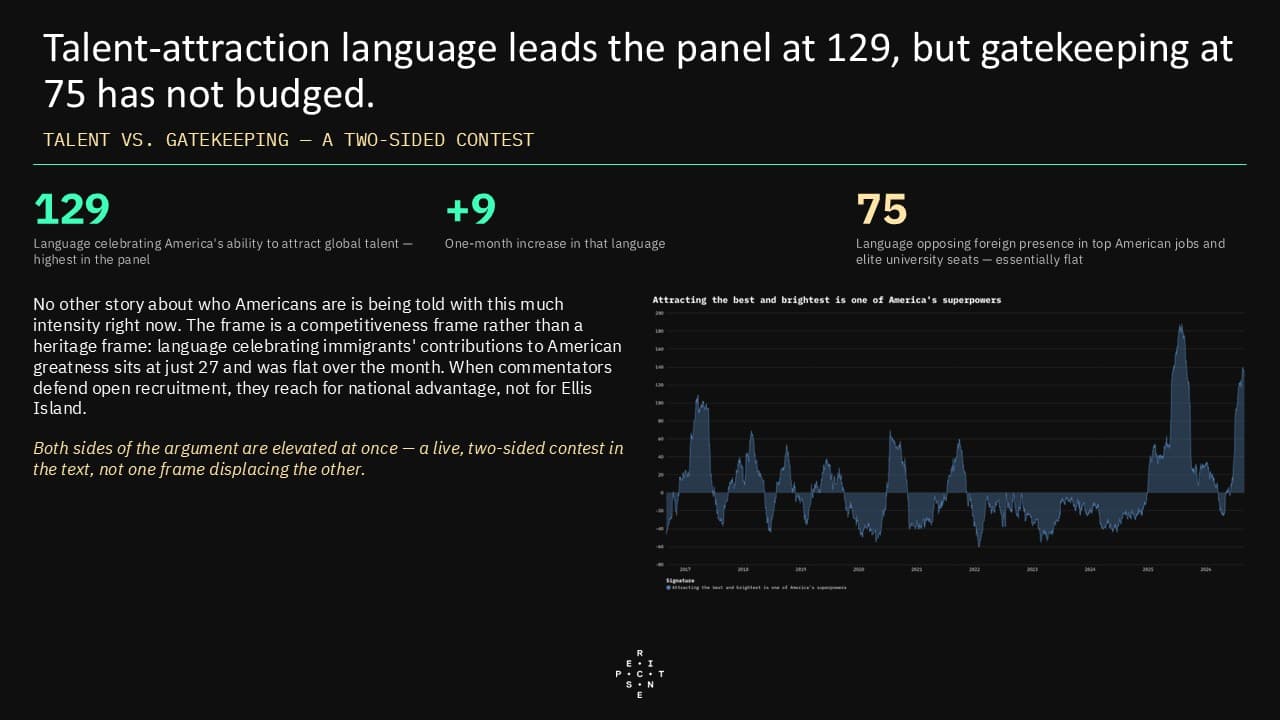
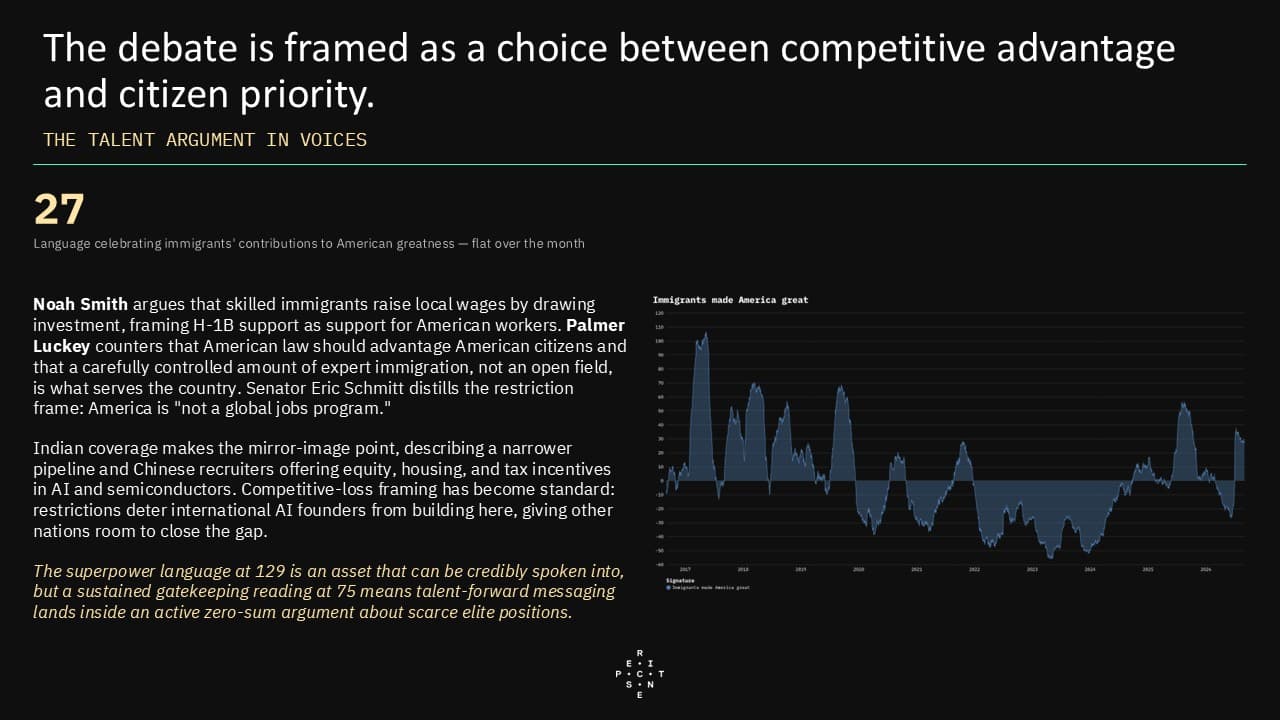
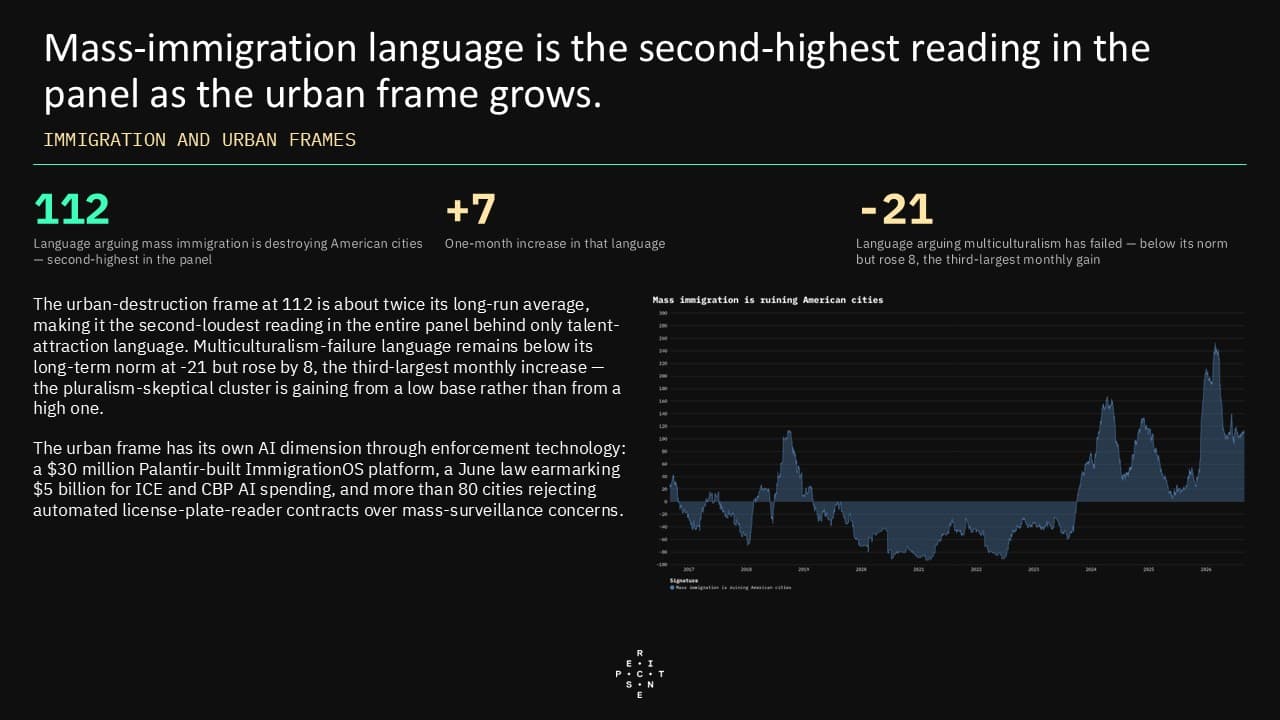
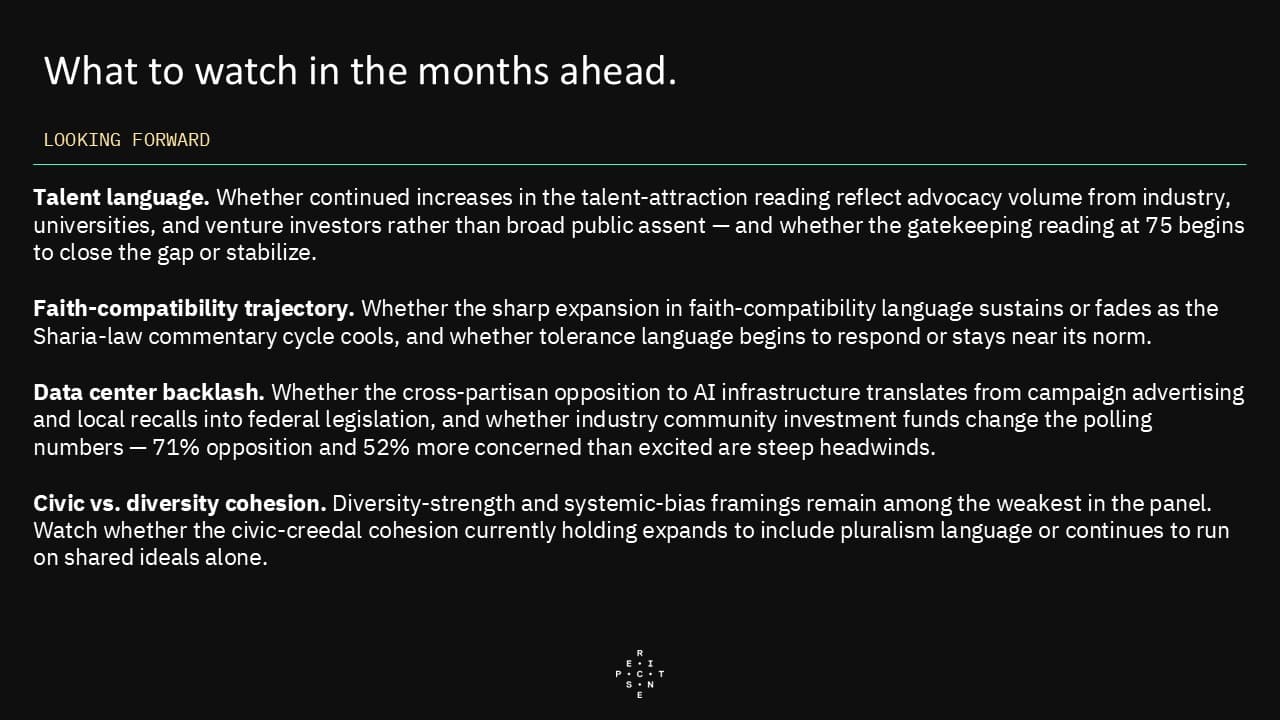
- Coverage of America's pull on global talent is the loudest identity story in the panel this month, and it is framed almost entirely in competitiveness terms rather than heritage terms — commentators defend open recruitment because it wins the AI race, not because of Ellis Island sentiment. Crucially, the counter-argument holding that foreigners occupy too many elite jobs and university seats has not weakened at all, so pro-talent messaging is being spoken into a live, two-sided fight over scarce positions rather than into a receptive vacuum.
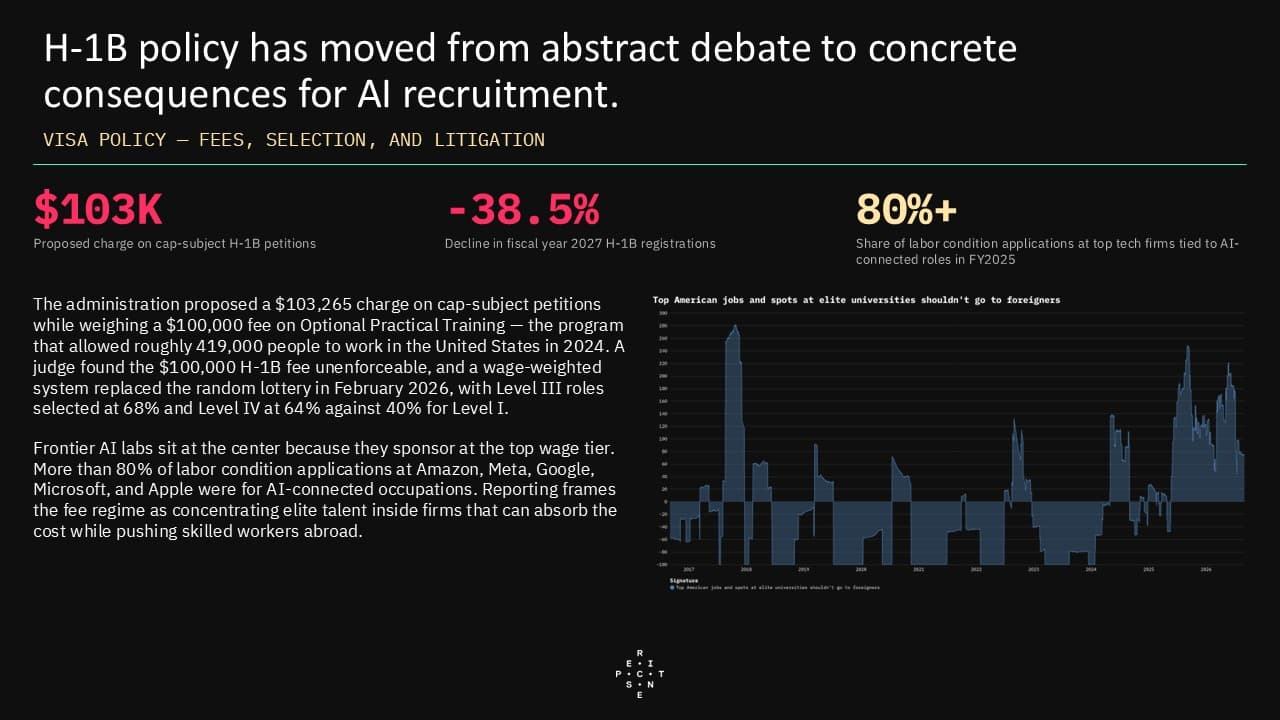
- Media discussion of H-1B and OPT policy has moved from abstract debate to concrete consequences, with proposed six-figure petition fees, a wage-weighted selection regime favoring senior roles, a steep drop in registrations, and litigation already unwinding one fee. Frontier AI labs sit at the center of the story because they sponsor at the top wage tier, which makes them structurally advantaged under the new rules and correspondingly prominent in restrictionist commentary.
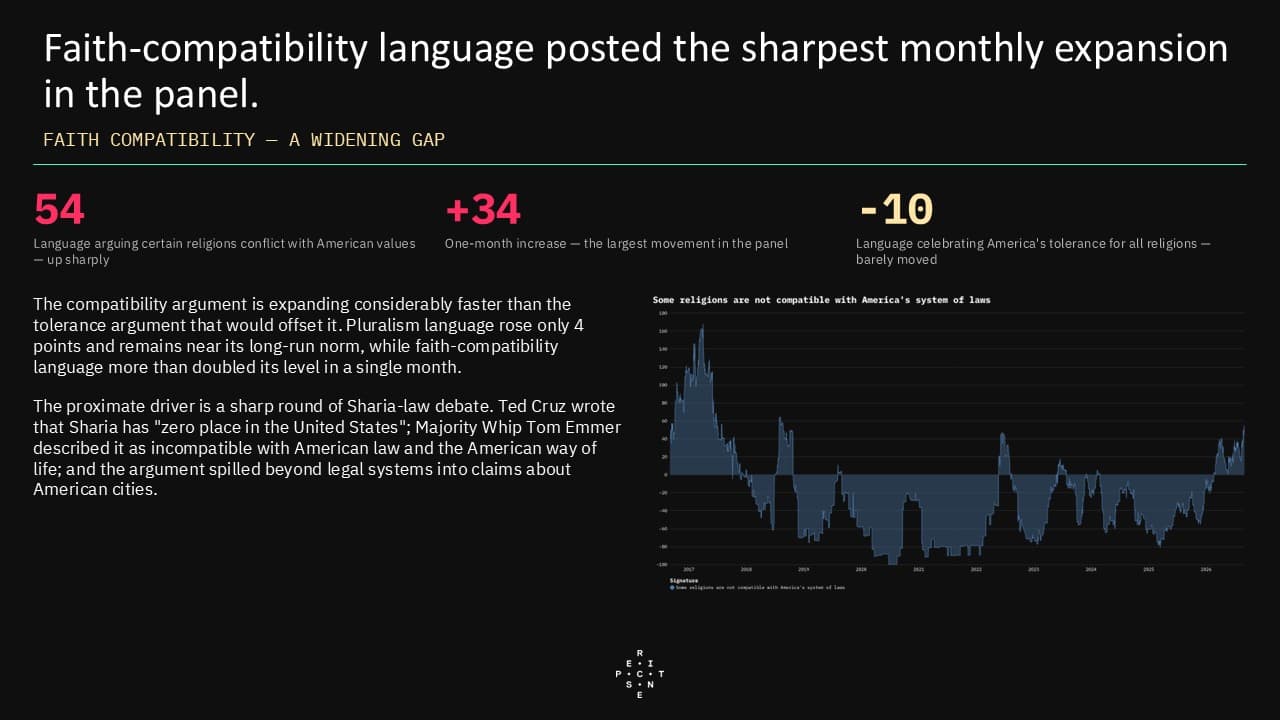
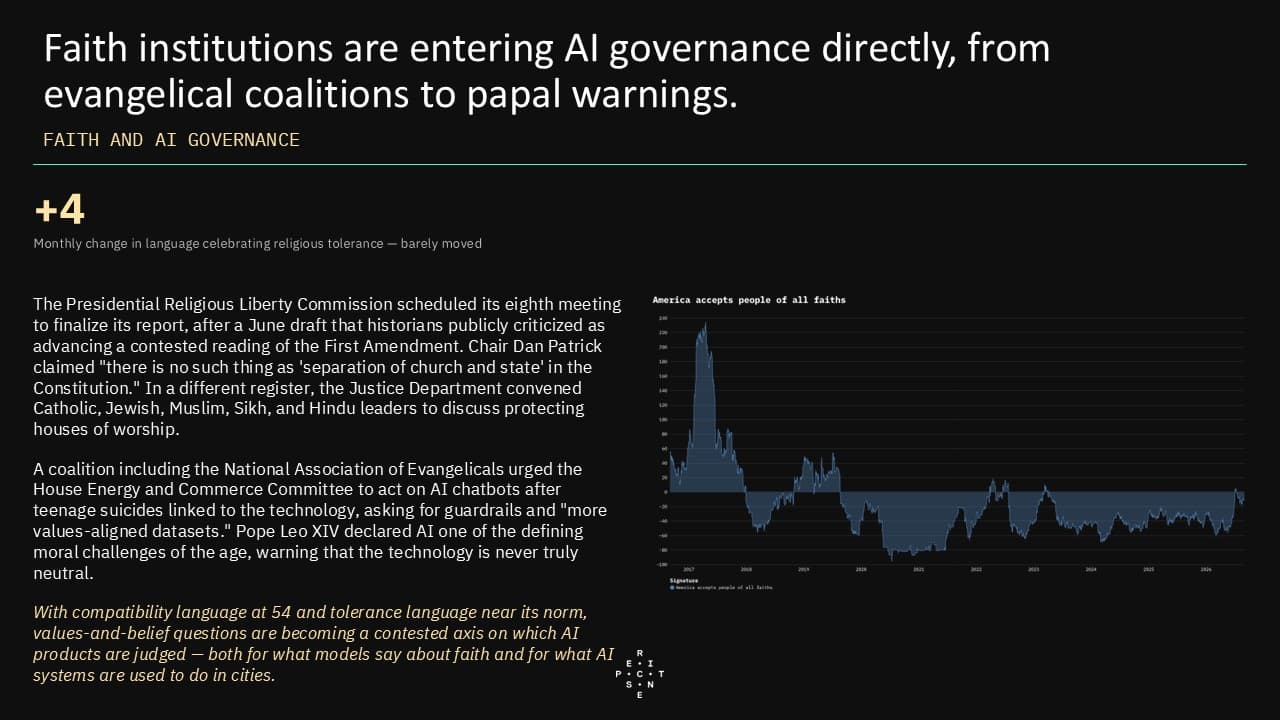
- Perscient's semantic signature tracking the density of language arguing that certain religions conflict with American values posted the sharpest one-month expansion anywhere in the panel, driven by a concentrated round of Sharia-law commentary that spilled into claims about American cities. Language celebrating religious tolerance barely moved, so the compatibility argument is expanding much faster than the pluralism argument that would counterbalance it — and faith institutions are simultaneously entering AI governance directly, from evangelical coalitions lobbying on chatbot guardrails to papal warnings that the technology is never neutral.
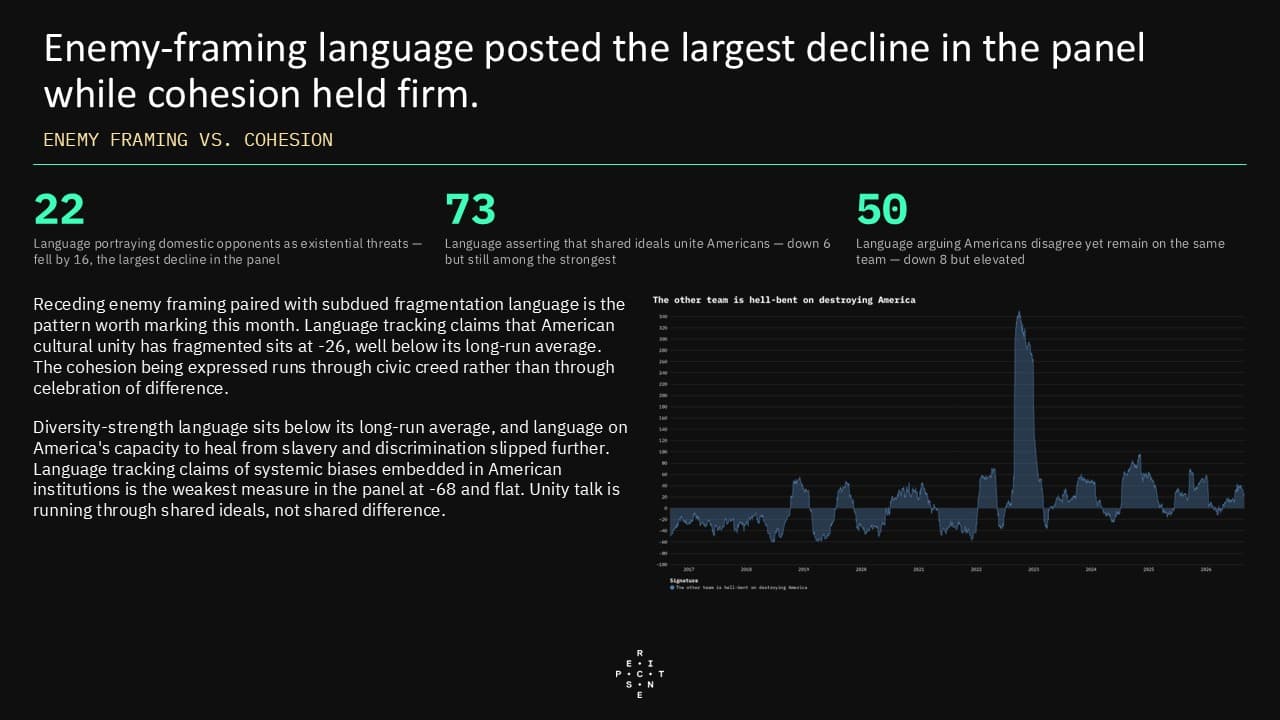
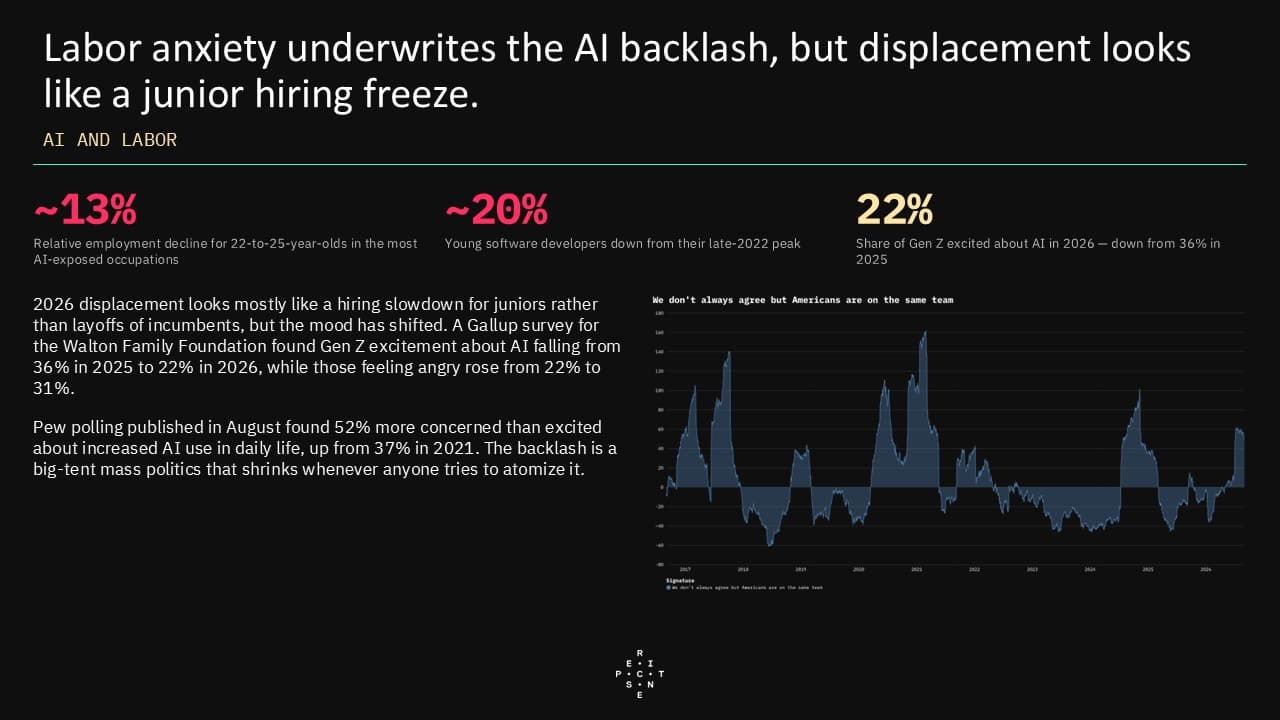
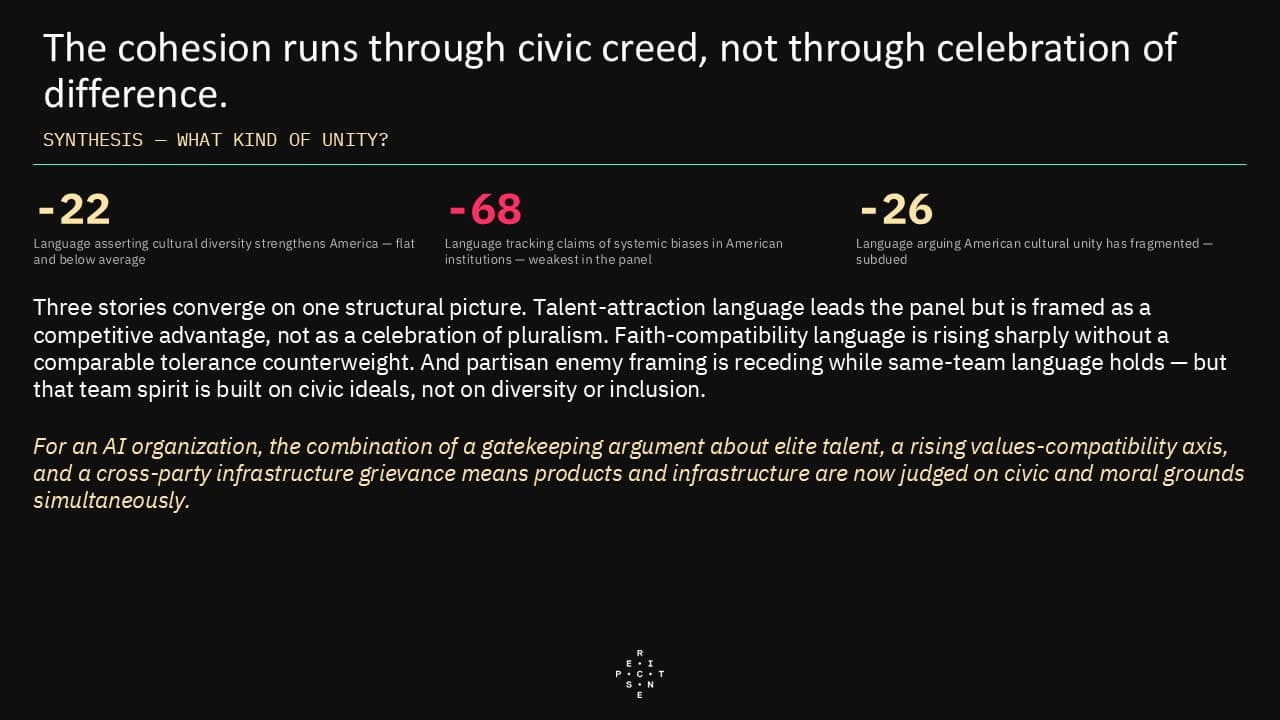
- Language casting domestic political opponents as existential threats fell more than any other measure tracked, while same-team and shared-ideals framing stayed among the strongest in the set. The cohesion being expressed runs through civic creed rather than through celebration of difference, since diversity-strength and systemic-bias framings remain subdued or weakest in the panel.
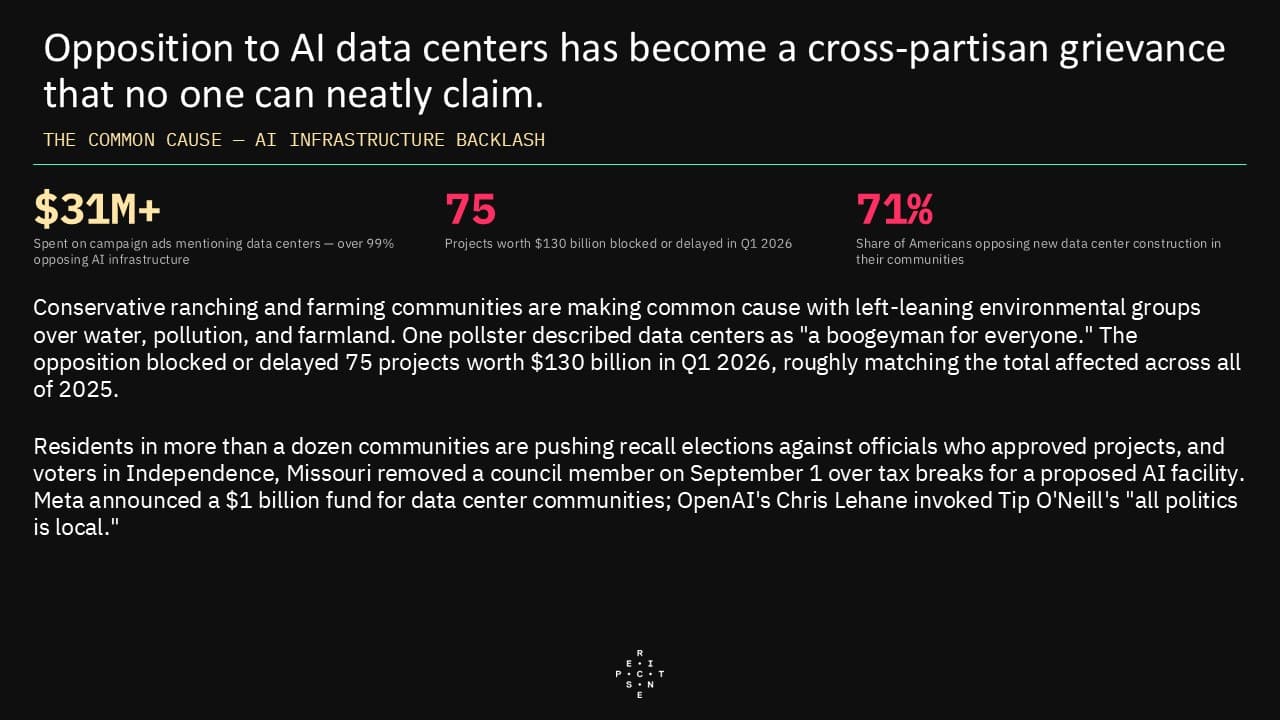
- Those two movements converge on a single external correlate: opposition to AI data centers has become the rare grievance that refuses to sort by party. Campaign advertising mentioning data centers is overwhelmingly hostile, rural conservatives are making common cause with environmental groups, billions in projects have been blocked or delayed, and voters have begun recalling local officials over approvals. For an AI organization, the combination of receding partisan enemy framing, an available cross-party common cause, a gatekeeping argument about elite talent, and a rising values-compatibility axis means AI products and infrastructure are now judged on civic and moral grounds simultaneously.
Last updated: ...