
Jobs Pulse
The Pulse
September 14, 2026·Jobs Pulse

Executive Summary
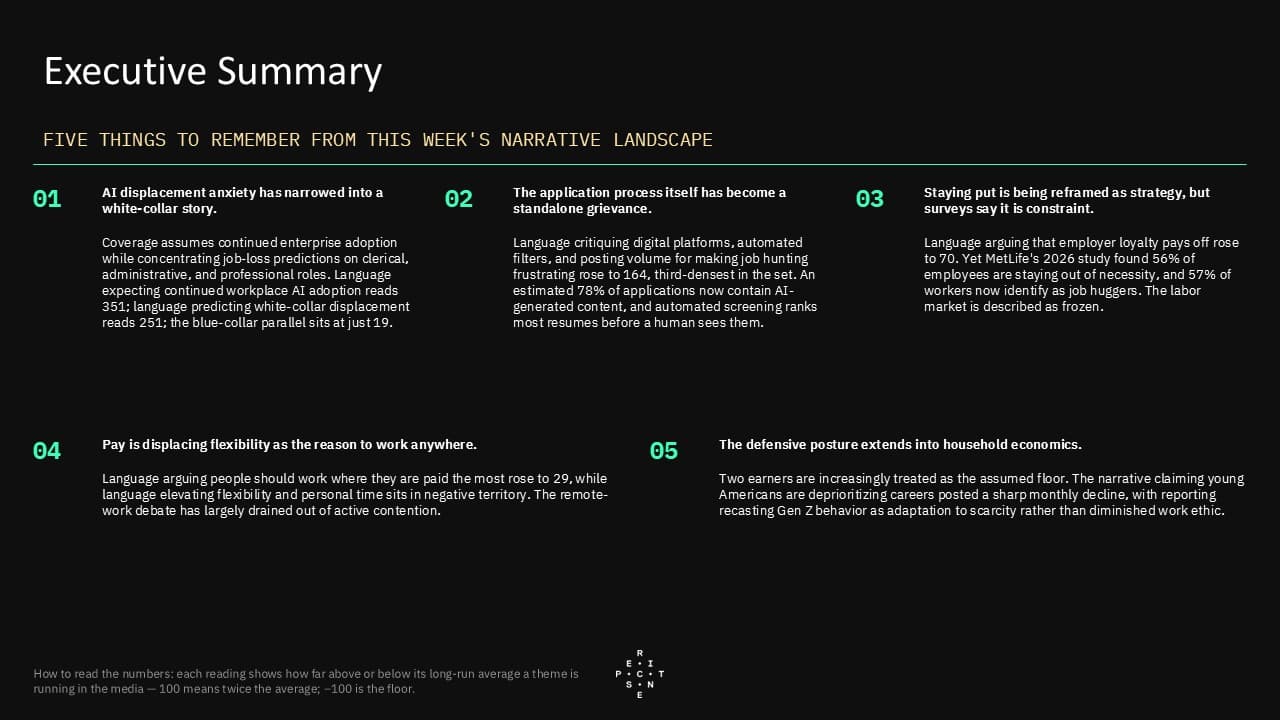
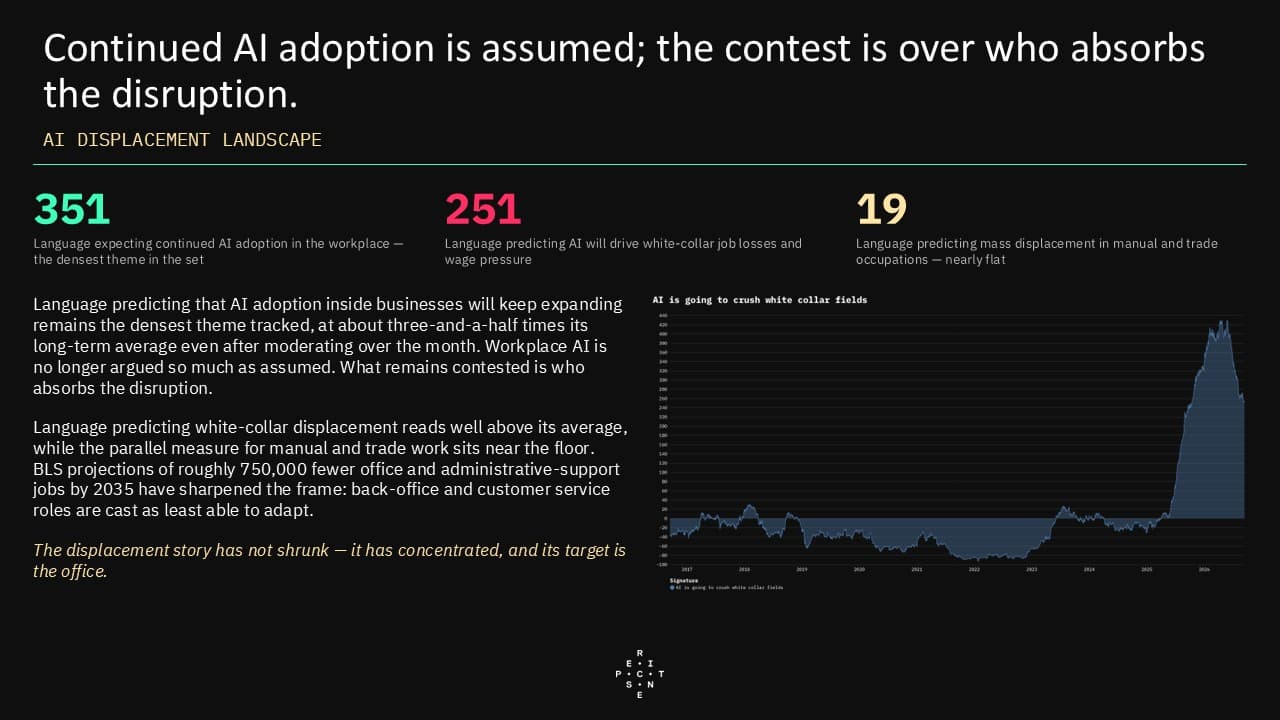
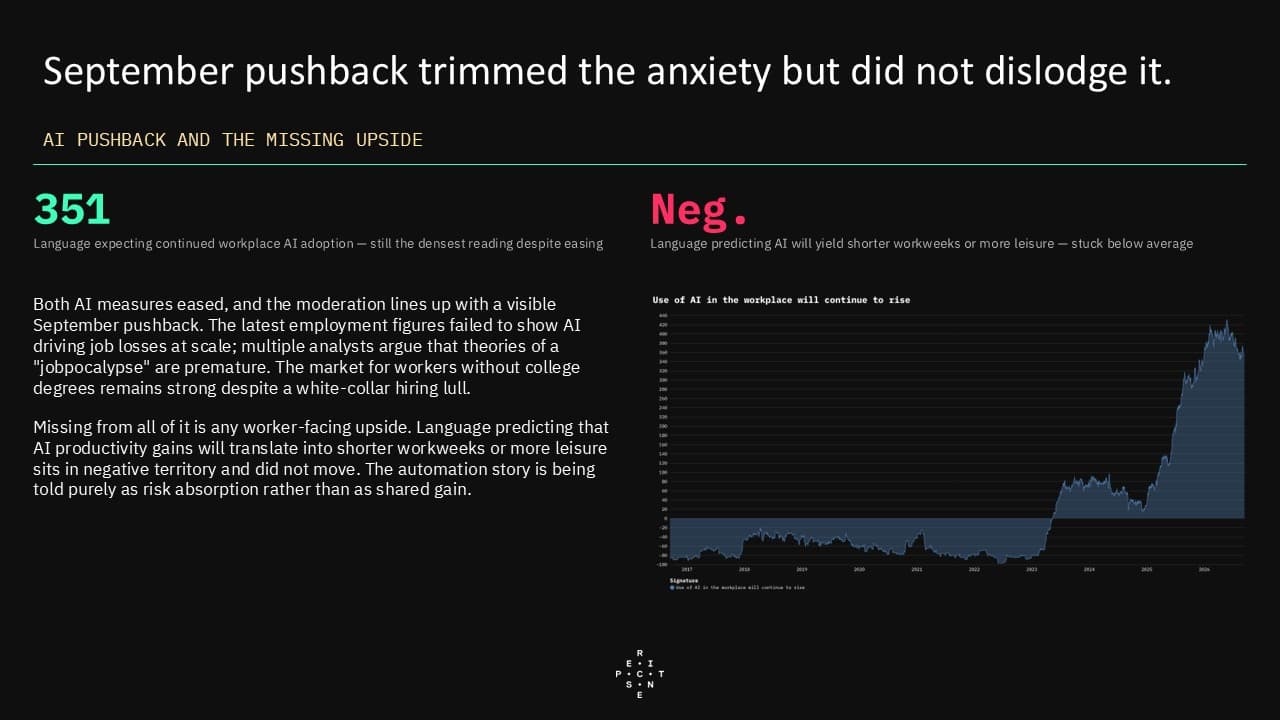
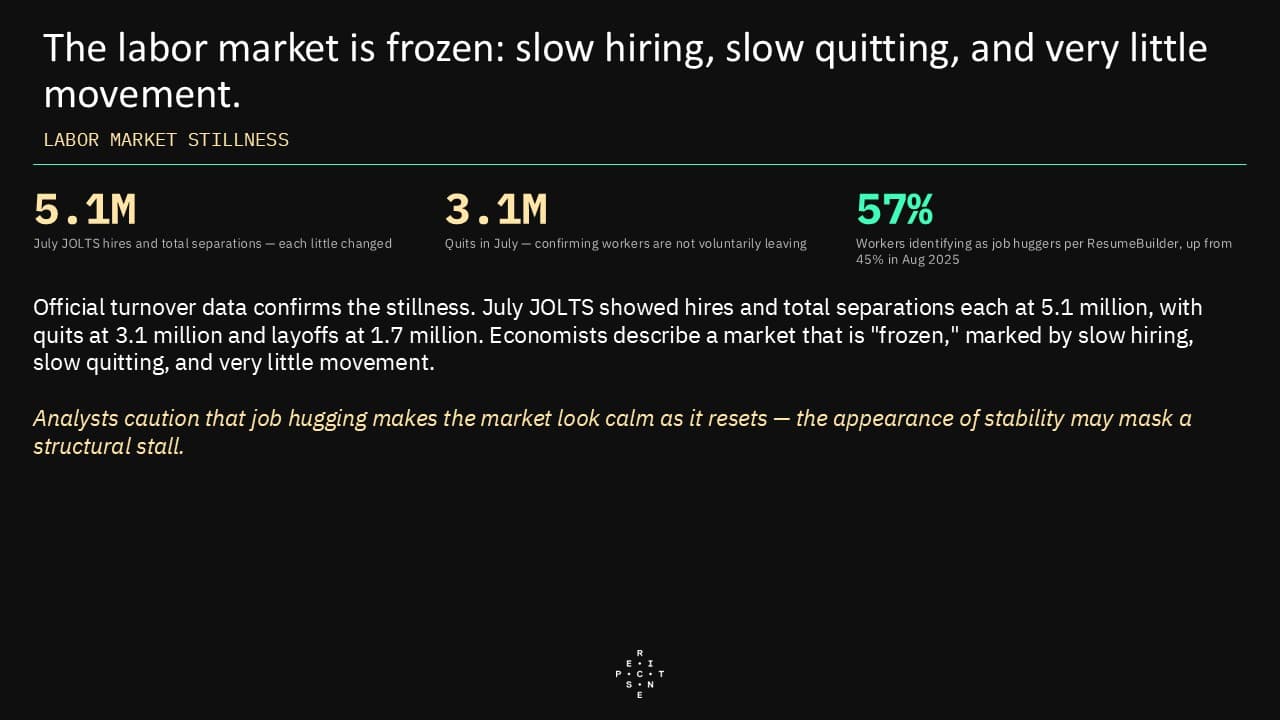
- Media treatment of workplace AI has narrowed from a general displacement panic into a specifically white-collar one: coverage assumes continued enterprise adoption while concentrating job-loss predictions on clerical, administrative, and professional office roles, leaving manual and trade work almost entirely out of the threat frame. September also brought a visible pushback, with analysts arguing that employment data does not yet support "jobpocalypse" claims — a correction that trimmed, but did not dislodge, the office-worker anxiety.
- Conspicuously absent from that conversation is any worker-facing benefit. Perscient's semantic signature tracking the density of language predicting that AI productivity gains will yield shorter workweeks or more leisure remains in negative territory and did not move, so the automation story is being told purely as risk absorption rather than as shared gain.
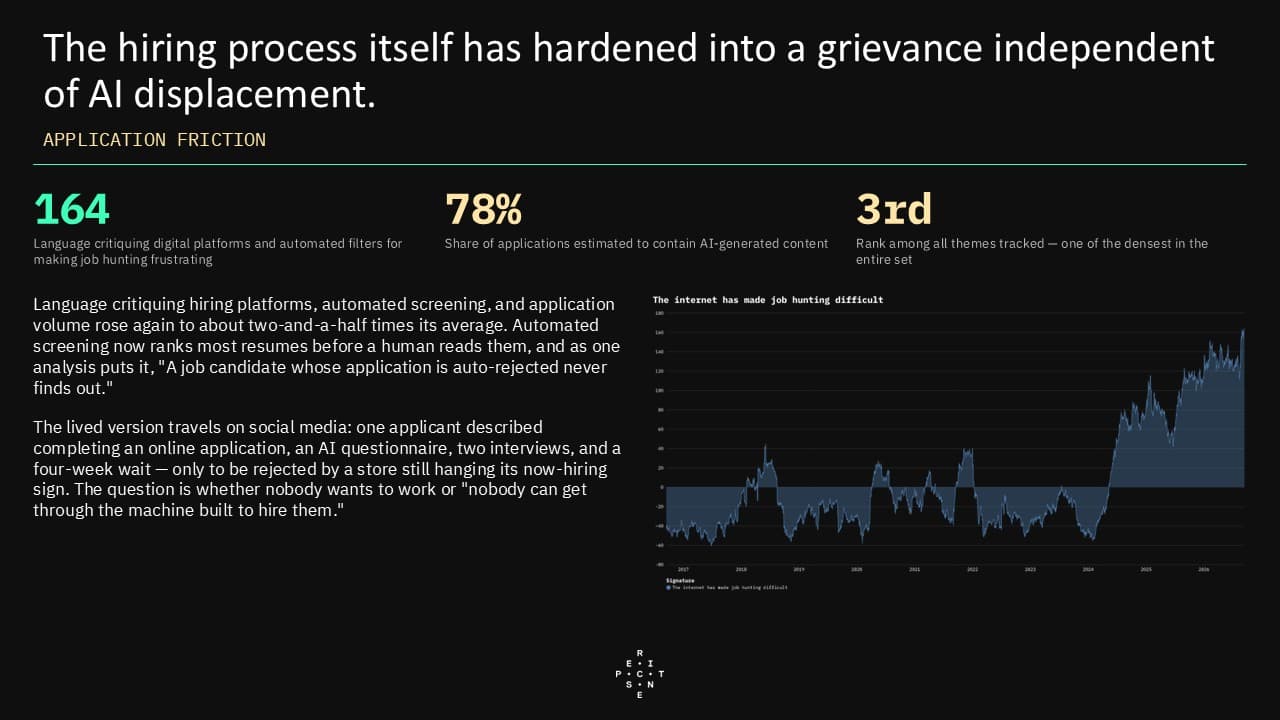
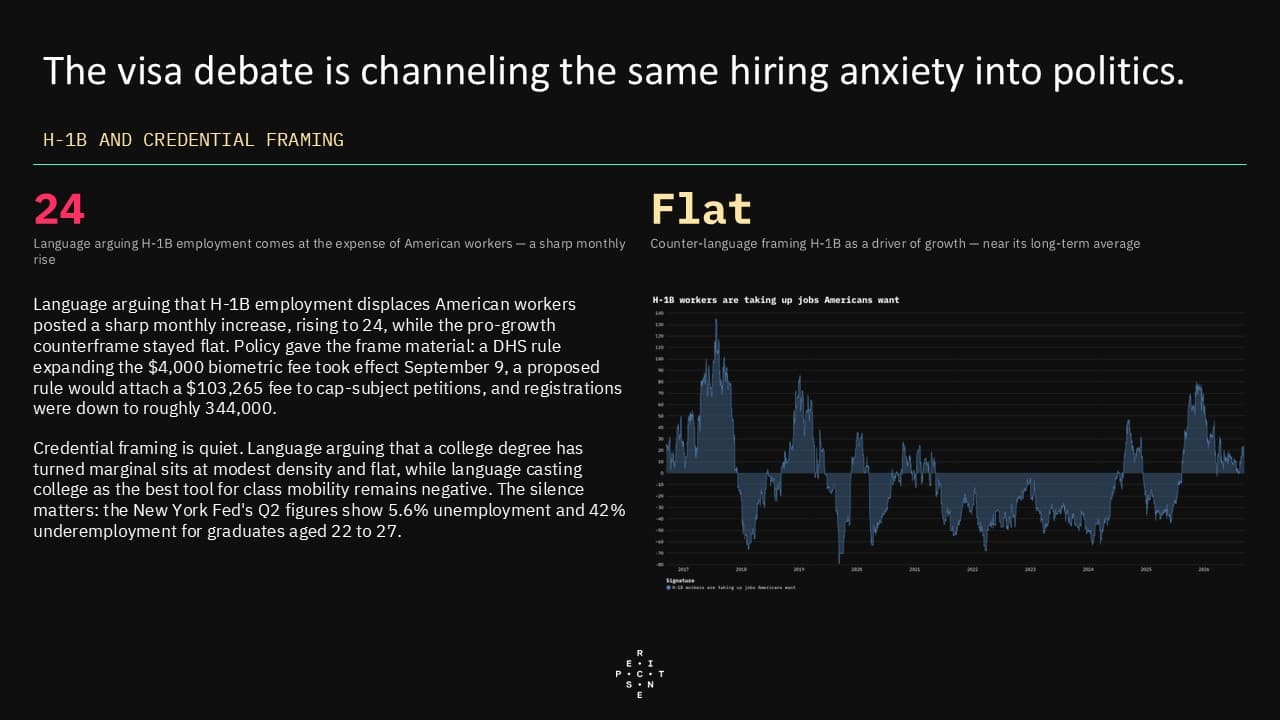
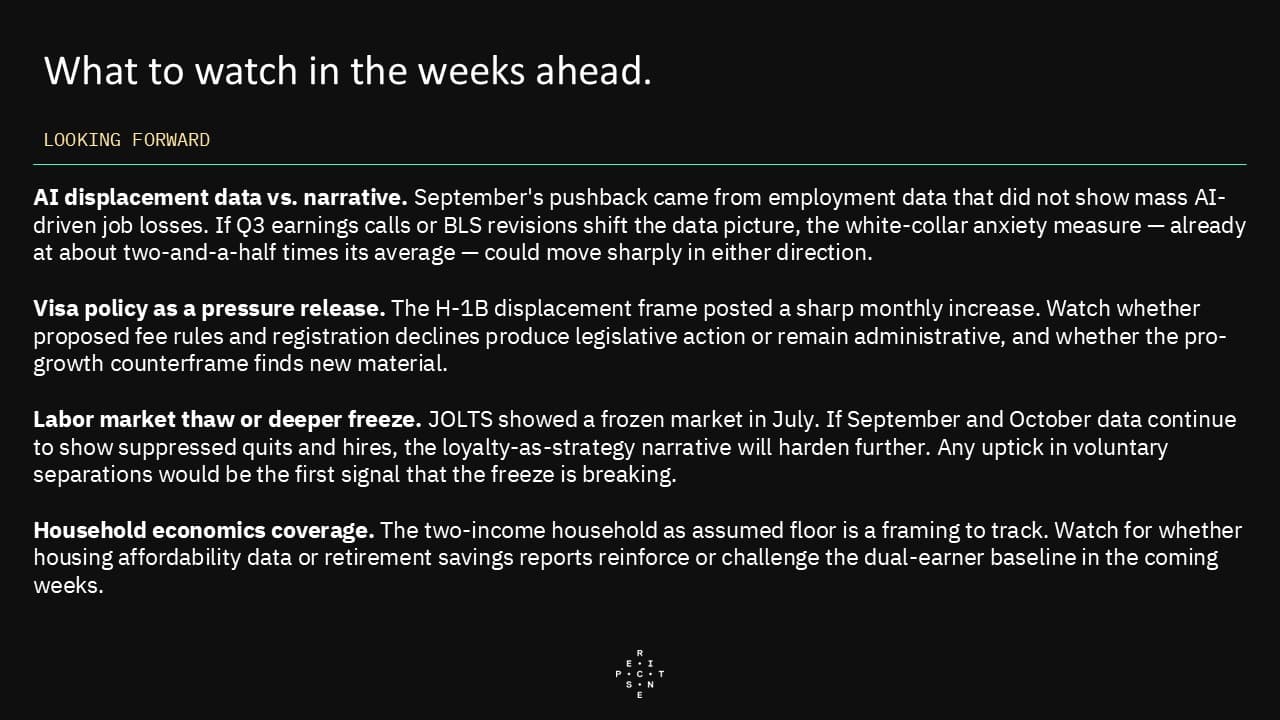
- Hiring friction has detached from the automation debate and become its own grievance. Language critiquing platforms, automated screening, and application volume rose again to become one of the densest themes in the set, carried by practitioner findings on resume filtering and by viral first-person accounts of candidates rejected without explanation. The political channel for the same anxiety is the visa debate, where the claim that H-1B employment displaces American workers recorded the largest single increase of any signature tracked this month while the pro-growth counterframe stayed flat.
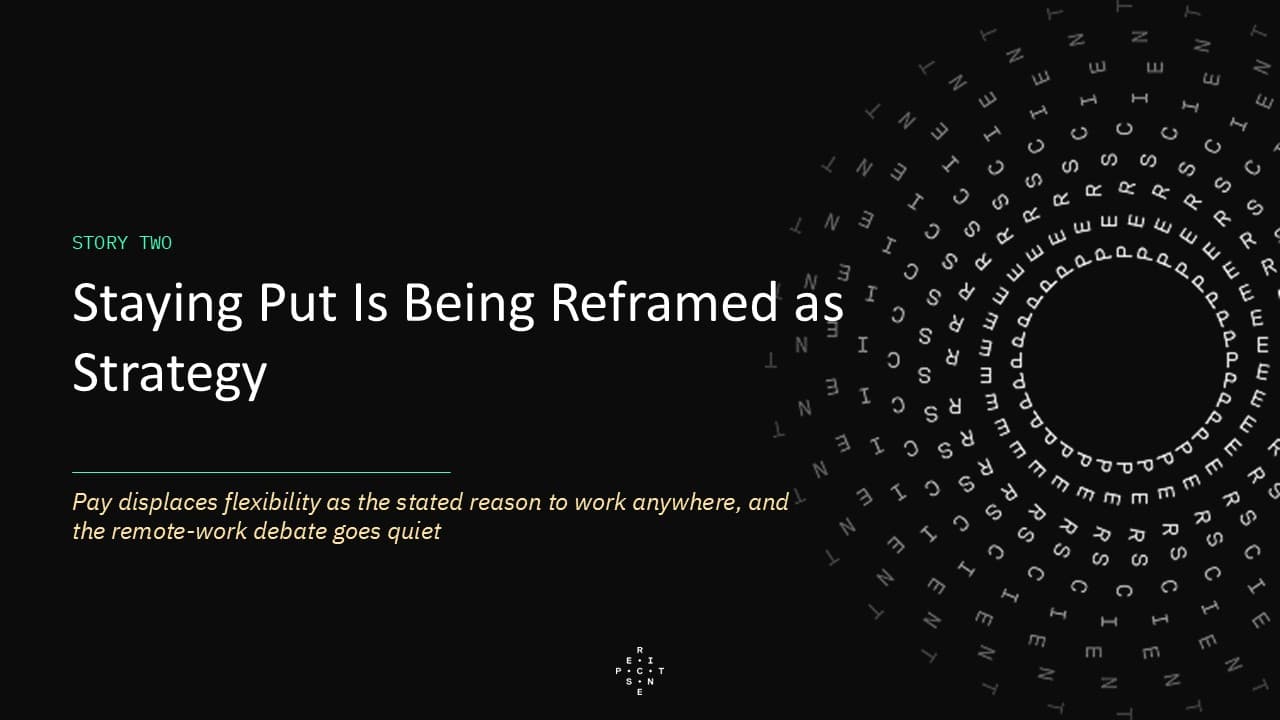
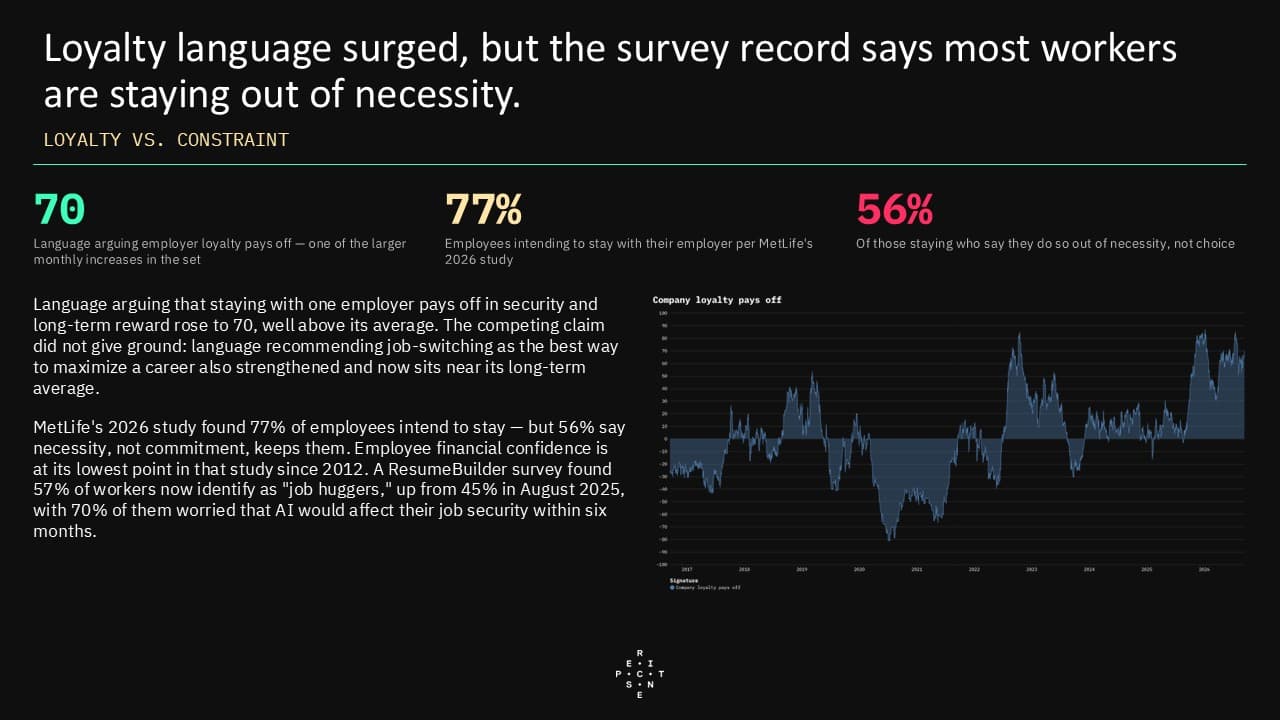
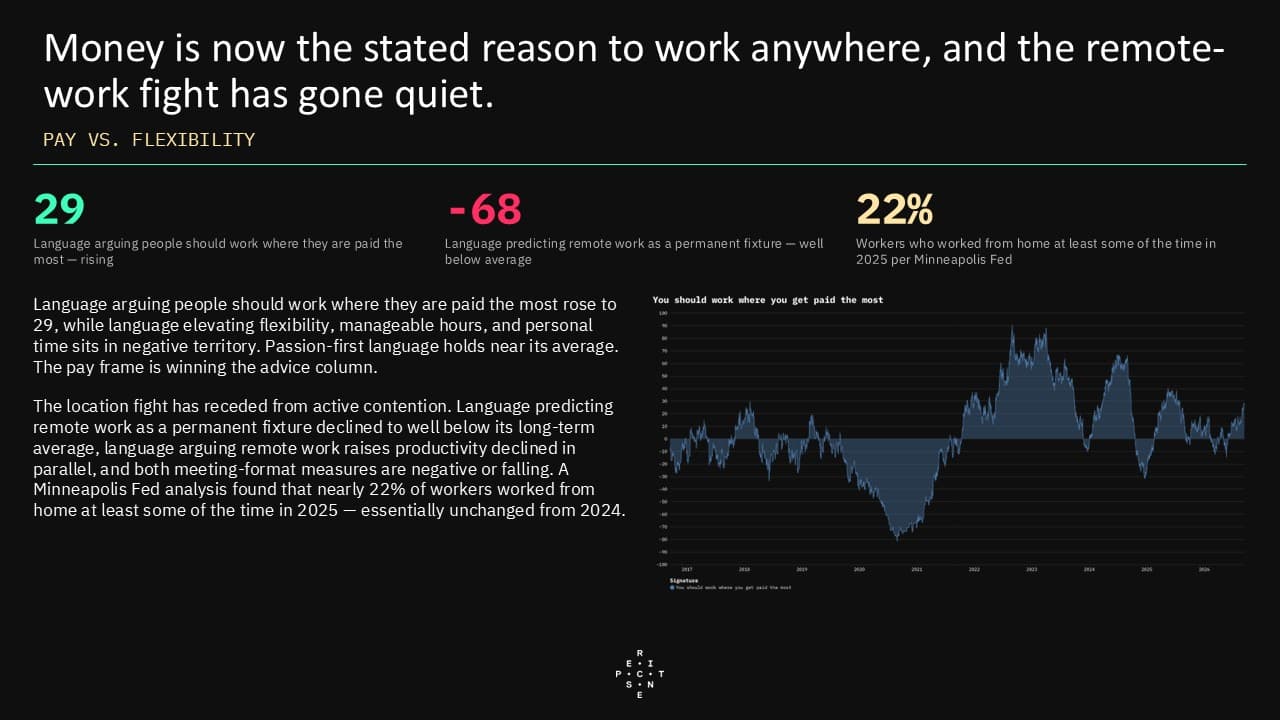
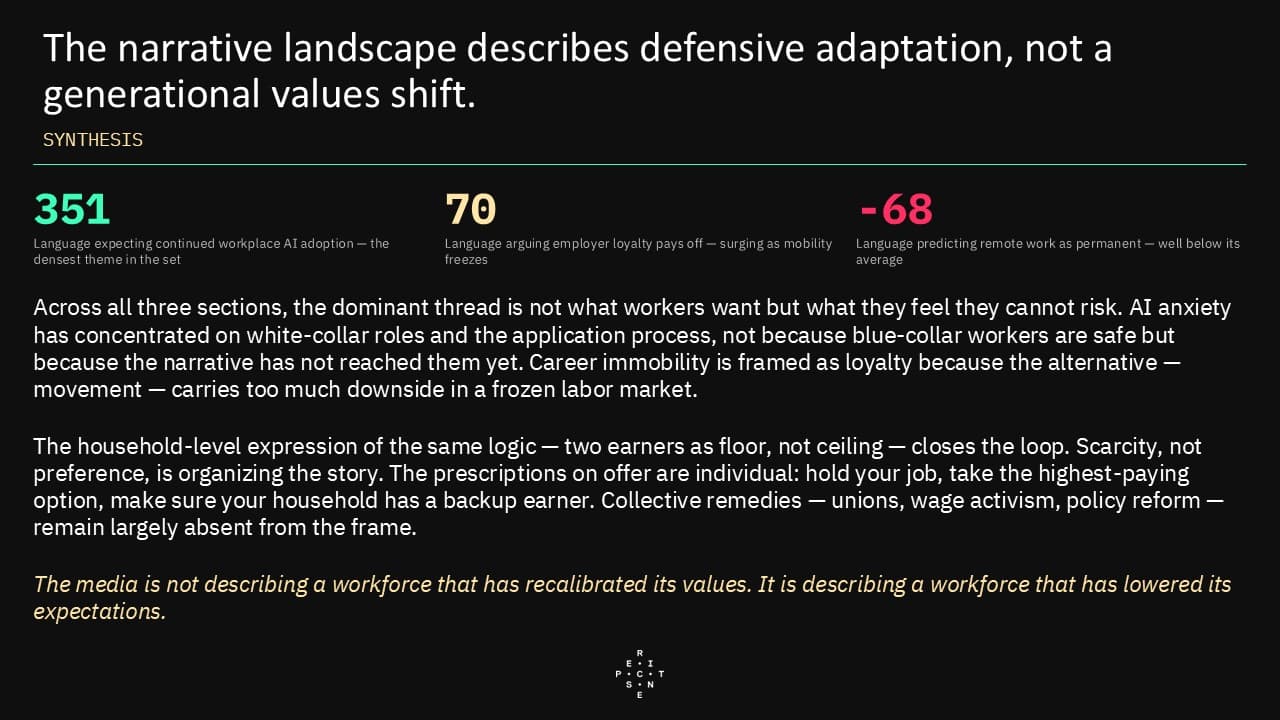
- Career advice coverage has reframed immobility as strategy. Language arguing that employer loyalty pays off strengthened sharply even as job-switching advocacy also firmed, yet the underlying survey record indicates that most workers staying put describe doing so out of necessity. Meanwhile, pay is displacing flexibility as the stated reason to accept a job, and the remote-versus-office fight has largely drained out of active contention.
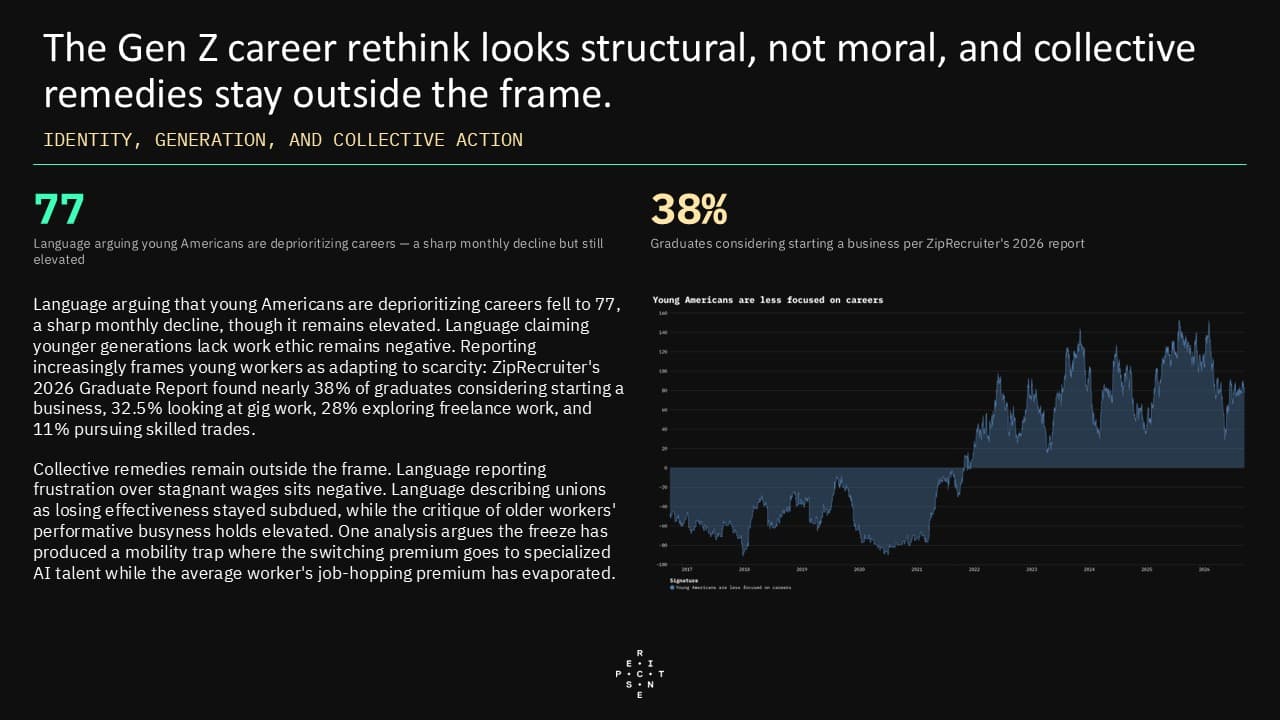
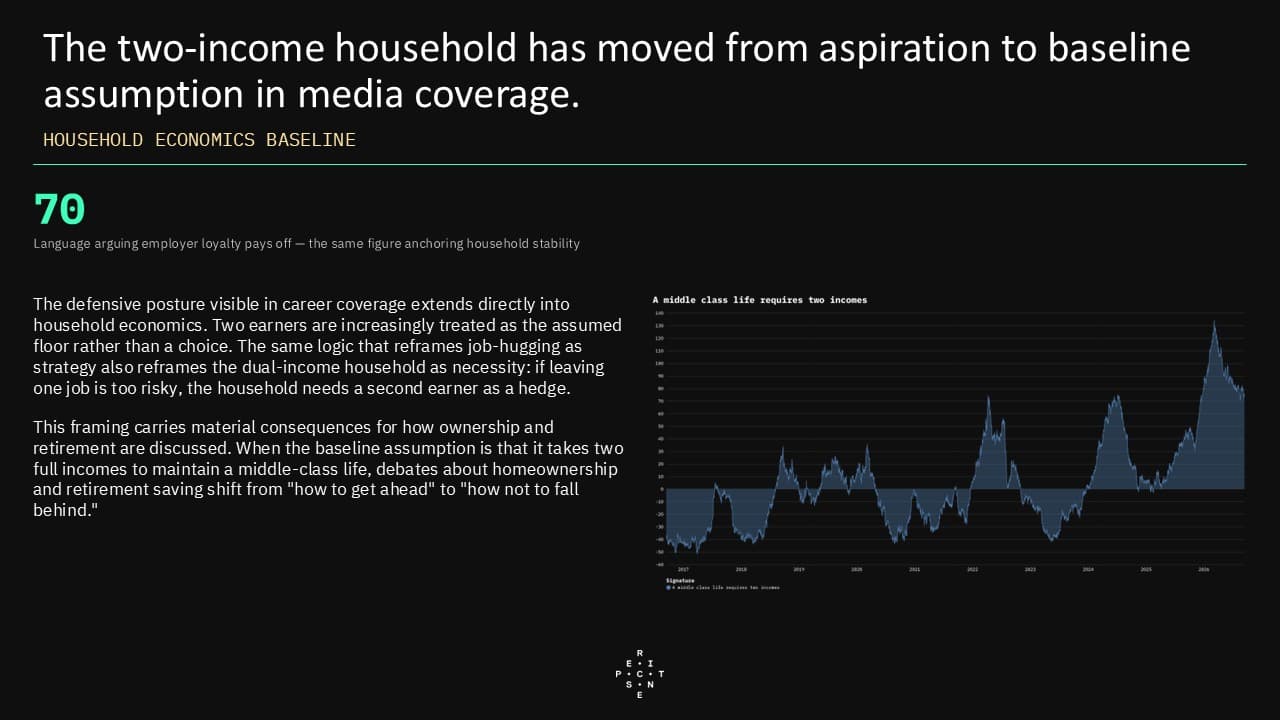
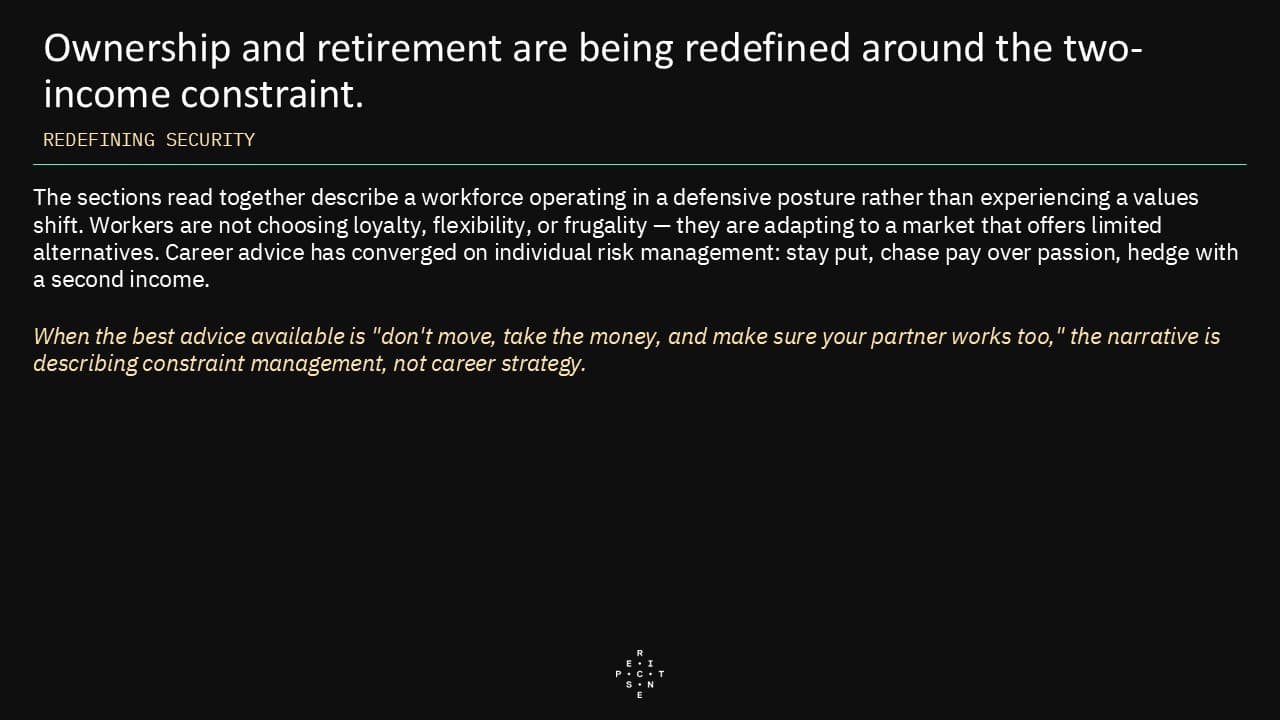
- Read together, the sections describe a defensive posture rather than a values shift: the narrative claiming that young Americans are deprioritizing careers posted the steepest monthly decline in the set, with reporting recasting Gen Z behavior as adaptation to scarcity rather than diminished work ethic, while collective remedies stay outside the frame and the prescriptions on offer are individual risk management — a logic that carries directly into household economics, where two earners are increasingly treated as the assumed floor and ownership and retirement get redefined around it.
Last updated: ...
Last updated: ...
Last updated: ...