School Pulse
The Pulse
September 14, 2026·Schools Pulse


Executive Summary
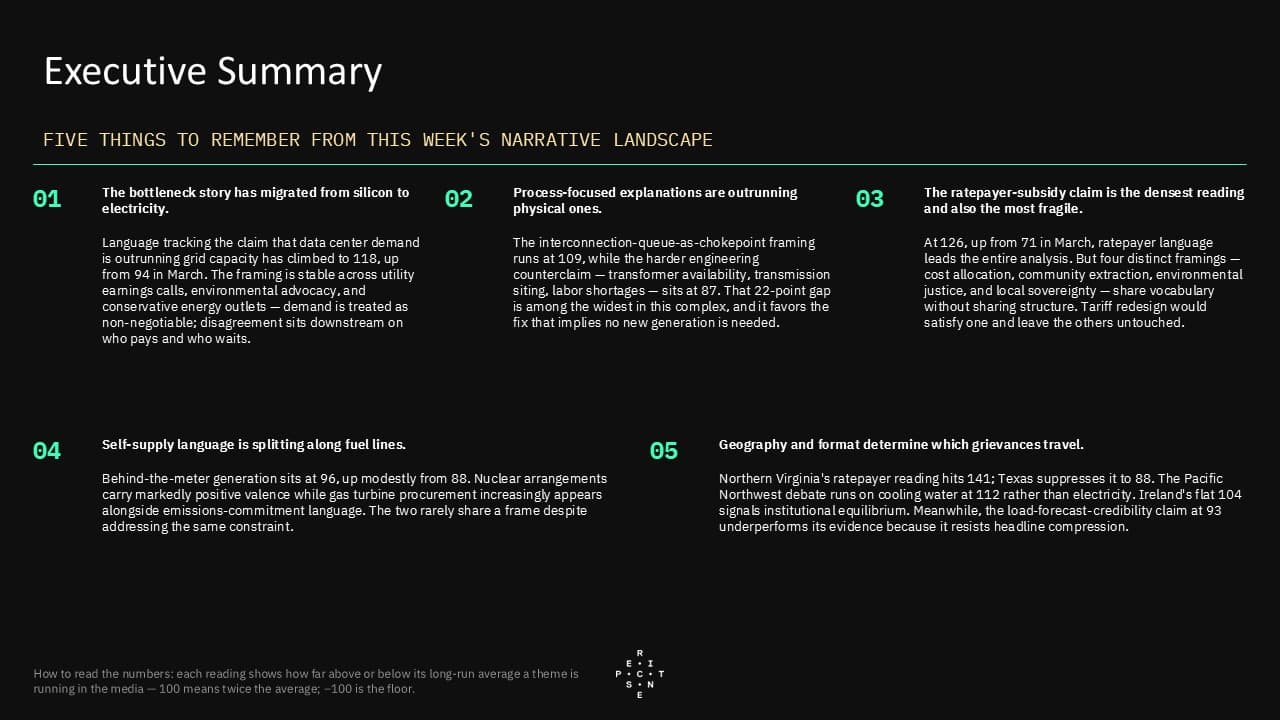
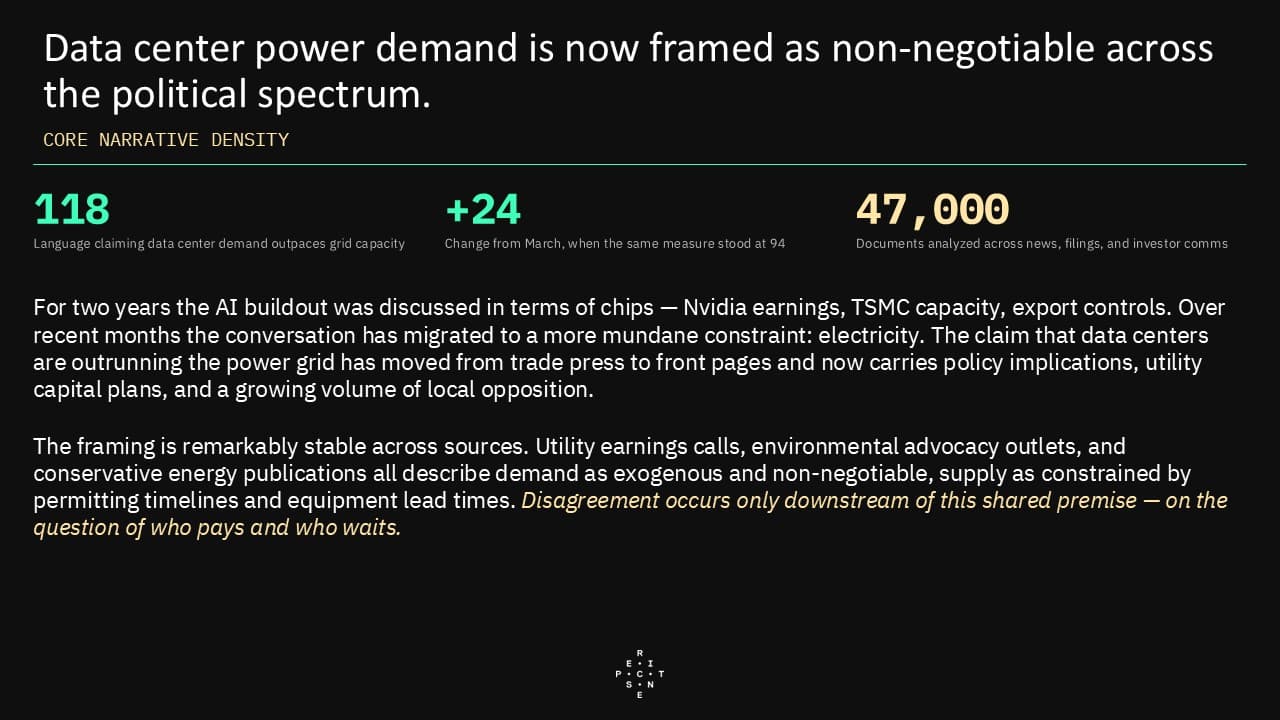
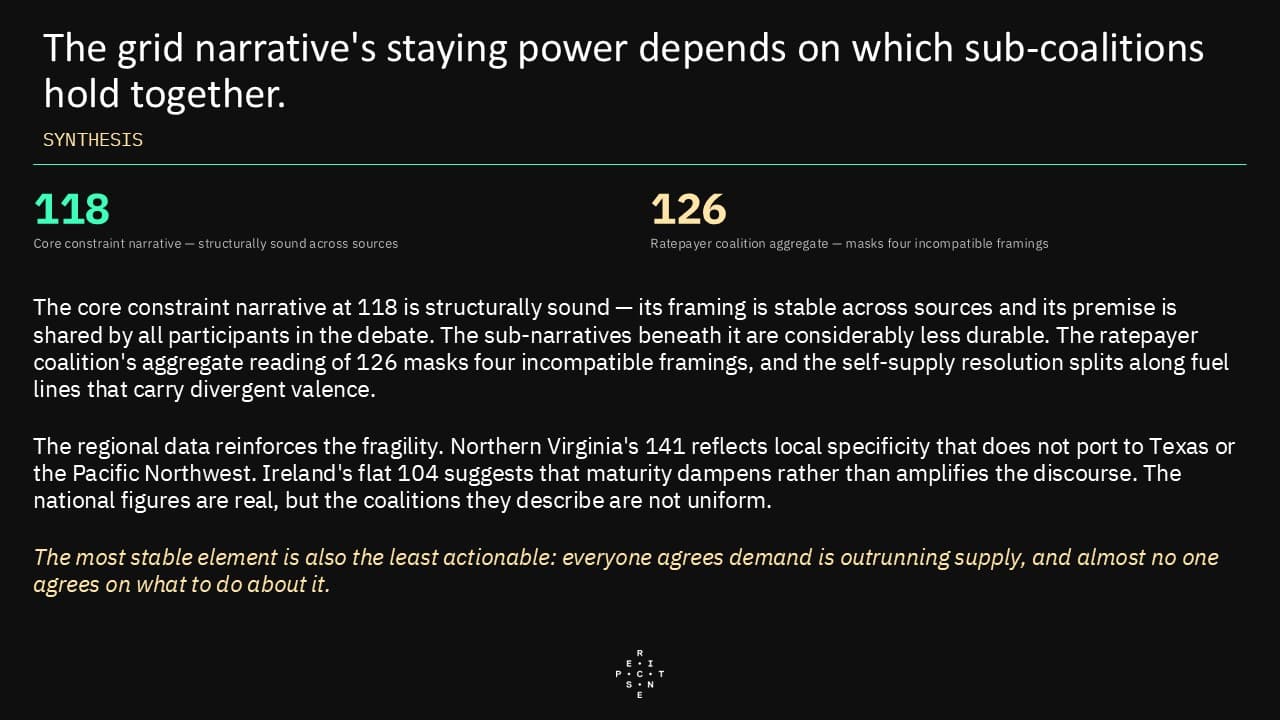
- The bottleneck story has migrated from silicon to electricity. Perscient's semantic signature tracking the claim that data center demand is outrunning generation and transmission capacity has grown substantially denser since March, and it holds a consistent shape across utility earnings calls, environmental advocacy outlets, and conservative energy publications alike. Demand is uniformly framed as exogenous and non-negotiable; the live disagreement sits downstream, on the questions of who pays and who waits.
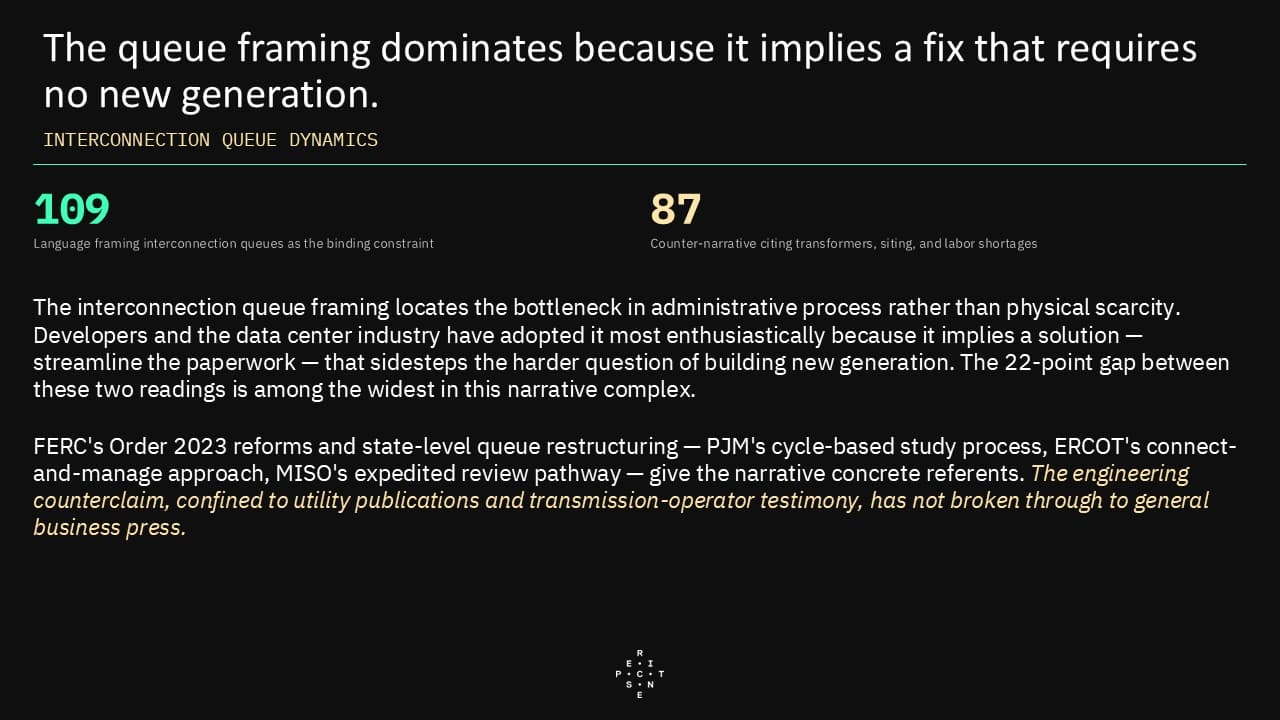
- Process-focused explanations are outrunning physical ones. The framing that interconnection queues are the binding constraint circulates far more widely than the engineering counterclaim concerning transformer availability, transmission siting, and skilled labor. That gap is among the widest in the complex, and it is not accidental: the queue framing implies a fix requiring no new generation, which explains its adoption by developers and the data center industry, while the harder constraint stays confined to utility engineering publications and operator testimony.
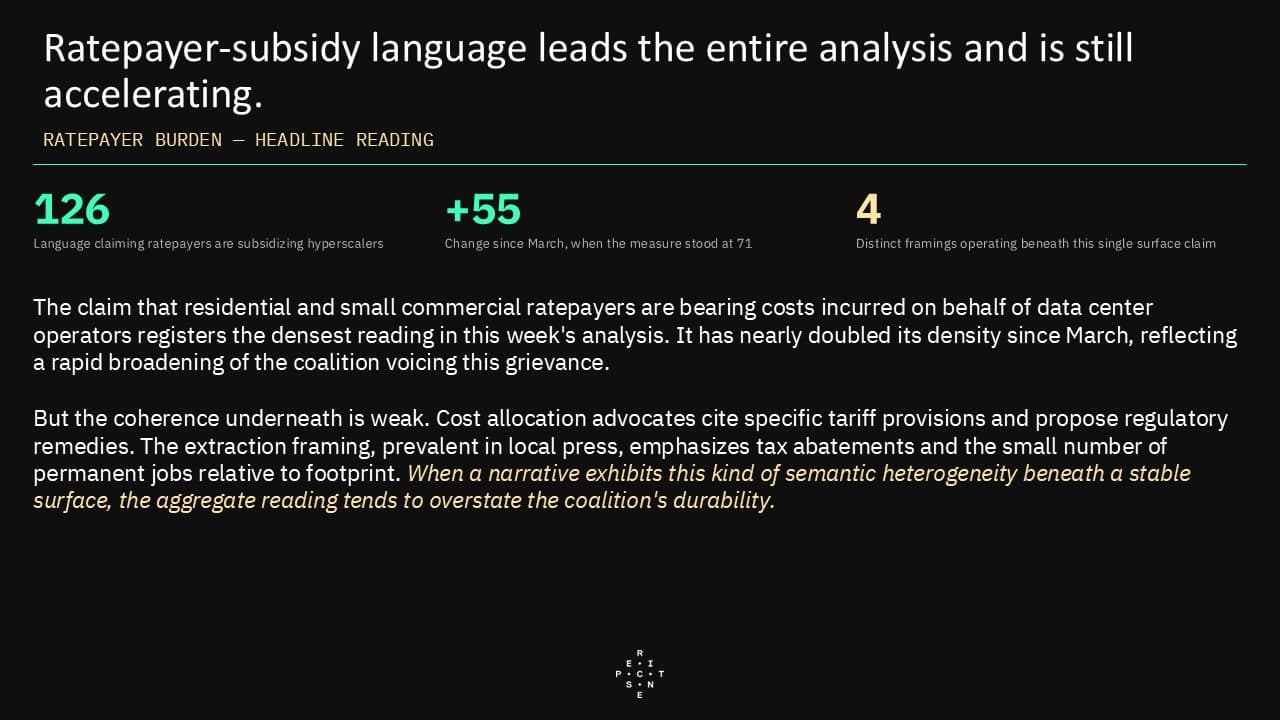
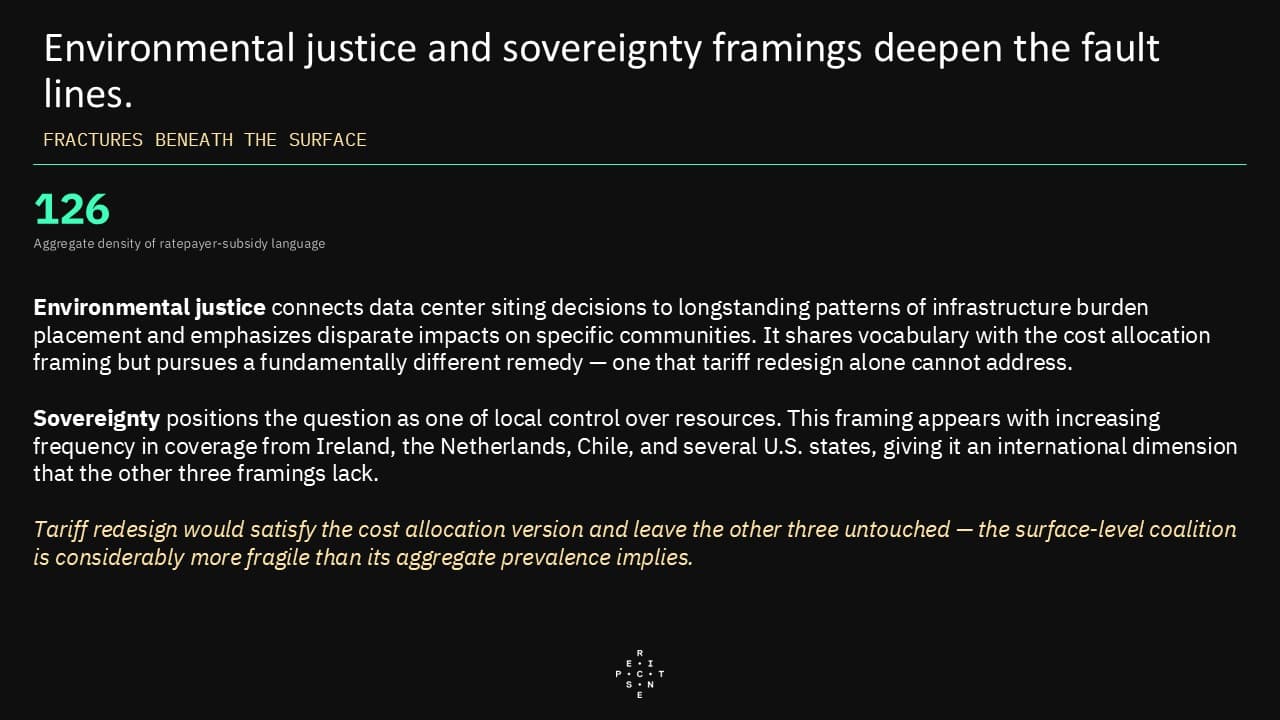
- The ratepayer-subsidy claim is the densest in the corpus and also the most internally unstable. Four distinct framings — technical cost allocation, community extraction, environmental justice, and local sovereignty — share vocabulary without sharing argumentative structure. Tariff redesign would satisfy the first and leave the others untouched, which means the surface-level coalition is considerably more fragile than its aggregate prevalence implies.
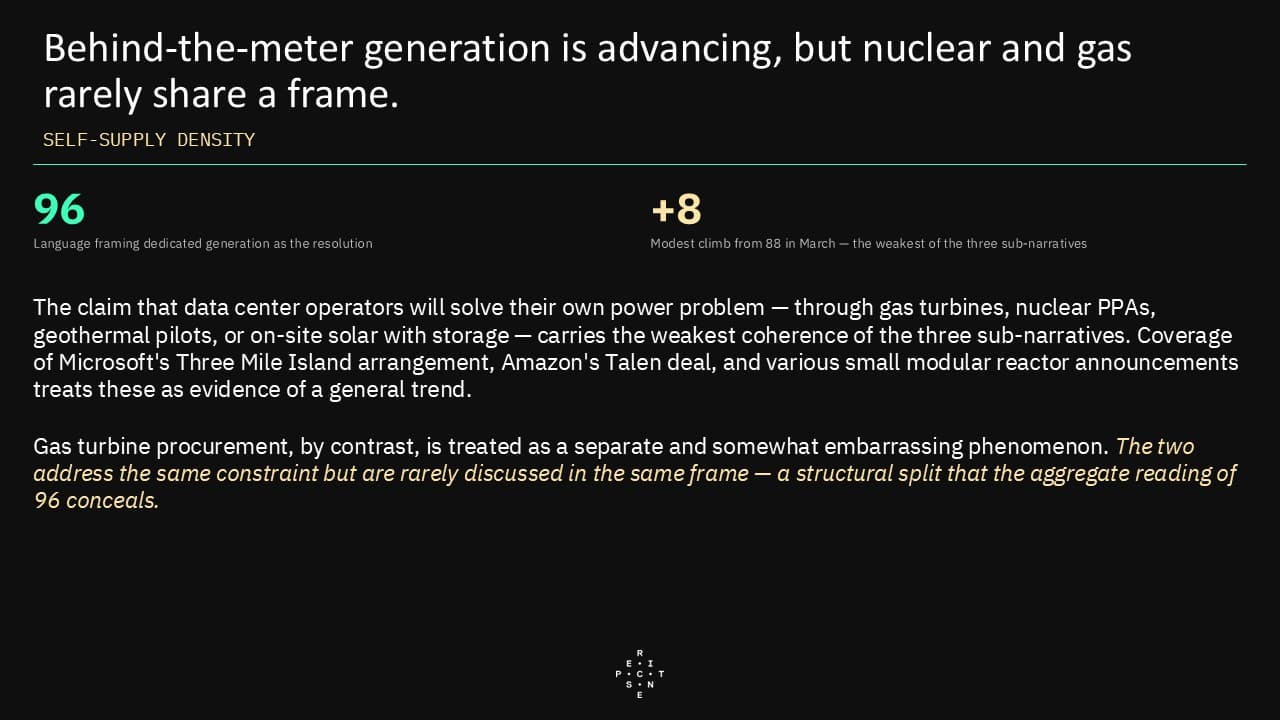
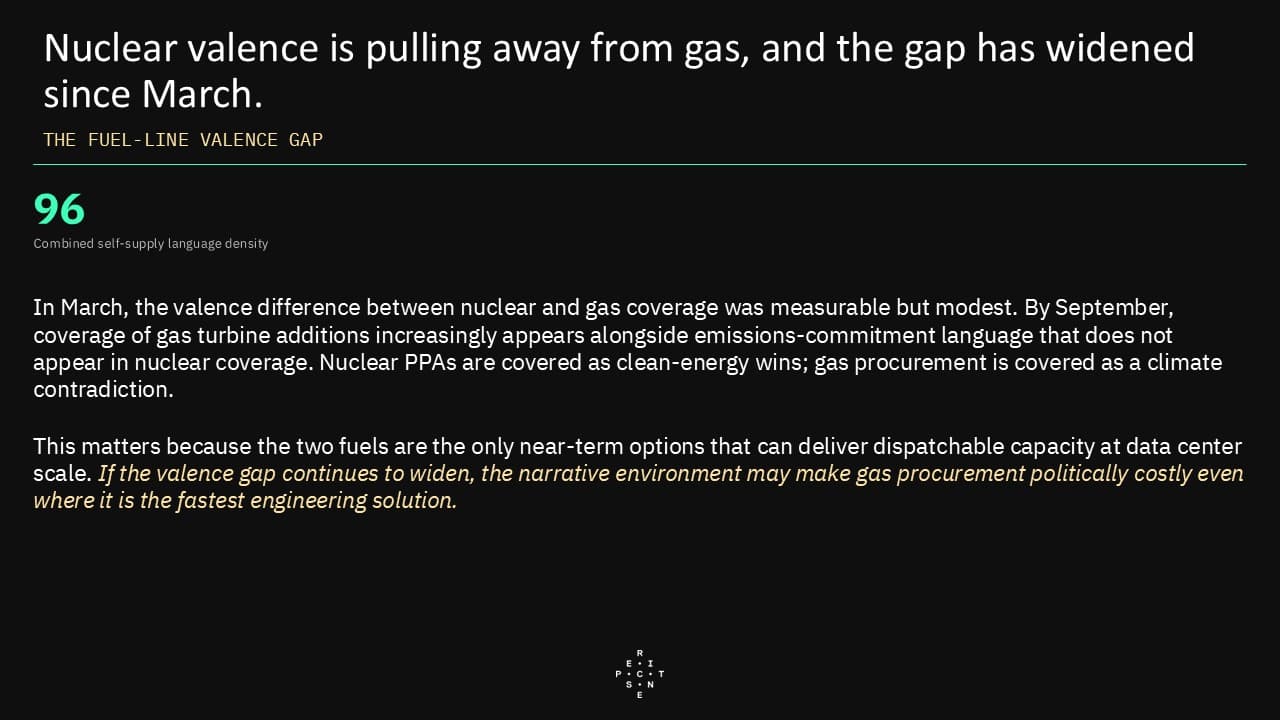
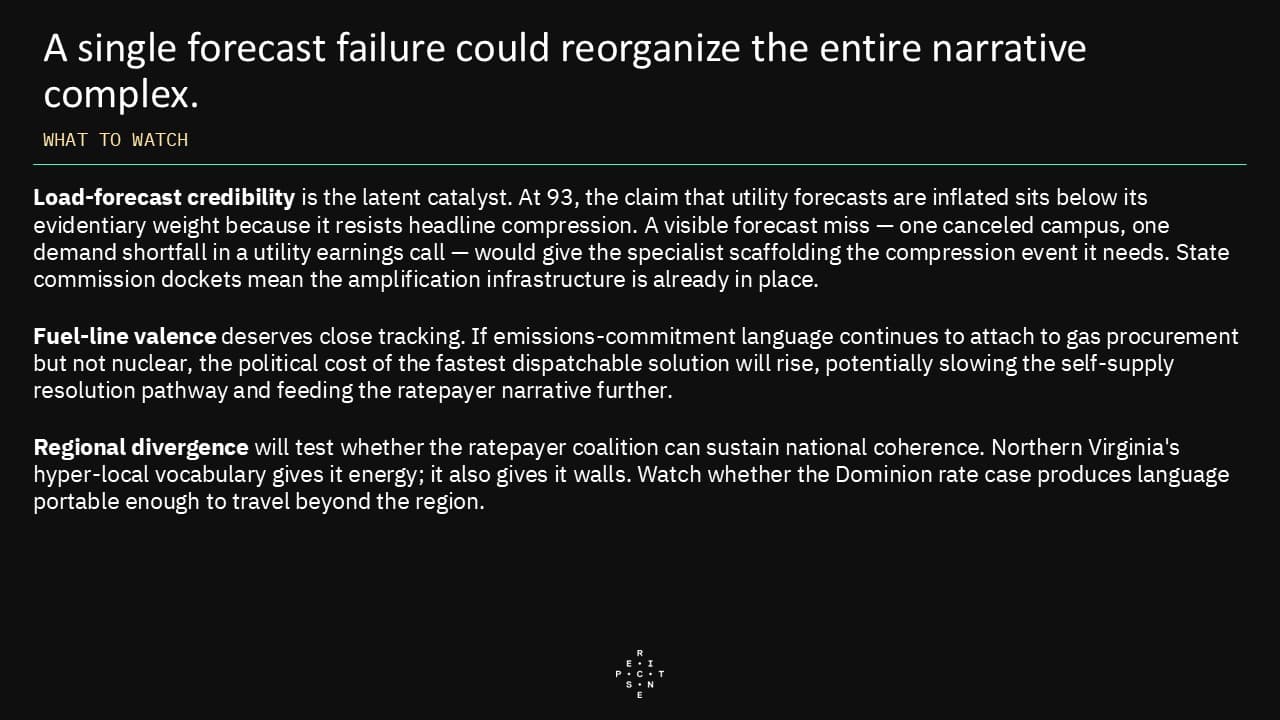
- The self-supply resolution story is advancing only modestly, and it is splitting along fuel lines. Nuclear arrangements and small modular reactor announcements are covered as evidence of a general trend and carry markedly positive valence, while gas turbine procurement is treated as a separate phenomenon and increasingly appears alongside emissions-commitment language. The two rarely occupy the same frame despite addressing an identical constraint, and the valence gap between them has widened over the measurement period.
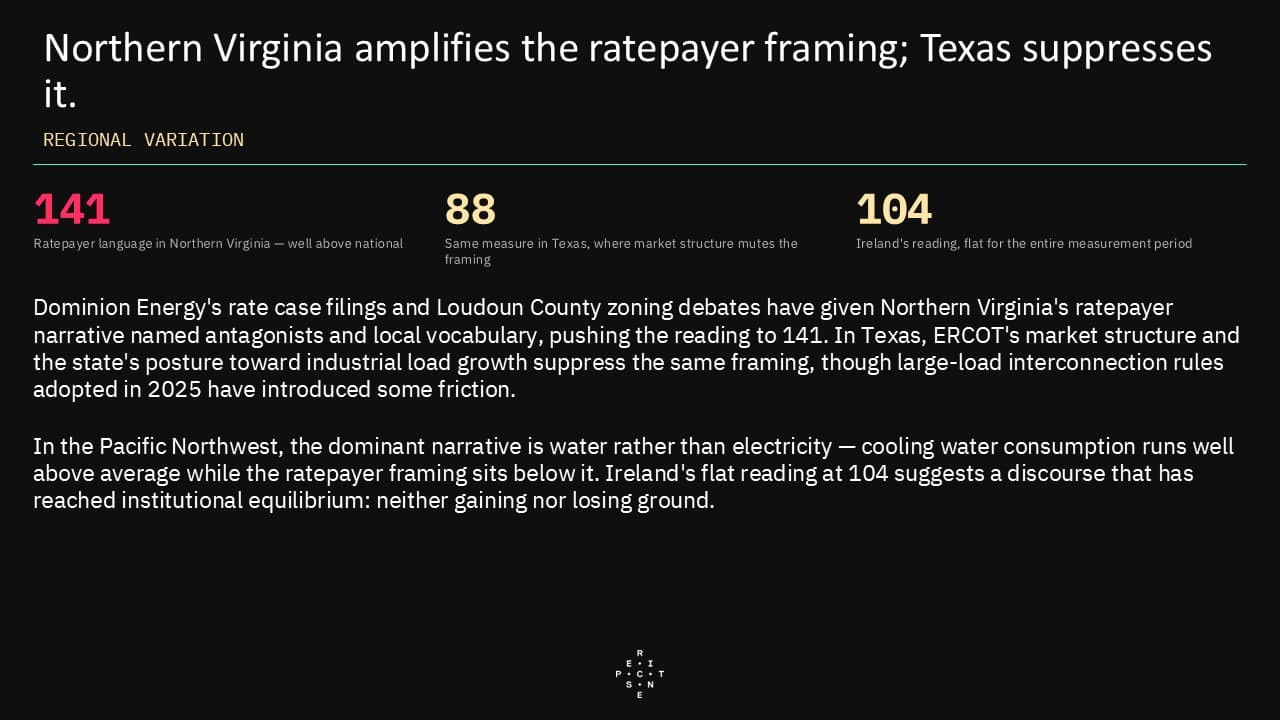
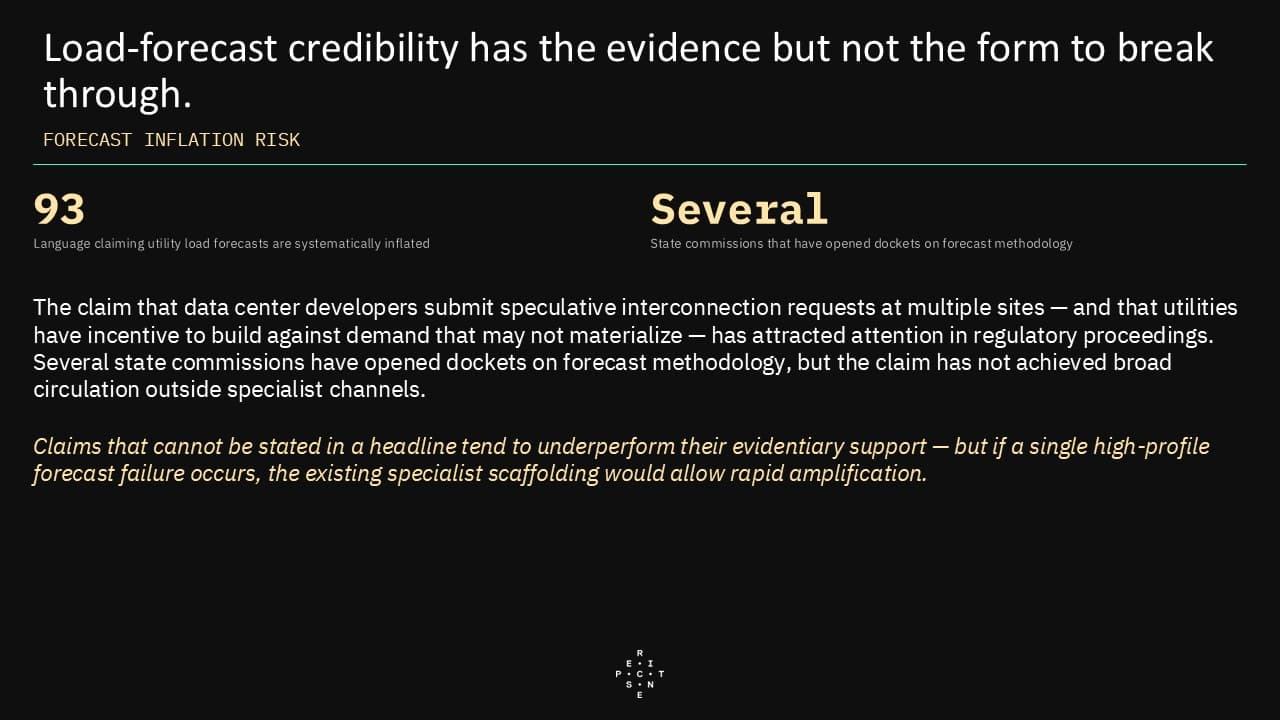
- Geography and format determine which grievances travel. Northern Virginia has given the ratepayer framing named antagonists and local vocabulary, Texas market structure suppresses it, the Pacific Northwest debate runs on cooling water rather than electricity, and Ireland has settled into institutional equilibrium. Running parallel to all of this, the claim that utility load forecasts are systematically inflated underperforms its evidentiary support because it resists compression into headline form — a latent narrative whose specialist scaffolding would permit rapid amplification following a single visible forecast failure.
Last updated: ...
Last updated: ...
Last updated: ...