
Spending and Budgeting Pulse
The Pulse
August 17, 2026·Spending & Budgeting Pulse


Executive Summary
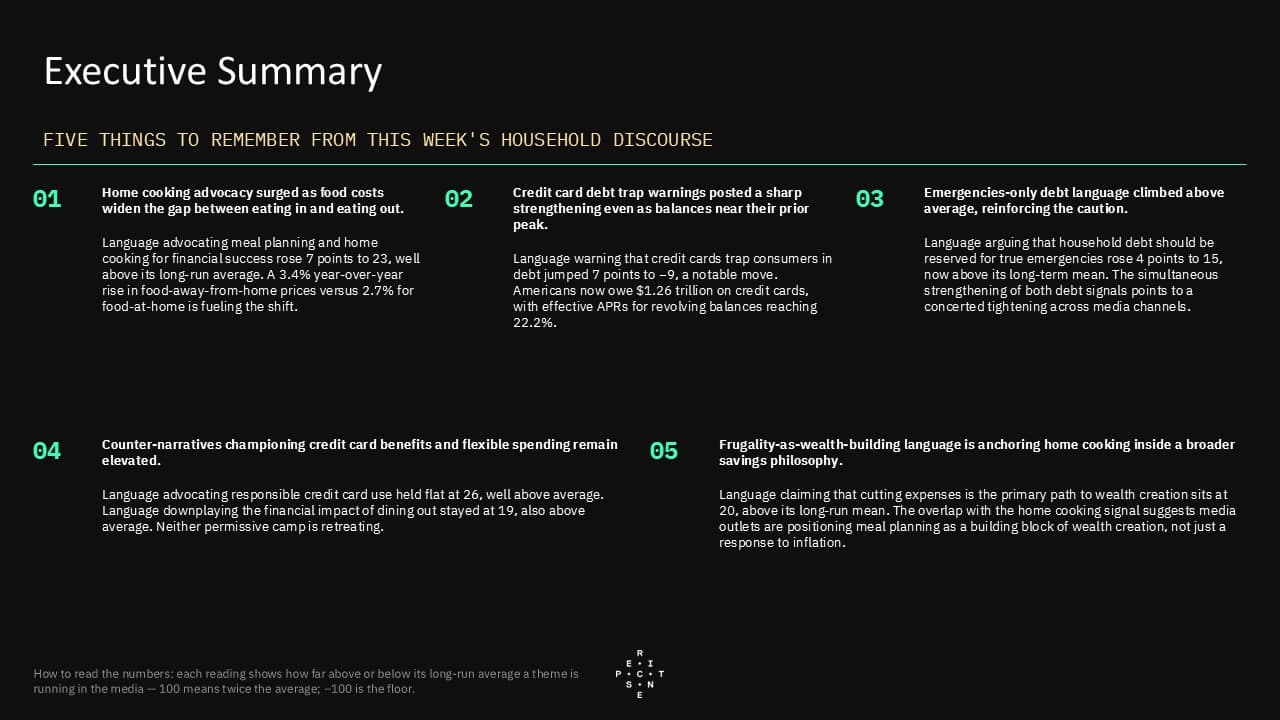
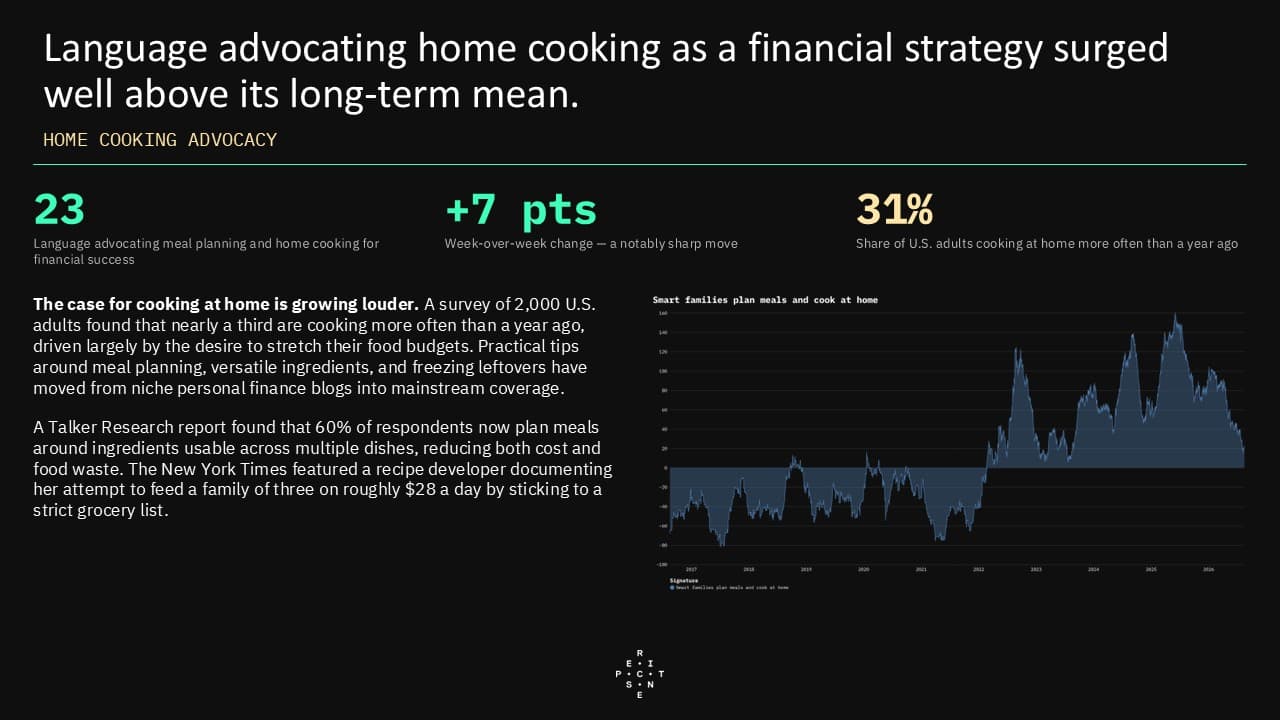
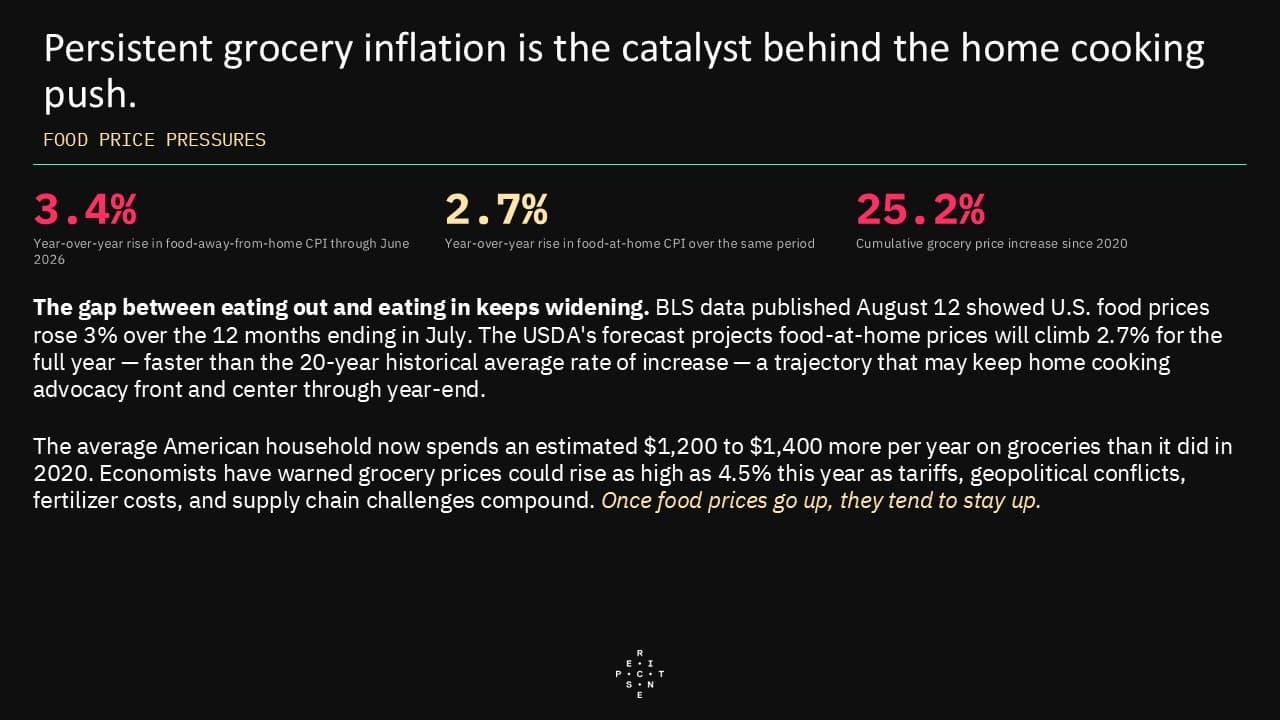
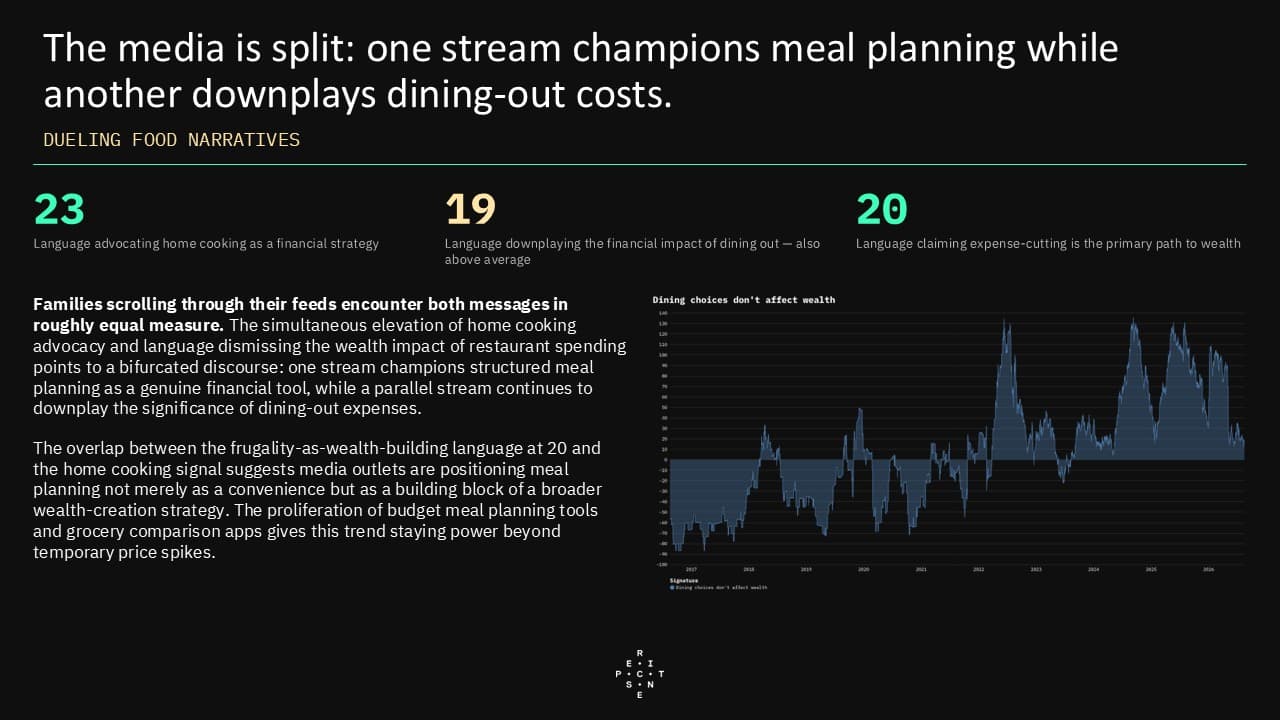
- Media advocacy for home cooking as a financial strategy intensified sharply this period, fueled by persistent grocery inflation and a widening gap between food-at-home and food-away-from-home costs. Yet Perscient's semantic signature tracking language that downplays the financial impact of dining out remains equally elevated, leaving consumers with contradictory guidance on whether their food spending habits genuinely matter for household wealth.
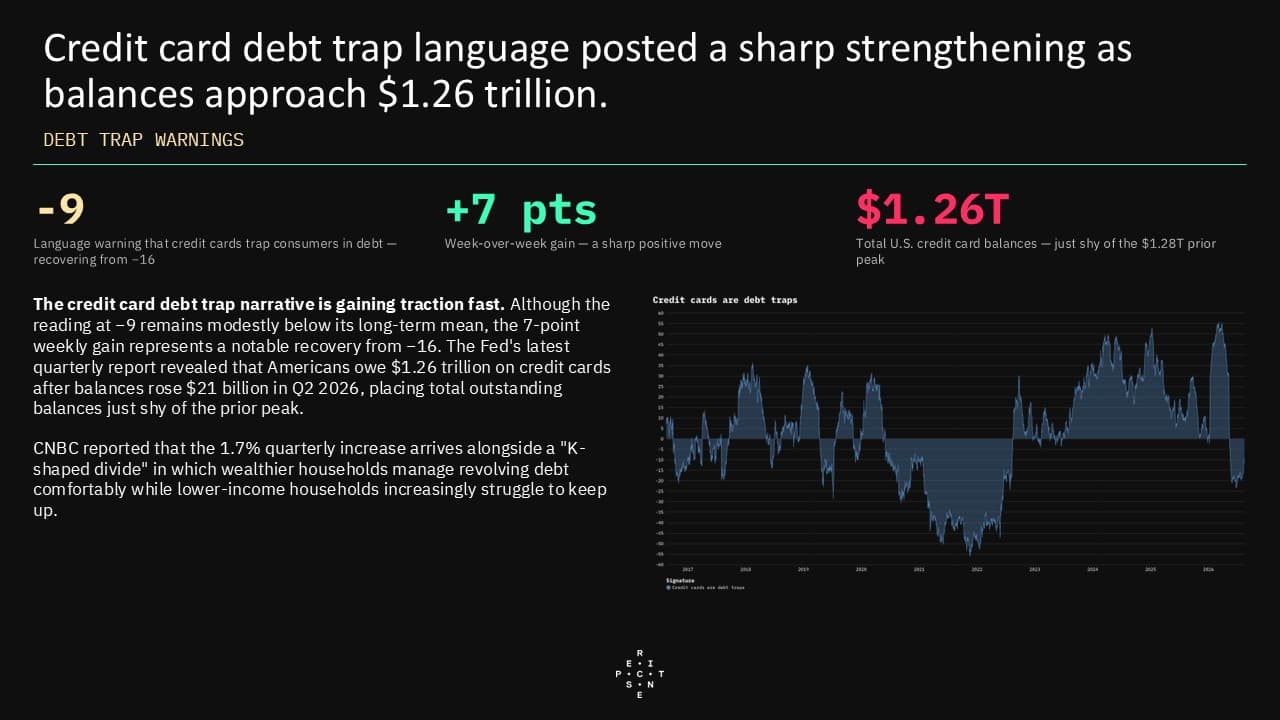
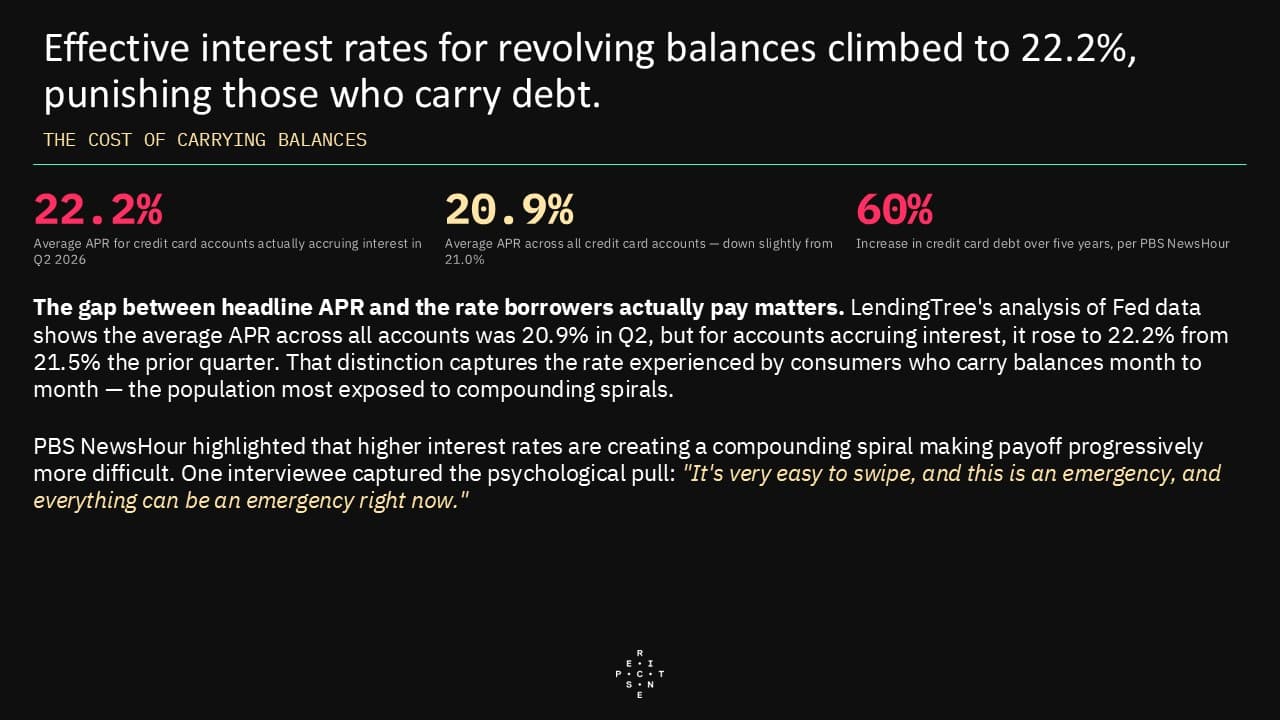
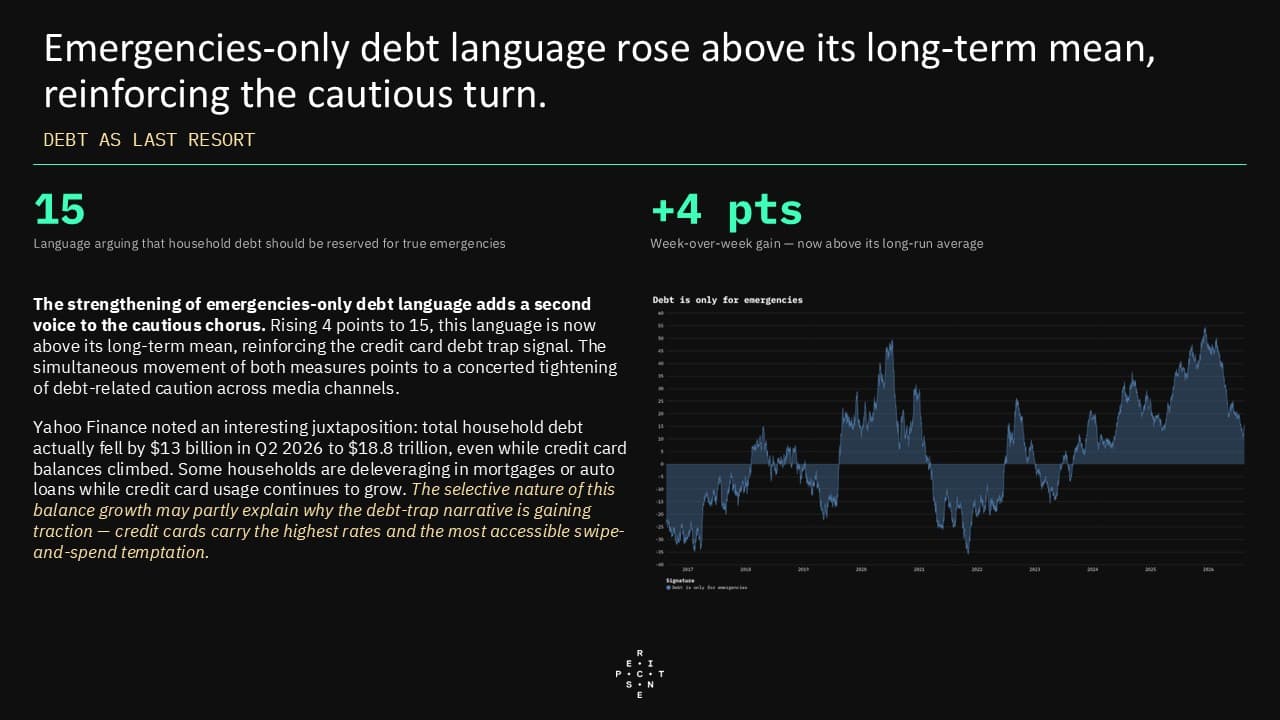
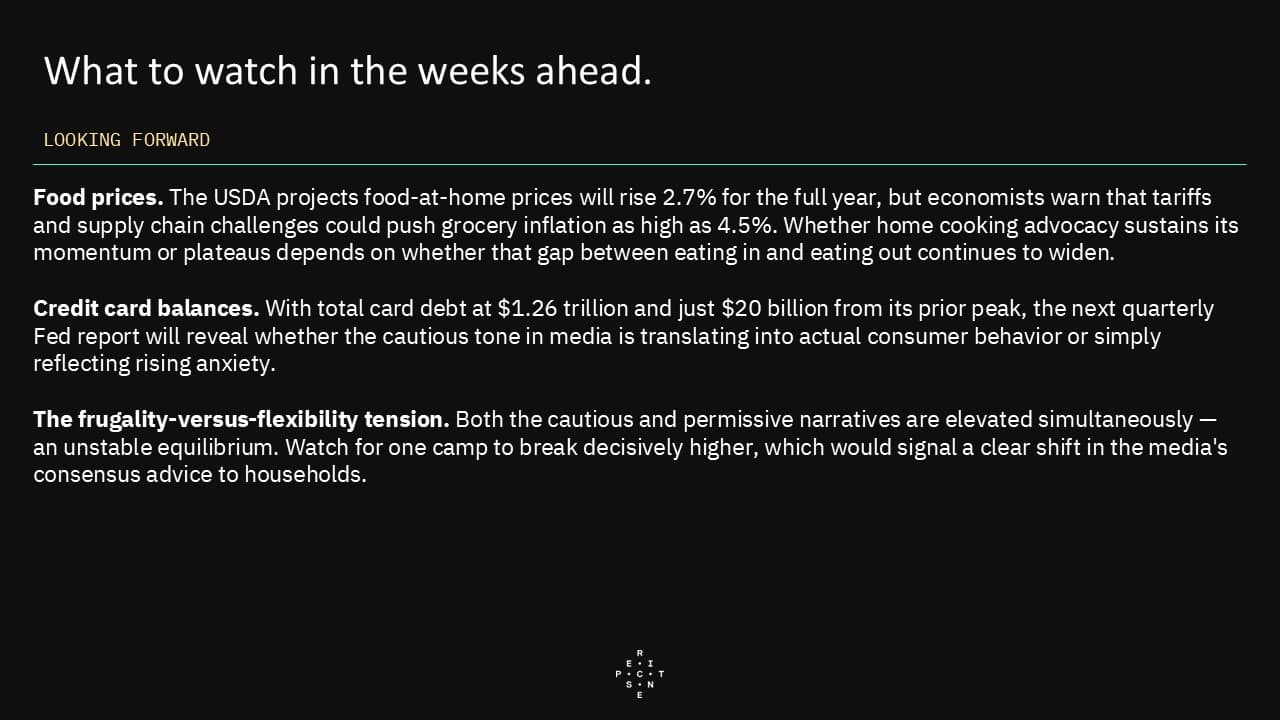
- Debt caution language surged across media channels, with the credit card debt trap semantic signature experiencing its sharpest strengthening on record while the emergencies-only debt signature climbed above its long-term average. These shifts coincide with consumer credit card balances approaching $1.26 trillion and effective interest rates exceeding 22% for borrowers who carry revolving balances—conditions that lend real-world weight to the warnings now proliferating in financial coverage.
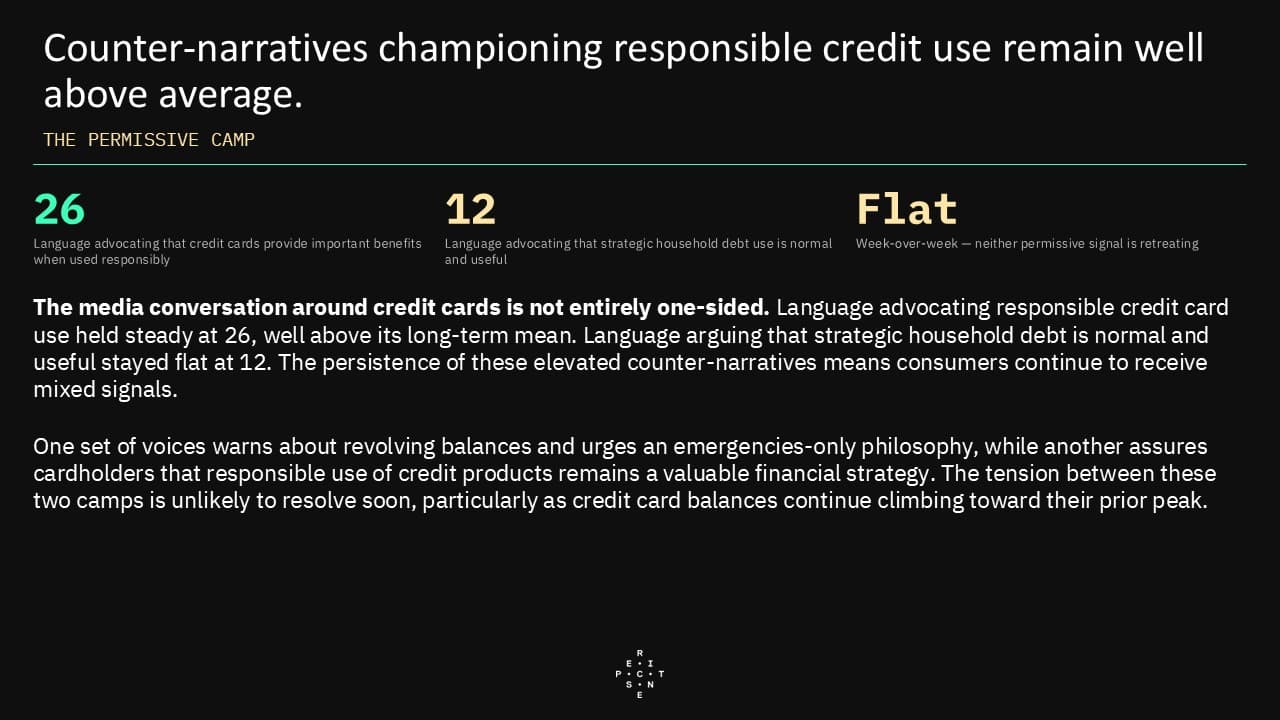
- Despite this rising tide of caution, counter-narratives championing the responsible use of credit cards and downplaying the cost of discretionary food spending remain firmly above their long-term averages. The result is a deeply divided media environment in which households receive simultaneous encouragement to tighten their finances and reassurance that flexibility is reasonable, with neither camp showing signs of retreating.
- The convergence of strengthening home cooking advocacy and an elevated frugality-as-wealth-building semantic signature suggests that media outlets are increasingly positioning everyday cost-cutting measures—particularly around food—not merely as responses to inflation but as core components of a broader wealth-creation philosophy. The practical infrastructure developing around this trend, from budget meal planning tools to grocery comparison apps, gives it staying power that extends well beyond temporary price spikes.
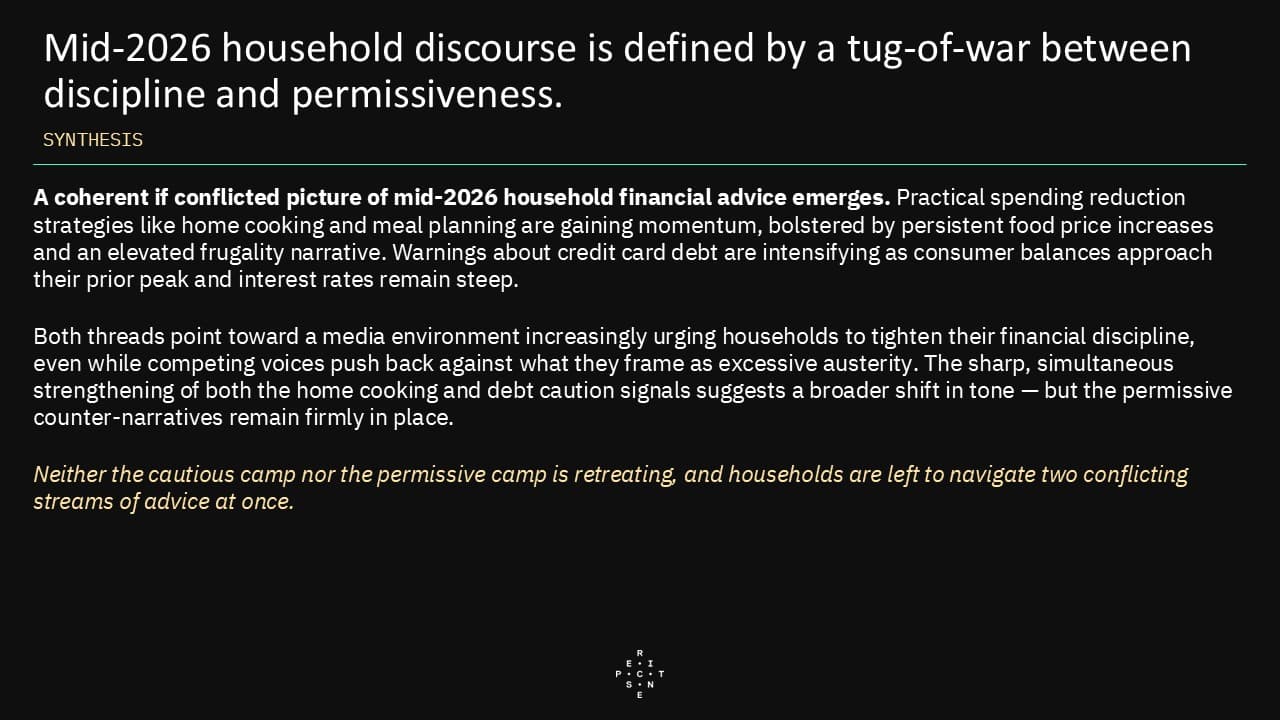
- Taken together, mid-2026 household financial discourse is defined by a tug-of-war between growing calls for discipline and persistent permissive counter-narratives, a tension that is unlikely to resolve while food prices remain elevated and credit card balances continue climbing toward their prior peak. The sharp, simultaneous strengthening of both the home cooking and debt caution signals warrants close monitoring in the months ahead.
Last updated: ...