
Personal Finance Pulse
The Pulse
August 17, 2026·Personal Finance Pulse


Executive Summary
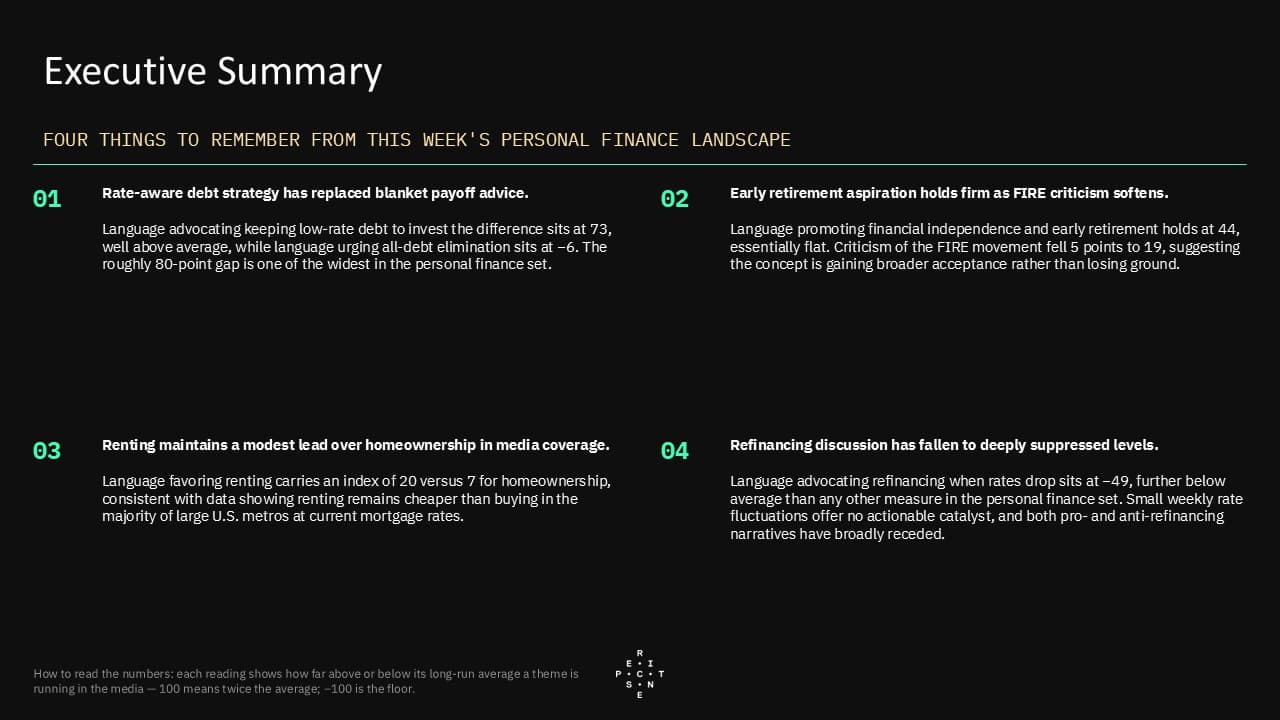
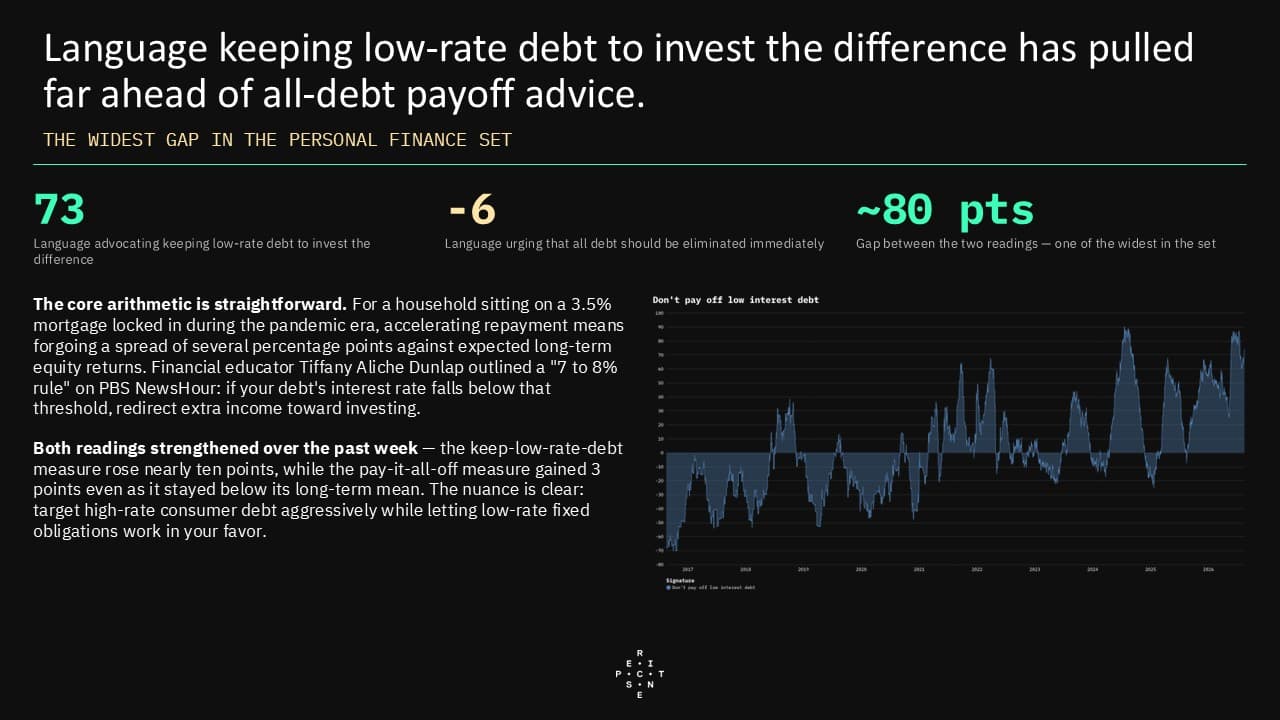
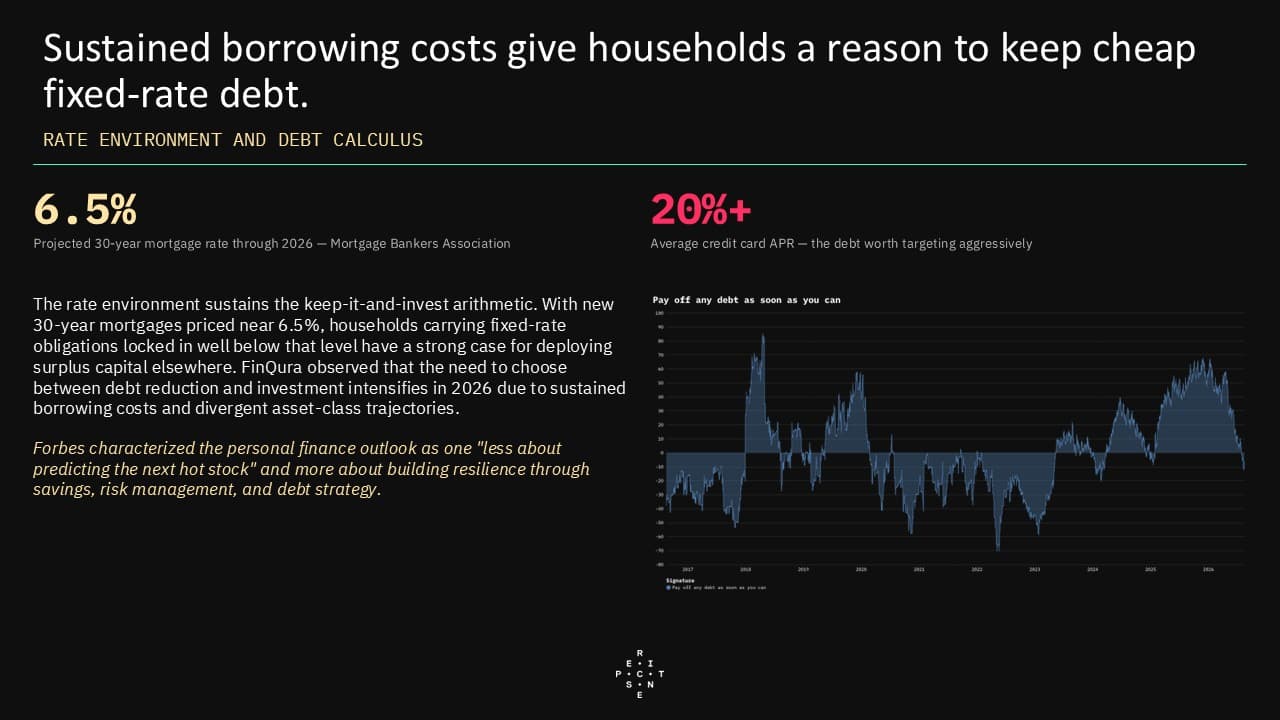
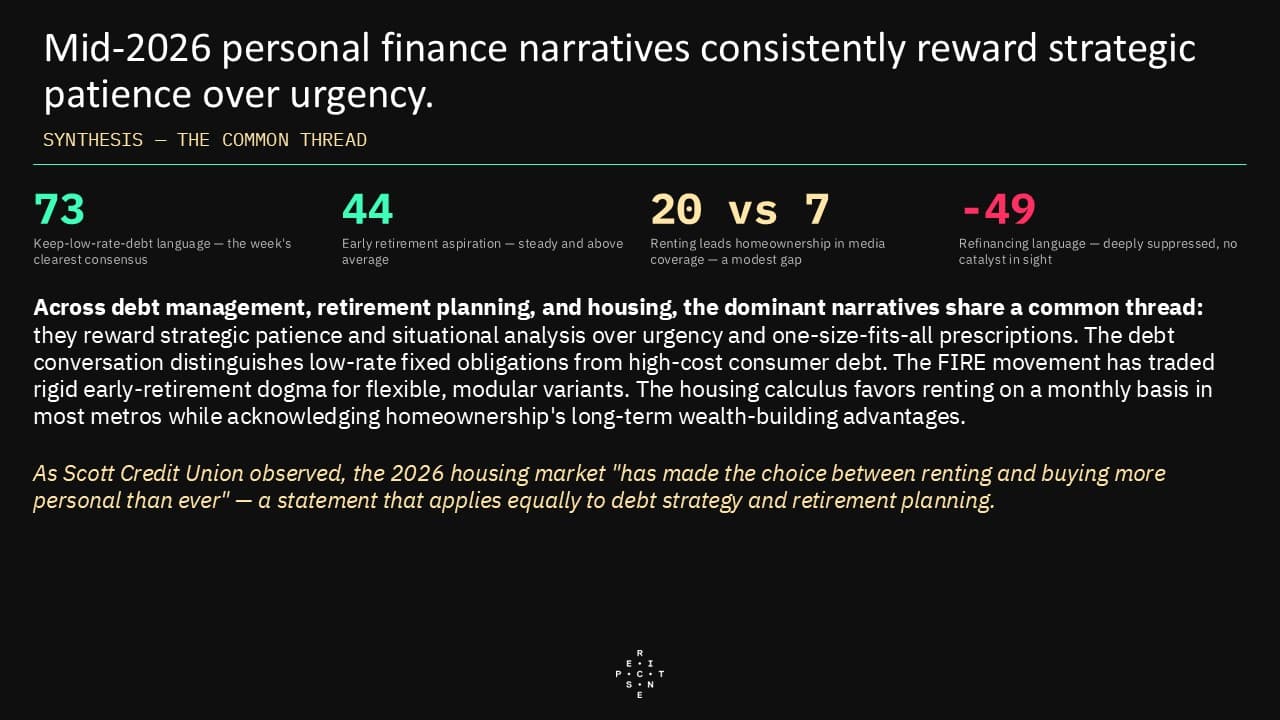
- Financial media in mid-2026 has moved decisively away from blanket debt-elimination advice and toward a rate-aware, differentiated framework. The semantic signature tracking language that advocates keeping low-rate debt to invest the difference is well above its long-term mean, while the signature tracking language that urges paying off all debt sits modestly below its own mean — creating one of the widest narrative gaps in the personal finance signature set. This calibrated posture, which distinguishes between high-cost consumer debt and low-rate fixed obligations locked in during the pandemic era, sets the tone for a broader media environment that favors individualized strategy over categorical rules.
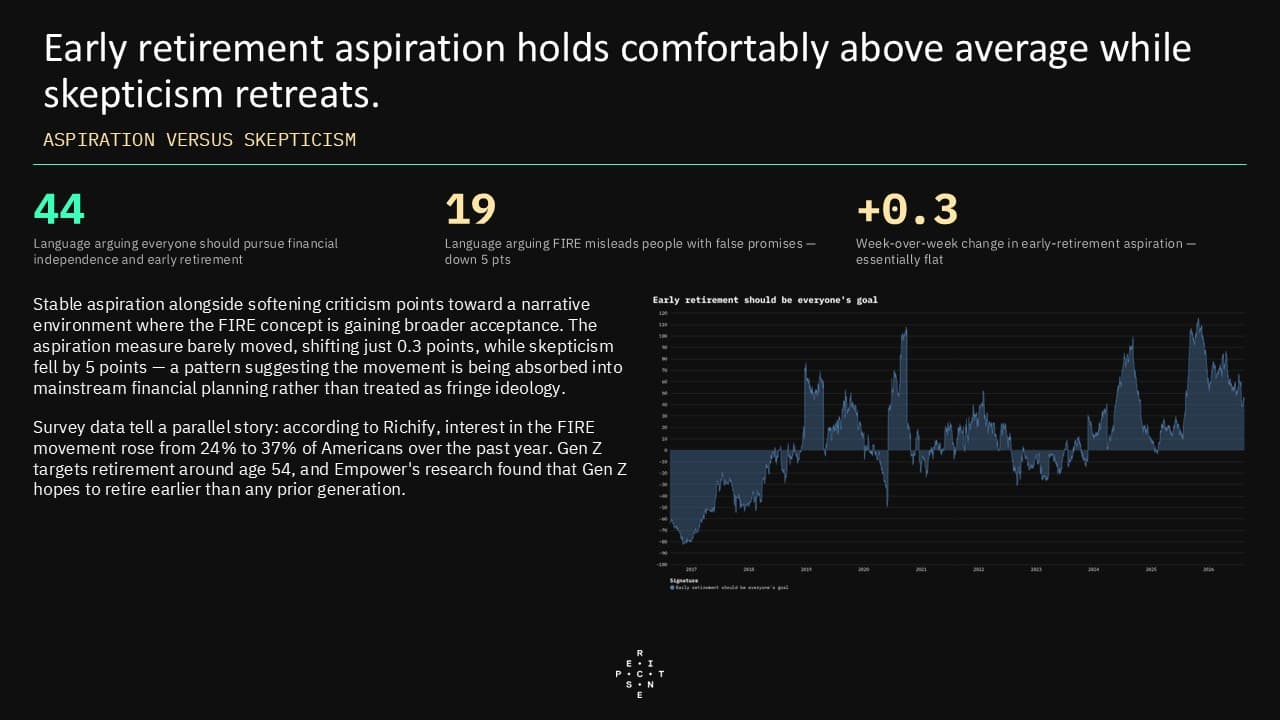
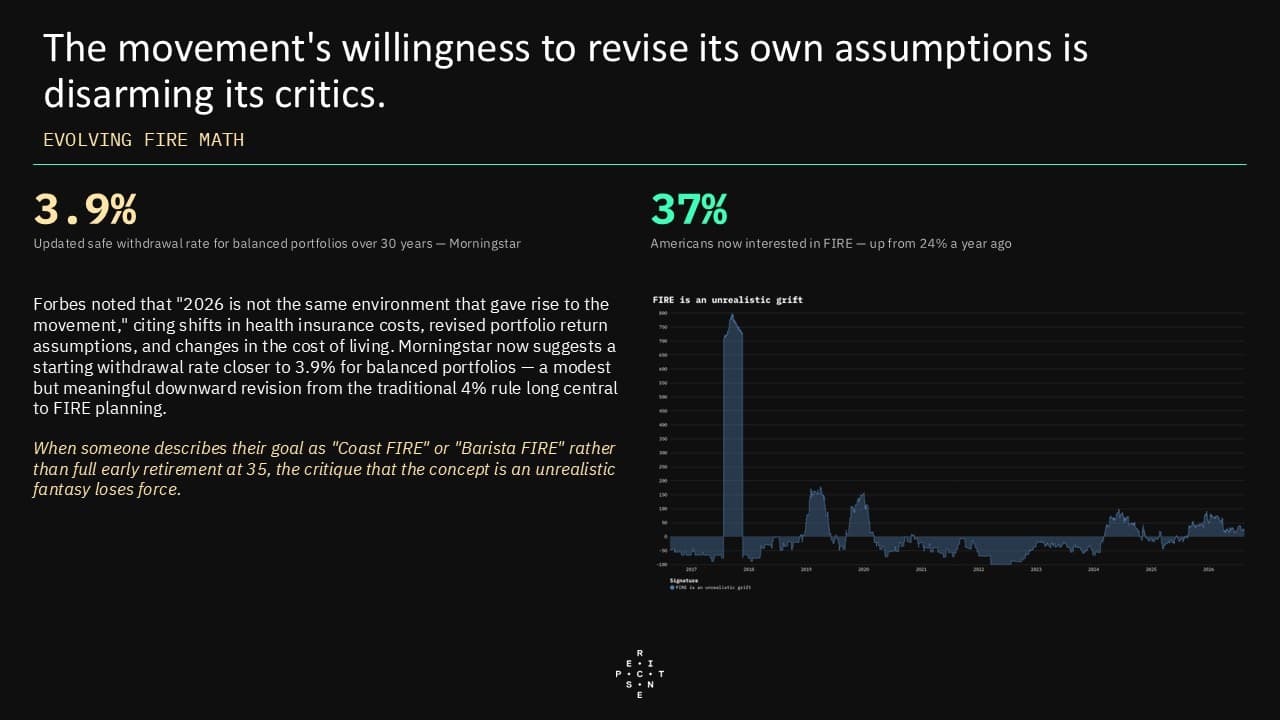
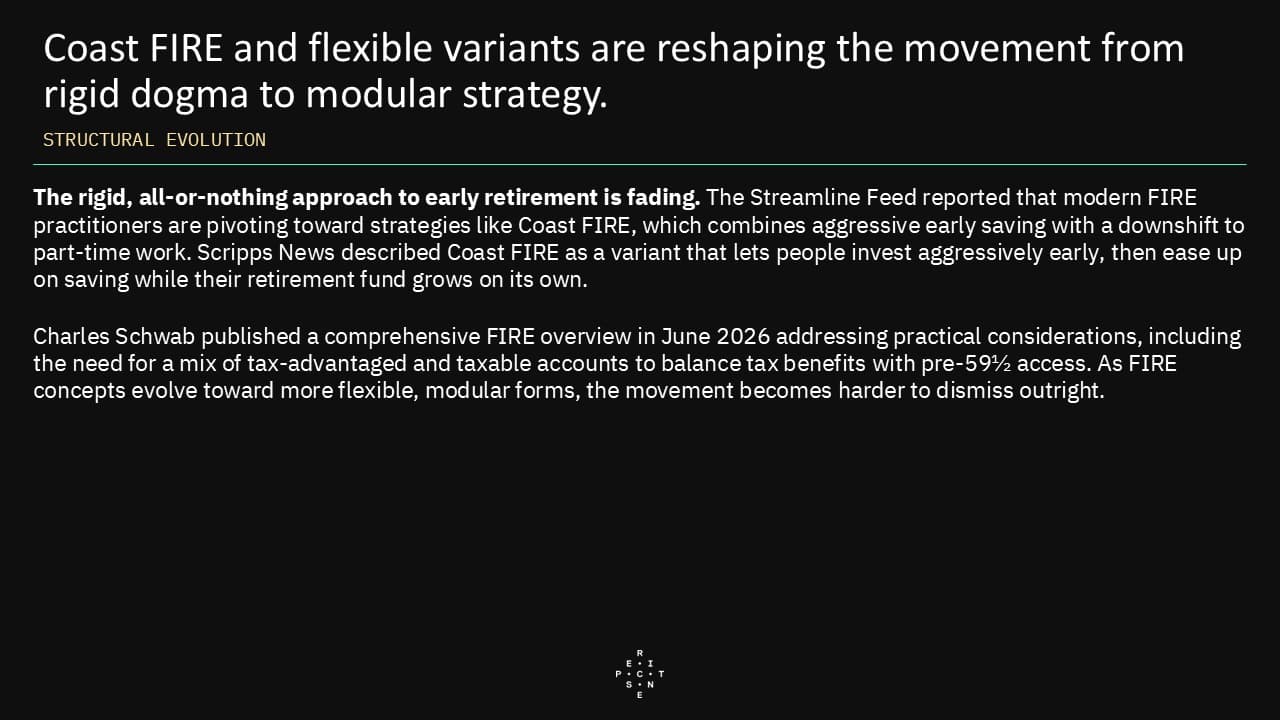
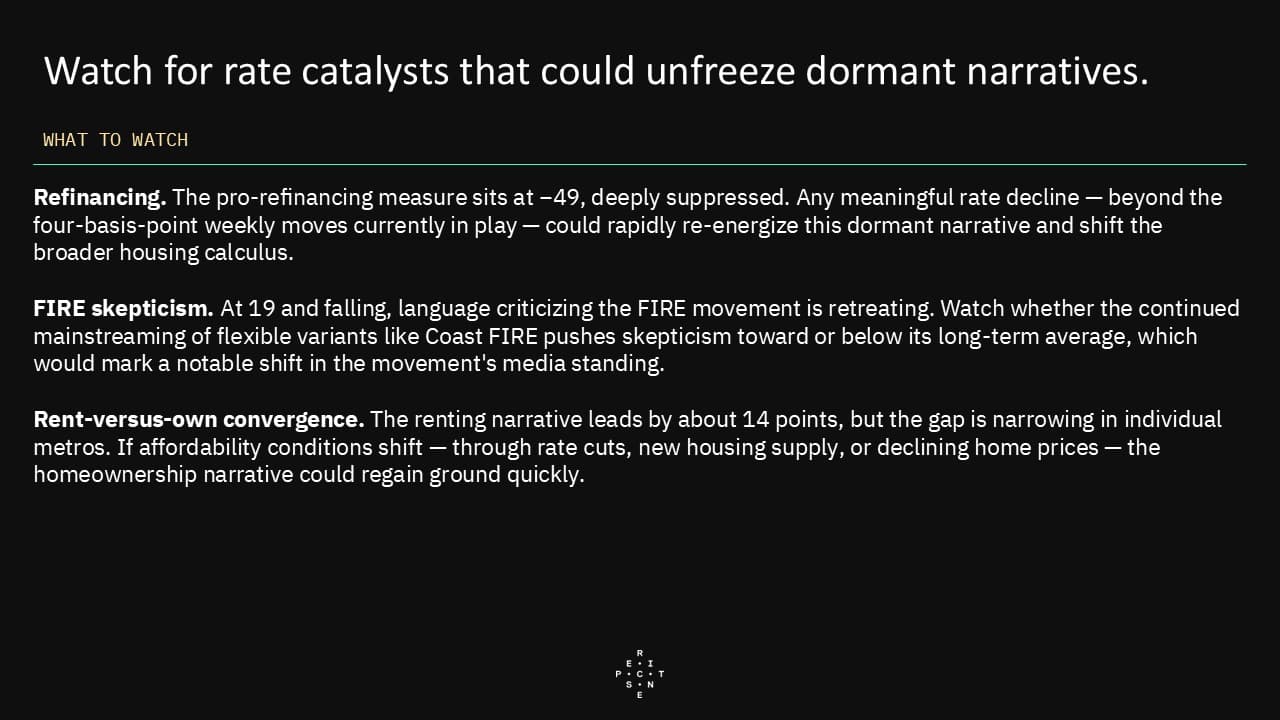
- Aspiration toward financial independence and early retirement remains firmly above its long-term mean and essentially flat, while criticism of the FIRE movement has softened meaningfully. The movement's evolution toward flexible variants — such as Coast FIRE and Barista FIRE — appears to be disarming skeptics and facilitating the absorption of FIRE concepts into mainstream financial planning rather than relegating them to the fringe.
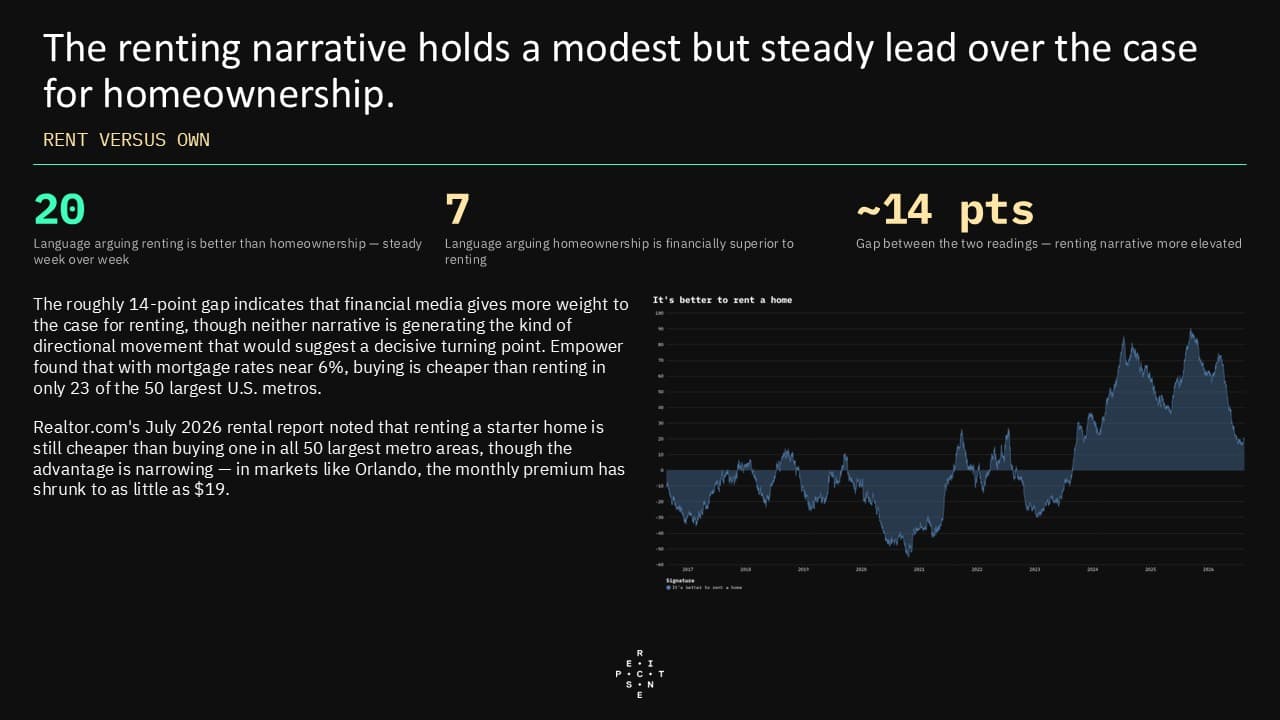
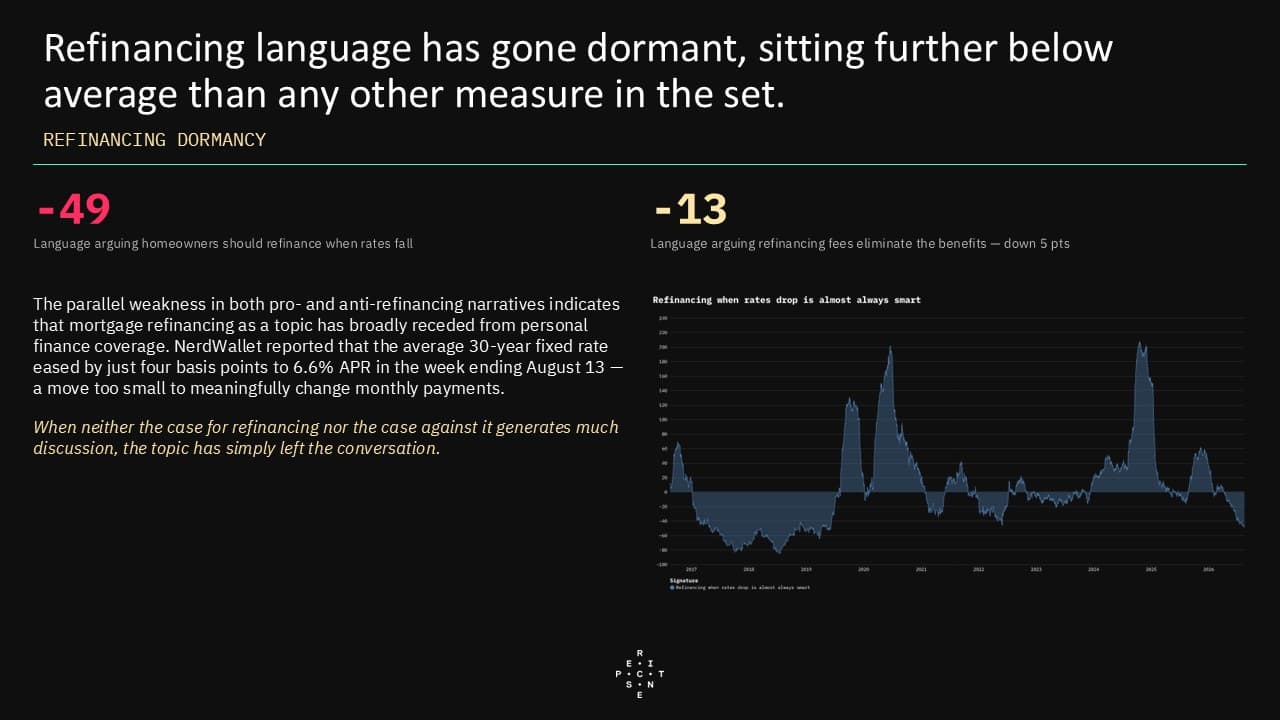
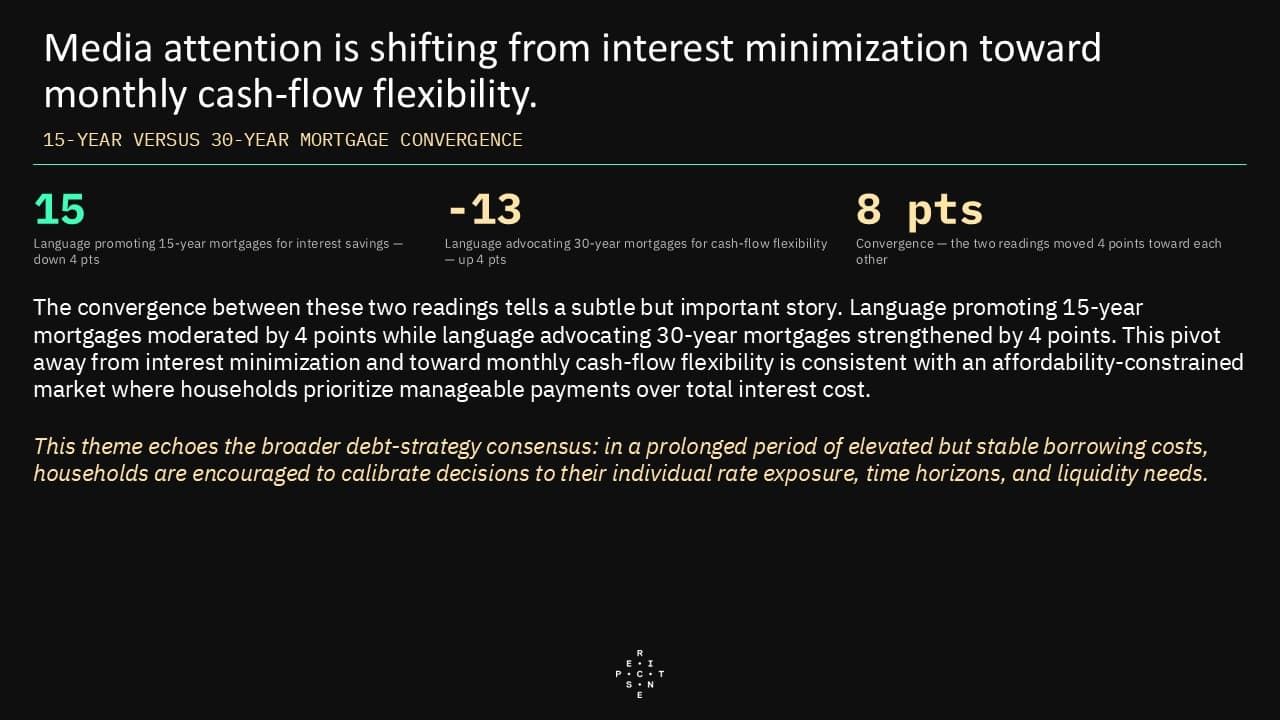
- The renting-over-buying narrative maintains a modest lead in media coverage over the case for homeownership, consistent with data showing that renting remains cheaper than buying in the majority of large U.S. metros at current mortgage rates. Refinancing discussion has fallen to the most deeply suppressed level in the entire personal finance signature set, reflecting a rate environment in which small weekly fluctuations offer no actionable catalyst. A subtle convergence between 15-year and 30-year mortgage advocacy suggests that media attention is shifting from interest minimization toward monthly cash-flow flexibility — a theme that echoes the broader debt-strategy consensus.
- Across debt management, retirement planning, and housing, the dominant mid-2026 personal finance narratives share a common thread: they reward strategic patience and situational analysis over urgency and one-size-fits-all prescriptions. This posture is consistent with a prolonged period of elevated but stable borrowing costs, in which households are encouraged to calibrate decisions to their individual rate exposure, time horizons, and liquidity needs.
Last updated: ...